• About

Rabbi John Rosove's Blog

Rabbi John Rosove's Blog

Monthly Archives: October 2011

My High Holiday Sermons – 5772

16 Sunday Oct 2011

Posted by rabbijohnrosove in American Jewish Life, Ethics, Holidays, Israel/Zionism, Musings about God/Faith/Religious life

≈ Leave a comment

The three sermons I delivered during the High Holidays this year can be accessed by clicking to your right on Temple Israel of Hollywood or going directly to the sermons by clicking http://www.tioh.org/about-us/clergy/aboutus-clergy-clergystudy. If you go through the Temple Israel website, you will see the link to the holiday sermons alongside my colleagues’ and my photos on the Temple’s home page. My three sermons are:

Thirty-two Pathways in the Heart – Kol Nidre 2011 (I consider 32 life-lessons I have learned in my nearly 62 years. These are means I have found to a healthier, wiser and more sacred way of living.)

Beyond Crisis: The Case for Aspirational Zionism – Rosh Hashanah Shacharit 2011 – (I make the case that Israel and the Jewish people need to expand our crisis-mode way of thinking and responding to legitimate and real threats as the only means of assuring Israel’s and the Jewish people’s survival. I embrace what Dr. Tal Becker has characterized as “Aspirational Zionism.” Aspirational Zionism emphasizes Jewish values and Jewish heritage as co-equal with concerns about Israeli and Jewish security, specifically focusing on the prophetic and rabbinic values of tzedek chevrati – social justice).

Doing a Congregational Cheshbon Hanefesh – Erev Rosh Hashanah 2011 (I ask fundamental questions about both the nature of our synagogue community at Temple Israel of Hollywood and about us individually as Jews in this 2nd decade of the 21st century: Who are we as a liberal Jewish community? What is necessary for our synagogue community to be ‘visionary’ as opposed to ‘functional’? And what might we as individual Jews do to enhance our Jewish literacy and our spiritual/religious lives?)

I welcome your comments to any of the ideas I present in these sermons, whether you agree with me or not.

Moadim l’simcha!


Z’man Simchateinu – The Messianic Thrust of Sukkot

14 Friday Oct 2011

Posted by rabbijohnrosove in Divrei Torah, Holidays, Inuyim - Prayer reflections and ruminations, Musings about God/Faith/Religious life

≈ 1 Comment

The Kotzker rebbe was asked once if he had the power to revive the dead. He answered: “Reviving the dead isn’t the problem; reviving the living is far more difficult.”

On Sukkot we are told to build temporary dwellings in which to reside for 7 days to remind us of life’s frailty and our dependence on God for physical and spiritual sustenance. As we build these flimsy dwellings, the festival reminds us of our duty to take action, rebuild our lives and not default to passivity nor fail to work to heal a shattered world. In this sense Sukkot is a messianic holiday, and the four species of plants in the lulav-etrog bundle present a messianic ideal.

The tradition of the Lulav and Etrog is based on a verse from Leviticus (23:40); “On the first day you shall take the product of Hadar trees (the etrog), branches of palm trees (lulav), boughs of leafy trees (myrtle – hadas), and the willows of the brook (aravah) and you shall rejoice before Adonai your God seven days.”

The Midrash (Vayikra Rabba 30:12-13) to Leviticus compares each plant to a different kind of Jew:

“THE FRUIT OF THE HADAR TREE symbolizes Israel; just as the etrog has taste as well as fragrance, so Israel have among them those with learning and good deeds. BRANCHES OF PALM TREES, too applies to Israel; as the palm-tree (lulav) has taste [i.e. the dates of the palm] but no fragrance, so Israel has among them such as possess learning but not good deeds. AND BOUGHS OF THICK TREES I likewise apply to Israel; just as the myrtle (hadas) has fragrance but no taste, so Israel have among them such as possess good deeds but not learning. AND WILLOWS OF THE BROOK also applies to Israel; just as the willow (aravah) has no taste and no fragrance, so Israel have among them people who possess neither learning nor good deeds. What then does the Holy One, blessed be God, do to them? … says God, let them all be tied together in one band … If you have done so [says God], then at that instant I am exalted…”

The Jewish messianic ideal requires that the Jewish community as a whole be united. The four species bundled together symbolize a unity not yet achieved, but inclusive of every kind of Jew, regardless of knowledge, ethical and ritual behavior.

The four species represent Jews from the most learned and diligent in the performance of the mitzvot to the most unlettered and negligent. The lesson of the lulav and etrog lies in the fact that as long as all four are part of the whole, even Jews with little knowledge of Judaism and little observance of the mitzvot, have a role to play in our community. When we exclude anyone from the fabric of Jewish society, we are essentially incomplete. The message is clear. We need everyone, and though we are so often at odds with each other, Sukkot reminds us that enmity and alienation from one another cannot be allowed to stand.

At the same time, Rabbi Yitzhak Arama (15th century Spain) teaches that Sukkot is far more than a holyday only for Jews. It is also universal in scope and vision embracing all of humankind. When we look at the “four species,” he taught, we are reminded of the four types of existence in the universe:

[1] The etrog is held apart from the other three and is not bound up with it. We hold it in the left hand opposite the heart. The etrog represents the highest form of existence, that which is perfect in all its aspects – namely, God;

[2] The lulav/palm branch represents purely spiritual creatures, the angels (mal’a-chim), and is the most honored of the remaining three species of plants and the tallest;

[3] The hadas/myrtle represents the stars and planets, luminary bodies of an enduring nature;

[4] The aravah/willow represents the world of humankind replete with all our inadequacies and imperfections.

The prophet Zechariah, which is read on the first day of Sukkot, tells of the nations coming to Jerusalem to celebrate Sukkot, for it is more universally messianic than any other holiday in the Jewish calendar year uniting the Jewish people, humankind, nature, the heavenly bodies, the angels, and God.

We call this festival of Sukkot – Z’man Sim’cha-tei-nu – the Season of our Joy – and when considering the universal and messianic nature of the chag is it any wonder why? This kind of joy is our response to the vision of a perfected world in the image of the dominion of God.

May that vision be our hope and our blessing. Chag Sukkot Sameach!


Gilad Shalit, Rabbi Meir of Rothenburg, and the Cost of this Deal

12 Wednesday Oct 2011

Posted by rabbijohnrosove in Ethics, Israel and Palestine

≈ 3 Comments

We have to be thrilled for Gilad Shalit and his family that he will be released from a Hamas jail soon. However, in our joy, we have to ask (as Israelis have been asking for five years) at what cost has this deal been made?

This is not the first time Jews have been confronted with the unjust imprisonment of one of its own. Consequently, much has been written in the legal literature about it. Maimonides (12th century) wrote that the duty to ransom captives (pidyon sh’vu-im) supersedes the duty to give charity (tz’dakah) to the poor. Others have compared this mitzvah with the saving of human life (pikuach nefesh).

The rabbis placed limits, however, on how much an individual or community should pay when ransoming a captive. To avoid extracting an exorbitant ransom payment or repeated kidnappings, the majority of legal authorities ruled that a captive could only be redeemed at what his or her ‘market value’ was as a slave, thus avoiding outrageous demands. (Rabbi Josef Karo, Shulchan Arukh, Yoreh Deah 252:4). Though the idea of paying blackmail to gain the release of an unjustifiably imprisoned person is repugnant, tradition clearly favored doing so if it meant saving life.

The most famous Jewish hostage in history was the leader of world Jewry at the end of the 13th century, Rabbi Meir of Rothenburg (the MAHARAM), and his experience set the moral and legal standard for Jewish communities for centuries when confronting the issue of paying a ransom for captives.

The MAHARAM lived at a time of great political upheaval that resulted from the election of Rudolf I of Hapsburg to be the German Emperor. Once in power, Rudolf taxed the Jewish community and reduced them to the status of servi camerai (serfs of the treasury), a euphemism for enslavement.

News of Rabbi Meir’s arrest spread across Europe, Spain and North Africa, and in response the Jewish community raised a huge sum of 23,000 pounds of silver to buy his freedom. However, on Rabbi Meir’s instructions it was stipulated that the silver was to be regarded as a ransom only, and not as the tax the Emperor had imposed on the Jewish community. Rudolf refused to accept the silver on this basis, and Rabbi Meir remained in prison until the end of his life at the age of 78.

Israel once had an iron-clad policy regarding hostage-taking: ‘No discussion! No negotiation! No lending of legitimacy to criminals and murderers.’ When PM Netanyahu was Israel’s Ambassador to the UN (1984-88) he articulated this view in a book he wrote on terror and how to deal with it (Terror – How the West Can Win, 1986). After its publication he was asked how he would respond if a member of his own family was taken hostage. Recalling the death of his own brother Yonaton in the Entebbe Rescue Mission on July 4, 1976, Bibi said that all of us must be prepared to accept loss, even if it means losing a beloved member of our own family.

I can only imagine the intense pressure Bibi has been under to find a way to bring Gilad Shalit home. Gilad’s family has camped outside the Prime Minister’s residence for the past five years, and Gilad has essentially been adopted as every Israeli’s son. Further, the IDF holds as a sacred trust the principle that the people and State of Israel will never leave a soldier on the battlefield or in an enemy prison.

All this being said, the price Israel is paying for Gilad Shalit may prove to be against Israel’s own best interests. Hamas knows that Israel and Jews value life above death and that this is not the first time Israel has traded Palestinians for Israelis (sometimes Israel has traded hundreds of Palestinians for one or two bodies of dead Israelis).

In light of all this we have to ask at what cost has this deal for Gilad been made? Deals like this in the past have encouraged terrorists to fear Israel less, for they figure that even if they do get caught, they most likely will be freed eventually in a prisoner exchange deal. Many released terrorists have returned to their terrorist activities, murdering more Israelis.

Is Israel right to have made this deal? I would not want to be in Bibi’s position, but I fear the worst.

A Simple Thought in this New Year

10 Monday Oct 2011

Posted by rabbijohnrosove in Holidays, Inuyim - Prayer reflections and ruminations, Musings about God/Faith/Religious life, Quote of the Day

≈ 1 Comment

We have just come through the most intense and introspective 10 days of the Jewish calendar year. For us rabbis, cantors and synagogue staff, we are bone weary. Nevertheless, in these initial days following Yom Kippur and before Sukkot commences I feel not only renewal but simple gratitude for the blessings of my life, my wife Barbara, my sons Daniel and David, my dearest friends and colleagues, our community, and the tradition, faith and people of Israel.

Here is a thought from outside Jewish tradition, yet reflective of who we are as a people.

Gratitude is not only the greatest of virtues, but the parent of all others.
–Cicero, Roman philosopher (106 BC – 43 BC)

L’shanah tovah u-m’tukah and beginning on Wednesday evening, chag Sukkot sameach!

The Day after the Palestinian State UN Resolution – Now what?

06 Thursday Oct 2011

Posted by rabbijohnrosove in Israel and Palestine, Israel/Zionism

≈ Leave a comment

The two articles below are important reads if we are to understand the nature of the stalemate between Israel and the Palestinians, and what it will take to break free of it, if indeed there is political will on each side to do so.

As a Zionist, I continue to ask, as does Tobin, how there can be a final settlement to the Israel-Palestine conflict if the leadership of Fatah won’t recognize Jewish historical claims to the land of Israel. As a universalist who supports the right of every nation, including the Palestinians, to national sovereignty, I believe it is reasonable to ask how those Palestinians who remain in Israel can identify as full citizens in a “Jewish state” even though, according to law, they are entitled to equal rights of citizenship.

There needs to be a way to break this logjam, and perhaps, Sari Nusseibeh has come up with it. There is much in his article that disturbs me, but his suggestion that Israel should be characterized as a democratic country with a Jewish majority and a Jewish state religion, and (I would add) as the “Homeland of the Jewish people” as opposed to a “Jewish State” can be a way to move forward.

Certainly, Israelis do not want to be told who they are and what Israel should be. No one has that right except the citizens of the State of Israel. However, what Nusseibeh describes is already, in effect, the case. Israel is a democracy. Jews are the majority. And Judaism is effectively the state religion, though Christianity and Islam have equal rights to practice their religions unimpeded. If the distinction that Nusseibeh suggests (above) allows the Palestinians to sit down with the Israelis and negotiate an end-of-conflict resolution, I say Dayeinu – that should be enough for anyone who wants a secure and lasting peace with two states for two peoples sitting side by side. Jews give up nothing. Israel is what it is and will be what the Jewish people determine it to be. We can call it the “Jewish State” and I see no need to have the Palestinians do so if it means ending this conflict once and for all.

Regardless of whether some Palestinians still hold onto the preposterous dream of destroying the State of Israel, the fact is that Israel is going nowhere. And regardless of whether Israeli extremists maintain their preposterous dream of not wanting a Palestinian state to emerge, Palestinians are also going nowhere and statehood is an inevitability.

Israel will always have her enemies, but a resolution of this conflict that assures Israel’s security behind defensible internationally recognized borders is no small thing. Indeed, it is what Israel’s founders dreamed about.  Should Israel and the Palestinians come to an agreement that ends the bloodshed and this conflict, everything in the Middle East will change, and (hopefully) for the better.

Sadly, history has shown this is more easily said than done (otherwise there would have been a settlement long ago), but I am an optimist. I recall President John Kennedy’s statement in 1962 relative to the former USSR and the threat of nuclear catastrophe with the United States; “These problems were created by human beings, and they can be solved by human beings.” Finding a way to peace between Israel and the Palestinians is not beyond the pale of solvable problems!

The first article is by Sari Nusseibeh of Al-Quds University, who discusses the question of Israel as a ‘Jewish state,’ suggesting an alternative stipulation for peace talks that would ask Palestinians to ‘recognize Israel (proper) as a civil, democratic, and pluralistic state whose official religion is Judaism, and whose majority is Jewish’:

http://english.aljazeera.net/indepth/opinion/2011/09/201192614417586774.html

The second article is by Jonathan S. Tobin of Commentary Magazine, who responds to Sari Nusseibeh’s discussion of the phrase ‘Jewish state,’ asserting that ‘the fact that Israel will be the state of the Jewish people cannot be questioned without unleashing the dogs of war that have doomed the Palestinians to tragedy during the last century’:
http://www.commentarymagazine.com/2011/10/04/nusseibeh-jewish-state/


Days of Awe!? A shocking report from the West Bank!

06 Thursday Oct 2011

Posted by rabbijohnrosove in Israel and Palestine, Israel/Zionism

≈ Leave a comment

Bernard Avishai is an Israeli journalist and blogger who I highly recommend that you read and then subscribe to. He is an Israeli and critic of the extreme right-wing government of Israel. That what he describes below would take place at any time in the State of Israel, but especially now, during these Days of Awe, shows Israel’s underbelly in stark and shocking terms. When I hear stories like this I am ashamed for my people – and I hope you are as well. Here is his most recent blog in its entirety. If you choose to do so, you may subscribe at the end.

Bernard Avishai Dot Com


Days Of AwePosted: 05 Oct 2011 09:44 AM PDT

It is hard to imagine a more vivid contrast between the Israels that Israelis must choose.

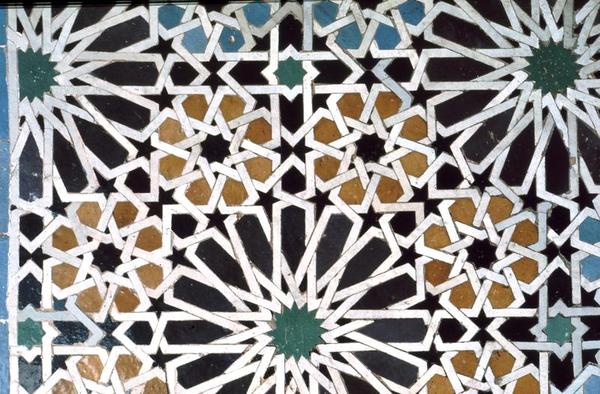
This morning, the Nobel Prize for Chemistry was awarded to Daniel Shechtman, 70, a professor of materials science at Technion-Israel Institute of Technology. A professional in cosmopolitan Haifa, who also teaches in Iowa, Shechtman personifies the old Zionist dream of a Jewish modernity, taken in what is best in the larger world, and breathing out a creative newness–in this case, an ingenious proof that nature, the natural crystal, is capable of imitating of all things classical Islamic art, which might have also been Maimonides’ art, since its genius was delighting without “graven images.”

Also this morning, I got this email from my friend Assaf Sharon, who along with other members of Solidarity was attacked near the settlement of Anatot on Rosh Hashana: “Perhaps you have already heard about the violent attack we experienced on Rosh Hashana. I paste below a description of the events and a video capturing some of what happened. Although I took quite a beating, I must confess that the pain of the blows and wounds dulls in comparison with the frustration from the silence and indifference with which this unprecedented event is being received.”

I reproduce his report in full. Something to consider on Yom Kippur:

For decades, the Israeli government and police force have passively allowed settlers to act violently against Palestinians and Israelis who protest the occupation. Last Friday, when a mob of settlers attacked a group of Palestinian farmers and Israeli solidarity activists outside the settlement of Anatot, a new level of collusion was reached: not only did the police not act to stop the mob of settlers, but indeed many of the settlers in the mob were themselves out-of-uniform policemen and state employees. The press was silent. The occupation has found a new way to silence non-violent resistance and dissent.

At first glance, Anatot is a pastoral gated community close to Jerusalem, inhabited by law-abiding citizens, many of whom are employed by the Civil Administration and the police. But despite its benign appearance, Anatot is a settlement, located in Palestinian territory occupied in 1967. Anatot was built in 1982 on land allocated by the Israeli government, and inexpensive housing was offered to police officers and other government employees in order to encourage them to live and work in the otherwise unattractive area known by the Israeli government and settlers as “Judea and Samaria,” and by the rest of the world as the West Bank. Like many other settlements, Anatot is surrounded by a separation fence that envelops acres of privately-owned Palestinian land.

Six years ago, the residents of Anatot decided to expand their settlement southward. They neither requested nor received government permits to expand. They simply rerouted the settlement’s fence to encompass additional private Palestinian land, including land owned by a farmer named Yassin el-Rafa’i and his family, who are citizens of Israel. For years, settlers from Anatot have regularly harassed el-Rafa’i. On multiple occasions, settlers have uprooted el-Rafa’i’s trees and otherwise damaged his property, including poisoning his well with animal carcasses. El-Rafa’i has filed numerous complaints with the local police, but to no avail.

The police have consistently refused to address el-Rafa’i’s complaints, or to take any action whatsoever to restrain the settlers’ continued harassment. Last Friday (9/30/2011), a group of a dozen Israeli activists from The Sheikh Jarrah Solidarity Movement, Ta’ayush, and other groups, went to visit Yassin el-Rafa’i and his wife Iman, in order to hear their story and to express friendship and solidarity. While the activists were getting ready to go home, a crowd of nearly a hundred settlers from Anatot surrounded the el-Rafa’i family and the Israeli activists.

The mob of settlers quickly grew violent, and began to attack Iman, Yassin and the Israeli activists with fists, rocks and clubs. Three people were hospitalized, including Yassin and Iman, and several activists were detained for interrogation. During the entire incident, uniformed police officers were present, and did nothing to stop or restrain the mob, despite the activists’ repeated pleas for intervention. Not a single settler was detained or arrested. No journalists were present, and the majority of the evidence was destroyed by the attackers, who specifically targeted cameras, breaking or stealing them and beating the photographers.

That evening, a group of about 40 Israeli activists returned to Anatot, to protest the brutalities committed earlier that day. The activists held a nonviolent demonstration in front of the settlement’s locked gate, while hundreds of settlers amassed on the other side. Some had participated in the afternoon’s violent attack, and some were soldiers and police officers in civilian dress: a horde of men seething with hatred and hungry for violence. The settlers demanded that the gates be opened, and charged at the activists, again with fists, rocks, and clubs.

The police officers in uniform that were present did nothing to restrain the crowd. One of the attackers tried a number of times to stab activists with a knife. When we tried to get away from the place, the attackers chased us, chanting “Death to Arabs!” and “Death to leftists!” They were accompanied by a group of uniformed police officers. About 10 demonstrators were injured, three of whom were evacuated for medical treatment. Six cars were seriously damaged or destroyed. On one of them a Jewish star, a Magen David, was incised.

Despite the attack, which was caught in stills and in video, the police did not arrest a single rioter. And despite the fact that the afternoon’s attack was known to the press, not a single journalist was present to witness the evening’s attack. The readiness with which the settlers turned to brutal violence – violence which in any other context would be called terror – exposes Anatot for what it is: an extremist ideological settlement. Furthermore, these attacks call into question the commonly held belief in Israel which posits a clear distinction between extremist, ideological settlements and moderate, ‘quality of life’ settlements.

All settlements are based on expropriation and dispossession, and all are maintained by the same tools of the occupation. The fact that the police accommodated and enabled the rioters highlights the complete lack of both accountability and justice in the occupation .The police and security forces do not monitor the settlers; they work for the settlers. In many cases, including the case of Anatot, the police are the settlers, and the settlers are the police. Police out of uniform assaulted citizens while uniformed police looked on and did nothing. The press largely ignored the events, and only after considerable public pressure and the release of videos and photos did several newspapers cover Friday’s events.

Even then, most of the coverage was tepid, equivocating, and biased towards the settlers and the police. With the Anatot events, political conflict in Israel has reached a watershed. In the light of day and under the supervision of the law enforcement, nonviolent dissent is being silenced with brutality. Dissidents are branded as traitors, and their physical safety and property are forfeit. Israelis and Palestinians alike were savaged by a mob of settlers, who acted with the complete confidence of those whose impunity is guaranteed.

Decades of occupation and repression have made Israeli society largely callous to settler and state violence against Palestinians. In Anatot on Friday, this violence was extended to Israelis who arrived to show nonviolent solidarity with the struggle against injustice, discrimination, and occupation.

•We demand an investigation of the events in Anatot, to be carried out by a special commission made of officials unrelated to the Judea and Samaria District.
•We demand the immediate suspension of the law enforcement officers present, and the dismissal of the chief security officer of the settlement, Tomer Shapira.
•We demand that the el-Rifa’i family be guaranteed full and uninhibited access to all of their land, including, if necessary, security escorts and protection.
•We demand the dismantlement of the illegal separation fence that allows the settlers of Anatot to expropriate privately-owned Palestinian lands.

We will not be silenced. We will continue to struggle against the occupation, violence, and repression. We will continue to stand up for justice, civil equality and democracy. Will you stand up with us? Share the story of the Anatot events and of the el-Rifa’i family. Share the videos of the attacks with your friends, family, classmates and colleagues. Bring these stories to the attention of your political representatives and community leaders.

— Assaf Sharon

You are subscribed to email updates from Bernard Avishai Dot Com
To stop receiving these emails, you may unsubscribe now.
Email delivery powered by Google
Google Inc., 20 West Kinzie, Chicago IL USA 60610

An ultimate spiritual reality at the core of Jewish faith

05 Wednesday Oct 2011

Posted by rabbijohnrosove in Divrei Torah, Holidays, Inuyim - Prayer reflections and ruminations, Musings about God/Faith/Religious life, Quote of the Day

≈ Leave a comment

The midrashic tradition teaches that t’shuvah (i.e. repentance, turning, returning) is an ultimate spiritual reality at the core of Jewish faith, and was one of the 10 phenomena that God created before the creation of humankind thus giving us the capacity to extricate ourselves from the chain of cause and effect.

The following are selections from classic Jewish texts and from some of our people’s most inspired and profound thinkers (ancient and modern) on the meaning, nature and impact of  t’shuvah on the individual, community, world, and God.

1. “T’shuvah is a manifestation of the divine in each human being…T’shuvah means “turning about,” “turning to,” “response” – return to God, to Judaism, return to community, return to family, return to “self”…T’shuvah reaches beyond personal configurations – it is possible for someone to return who “was never there” – with no memories of a Jewish way of life…Judaism isn’t personal but a historical heritage…T’shuvah is a return to one’s own paradigm, to the prototype of the Jewish person…The act of t’shuvah is a severance of the chain of cause and effect in which one wrong follows inevitably upon another…The thrust of t’shuvah is to break through the ordinary limits of the self…The significance of the past can only be changed at a higher level of t’shuvah – called Tikun – tikun hanefesh – tikun olam…The highest level of t’shuvah is reached when the change and correction penetrate the very essence of the sins once committed and create the condition in which a person’s transgressions become his/her merits.” (Gleaned from “Repentance” by Rabbi Adin Steinsaltz, 20th-21st century, Israel)

2. “For transgressions committed between an individual and the Omnipresent, the day of Atonement atones.  For transgressions between one individual and another, the Day of Atonement atones only if the one will regain the goodwill of his fellow.” (Mishnah, Yoma 8:9, 2nd century CE, Palestine)

3. “Even if one only injured the other in words [and not in deed], he must pacify him and approach him until he forgives him. If his fellow does not wish to forgive him, the other person brings a line of three of his friends who [in turn] approach the offended person and request from him [that he grant forgiveness]. If he is not accepting of them, he brings a second [cadre of friends] and then a third.  If he still does not wish [to grant forgiveness], one leaves him and goes his own way, and the person who would not forgive is himself the sinner.” (Maimonides, Mishnah Torah, Laws of Repentance, 2:9-10, 11th century CE, Spain and Egypt)

4. “The primary role of penitence, which at once sheds light on the darkened zone, is for the person to return to himself, to the root of his soul.  Then he will at once return to God, to the Soul of all souls…. It is only through the great truth of returning to oneself that the person and the people, the world and all the words, the whole of existence, will return to their Creator, to be illumined by the light of life.” (Rabbi Abraham Isaac Kook, early 20th century, Palestine)

5. “Humility is the root and beginning of repentance.” (Bachya ibn Pakuda, 11th century, Spain)

6. “Know that you must judge everyone with an eye to their merits.  Even regarding those who are completely wicked, one must search and find some small way in which they are not wicked and with respect to this bit of goodness, judge them with an eye to their merits.  In this way, one truly elevates their merit and thereby encourages them to do teshuvah.” (Rabbi Nachman of Bratzlav, Likutei Moharan 282, 18th century, Ukraine)

7. “Rabbi Abbahu said, ‘In the place where penitents stand, even the wholly righteous cannot stand.’” (Talmud Bavli, Berachot 34b, 3rd century, Palestine)

G’mar chatimah tovah u-l’shanah tovah u-m’tukah!

Yom Kippur – Attracts Jews like no other Holyday

04 Tuesday Oct 2011

Posted by rabbijohnrosove in Holidays, Inuyim - Prayer reflections and ruminations, Musings about God/Faith/Religious life

≈ Leave a comment

Yom Kippur is like no other holyday in Judaism as it puts us directly in touch with the sacred; Kol Nidre evening is like no other night in Judaism as it draws in our people from every quarter; and the Kol Nidre melody is like none other in Jewish worship as it opens the broken heart to the deepest of spiritual mysteries.

It is told of Rabbi Menachem Mendel of Kotzk that he once attended a wedding where he heard a young man playing a violin. He called to the violinist and asked him to play Kol Nidre. Hearing its somber moving tones, the Kotzker Rebbe said: “It is possible to be moved to do t’shuvah (repentance) even by hearing Kol Nidre played on the violin!”

Why is Yom Kippur so powerful? What is it about Kol Nidre night that attracts so many Jews?

There are many reasons; the darkened, full and quiet Sanctuary, the spectacle of an empty Ark upon entering, the wearing of white by hundreds of worshippers, the stately and silent procession of the sifrei Torah with only the ringing of the silver bells punctuating the quiet, the glorious and awe-inspiring music, the powerful liturgical message calling upon us to make amends, the expectation that we will drop our pretensions, acknowledge our failings and frailties, and commit to live on a higher moral and spiritual plane, and our return to community, the Jewish people, Torah, and God.

Rabbi Eddie Feinstein offers a powerful insight to who we are and what this day is really all about in his interpretation of a passage that we read immediately before the Kol Nidre is chanted: ….anu matirin l’hitpalel im ha-avaryanim (“We are permitted to pray with sinners”). He suggests that ha-avaryanim (“sinners”) can also refer to “Iberians.”

Iberians were Jews who lived in Spain and Portugal from Roman times until their expulsion in 1492. When they fled into Europe, Ashkenazi Jews (those from Germany and the surrounding lands) could not tell one Iberian Jew from another. Consequently, they suspected that all of them were conversos (i.e. secret Jews who were forced to convert to Catholicism though in their hearts they remained Jews). Rabbi Feinstein suspects that in order to include the Iberians in the community the rabbis wrote this prayer intending it to mean, “We are permitted to pray with ha-avaryanim – these Iberians.”

What is the lesson? He says: “We are all Iberians. We are all hiding something. We all have secrets. We have all failed at something, betrayed some idea. We have all found ourselves far from where we planned to be in life. We all have shame. We all have movements when life drives us off our map. We arrive at Kol Nidre seeking a second chance, a second chance to come home, to join the community, to seek God’s forgiveness and a new beginning.” (All These Vows: Kol Nidre, edited by Rabbi Larry Hoffman, Jewish Lights publ., p. 146-148)

When we enter the synagogue as one disparate people on Friday evening, each of us has, in effect, come home!

G’mar chatimah tovah!

Talking Peace Is Only Language He Understands

03 Monday Oct 2011

Posted by rabbijohnrosove in Israel and Palestine, Israel/Zionism

≈ Leave a comment

Gershom Baskin is an American-born Israeli having made aliyah in the 1970s, and is the co-founder of the Israel-Palestine Center for Research and Information (IPCRI), the only think tank in Israel devoted to the peace process that is run jointly by Israelis and Palestinians. He has extensive contacts in the PLO, including in Hamas, has been an advisor to Israeli Prime Ministers and Israeli security experts, and helped broker the latest cease-fire via cell phone between Israel and Hamas in Gaza.

In reading his story (below in the Forward) I am reminded of what good one person can do when motivated by vision, passion, willfulness, commitment, chutzpah, courage, faith, and skill. Those committed to a two-states for two-peoples resolution of the Israeli-Palestinian conflict need people like Gershom Baskin on both the Israeli and Palestinian sides more and more.

http://www.forward.com/articles/142048/

The Torah is Political – Rabbis can be too

02 Sunday Oct 2011

Posted by rabbijohnrosove in American Jewish Life, American Politics and Life, Divrei Torah, Musings about God/Faith/Religious life

≈ 4 Comments

Every year before the High Holidays the issue of politics, rabbis and the pulpit are raised in the Jewish and general media. Should they or shouldn’t they speak on contemporary issues such as Israel, health care, economic justice, the poor, minorities, civil rights, war and peace, etc. that have political dimensions to them? Should they speak only about purely “spiritual” and personal matters? What, if any, limitations should rabbis impose on themselves?

This past month the following pieces appeared in the Jewish and general media:

  1. “The Torah is Political – Rabbis Can Be Too.” by Rabbi Jill Jacobs, Executive Director of Rabbis for Human Rights, North America, The Huffington Post, September 26, 2011 – http://www.huffingtonpost.com/rabbi-jill-jacobs/rabbis-and-political-sermons_b_980423.html
  2. “When Rabbis Politicize the High Holidays,” op-ed by Dennis Prager, LA Jewish Journal, September 14, 2011 http://www.jewishjournal.com/opinion/article/when_rabbis_politicize_the_high_holy_days_20110914/
  3. “Blank Slate Rabbis” – “Letters to the Editor,” LA Jewish Journal, by Rabbi Ken Chasen, Leo Baeck Temple, LA, in response to Dennis Prager’s op-ed piece http://www.jewishjournal.com/articles/item/letters_to_the_editor_high_holy_days_un-vote_palestine_20110921/

Before I offer a few operating principles that have guided me, it is important to define what we mean by “politics.” Here is a good operative definition from Wikipedia:

“Politics (from Greek πολιτικός, “of, for, or relating to citizens”), is a process by which groups of people make collective decisions. The term is generally applied to the art or science of running governmental or state affairs. It also refers to behavior within civil governments. … It consists of “social relations involving authority or power” and refers to the regulation of public affairs within a political unit, and to the methods and tactics used to formulate and apply policy.”

Should rabbis be “political?” We should and have every right in the sense of the meaning above. There are limitations, however. What we say must be said on the basis of Jewish religious, ethical and moral principles that promote common decency, equality, justice, and human freedom, and based on both the values of B’tzelem Elohim (that every human being is created in the Divine image and is therefore infinitely worthy and valuable) and Ohavei Am Yisrael (that we share a “love for the people of Israel”).

Every rabbi should understand when speaking that we Jews hold multiple visions and positions on the myriad issues that face our community and society. Rav Shmuel (3rd century C.E. Babylonia) said Eilu v’eilu divrei Elohim chayim (“This and that are the words of the living God”). In other words, there are many legitimate and authentic religious and moral perspectives that must be respected.

In the realm of partisan politics, the American Jewish community has no unanimous political point of view, though since WWII between 60% and 90% of the American Jewish community has supported moderate and liberal policies and candidates for political office locally, at the state and national levels. We are a politically liberal community, and there are also conservatives among us.

The Reform movement (represented by the Religious Action Center in Washington, D.C., the social justice arm of the Union for Reform Judaism) has consistently taken moral, ethical and religious positions on public policy issues that come before our government and in our society as a whole. These positions are always based on our movement’s understanding of the Jewish mandate L’taken ha-olam b’malchut Shaddai (“To restore the world in the image of the dominion of God,” which means for us to adhere to standards of justice, compassion and peace – i.e. Tikun olam).

This being said, my view on the role of the Rabbi on the bimah aligns closely with Rabbis Jill Jacobs and Ken Chasen (above). I take issue with Dennis Prager’s position for the same reasons that my friend, Rabbi Chasen, did in his Letter to the Editor.

In addition to what my colleagues wrote, there are a few operating principles that guide me when I speak or write:

  1. I do not publicly endorse candidates for political office;
  2. When I offer divrei Torah and sermons, I do so always from the perspective of what I believe are the Jewish moral, ethical and religious principles involved. At times those sermons are, indeed, “political,” but they are not, in my view, “partisan;”
  3. I do not claim to have the final word on any matter that I address. I respect opposing views and believe that the synagogue should be a place where honest and respectful debate occurs. I have therefore invited people to speak in our congregation with whom I do not agree;
  4. I speak for myself alone and say so when I take positions in the media.

Plato warned that passivity and withdrawal from the political realm carry terrible risks: “The penalty that good [people] pay for not being interested in politics is to be governed by [people] worse than themselves.”

G’mar chatimah tovah.

← Older posts
Newer posts →

Enter your email address to subscribe to this blog and receive notifications of new posts by email.

Join 366 other subscribers

Archive

  • January 2026 (1)
  • December 2025 (4)
  • November 2025 (6)
  • October 2025 (8)
  • September 2025 (3)
  • August 2025 (6)
  • July 2025 (4)
  • June 2025 (5)
  • May 2025 (4)
  • April 2025 (6)
  • March 2025 (8)
  • February 2025 (4)
  • January 2025 (8)
  • December 2024 (5)
  • November 2024 (5)
  • October 2024 (3)
  • September 2024 (7)
  • August 2024 (5)
  • July 2024 (7)
  • June 2024 (5)
  • May 2024 (5)
  • April 2024 (4)
  • March 2024 (8)
  • February 2024 (6)
  • January 2024 (5)
  • December 2023 (4)
  • November 2023 (4)
  • October 2023 (9)
  • September 2023 (8)
  • August 2023 (8)
  • July 2023 (10)
  • June 2023 (7)
  • May 2023 (6)
  • April 2023 (8)
  • March 2023 (5)
  • February 2023 (9)
  • January 2023 (8)
  • December 2022 (10)
  • November 2022 (5)
  • October 2022 (5)
  • September 2022 (10)
  • August 2022 (8)
  • July 2022 (8)
  • June 2022 (5)
  • May 2022 (6)
  • April 2022 (8)
  • March 2022 (11)
  • February 2022 (3)
  • January 2022 (7)
  • December 2021 (6)
  • November 2021 (9)
  • October 2021 (8)
  • September 2021 (6)
  • August 2021 (7)
  • July 2021 (7)
  • June 2021 (6)
  • May 2021 (11)
  • April 2021 (4)
  • March 2021 (9)
  • February 2021 (9)
  • January 2021 (14)
  • December 2020 (5)
  • November 2020 (12)
  • October 2020 (13)
  • September 2020 (17)
  • August 2020 (8)
  • July 2020 (8)
  • June 2020 (8)
  • May 2020 (8)
  • April 2020 (11)
  • March 2020 (13)
  • February 2020 (13)
  • January 2020 (15)
  • December 2019 (11)
  • November 2019 (9)
  • October 2019 (5)
  • September 2019 (10)
  • August 2019 (9)
  • July 2019 (8)
  • June 2019 (12)
  • May 2019 (9)
  • April 2019 (9)
  • March 2019 (16)
  • February 2019 (9)
  • January 2019 (19)
  • December 2018 (19)
  • November 2018 (9)
  • October 2018 (17)
  • September 2018 (12)
  • August 2018 (11)
  • July 2018 (10)
  • June 2018 (16)
  • May 2018 (15)
  • April 2018 (18)
  • March 2018 (8)
  • February 2018 (11)
  • January 2018 (10)
  • December 2017 (6)
  • November 2017 (12)
  • October 2017 (8)
  • September 2017 (17)
  • August 2017 (10)
  • July 2017 (10)
  • June 2017 (12)
  • May 2017 (11)
  • April 2017 (12)
  • March 2017 (10)
  • February 2017 (14)
  • January 2017 (22)
  • December 2016 (13)
  • November 2016 (12)
  • October 2016 (8)
  • September 2016 (6)
  • August 2016 (6)
  • July 2016 (10)
  • June 2016 (10)
  • May 2016 (11)
  • April 2016 (13)
  • March 2016 (10)
  • February 2016 (11)
  • January 2016 (9)
  • December 2015 (10)
  • November 2015 (12)
  • October 2015 (8)
  • September 2015 (7)
  • August 2015 (10)
  • July 2015 (7)
  • June 2015 (8)
  • May 2015 (10)
  • April 2015 (9)
  • March 2015 (12)
  • February 2015 (10)
  • January 2015 (12)
  • December 2014 (7)
  • November 2014 (13)
  • October 2014 (9)
  • September 2014 (8)
  • August 2014 (11)
  • July 2014 (10)
  • June 2014 (13)
  • May 2014 (9)
  • April 2014 (17)
  • March 2014 (9)
  • February 2014 (12)
  • January 2014 (15)
  • December 2013 (13)
  • November 2013 (16)
  • October 2013 (7)
  • September 2013 (8)
  • August 2013 (12)
  • July 2013 (8)
  • June 2013 (11)
  • May 2013 (11)
  • April 2013 (12)
  • March 2013 (11)
  • February 2013 (6)
  • January 2013 (9)
  • December 2012 (12)
  • November 2012 (11)
  • October 2012 (6)
  • September 2012 (11)
  • August 2012 (8)
  • July 2012 (11)
  • June 2012 (10)
  • May 2012 (11)
  • April 2012 (13)
  • March 2012 (10)
  • February 2012 (9)
  • January 2012 (14)
  • December 2011 (16)
  • November 2011 (23)
  • October 2011 (21)
  • September 2011 (19)
  • August 2011 (31)
  • July 2011 (8)

Categories

  • American Jewish Life (458)
  • American Politics and Life (417)
  • Art (30)
  • Beauty in Nature (24)
  • Book Recommendations (52)
  • Divrei Torah (159)
  • Ethics (490)
  • Film Reviews (6)
  • Health and Well-Being (156)
  • Holidays (136)
  • Human rights (57)
  • Inuyim – Prayer reflections and ruminations (95)
  • Israel and Palestine (358)
  • Israel/Zionism (502)
  • Jewish History (441)
  • Jewish Identity (372)
  • Jewish-Christian Relations (51)
  • Jewish-Islamic Relations (57)
  • Life Cycle (53)
  • Musings about God/Faith/Religious life (190)
  • Poetry (86)
  • Quote of the Day (101)
  • Social Justice (355)
  • Stories (74)
  • Tributes (30)
  • Uncategorized (820)
  • Women's Rights (152)

Blogroll

  • Americans for Peace Now
  • Association of Reform Zionists of America (ARZA)
  • Congregation Darchei Noam
  • Haaretz
  • J Street
  • Jerusalem Post
  • Jerusalem Report
  • Kehillat Mevesseret Zion
  • Temple Israel of Hollywood
  • The IRAC
  • The Jewish Daily Forward
  • The LA Jewish Journal
  • The RAC
  • URJ
  • World Union for Progressive Judaism

Blog at WordPress.com.

  • Subscribe Subscribed
    • Rabbi John Rosove's Blog
    • Join 366 other subscribers
    • Already have a WordPress.com account? Log in now.
    • Rabbi John Rosove's Blog
    • Subscribe Subscribed
    • Sign up
    • Log in
    • Report this content
    • View site in Reader
    • Manage subscriptions
    • Collapse this bar