• About

Rabbi John Rosove's Blog

Rabbi John Rosove's Blog

Monthly Archives: September 2017

Overcoming Despair and Beginning Again

11 Monday Sep 2017

Posted by rabbijohnrosove in Ethics, Health and Well-Being, Holidays, Inuyim - Prayer reflections and ruminations, Jewish Identity, Musings about God/Faith/Religious life

≈ 2 Comments

The central theme of the High Holidays is teshuvah, a restorative process that brings us back to ourselves, to our families and friends, to our community, to humanity, to the natural world, to Torah, and to God. Teshuvah demonstrates the power of hope, that who we are today need not be who we become tomorrow.

Teshuvah is a step-by-step process of turning and re-engaging with our inclinations, the yetzer hara-the evil urge that’s propelled by desire, lust, and self-centered needs and our yetzer tov-the good inclination that is inspired by humility, gratitude, generosity, and kindness.

The beginning in the teshuvah process is, however, despair, hopelessness, and sadness, the feeling that we’re stuck and can’t change the nature, character, and direction our lives have taken us.

Judaism rejects pessimism, cynicism, and everything that impedes personal transformation and a hopeful future.

In the story of Jonah, to be read as final scriptural portion on the afternoon of Yom Kippur, we read the tale of the prophet’s descent into despair and what’s required for him to change direction and restore a hopeful self.

Jonah is an unrealized prophet who runs away from himself, from civilization, and from God. Every verb used in his journey is the language of descent (yod-resh-daled). He flees down to the sea. He boards a ship and goes down into its dark interior. He lies down and falls into a deep sleep. He is thrown overboard down into the waters. A great fish swallows him and he finds himself down in its belly where he remains in utter darkness for three days and nights until his despair forces him, at last, to choose to live and not to die. Then he cries out to God to save him.

God responds and the great fish vomits Jonah out onto dry land. Jonah agrees this time to do God’s bidding and preach to the Ninevites to repent from their evil ways. The town’s people put on sack cloth and ashes and promise to change.

Jonah, however, still believes that change is impossible and the Ninevites are destined to failure. God chastises Jonah for his pessimism and lack of faith, for his self-centered concern for himself and not the well-being of others.

Teshuvah is difficult and challenging. It’s a dramatic break from the past, our refusal to remain stuck. It’s for the strong of mind, heart and soul, for those willing to work hard and transcend their suffering and fear of failure, to get up every time, to own without defense and excuse what we do and what we’ve become, to acknowledge all of it, to apologize to ourselves and to others without conditions that we are responsible and at fault, and to recommit to our struggle step-by-step, patiently, one day at a time, one hour at a time, one moment at a time to turn our lives around.

When successful, teshuvah is restorative and utopian, for it enables us to return to our best selves, to the place of soul, to the garden of oneness.

Rabbi Joseph Soloveitchik wrote that in teshuvah we’re able even to transcend time: “The future has overcome the past.”

Originally published – September 13, 2015
 

Bannon’s Demagogic Vision of America

11 Monday Sep 2017

Posted by rabbijohnrosove in American Politics and Life, Ethics, Poetry, Social Justice

≈ Leave a comment

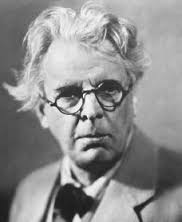
In watching Steve Bannon dueling with Charlie Rose on 60 Minutes, I was reminded of this famous Yeats poem and wondered what further damage Bannon and his minions will do to the soul of America.

“Things fall apart; the center cannot hold; / Mere anarchy is loosed upon the world. / The blood-dimmed tide is loosed, / And everywhere the ceremony of innocence is drowned; / The best lack all conviction, while the worst are full of passionate intensity.”

images

William Butler Yeats

Trump is Heartless and Cruel

08 Friday Sep 2017

Posted by rabbijohnrosove in American Politics and Life, Ethics, Social Justice

≈ 2 Comments

Image may contain: 1 person, suit, eyeglasses and closeup

A narcissist is a person concerned only about himself. He sees the world through a lens reflecting just his image. Everything is a function of his ego. He is hypersensitive to slights. He bristles at criticism. If it serves his interests, he attacks, maligns, humiliates, and obliterates those he perceives as a threat.

When a narcissist is President of the United States, his actions, words, and policies can be cruel, and cruelty is the only word that adequately describes Trump’s action against 800,000 children of undocumented people who have committed no crime.

Trump’s cancellation of DACA instituted six years ago by Executive Order of President Obama, despite the urging of Trump’s advisors and many fellow Republicans not to do so, is without question the ugliest action he has taken since becoming President. In my memory, this is the ugliest action taken by any president in my lifetime.

Countless Jewish organizations have condemned Trump’s decision including the Union for Reform Judaism, the Central Conference of American Rabbis, the Hebrew Immigrant Aid Society, the American Jewish Committee, the ADL, Bend the Arc, J Street, Amenu, the National Council of Jewish Women, Truah: The Rabbinic Call for Human Rights, the Shalom Center, the Anne Frank Center for Mutual Respect, and the Jewish Council for Public Affairs.

Why did Trump do it? The writer John Binder in Breitbart News tried to justify Trump’s action:

“Ending DACA could be a major stimulus for the 4.4 percent of unemployed Americans who will see more than 700,000 new job openings across the United States.”

Rob Eshman, the publisher of the LA Jewish Journal, put it exactly right when he wrote this week:

“… ludicrous. It assumes none of the Dreamers are self-employed, that their roles can easily be filled by the ranks of the remaining unemployed – many of whom are far less well-educated, less well-trained, less motivated, far older or not even living in areas where the Dreamers work. Some 250 work for Apple – in what fantasy world are those jobs just ripe for the picking? But Breitbart knows that.”

And so, what’s this all about?

It seems to me that Trump was motivated by two things:

First, he hates Obama, never missing an opportunity to trash policies of the Obama administration. It doesn’t matter what good Obama did for the country and for millions of people. If the policy was Obama’s, Trump has sought to reverse it.

Second, Trump recognizes that his shrinking power-base has to be fed continually. His base of nativist, xenophobic, white supremacist and anti-immigrant bigots will stay close if he speaks and acts on their dark impulses. According to polls, Trump is now losing everyone else at the rate of one percentage point each week.

Thankfully, for the sake of these 800,000 children of undocumented immigrants, there is a potential silver lining. Not only has the nation reacted negatively across political lines to Trump’s decision to cancel DACA, a number of Republicans are working in a bi-partisan effort with Democrats in Congress to legislate a compassionate and humane solution for the dreamers.

As more and more Republicans lose faith in Trump and see him for who he really is, many Republicans in Congress will be guided not by partisan politics but by their moral compass. That will be good not only for the DACA people but for the country.

An Appropriate Response to Trump’s Cruelty is Compassion

06 Wednesday Sep 2017

Posted by rabbijohnrosove in American Politics and Life, Ethics, Quote of the Day, Social Justice

≈ 4 Comments

Compassion

This week has yet proved another difficult time for the American dream and the dreamers.

I offer some thoughts by others as an antidote to the hard-heartedness of Donald Trump.

“Compassion, in which all ethics must take root, can only attain its full breadth and depth if it embraces all living creatures and does not limit itself to mankind.” -Albert Schweitzer

“I learned compassion from being discriminated against. Everything bad that’s ever happened to me has taught me compassion.” -Ellen DeGeneres

“The dew of compassion is a tear.” -Lord Byron

“The measure of a country’s greatness is its ability to retain compassion in times of crisis.” -Thurgood Marshall

“If you want others to be happy, practice compassion. If you want to be happy, practice compassion.” -The Dalai Lama

“Az mir hat nit kein rachmonis, farvoss zein zee a Yid? — If you have no compassion, so why be a Jew?”


The Time for Forgiveness is Now!

03 Sunday Sep 2017

Posted by rabbijohnrosove in American Jewish Life, Ethics, Health and Well-Being, Holidays, Musings about God/Faith/Religious life, Stories

≈ 1 Comment

Forgiveness (i.e. forgiving others and forgiving ourselves) may be the most difficult challenge we ever have to face. However, we often make it more difficult than it needs to be because we misunderstand what forgiveness is and is meant to do.

Forgiving others doesn’t mean excusing their bad behavior or forgetting that they wronged us. Even if people who hurt us don’t apologize to us and even if they continue to justify what they did that is contrary to what we believe actually happened, we ought to forgive them not for their sake but for ours. Forgiveness means “letting go” of resentments because these negative and toxic feelings are damaging to us.

Having noted this, the ideal goal of forgiveness is to reconcile and reestablish some kind of relationship with the offending “other.” Let me be quick to say, however, that reconciliation isn’t always possible if, for example, the person who harmed us or we harmed is deceased, nor is it always desirable if the “other” is so incorrigible, narcissistic, and damaged that we have no desire for reconciliation.

Here, however, is one positive example of what forgiveness can do.

A woman in her 70s hadn’t spoken with her sister in forty years. Out of the blue one day her sister called to tell her that she was dying and wanted to see her. They met, her sister apologized for the wrong that caused the breach so long before, and asked for forgiveness. They wept together and reconciled. After her sister died the woman felt a heavy burden lifted from her heart, and the love she once felt for her sister returned.

There is no time like the present (in this season of Elul before Rosh Hashanah in particular) to summon the courage, take the risk, and seek forgiveness from those we’ve wronged even if the event occurred many years ago. Hopefully, those who wronged us will do the same. There is no expiration date nor is there a statute of limitations on forgiveness.

Michael McCullough extends the principles of forgiveness to groups, communities, and nations:

“The forgiveness instinct … can change the world. Groups can be helped to forgive other groups, communities can be helped to forgive other communities, …and nations can even be helped to forgive other nations. Leaders… can offer apologies on behalf of their people to groups with whom they’ve been in conflict. They can also offer … remorse and empathy for the suffering of another group, and they can provide compensation to groups of people whom they’ve harmed – just as individuals can. When they engage in such gestures, it is often to great effect.” (Beyond Revenge – The Evolution of the Forgiveness Instinct, [Jossey-Bass, San Francisco, 2008] p. 181-2)

Think of the power of Pope John Paul II’s apology to the Jewish people for Christendom’s participation in the Holocaust, the Japanese apology for war atrocities it committed against China and Korea, the United States’ apology to Japanese Americans interred in concentration camps during World War II, and the Irish Republican Army’s apology for the deaths of noncombatants during the war in northern Ireland.

Imagine Prime Minister Netanyahu on behalf of Israel and President Abbas on behalf of the Palestinians taking a similar step and apologizing to the other for the pain and suffering each people caused non-combatants on the other side. If this were to happen, if either took the initiative, I believe that a peaceful resolution of the Israeli-Palestinian conflict is possible.

Longfellow wrote: “If we could read the secret history of our enemies, we should find in each person’s life sorrow and suffering enough to disarm all hostility.”

Note: Selichot (the Holiday in which Judaism teaches that the Gates of Heaven begin to open to receive the petitionary prayers of the community) this year falls on Saturday night, September 16. Those who live in Los Angeles and are unaffiliated are welcome to join us at Temple Israel of Hollywood. We’ll convene for learning with the Rabbis at 8:30 pm considering all aspects of forgiveness, followed by a presentation by Theater Dybbuk on the theme of forgiveness, and then we’ll join together in the mystical service of Selichot in which we will change the Torah mantles on all our sifrei Torah to white. Come dressed in white.  

L’shanah tovah.


“Law professor explains legal reasoning why Trump’s new memo puts Mike Pence ‘in legal jeopardy’ for impeachment” – Rawstory

03 Sunday Sep 2017

Posted by rabbijohnrosove in American Politics and Life

≈ 1 Comment

pence

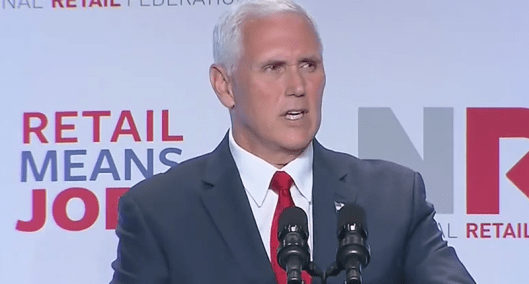
“Fordham University Law professor Jed Shugerman made one of the most damning cases against Vice President Mike Pence for being involved in obstruction of justice.”

Read the entire article below.

In short, should both President Trump and Vice-President Pence be impeached per the reasoning of Professor Shugerman in this article (which likely wouldn’t happen in a Republican controlled Congress but wait until after the 2018 elections), the Presidential Succession Act of 1947 would give us President Paul Ryan who is next in line.

Here is current succession list of office-holders:

  • Vice President Mike Pence.
  • Speaker of the House Paul Ryan.
  • Senate President Pro Tempore Orrin Hatch.
  • Secretary of State Rex Tillerson.
  • Secretary of the Treasury Steven Mnuchin.
  • Secretary of Defense James Mattis.
  • Attorney General Jeff Sessions.

See story here:

http://www.rawstory.com/2017/09/law-prof-explains-legal-reasoning-why-trumps-new-memo-puts-mike-pence-in-legal-jeopardy-for-impeachment/


5 Reform Movement Ways to Contribute to Hurricane Harvey Relief

01 Friday Sep 2017

Posted by rabbijohnrosove in American Politics and Life, Uncategorized

≈ Leave a comment

Scott Simon of NPR wrote recently that in times of disaster such as what those in the path of Hurricane Harvey suffered, the country comes together. However, not every gift is a good gift. The best gift one can give is money – because then the relief workers can purchase what the people most in need require.

Scott Simon said in no uncertain terms – Do not send items even if you think they are needed because they create more problems than they solve.

Here is a link for Reform Jews (and anyone else) who would like to give financial resources to the relief organizations on the ground that can best help the victims of this terrible storm.

https://mail.google.com/mail/u/0/?shva=1#inbox/15e3cb93a2ee8805


Newer posts →

Enter your email address to subscribe to this blog and receive notifications of new posts by email.

Join 366 other subscribers

Archive

  • January 2026 (1)
  • December 2025 (4)
  • November 2025 (6)
  • October 2025 (8)
  • September 2025 (3)
  • August 2025 (6)
  • July 2025 (4)
  • June 2025 (5)
  • May 2025 (4)
  • April 2025 (6)
  • March 2025 (8)
  • February 2025 (4)
  • January 2025 (8)
  • December 2024 (5)
  • November 2024 (5)
  • October 2024 (3)
  • September 2024 (7)
  • August 2024 (5)
  • July 2024 (7)
  • June 2024 (5)
  • May 2024 (5)
  • April 2024 (4)
  • March 2024 (8)
  • February 2024 (6)
  • January 2024 (5)
  • December 2023 (4)
  • November 2023 (4)
  • October 2023 (9)
  • September 2023 (8)
  • August 2023 (8)
  • July 2023 (10)
  • June 2023 (7)
  • May 2023 (6)
  • April 2023 (8)
  • March 2023 (5)
  • February 2023 (9)
  • January 2023 (8)
  • December 2022 (10)
  • November 2022 (5)
  • October 2022 (5)
  • September 2022 (10)
  • August 2022 (8)
  • July 2022 (8)
  • June 2022 (5)
  • May 2022 (6)
  • April 2022 (8)
  • March 2022 (11)
  • February 2022 (3)
  • January 2022 (7)
  • December 2021 (6)
  • November 2021 (9)
  • October 2021 (8)
  • September 2021 (6)
  • August 2021 (7)
  • July 2021 (7)
  • June 2021 (6)
  • May 2021 (11)
  • April 2021 (4)
  • March 2021 (9)
  • February 2021 (9)
  • January 2021 (14)
  • December 2020 (5)
  • November 2020 (12)
  • October 2020 (13)
  • September 2020 (17)
  • August 2020 (8)
  • July 2020 (8)
  • June 2020 (8)
  • May 2020 (8)
  • April 2020 (11)
  • March 2020 (13)
  • February 2020 (13)
  • January 2020 (15)
  • December 2019 (11)
  • November 2019 (9)
  • October 2019 (5)
  • September 2019 (10)
  • August 2019 (9)
  • July 2019 (8)
  • June 2019 (12)
  • May 2019 (9)
  • April 2019 (9)
  • March 2019 (16)
  • February 2019 (9)
  • January 2019 (19)
  • December 2018 (19)
  • November 2018 (9)
  • October 2018 (17)
  • September 2018 (12)
  • August 2018 (11)
  • July 2018 (10)
  • June 2018 (16)
  • May 2018 (15)
  • April 2018 (18)
  • March 2018 (8)
  • February 2018 (11)
  • January 2018 (10)
  • December 2017 (6)
  • November 2017 (12)
  • October 2017 (8)
  • September 2017 (17)
  • August 2017 (10)
  • July 2017 (10)
  • June 2017 (12)
  • May 2017 (11)
  • April 2017 (12)
  • March 2017 (10)
  • February 2017 (14)
  • January 2017 (22)
  • December 2016 (13)
  • November 2016 (12)
  • October 2016 (8)
  • September 2016 (6)
  • August 2016 (6)
  • July 2016 (10)
  • June 2016 (10)
  • May 2016 (11)
  • April 2016 (13)
  • March 2016 (10)
  • February 2016 (11)
  • January 2016 (9)
  • December 2015 (10)
  • November 2015 (12)
  • October 2015 (8)
  • September 2015 (7)
  • August 2015 (10)
  • July 2015 (7)
  • June 2015 (8)
  • May 2015 (10)
  • April 2015 (9)
  • March 2015 (12)
  • February 2015 (10)
  • January 2015 (12)
  • December 2014 (7)
  • November 2014 (13)
  • October 2014 (9)
  • September 2014 (8)
  • August 2014 (11)
  • July 2014 (10)
  • June 2014 (13)
  • May 2014 (9)
  • April 2014 (17)
  • March 2014 (9)
  • February 2014 (12)
  • January 2014 (15)
  • December 2013 (13)
  • November 2013 (16)
  • October 2013 (7)
  • September 2013 (8)
  • August 2013 (12)
  • July 2013 (8)
  • June 2013 (11)
  • May 2013 (11)
  • April 2013 (12)
  • March 2013 (11)
  • February 2013 (6)
  • January 2013 (9)
  • December 2012 (12)
  • November 2012 (11)
  • October 2012 (6)
  • September 2012 (11)
  • August 2012 (8)
  • July 2012 (11)
  • June 2012 (10)
  • May 2012 (11)
  • April 2012 (13)
  • March 2012 (10)
  • February 2012 (9)
  • January 2012 (14)
  • December 2011 (16)
  • November 2011 (23)
  • October 2011 (21)
  • September 2011 (19)
  • August 2011 (31)
  • July 2011 (8)

Categories

  • American Jewish Life (458)
  • American Politics and Life (417)
  • Art (30)
  • Beauty in Nature (24)
  • Book Recommendations (52)
  • Divrei Torah (159)
  • Ethics (490)
  • Film Reviews (6)
  • Health and Well-Being (156)
  • Holidays (136)
  • Human rights (57)
  • Inuyim – Prayer reflections and ruminations (95)
  • Israel and Palestine (358)
  • Israel/Zionism (502)
  • Jewish History (441)
  • Jewish Identity (372)
  • Jewish-Christian Relations (51)
  • Jewish-Islamic Relations (57)
  • Life Cycle (53)
  • Musings about God/Faith/Religious life (190)
  • Poetry (86)
  • Quote of the Day (101)
  • Social Justice (355)
  • Stories (74)
  • Tributes (30)
  • Uncategorized (820)
  • Women's Rights (152)

Blogroll

  • Americans for Peace Now
  • Association of Reform Zionists of America (ARZA)
  • Congregation Darchei Noam
  • Haaretz
  • J Street
  • Jerusalem Post
  • Jerusalem Report
  • Kehillat Mevesseret Zion
  • Temple Israel of Hollywood
  • The IRAC
  • The Jewish Daily Forward
  • The LA Jewish Journal
  • The RAC
  • URJ
  • World Union for Progressive Judaism

Blog at WordPress.com.

  • Subscribe Subscribed
    • Rabbi John Rosove's Blog
    • Join 366 other subscribers
    • Already have a WordPress.com account? Log in now.
    • Rabbi John Rosove's Blog
    • Subscribe Subscribed
    • Sign up
    • Log in
    • Report this content
    • View site in Reader
    • Manage subscriptions
    • Collapse this bar
 

Loading Comments...