This letter expresses well the views, I suspect, of the vast majority of the American Jewish community following the impolitic and unfair criticism of President Biden by Prime Minister Netanyahu.
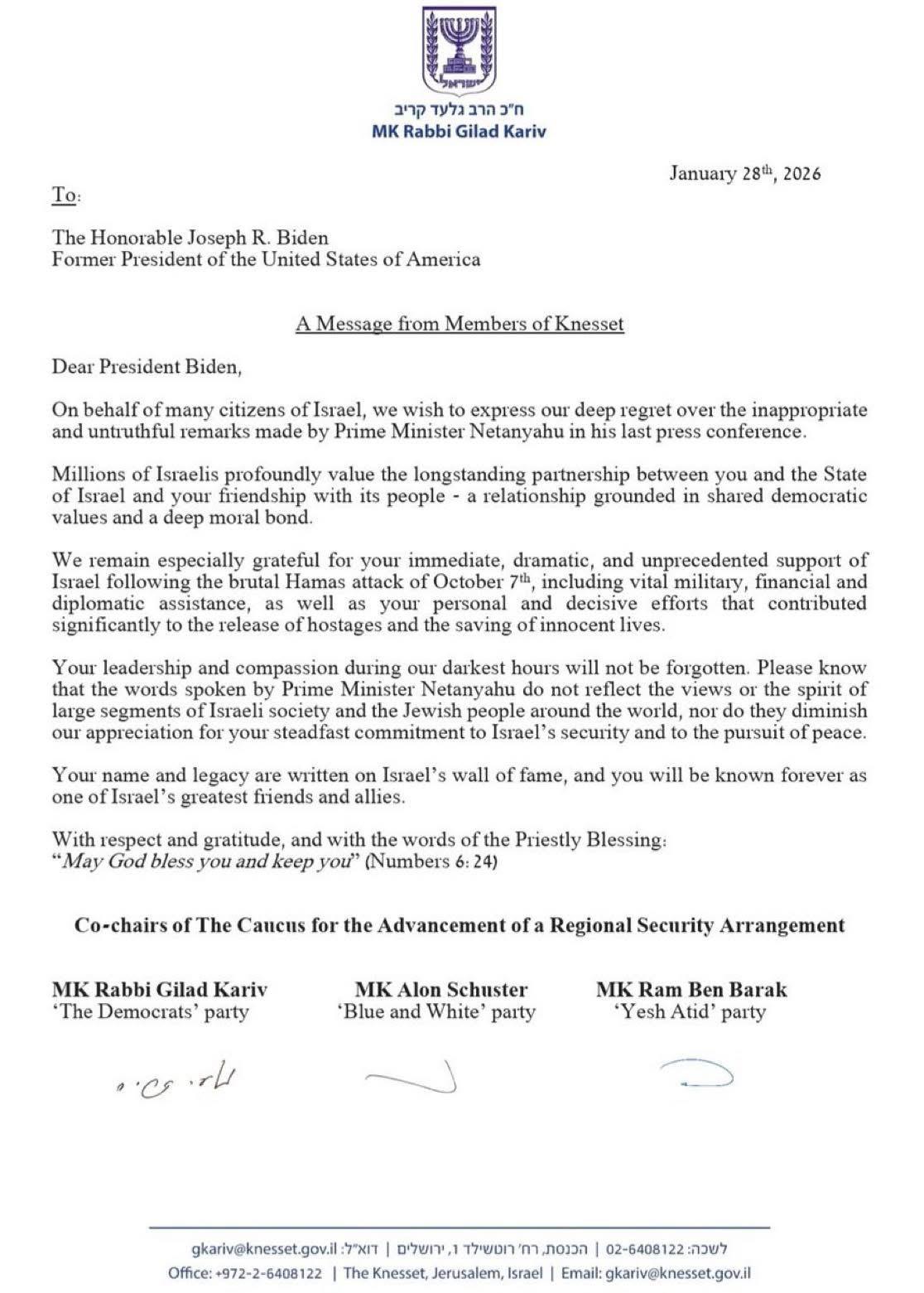

28 Wednesday Jan 2026
Posted in Uncategorized
This letter expresses well the views, I suspect, of the vast majority of the American Jewish community following the impolitic and unfair criticism of President Biden by Prime Minister Netanyahu.
22 Thursday Jan 2026
Posted in Uncategorized
Tags
January 21, 2026
ואהבתם את-הגר כי-גרים הייתם בארץ מצרים
Love the stranger, for you were strangers in the land of Egypt. (Deuteronomy 10:19)
Adding our voices to millions of others across the United States, leaders of the Reform, Conservative/Masorti, and Reconstructionist Movements of Judaism condemn, in the strongest terms, the violence with which the Department of Homeland Security is enforcing American immigration law—above all, in Minneapolis, Minnesota, as well as in cities and towns across the nation.
Many Americans are deeply disturbed as they see their neighbors targeted for detention and deportation in their homes, at work, at their schools, and at their houses of worship. They are deeply concerned about numerous accounts of the use of intimidating and violent detention tactics, dangerous and unhealthy holding facilities, lack of appropriate warrants or due process, and wrongful apprehension of US citizens or individuals with proper visas based on appearance or language.
In response, some are taking nonviolent steps to warn and protect their neighbors from this immigration enforcement overreach. The right to protest and speak freely are fundamental American rights, protected by the United States Constitution. Too often, though, nonviolent protest and civil disobedience is being met with violence.
The United States is a nation of laws, and as Americans we expect that our laws will be enforced with clarity and consistency. We are pained by reports and videos indicating that in carrying out their assignment, members of law enforcement are engaging in behavior that escalates confrontation, risking the safety of those suspected of having violated the law, of bystanders and protesters, and their own safety. Candidates for law enforcement must be properly vetted, fully and carefully trained, and held accountable when they do not meet appropriate standards. Such accountability includes investigating complaints fairly, transparently, and impartially, particularly but not only, in cases of officer-involved shootings. To that end, we call on the Department of Justice to investigate the shooting death by an ICE officer of Renee Good, z”l.
Our sages taught that the Book of Deuteronomy’s directive צדק צדק תרדף (Tzedek, tzedek tirdof), “Justice, justice shall you pursue” (16:20), implies that the law must be enforced through a fair process, and that one should pursue justice whether it would be to one’s advantage or to one’s loss.[i]
Immigrants are members of our congregations, our families, and people with whom we interact in our broader communities. American Jews cherish our own families’ immigration stories. We recall that, like many being expelled from America today, we or our ancestors came to this country to escape oppression and find opportunity. That is why so many Jewish congregations, rabbis, cantors, and lay leaders have engaged in a variety of legal actions to protect immigrants in our midst. We grieve an American promise that seems to be no more.
We who lead the North American Reform, Conservative/Masorti, and Reconstructionist Jewish Movements stand with the members and leaders of Jewish communities in Minneapolis—and before that, in the Chicago area and other cities in the United States—who have confronted Immigration and Customs Enforcement nonviolently, legally, but resolutely. We fear that additional communities will need to be prepared to do the same in the months ahead.
We call on President Trump and Secretary of Homeland Security Kristi Noem to pursue immigration enforcement and their response to protest through just and non-violent means, upholding our nation’s highest values and commitment to due process and the rule of law.
Rabbi David Lyon, President, Central Conference of American Rabbis
Rabbi Hara Person, Chief Executive, Central Conference of American Rabbis
Rabbi Rick Jacobs, President, Union for Reform Judaism
Shelley Niceley Groff, Chair of the North American Board of the Union for Reform Judaism
Cantor Josh Breitzer, President, American Conference of Cantors
Rachel Roth, Chief Operating Officer, American Conference of Cantors
Rabbi Jacob Blumenthal, Chief Executive Officer, Rabbinical Assembly and United Synagogue of Conservative Judaism
Eliot Meadow, President, United Synagogue of Conservative Judaism
Rabbi Jay Kornsgold, President, Rabbinical Assembly
Cantor Matt Axelrod, Executive Director, Cantors Assembly
Edwin M. Baum, Board Chair, Reconstructing Judaism
Rabbi Deborah Waxman, President and CEO, Reconstructing Judaism
Rabbi Renee Bauer, President, Reconstructionist Rabbinical Association
Rabbi Megan Doherty, Chief Executive, Reconstructionist Rabbinical Association
[i] Ramban on Deuteronomy 16:20.
20 Tuesday Jan 2026
Posted in Uncategorized
Tags
Introductory Note: The historian Heather Cox Richardson spells out why Donald Trump is unfit to be President of the United States (January 20, 2026) and that Congressional Republicans must act before Trump does any more damage to our American democracy and economic stability, NATO, the global institutions that western nations have spent the past 80 years building, and the international world order based upon mutual respect between nations.
“Late last night, Nick Schifrin of PBS NewsHour posted on social media that the staff of the U.S. National Security Council had sent to European ambassadors in Washington a message that President Donald J. Trump had already sent to Prime Minister Jonas Gahr Støre of Norway. The message read:
“Dear Jonas: Considering your Country decided not to give me the Nobel Peace Prize for having stopped 8 Wars PLUS, I no longer feel an obligation to think purely of Peace, although it will always be predominant, but can now think about what is good and proper for the United States of America. Denmark cannot protect that land from Russia or China, and why do they have a ‘right of ownership’ anyway? There are no written documents, it’s only that a boat landed there hundreds of years ago, but we had boats landing there, also. I have done more for NATO than any other person since its founding, and now, NATO should do something for the United States. The World is not secure unless we have Complete and Total Control of Greenland. Thank you! President DJT”
Faisal Islam of the BBC voiced the incredulity rippling across social media in the wake of Schifrin’s post, writing: “Even by the standards of the past week, like others, I struggle to comprehend how the below letter on Greenland/Nobel might be real, although it appears to come from the account of a respected PBS journalist… this is what I meant by beyond precedent, parody and reality….” Later, Islam confirmed on live TV that the letter was real and posted on X: “Incredible… the story is actually not a parody.”
International affairs journalist Anne Applebaum noted in The Atlantic the childish grammar in the message, and pointed out—again—that the Norwegian Nobel Committee is not the same thing as the Norwegian government, and neither of them is Denmark, a different country. She also noted that Trump did not, in fact, end eight wars, that Greenland has been Danish for centuries, that many “written documents” establish Danish sovereignty there, that Trump has done nothing for NATO, and that European NATO members increased defense spending out of concern over Russia’s increasing threat.
This note, she writes, “should be the last straw.” It proves that “Donald Trump now genuinely lives in a different reality, one in which neither grammar nor history nor the normal rules of human interaction now affect him. Also, he really is maniacally, unhealthily obsessive about the Nobel Prize.” Applebaum implored Republicans in Congress “to stop Trump from acting out his fantasy in Greenland and doing permanent damage to American interests.” “They owe it to the American people,” she writes, “and to the world.”
Former Vice President Dick Cheney’s doctor Jonathan Reiner agreed: “This letter, and the fact that the president directed that it be distributed to other European countries, should trigger a bipartisan congressional inquiry into presidential fitness.”
Today three top American Catholic cardinals, Blase Cupich of Chicago, Robert McElroy of Washington, D.C., and Joseph Tobin of Newark, New Jersey, issued a joint statement warning the Trump administration that its military action in Venezuela, threats against Greenland, and cuts to foreign aid risk bringing vast suffering to the world. Nicole Winfield and Giovanna Dell’Orto of the Associated Press reported that the cardinals spoke up after a meeting at the Vatican in which several fellow cardinals expressed alarm about the administration’s actions. Cupich said that when the U.S. can be portrayed as saying “‘might makes right’—that’s a troublesome development. There’s the rule of law that should be followed.”
“We are watching one of the wildest things a nation-state has ever done,” journalist Garrett Graff wrote: “A superpower is [dying by] suicide because the [Republican] Congress is too cowardly to stand up to the Mad King. This is one of the wildest moments in all of geopolitics ever.”
In just a year since his second inauguration, Trump has torn apart the work that took almost a century of struggle and painstaking negotiations from the world’s best diplomats to build. Since World War II, generations of world leaders, often led by the United States, created an international order designed to prevent future world wars. They worked out rules to defend peoples and nations from the aggressions of neighboring countries, and tried to guarantee that global trade, bolstered by freedom of the seas, would create a rising standard of living that would weaken the ability of demagogues to create loyal followings.
In August 1941, four months before the U.S. entered World War II, U.S. president Franklin Delano Roosevelt and British prime minister Winston Churchill and their advisors laid out principles for an international system that could prevent future world wars. In a document called the Atlantic Charter, they agreed that countries should not invade each other and therefore the world should work toward disarmament, and that international cooperation and trade thanks to freedom of the seas would help to knit the world together with rising prosperity and human rights.
The war killed about 36.5 million Europeans, 19 million of them civilians, and left many of those who had survived homeless or living in refugee camps. In its wake, in 1945, representatives of the 47 countries that made up the Allies in World War II, along with the Byelorussian Soviet Socialist Republic, the Ukrainian Soviet Socialist Republic, and newly liberated Denmark and Argentina, formed the United Nations as a key part of an international order based on rules on which nations agreed, rather than the idea that might makes right, which had twice in just over twenty years brought wars that involved the globe.
Four years later, many of those same nations came together to resist Soviet aggression, prevent the revival of European militarism, and guarantee international cooperation across the Atlantic Ocean. France, the U.K., Belgium, the Netherlands, and Luxembourg formed a defensive military alliance with the U.S., Canada, Portugal, Italy, Norway, Denmark, and Iceland to make up the twelve original signatories to the North Atlantic Treaty. In it, the countries that made up the North Atlantic Treaty Organization (NATO) reaffirmed “their desire to live in peace with all peoples and all governments” and their determination “to safeguard the freedom, common heritage and civilisation of their peoples, founded on the principles of democracy, individual liberty and the rule of law.”
They vowed that any attack on one of the signatories would be considered an attack on all, thus deterring war by promising strong retaliation. This system of collective defense has stabilized the world for 75 years. Thirty-two countries are now members, sharing intelligence, training, tactics, equipment, and agreements for use of airspace and bases. In 2024, NATO countries reaffirmed their commitment and said Russia’s invasion of Ukraine had “gravely undermined global security.”
And therein lies the rub. The post–World War II rules-based international order prevents authoritarians from grabbing land and resources that belong to other countries. But Russia’s president Vladimir Putin, for example, is eager to dismantle NATO and complete his grab of Ukraine’s eastern industrial regions.
Trump has taken the side of rising autocrats and taken aim at the rules-based international order with his insistence that the U.S. must control the Western Hemisphere. In service to that plan, he has propped up Argentina’s right-wing president Javier Milei and endorsed right-wing Honduran president Nasry Asfura, helping his election by pardoning former president Juan Orlando Hernández, a leading member of Asfura’s political party, who was serving 45 years in prison in the U.S. for drug trafficking. Trump ousted Venezuelan president Nicolás Maduro and seized control of much of Venezuela’s oil, the profits of which are going to an account in Qatar that Trump himself controls.
This week, Trump has launched a direct assault on the international order that has stabilized the world since 1945. He is trying to form his own “Board of Peace,” apparently to replace the United Nations. A draft charter for that institution gives Trump the presidency, the right to choose his successor, veto power over any actions, and control of the $1 billion fee permanent members are required to pay. In a letter to prospective members, Trump boasted that the Board of Peace is “the most impressive and consequential Board ever assembled,” and that “there has never been anything like it!” Those on it would, he said, “lead by example, and brilliantly invest in a secure and prosperous future for generations to come.”
The Kremlin says Putin, whose war on Ukraine has now lasted almost four years and who has been shunned from international organizations since his indictment by the International Criminal Court for war crimes, has received an invitation to that Board of Peace. So has Putin’s closest ally, President Alexander Lukashenko of Belarus, who Ivana Kottasová and Anna Chernova of CNN note has been called “Europe’s last dictator.” Also invited are Hungary’s prime minister and Putin ally Viktor Orbán as well as Javier Milei.
And now Trump is announcing to our allies that he has the right to seize another country.
Trump’s increasing frenzy is likely coming at least in part from increasing pressure over the fact the Department of Justice is now a full month past the date it was required by law to release all of the Epstein files. Another investigation will be in the news as well, as former special counsel Jack Smith testifies publicly later this week about Trump’s role in trying to overturn the results of the 2020 election. Smith told the House Judiciary Committee in December that he believed a jury would have found Trump guilty on four felony counts related to his actions.
Smith knows what happened, and Trump knows that Smith knows what happened.
Trump’s fury over the Nobel Peace Prize last night was likely fueled as well by the national celebration today of an American who did receive that prize: the Reverend Doctor Martin Luther King Jr. The Nobel Prize Committee awarded King the prize in 1964 for his nonviolent struggle for civil rights for the Black population in the U.S. He accepted it “with an abiding faith in America and an audacious faith in the future of mankind,” affirming what now seems like a prescient rebuke to a president sixty years later, saying that “what self-centered men have torn down men other-centered can build up.”
Trump did not acknowledge Martin Luther King Jr. Day this year.
While the walls are clearly closing in on Trump’s ability to see beyond himself, he and his loyalists are being egged on in their demand for the seizure of Greenland by White House deputy chief of staff Stephen Miller, who is publicly calling for a return to a might-makes-right world. On Sean Hannity’s show on the Fox News Channel today, Miller ignored the strength of NATO in maintaining global security as he insisted only the U.S. could protect Greenland.
He also ignored the crucial fact that the rules-based international order has been instrumental in increasing U.S.—as well as global—prosperity since 1945. With his claim that “American dollars, American treasure, American blood, American ingenuity is what keeps Europe safe and the free world safe,” Miller is erasing the genius of the generations before us. It is not the U.S. that has kept the world safe and kept standards of living rising: it is our alliances and the cooperation of the strongest nations in the world, working together, to prevent wannabe dictators from dividing the world among themselves.
Miller is not an elected official. Appointed by Trump and with a reasonable expectation that Trump will pardon him for any crimes he commits, Miller is insulated both from the rule of law and, crucially, from the will of voters. The Republican congress members Applebaum called on to stop Trump are not similarly insulated. Tonight Danish troops—the same troops who stood shoulder to shoulder with U.S. troops in Afghanistan from 2001 to 2021—arrived in Greenland to defend the island from the United States of America.”
16 Friday Jan 2026
Posted in Uncategorized
Tags
ice, immigration, news, politics, trump
The following is a Facebook Post by Carin Mrotz, Senior Advisor at the Minnesota Attorney General’s Office. My colleague, Rabbi Jill Jacob, posted it on her Facebook Page.
What is happening in the Twin Cities of Minnesota is unprecedented in the United States in most of our lifetimes. Our support for the citizens of that city needs to be expressed peacefully by all Americans.
Here is Carin Mrotz’s post:
“A post for my friends and family outside of Minneapolis – There is a lot of misinformation flying around and I want to share my perspective if it’s useful or compelling or helps cut through the clickbait and profiteering.
Over the past several weeks, thousands of ICE agents have been deployed to the Twin Cities and more are expected this week. There are currently more ICE agents than local law enforcement in the metro area. In some places they are visiting businesses that are likely to employ or serve immigrants looking for people to arrest. In some places they are camping out in cars on highway exit ramps and pulling over drivers they believe look like they could be immigrants. In neighborhoods like mine that are primarily residential with few business corridors, they are staging targeted raids of homes. But they mix it up; yesterday they were driving around the neighborhood and a neighbor reported that an agent pulled over and asked her husband, who was out walking the dog, if he was a US citizen.
Yesterday morning I received a text in my neighborhood group chat that more than a dozen agents were staging outside of a house a few blocks away, legal observers were needed. I put on boots and drove over to a home near our middle school and found the street full of SUVs and men in militarized but not standardized gear with big “POLICE” labels all over them. These men were carrying big guns. Several of my friends had already been maced and one of the agents was spraying mace into a crowd of observers as casually as a dad might spray his lawn with a hose in the summer. The agents brandished their guns at us a warning, or a threat, maybe both. Neighbors stood on the front lawns and blew whistles or banged on drums and asked to see the agents’ warrant. ICE is not supposed to be able to enter a home without a judicial warrant, which is a warrant signed by a judge. If you are a law and order person, that might mean something to you.
Yesterday, after a few minutes of arguing with neighbors, 10-15 agents mustered and broke down the door of the single family home. They entered and after a few minutes, they re-emerged with a tall Black man in a tee shirt, shorts, an unzipped hoodie, and rubber slides. They led him to their vehicle. It was about 15 degrees out. His wife stood on the front lawn, begging to know why they took him. Behind her the front door stood broken, offering no security to a house full of family members,
including children.
Several of us observers asked to see the warrant, and I took a picture. I will not share it out of concern for the man’s privacy, but it was an administrative warrant, signed by an ice agent, not a judge. If it matters to you that residents follow the law in engaging with our occupying agents, this should matter to you. If you are a law and order person, you might consider that what I witnessed was an abduction, not an arrest.
Across the Twin Cities, raids like this continued all day. On the Southside, ICE agents surrounded a legal observer in her vehicle, broke the windows, and dragged her and her passenger out of the car and detained them. Everyone I know knows someone who has either had a relative (or multiple relatives) taken or has been a witness to one of these abductions. The pace of the operations has been relentless, manic, and the agents are acting with remarkable brutality. Yesterday, as one of my neighbors attended to another who’d been sprayed with mace, pouring clean water in her eyes on the icy sidewalk in below freezing temps, her mother stood nearby on the phone with MPD, asking them to send someone to help. I don’t know if their decision not to was strategic or just simply about capacity, no local law enforcement has been present at any of the operations I’ve witnessed.
If you are someone who believes that you should absolutely just do whatever law enforcement tells you to do and you will be safe and respected, I would ask if you’ve ever had big guns drawn on you by someone yelling orders at you, those orders sometimes conflicting and unclear; and what if they were also spraying you with chemical irritants in 15 degree weather. If someone maced you for blowing a whistle at them, how confident are you in their ability to calmly follow procedure and not shoot you? This summer, our House Speaker Emerita and her husband were murdered in their home by someone impersonating a police officer. How confident are you that you could make sense of the meanings and markings of a uniform under stress? If armed men filled your street and broke down your neighbor’s door without a warrant, how confident are you that you could stay calm? These are questions we are asking ourselves constantly.
I have a lot of opinions about why this is happening, why Minnesota has been targeted and why our elected leaders are making the decisions they are and what will happen next, but this post is primarily to level set and let you know what’s going on. Because I also want you to know how we are responding.
First, I want to say that my experiences are those of a white professional who is not at risk for deportation. Immigrants and people afraid of being mistaken for immigrants are having a different set of experiences. ICE has been putting detainees on planes and sending them to places like Texas before their families can even hire lawyers or find out where their loved ones have been taken. People are afraid and avoiding leaving their homes, even to get groceries. After ICE tear-gassed parents and school staff at a local high school last week, our public schools closed and have now re-opened with hybrid learning so that parents who are afraid to send their kids to school have an option.
Neighbors are organizing to protect and care for each other. We observe and document raids. We show up at schools at drop-off and pickup time, we pick up groceries for those who are staying home. Some of the muscle memory of the neighborhood watches we formed during the uprising 5 and a-half years ago has reengaged. The Twin Cities is connected and resilient and pissed off and will continue to protect each other.
That is the important thing to know right now: Our cities are under occupation and we are being attacked by our federal government. And we are tenacious and we love each other and we will continue to protect each other. We will continue to blow whistles and bang pots and pans to alert our neighbors that ICE is nearby. We will continue to argue with them and waste their time knowing that someone else will have 15 more minutes to get away. We will continue to share videos of them slipping and falling on their asses on the icy walks and we will laugh hard at them. We have legal tools to fight them and we also have our long history of organizing and resistance.”
14 Wednesday Jan 2026
Posted in Uncategorized
Early morning is my preferred time of day. I love walking the dark streets before most people have awakened. As I pass my neighbors’ homes with only a few scattered lights opened within, before our coyote neighbors begin their search for food, before the neighborhood dogs bark and disturb the pre-dawn quiet, and as the stars flicker their light from so very long ago, it is then that I feel the greatest sense of calm serenity. As the day emerges with the sun painting the clouds orange, magenta, and pink against the blue sky, I marvel as the colors change from moment to moment. The air is so still, quiet, and cool then, and when it rains on occasion and I step around the puddles and over the rivers streaming from the foothills, and there is no one outside except me, I feel wonderfully alive.
The following are images I have captured before, during, and after heavy rain has drenched my community, and other images too. I hope they communicate my experience in those early hours.





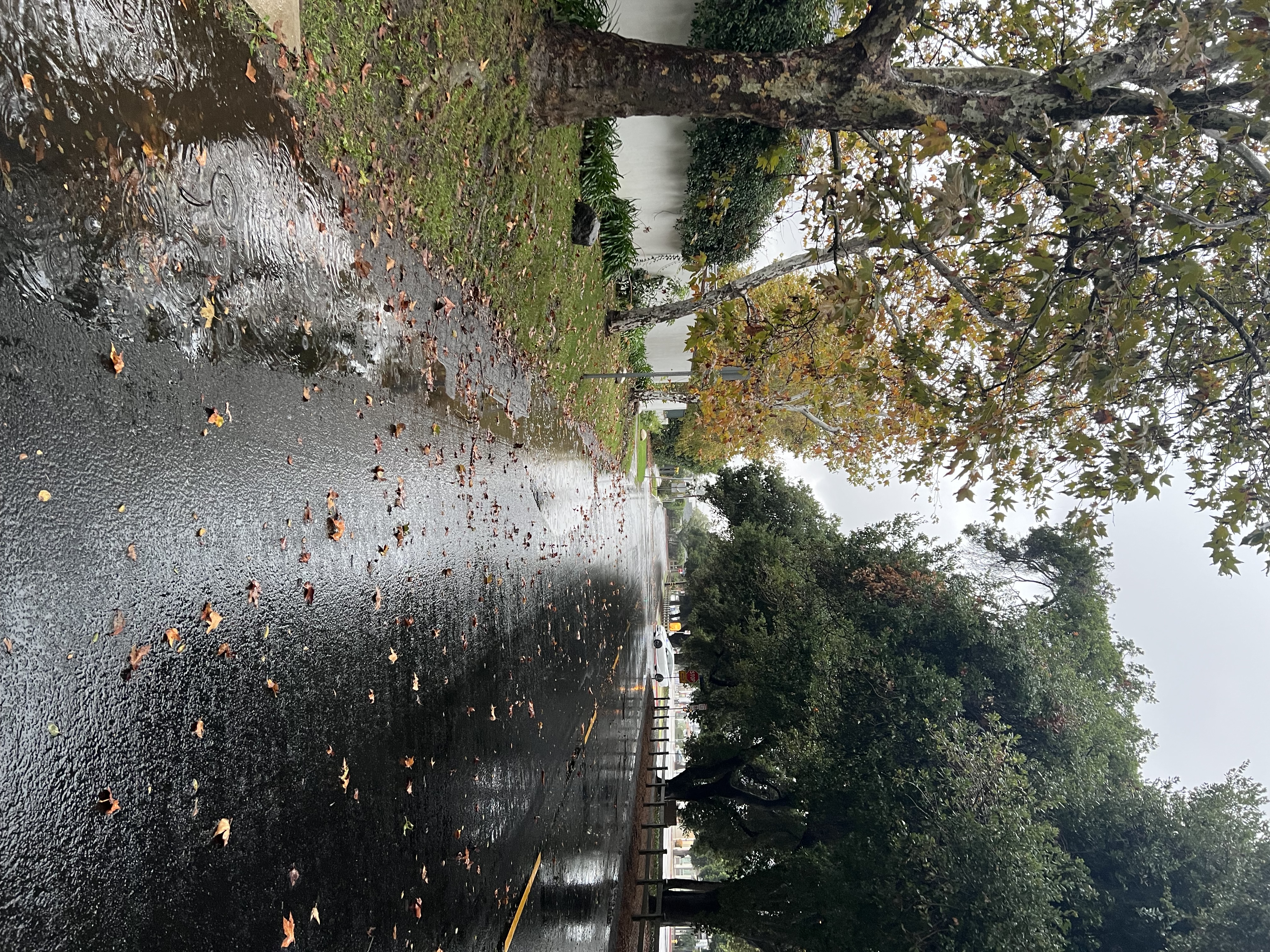
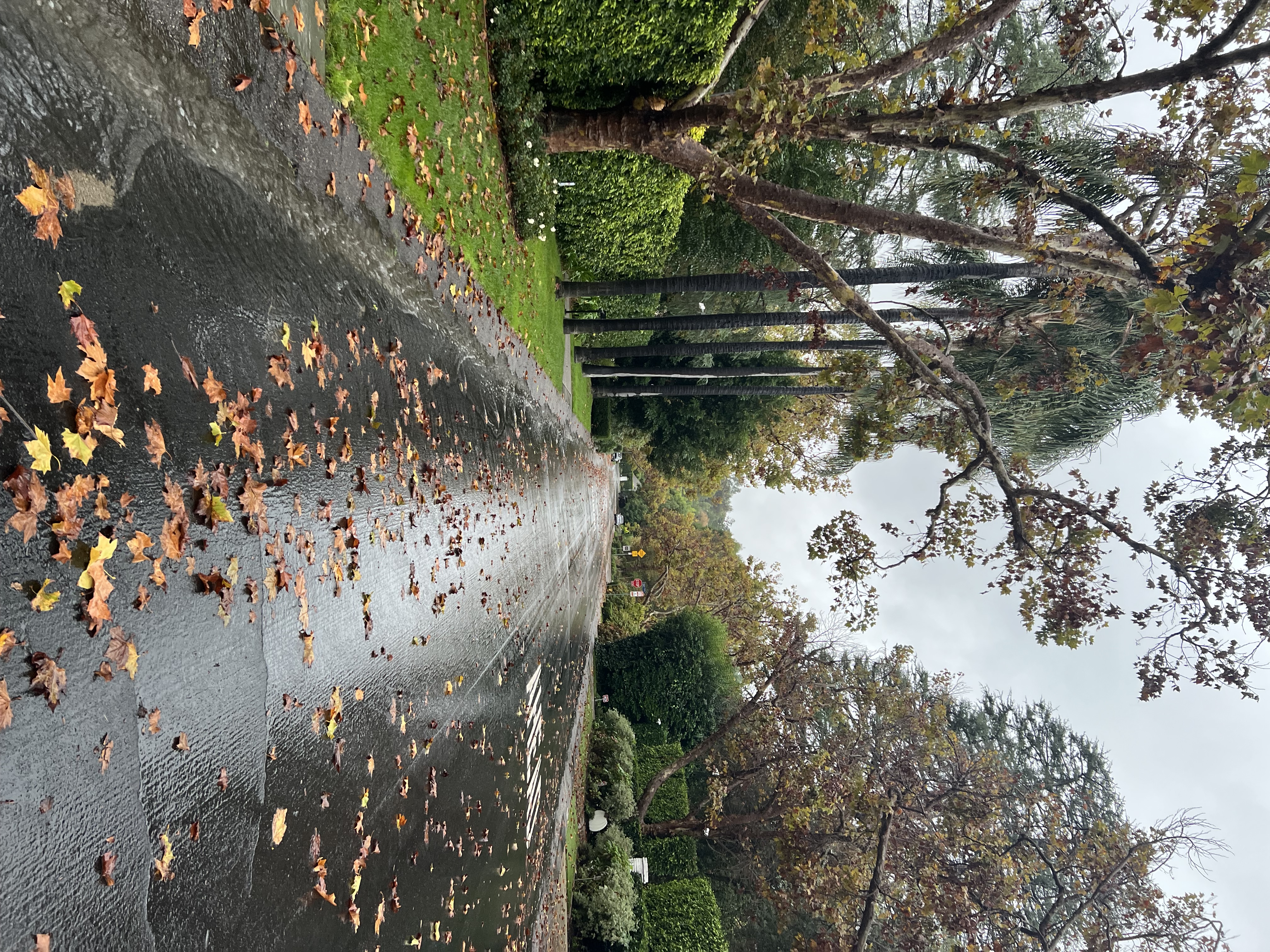
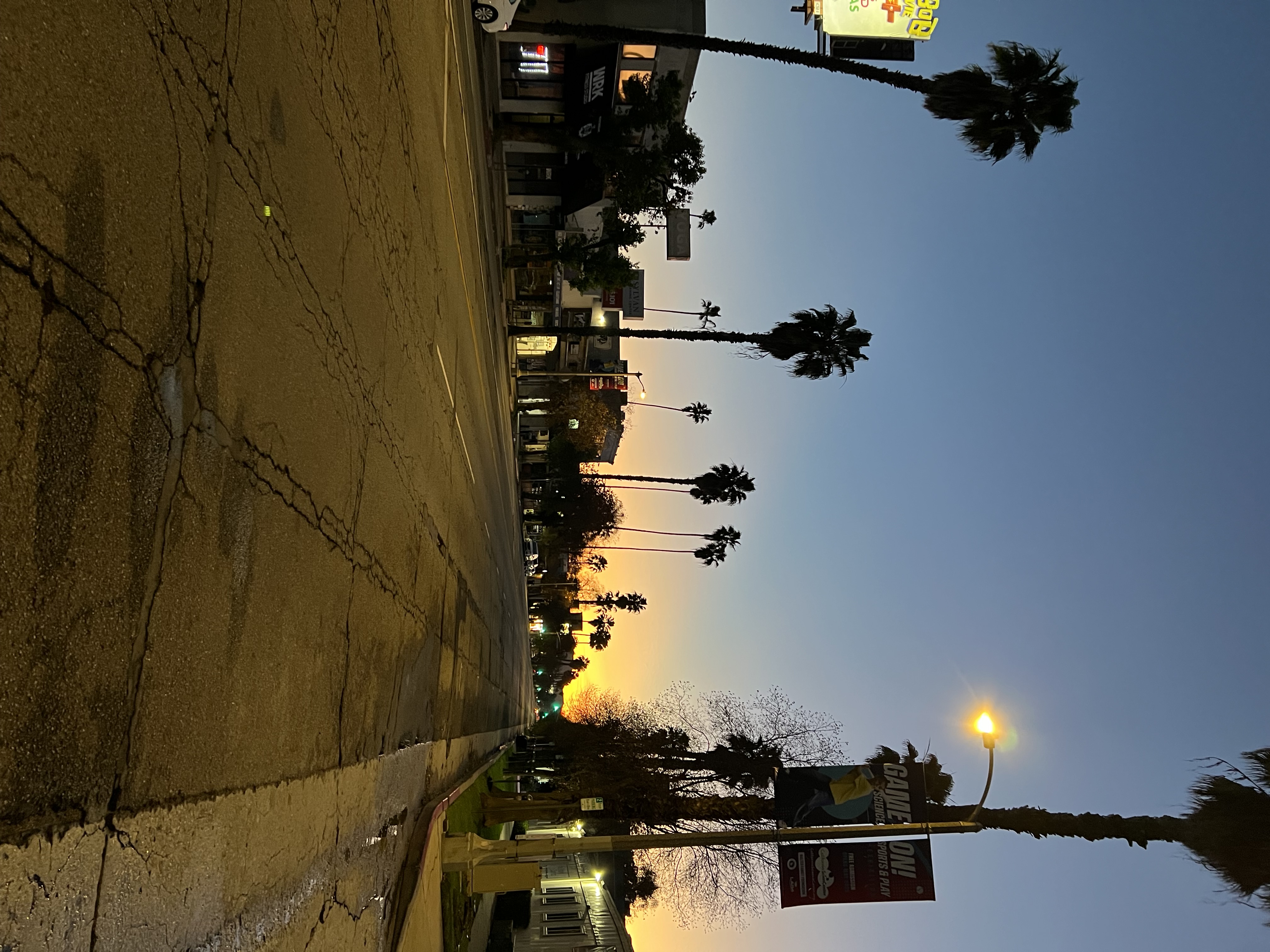


11 Sunday Jan 2026
Posted in Uncategorized
Tags
The American historian Heather Cox Richardson offers a characterization of Fascism in her “Letters From An American” substack. She writes that the events carried out by President Trump and key leaders in his administration during the past year make it “clear that officials in the Trump Administration have fully embraced the same fascism that underpinned the Nazi government that American soldiers were fighting 80 years ago.” (see her January 10, 2026 posting)
That is, obviously, a serious indictment. However, after reading the following with in mind the actions Trump and company have taken, Professor Richardson’s description of fascism as it relates to the MAGA movement is not an exaggeration.
If you have family and/or friends who support Donald Trump, for whatever reason, please consider sharing the following with them and, if they acknowledge what is happening in this country and consequently break away from the Trump camp, your effort would be worthwhile.
Professor Cox Richardson posted on January 9, 2026:
“Beginning in 1943, the War Department published a series of pamphlets for U.S. Army personnel in the European theater of World War II. Titled Army Talks, the series was designed “to help [the personnel] become better-informed men and women and therefore better soldiers.”
On March 24, 1945, the topic for the week was “FASCISM!”
“You are away from home, separated from your families, no longer at a civilian job or at school and many of you are risking your very lives,” the pamphlet explained, “because of a thing called fascism.” But, the publication asked, what is fascism? “Fascism is not the easiest thing to identify and analyze,” it said, “nor, once in power, is it easy to destroy. It is important for our future and that of the world that as many of us as possible understand the causes and practices of fascism, in order to combat it.”
Fascism, the U.S. government document explained, “is government by the few and for the few. The objective is seizure and control of the economic, political, social, and cultural life of the state.” “The people run democratic governments, but fascist governments run the people.”
“The basic principles of democracy stand in the way of their desires; hence—democracy must go! Anyone who is not a member of their inner gang has to do what he’s told. They permit no civil liberties, no equality before the law.” “Fascism treats women as mere breeders. ‘Children, kitchen, and the church,’ was the Nazi slogan for women,” the pamphlet said.
Fascists “make their own rules and change them when they choose…. They maintain themselves in power by use of force combined with propaganda based on primitive ideas of ‘blood’ and ‘race,’ by skillful manipulation of fear and hate, and by false promise of security. The propaganda glorifies war and insists it is smart and ‘realistic’ to be pitiless and violent.”
Fascists understood that “the fundamental principle of democracy—faith in the common sense of the common people—was the direct opposite of the fascist principle of rule by the elite few,” it explained, “[s]o they fought democracy…. They played political, religious, social, and economic groups against each other and seized power while these groups struggled.”
Americans should not be fooled into thinking that fascism could not come to America, the pamphlet warned; after all, “[w]e once laughed Hitler off as a harmless little clown with a funny mustache.” And indeed, the U.S. had experienced “sorry instances of mob sadism, lynchings, vigilantism, terror, and suppression of civil liberties. We have had our hooded gangs, Black Legions, Silver Shirts, and racial and religious bigots. All of them, in the name of Americanism, have used undemocratic methods and doctrines which…can be properly identified as ‘fascist.’”
The War Department thought it was important for Americans to understand the tactics fascists would use to take power in the United States. They would try to gain power “under the guise of ‘super-patriotism’ and ‘super-Americanism.’” And they would use three techniques:
First, they would pit religious, racial, and economic groups against one another to break down national unity. Part of that effort to divide and conquer would be a “well-planned ‘hate campaign’ against minority races, religions, and other groups.”
Second, they would deny any need for international cooperation, because that would fly in the face of their insistence that their supporters were better than everyone else. “In place of international cooperation, the fascists seek to substitute a perverted sort of ultra-nationalism which tells their people that they are the only people in the world who count. With this goes hatred and suspicion toward the people of all other nations.”
Third, fascists would insist that “the world has but two choices—either fascism or communism, and they label as ‘communists’ everyone who refuses to support them.”
It is “vitally important” to learn to spot native fascists, the government said, “even though they adopt names and slogans with popular appeal, drape themselves with the American flag, and attempt to carry out their program in the name of the democracy they are trying to destroy.”
The only way to stop the rise of fascism in the United States, the document said, “is by making our democracy work and by actively cooperating to preserve world peace and security.” In the midst of the insecurity of the modern world, the hatred at the root of fascism “fulfills a triple mission.” By dividing people, it weakens democracy. “By getting men to hate rather than to think,” it prevents them “from seeking the real cause and a democratic solution to the problem.” By falsely promising prosperity, it lures people to embrace its security.
“Fascism thrives on indifference and ignorance,” it warned. Freedom requires “being alert and on guard against the infringement not only of our own freedom but the freedom of every American. If we permit discrimination, prejudice, or hate to rob anyone of his democratic rights, our own freedom and all democracy is threatened.”
—
Notes:
https://onlinebooks.library.upenn.edu/webbin/serial?id=armytalks
War Department, “Army Talk 64: FASCISM!” March 24, 1945, at https://archive.org/details/ArmyTalkOrientationFactSheet64-Fascism/mode/2up
PS – Ezra Klein spoke with Masha Gessen, the Russian-born NY Times Opinion columnist on January 10 on The Ezra Klein Show on the theme of “Venezuela, Renee Good and Trump’s ‘Assault on Hope.’” It is worth hearing as it relates to the above.
09 Friday Jan 2026
Posted in Uncategorized
Tags
ice, minneapolis, news, politics, trump
Introductory Note:
Dan Rather said it as clearly as anyone can in his following Substack “Steady.” In the last 2 days, social media has been filled with the visual evidence that an ICE agent murdered Renee Good. The only way for us Americans to have any hope of stopping the outrageous policies of the Trump Administration’s ICE military force and the corrupt lying leadership of Trump including Kristi Noem and VP Vance, is to peacefully resist and say the names of the innocent victims out-loud-all-the-time-all-at-once.
RENEE GOOD – May her memory be a blessing and may she never be forgotten.
Here is Dan Rather
“This is not right. Not justifiable. Not who we are as Americans. Full stop.
The act of violence by a federal officer that killed an unarmed American is an unimaginable horror and a national atrocity.
Renee Good was murdered by an ICE agent on her way home from dropping off her first grader at school. Video from three different angles shows Good driving onto a street full of protesters and agents near her Minneapolis home. One can then see Good maneuvering her car at the command of several agents.
According to eyewitnesses, two agents were yelling at her simultaneously and at cross purposes to turn around, back up, stop, and get out of the car. She rolled down her window to hear and speak with them.
Moments before the shooting, she was inching her car forward. An agent, who was standing on the left side of the car, raised his gun and shot Good at point-blank range. A doctor in the crowd offered to help Good. The agent would not let him, saying, “I don’t care.”
Good was a poet and stay-at-home mom who was born and raised in Colorado. She has been described as a devoted Christian who was not politically active, according to her ex-husband’s father. Her social media accounts appear to bear this out.
Once again, the president and his lackeys are asking Americans not to believe what they see with their own eyes.
Rather than console the family or condemn the violence, he orchestrated a fiction to cover up ICE’s criminality, abuse of power, and the failures of his draconian deportation policies.
Trump claims the ICE agent acted in self-defense and DHS Secretary Kristi Noem called Good a domestic terrorist who weaponized her car to target the agents. While die-hard Trumpsters might gobble that up like it’s Thanksgiving dinner, the real story can be seen on the video taken by multiple bystanders.
ICE stokes fear and heightens tensions rather than de-escalating them. Since Trump took office last January, four people have been killed and five injured by ICE agents in 15 shootings. Though there is clear evidence that the agent who killed Good did not act in self-defense, it is unlikely even he will see the inside of a courtroom, never mind a prison cell.
The agent who killed Good was identified by the Minneapolis Star Tribune. He is an Iraq War veteran who has been with ICE since at least 2016. The agent was previously injured in a traffic incident while seizing an undocumented man who was later convicted of dragging the agent with his car. This doesn’t justify what happened. At all.
Stephen Miller, Trump’s immigration guru, who is not a lawyer, maintains ICE agents are untouchable. “You have federal immunity in the conduct of your duties. And anybody who lays a hand on you or tries to stop or obstruct you is committing a felony,” he said on Fox. This is patently false in America — always has been and always should be.
Though Minneapolis’s mayor and Minnesota’s governor vowed to seek justice for Good, Trump & Co. made sure they were unable to. The FBI announced on Thursday morning that it would be handling the investigation alone, boxing out the Minnesota Bureau of Criminal Apprehension (BCA). Historically, the agencies work together.
The BCA said in a statement that the U.S. attorney’s office “had reversed course: the investigation would now be led solely by the FBI, and the BCA would no longer have access to the case materials, scene evidence or investigative interviews necessary to complete a thorough and independent investigation.”
With no independent investigation and a Justice Department in the president’s pocket, the agent who killed Good may not even get a slap on the wrist.
Unless we demand it.
Renee Good’s death will not be in vain. It has already drawn needed attention to a rogue president and agency acting with impunity. She could be any mother, in any city, at any time. She could be any one of us. It is time to draw the line in the sand. And to say her name while doing it.”
04 Sunday Jan 2026
Posted in Uncategorized
Tags
bible, christianity, Faith, god, moses
This week, in synagogues around the world, Jews read the first chapters in the biblical book of Exodus. There we meet Moses and read about his birth to enslaved parents, his adoption into the palace and growth as a prince, his defense of an abused slave, his exile, his becoming a shepherd, and his encounter with God at the burning bush. There God commands Moses to go to the most powerful king on earth and demand the liberation of the enslaved Israelites. At first, Moses demurs believing he has no agency to stand before Pharaoh, but God reassures him and inspires in him the courage to do what must be done.
The narrative is infused with Ancient Near Eastern mythology that tells of a slave child becoming the redeemer of his people, but we have no archaeological evidence (except the Hebrew Bible) that Moses ever existed. Nevertheless, he would come to represent the model of prophetic leadership that took root in Judaism, Christianity, Islam, and western civilization.
One of the most important aspects of the Moses story is that, on God’s behalf, he destroyed the master-slave order of ancient Egypt and ushered in a new era in which every human being was to be regarded as a creation in the Divine Image and therefore worthy of ultimate dignity, respect, and freedom. (1)
Moses was singularly significant as God’s most intimate and important prophet regardless of the lack of historic evidence that he lived. Scholars have argued that even if no historic evidence outside of the biblical text exists, there had to be a figure like Moses who gave rise to the prophetic and legal tradition that he initiated and embodied.
Rabbi Abraham Joshua Heschel (1907-1972), arguably one of the greatest Jewish thinkers and social justice activists of the 20th century who lost his entire family in the Holocaust and who was a strong ally of Dr. Martin Luther King, characterized prophecy and the prophet’s nature in this way:
“Prophecy is the voice that God has lent to the silent agony, a voice to the plundered poor, to the profaned riches of this world. … God is raging in the prophets’ words.” (2)
“The prophet … feels fiercely. God has thrust a burden upon his soul, and he is bowed and stunned at [humankind]’s fierce greed. Frightful is the agony …; no human voice can convey its full terror. Prophecy … is a form of living, a crossing point of God and humankind.” (3)
“The prophet … employs notes one octave too high for our ears [and] experiences moments that defy our understanding. [The prophet] is … an assaulter of the mind [whose] words begin to burn where conscience ends.” (4)
Years ago, I wrote a poem about Moses and his encounter with God at the burning bush, and I edited it this past week because the story of Moses offers us still a preferred paradigm of moral and spiritual leadership that we need so badly in these times.
We walk in a daze / eyes sunk in creviced faces / fettered to worldly tasks / blind to rainbows.
I imagine Moses in Midian like that / brooding in exile / burdened by his people’s suffering / knowing each day their pain and stopped-up hearts.
A simple shepherd-prince Moses was / now staff in hand counting sheep / until one day / weaving through rocks amongst bramble bushes / he heard thorns popping.
Turning his head / his eyes opened / to see a bush burning / but not consumed by flames.
God had long before taken note of him / from his birth / but waited until this moment / to choose him as Prophet.
“Open to Me, My dove / My twin / My undefiled one.” (5)
Moses heard God’s voice / and beheld angels / his soul flowing in a sacred river / of Shekhinah light. (6)
‘Why me? / Why am I so privileged to behold such wonder? / Unworthy as I am.’
God said / “Moses – I choose you / because you are humble / the most humble of any human being on earth (7) / and your heart is burdened / because you know the world’s cruelty / and you are not cruel / ‘Nor do you stand idly by when others bleed.’ (8) / You are a tender of sheep / and you will lead my people / with the shepherd’s staff / and inspire them to open their stopped-up hearts to Me / without fear / with love.”
Trembling – Moses looked again / into the bush-flames / free from smoke and ash.
His eyes opened as in a dream / and he heard a soft-murmuring-sound (9) / the same that breath makes as it passes quietly / through lips.
MOSHE MOSHE!—HINEINI (10)
Two voices—One utterance.
He hid his face / for the more Moses heard / the brighter the light became / and he knew he must turn away or die. (11)
The Prophet’s thoughts were free / soaring / no longer of self / to this day there has not been a purer soul than Moses.
God said / “Come no closer / Remove your shoes” (12) / stand barefoot / I want your soul.
I am here with you / and in you / I am every thing / and no thing / and you are Me / I see that which is / and which is not / and I hear it all.
Take heed Moses / My shepherd-prince / “For My people‘s blood calls to Me from the ground” (13) / and the living are suffering a thousand deaths.
You must take them out / every last one / every crying child / every lashed man / every woman screaming.
And Moses know this / “With weeping they will come / and with compassion I will guide them.” (14)
The people’s exile began with tears of pain / and it will end with tears of joy.
I have recorded their story in a Book / “Black Fire on White Fire” (15) / letters on parchment / telling of slaves / seeing light / turning to Me / becoming a free people / and a nation.
The Book is My spirit / the Letters are My heart / “They are near to you that you do them” (16) / and teach them / and redeem My world / and free every human being / my cherished ones / all children of humankind / that the world not be consumed in flames.
This Book I give to you / O purest of souls / “that you may live / you and your generations to come.” (17)
Poem by Rabbi John L. Rosove
Notes:
 Rabbi John Rosove's Blog