• About

Rabbi John Rosove's Blog

Rabbi John Rosove's Blog

Author Archives: rabbijohnrosove

Trump is Heartless and Cruel

08 Friday Sep 2017

Posted by rabbijohnrosove in American Politics and Life, Ethics, Social Justice

≈ 2 Comments

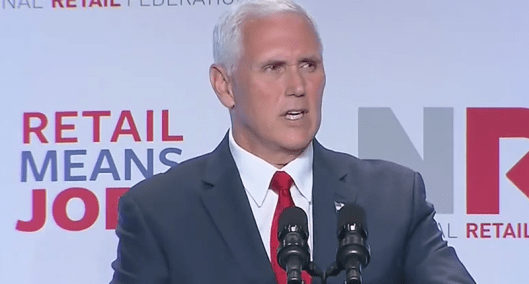
Image may contain: 1 person, suit, eyeglasses and closeup

A narcissist is a person concerned only about himself. He sees the world through a lens reflecting just his image. Everything is a function of his ego. He is hypersensitive to slights. He bristles at criticism. If it serves his interests, he attacks, maligns, humiliates, and obliterates those he perceives as a threat.

When a narcissist is President of the United States, his actions, words, and policies can be cruel, and cruelty is the only word that adequately describes Trump’s action against 800,000 children of undocumented people who have committed no crime.

Trump’s cancellation of DACA instituted six years ago by Executive Order of President Obama, despite the urging of Trump’s advisors and many fellow Republicans not to do so, is without question the ugliest action he has taken since becoming President. In my memory, this is the ugliest action taken by any president in my lifetime.

Countless Jewish organizations have condemned Trump’s decision including the Union for Reform Judaism, the Central Conference of American Rabbis, the Hebrew Immigrant Aid Society, the American Jewish Committee, the ADL, Bend the Arc, J Street, Amenu, the National Council of Jewish Women, Truah: The Rabbinic Call for Human Rights, the Shalom Center, the Anne Frank Center for Mutual Respect, and the Jewish Council for Public Affairs.

Why did Trump do it? The writer John Binder in Breitbart News tried to justify Trump’s action:

“Ending DACA could be a major stimulus for the 4.4 percent of unemployed Americans who will see more than 700,000 new job openings across the United States.”

Rob Eshman, the publisher of the LA Jewish Journal, put it exactly right when he wrote this week:

“… ludicrous. It assumes none of the Dreamers are self-employed, that their roles can easily be filled by the ranks of the remaining unemployed – many of whom are far less well-educated, less well-trained, less motivated, far older or not even living in areas where the Dreamers work. Some 250 work for Apple – in what fantasy world are those jobs just ripe for the picking? But Breitbart knows that.”

And so, what’s this all about?

It seems to me that Trump was motivated by two things:

First, he hates Obama, never missing an opportunity to trash policies of the Obama administration. It doesn’t matter what good Obama did for the country and for millions of people. If the policy was Obama’s, Trump has sought to reverse it.

Second, Trump recognizes that his shrinking power-base has to be fed continually. His base of nativist, xenophobic, white supremacist and anti-immigrant bigots will stay close if he speaks and acts on their dark impulses. According to polls, Trump is now losing everyone else at the rate of one percentage point each week.

Thankfully, for the sake of these 800,000 children of undocumented immigrants, there is a potential silver lining. Not only has the nation reacted negatively across political lines to Trump’s decision to cancel DACA, a number of Republicans are working in a bi-partisan effort with Democrats in Congress to legislate a compassionate and humane solution for the dreamers.

As more and more Republicans lose faith in Trump and see him for who he really is, many Republicans in Congress will be guided not by partisan politics but by their moral compass. That will be good not only for the DACA people but for the country.

An Appropriate Response to Trump’s Cruelty is Compassion

06 Wednesday Sep 2017

Posted by rabbijohnrosove in American Politics and Life, Ethics, Quote of the Day, Social Justice

≈ 4 Comments

Compassion

This week has yet proved another difficult time for the American dream and the dreamers.

I offer some thoughts by others as an antidote to the hard-heartedness of Donald Trump.

“Compassion, in which all ethics must take root, can only attain its full breadth and depth if it embraces all living creatures and does not limit itself to mankind.” -Albert Schweitzer

“I learned compassion from being discriminated against. Everything bad that’s ever happened to me has taught me compassion.” -Ellen DeGeneres

“The dew of compassion is a tear.” -Lord Byron

“The measure of a country’s greatness is its ability to retain compassion in times of crisis.” -Thurgood Marshall

“If you want others to be happy, practice compassion. If you want to be happy, practice compassion.” -The Dalai Lama

“Az mir hat nit kein rachmonis, farvoss zein zee a Yid? — If you have no compassion, so why be a Jew?”


The Time for Forgiveness is Now!

03 Sunday Sep 2017

Posted by rabbijohnrosove in American Jewish Life, Ethics, Health and Well-Being, Holidays, Musings about God/Faith/Religious life, Stories

≈ 1 Comment

Forgiveness (i.e. forgiving others and forgiving ourselves) may be the most difficult challenge we ever have to face. However, we often make it more difficult than it needs to be because we misunderstand what forgiveness is and is meant to do.

Forgiving others doesn’t mean excusing their bad behavior or forgetting that they wronged us. Even if people who hurt us don’t apologize to us and even if they continue to justify what they did that is contrary to what we believe actually happened, we ought to forgive them not for their sake but for ours. Forgiveness means “letting go” of resentments because these negative and toxic feelings are damaging to us.

Having noted this, the ideal goal of forgiveness is to reconcile and reestablish some kind of relationship with the offending “other.” Let me be quick to say, however, that reconciliation isn’t always possible if, for example, the person who harmed us or we harmed is deceased, nor is it always desirable if the “other” is so incorrigible, narcissistic, and damaged that we have no desire for reconciliation.

Here, however, is one positive example of what forgiveness can do.

A woman in her 70s hadn’t spoken with her sister in forty years. Out of the blue one day her sister called to tell her that she was dying and wanted to see her. They met, her sister apologized for the wrong that caused the breach so long before, and asked for forgiveness. They wept together and reconciled. After her sister died the woman felt a heavy burden lifted from her heart, and the love she once felt for her sister returned.

There is no time like the present (in this season of Elul before Rosh Hashanah in particular) to summon the courage, take the risk, and seek forgiveness from those we’ve wronged even if the event occurred many years ago. Hopefully, those who wronged us will do the same. There is no expiration date nor is there a statute of limitations on forgiveness.

Michael McCullough extends the principles of forgiveness to groups, communities, and nations:

“The forgiveness instinct … can change the world. Groups can be helped to forgive other groups, communities can be helped to forgive other communities, …and nations can even be helped to forgive other nations. Leaders… can offer apologies on behalf of their people to groups with whom they’ve been in conflict. They can also offer … remorse and empathy for the suffering of another group, and they can provide compensation to groups of people whom they’ve harmed – just as individuals can. When they engage in such gestures, it is often to great effect.” (Beyond Revenge – The Evolution of the Forgiveness Instinct, [Jossey-Bass, San Francisco, 2008] p. 181-2)

Think of the power of Pope John Paul II’s apology to the Jewish people for Christendom’s participation in the Holocaust, the Japanese apology for war atrocities it committed against China and Korea, the United States’ apology to Japanese Americans interred in concentration camps during World War II, and the Irish Republican Army’s apology for the deaths of noncombatants during the war in northern Ireland.

Imagine Prime Minister Netanyahu on behalf of Israel and President Abbas on behalf of the Palestinians taking a similar step and apologizing to the other for the pain and suffering each people caused non-combatants on the other side. If this were to happen, if either took the initiative, I believe that a peaceful resolution of the Israeli-Palestinian conflict is possible.

Longfellow wrote: “If we could read the secret history of our enemies, we should find in each person’s life sorrow and suffering enough to disarm all hostility.”

Note: Selichot (the Holiday in which Judaism teaches that the Gates of Heaven begin to open to receive the petitionary prayers of the community) this year falls on Saturday night, September 16. Those who live in Los Angeles and are unaffiliated are welcome to join us at Temple Israel of Hollywood. We’ll convene for learning with the Rabbis at 8:30 pm considering all aspects of forgiveness, followed by a presentation by Theater Dybbuk on the theme of forgiveness, and then we’ll join together in the mystical service of Selichot in which we will change the Torah mantles on all our sifrei Torah to white. Come dressed in white.  

L’shanah tovah.


“Law professor explains legal reasoning why Trump’s new memo puts Mike Pence ‘in legal jeopardy’ for impeachment” – Rawstory

03 Sunday Sep 2017

Posted by rabbijohnrosove in American Politics and Life

≈ 1 Comment

pence

“Fordham University Law professor Jed Shugerman made one of the most damning cases against Vice President Mike Pence for being involved in obstruction of justice.”

Read the entire article below.

In short, should both President Trump and Vice-President Pence be impeached per the reasoning of Professor Shugerman in this article (which likely wouldn’t happen in a Republican controlled Congress but wait until after the 2018 elections), the Presidential Succession Act of 1947 would give us President Paul Ryan who is next in line.

Here is current succession list of office-holders:

  • Vice President Mike Pence.
  • Speaker of the House Paul Ryan.
  • Senate President Pro Tempore Orrin Hatch.
  • Secretary of State Rex Tillerson.
  • Secretary of the Treasury Steven Mnuchin.
  • Secretary of Defense James Mattis.
  • Attorney General Jeff Sessions.

See story here:

http://www.rawstory.com/2017/09/law-prof-explains-legal-reasoning-why-trumps-new-memo-puts-mike-pence-in-legal-jeopardy-for-impeachment/


5 Reform Movement Ways to Contribute to Hurricane Harvey Relief

01 Friday Sep 2017

Posted by rabbijohnrosove in American Politics and Life, Uncategorized

≈ Leave a comment

Scott Simon of NPR wrote recently that in times of disaster such as what those in the path of Hurricane Harvey suffered, the country comes together. However, not every gift is a good gift. The best gift one can give is money – because then the relief workers can purchase what the people most in need require.

Scott Simon said in no uncertain terms – Do not send items even if you think they are needed because they create more problems than they solve.

Here is a link for Reform Jews (and anyone else) who would like to give financial resources to the relief organizations on the ground that can best help the victims of this terrible storm.

https://mail.google.com/mail/u/0/?shva=1#inbox/15e3cb93a2ee8805


Why Forgive?

30 Wednesday Aug 2017

Posted by rabbijohnrosove in American Jewish Life, Ethics, Health and Well-Being, Holidays, Inuyim - Prayer reflections and ruminations

≈ 1 Comment

forgiveness-001

During the thirty days before Rosh Hashanah we Jews begin the process of returning (Teshuvah) to the people from whom we’ve become alienated, to the Jewish community, to Torah, to one’s own soul, to a balanced relationship with nature, and to God. Part of that journey requires the act forgiveness in all its dimensions. Forgiving those who have hurt us is not easy.

I’ve come to the conclusion that our forgiving others and forgiving ourselves for past wrongs means letting go of hurt, anger, resentment, jealousy, envy, and hate, and thereby becoming free. If we are successful, the ensuing relationship we develop with the “other” will necessarily be different than it was. In many cases, the change that takes place in us requires letting go not only of the toxic relationship that caused us so much pain and hardship but any future relationship with the “other.”

On Saturday night, September 16, the Jewish world enters into a midnight service called “Selichot” (“forgiveness”) when tradition teaches that the gates of heaven begin to open to receive our prayers and supplications. Selichot is the opening service of the High Holiday season and it occurs on Saturday night just before Rosh Hashanah. It is a powerful service if we take the need for forgiveness seriously.

I have compiled a list of quotations from world literature that offer wisdom and insight into the purpose and benefits of forgiveness. I present it to you as a gift.

“Forgiveness sets you free!” – Mother Teresa

“The weak can never forgive. Forgiveness is the attribute of the strong.” – Mohandas “Mahatma” Gandhi

“I can forgive, but I cannot forget” is only another way of saying, ‘I will not forgive.’ Forgiveness ought to be like a canceled note — torn in two, and burned up, so that it never can be shown against one.” – Henry Ward Beecher

“A wise person will make haste to forgive, because s/he knows the true value of time, and will not suffer it to pass away in unnecessary pain.” – Samuel Johnson

“Those who cannot forgive others break the bridge over which they themselves must pass.” – Confucius

“To forgive someone does not mean you excuse their behavior or that they were bad. To forgive means getting rid of your resentment, so that it does not complicate your own life.” – Rabbi Abraham J Twerski

“The primary aspect of forgiveness is not as an act of kindness toward the offender, but as a gift to oneself, to free one of the burdens of harboring resentment, which can have negative effects, both physically and emotionally.” – Rabbi Abraham J Twerski

“Forgiveness isn’t about pardoning the one who has hurt us. We simply decide to move on.” – Rabbi Edwin Goldberg

“If we could read the secret history of our enemies, we should find in each person’s life sorrow and suffering enough to disarm all hostility.” – Henry Wadsworth Longfellow

“The day the child realizes that all adults are imperfect, s/he becomes an adolescent; the day s/he forgives them, s/he becomes an adult; the day s/he forgives her/himself, s/he becomes wise.” – Alden Nowlan

“Ribono shel olam! I hereby forgive everyone who has angered or provoked me or sinned against me, whether against me physically, financially, or against my dignity, or against anything belonging to me, whether it was done under duress, or intentionally, or inadvertently or willfully, whether it was verbal, or by deed, or by thought, whether it was in this existence or in a previous existence, everyone, and may no person ever be punished because of me.” – Jewish bedtime prayer

L’shanah tovah!

BEA WAIN, ‘GIRL SINGER’ FROM BIG BAND ERA, DEAD AT 100

24 Thursday Aug 2017

Posted by rabbijohnrosove in American Jewish Life, Stories, Tributes

≈ 4 Comments

images

Bea Wain was the mother of one of my wife’s and my dearest friends, Wayne Baruch and his wife Shelley. Bea is an American musical cultural icon, and she died earlier this week at age 100.

One reviewer described her this way:

“Bea is considered by many to be one of the best female vocalists of her era, possessing a natural feel for swing-music rhythms not often found among white singers of the day. She excelled in pitch and subtle utilization of dynamics. She also communicated a feminine sensuality and sang with conviction in an unforced manner.”

Bea’s obituary in the Washington Post had a few inaccuracies, so Wayne, her son, edited it, as follows:

“Bea Wain, who started singing on the radio at age six, became a hit-making pop vocalist in the late 1930s, and performed into her ninth decade as one of the last surviving singers from the big-band era, died August 19 in Beverly Hills, CA.

Completely self-taught, Wain had an expressive but understated swing style that propelled her career. She performed in nightclubs and on radio programs before her breakthrough in 1937 [at the age of 20] when arranger Larry Clinton selected her as the thrush for a band he was starting. Clinton’s orchestra never achieved the enduring recognition of groups led by Glenn Miller, Tommy Dorsey, Artie Shaw, or Benny Goodman. But with superb arrangements, a tightknit group of players, and Wain out front, the ensemble had a solid commercial run with jukebox favorites such as “Deep Purple” and “Heart and Soul.” The band made its biggest impression adapting classical compositions into popular swing numbers featuring Wain’s interpretations, notably “My Reverie” from the Claude Debussy piano piece “Rêverie,” and “Martha,” from the Friedrich von Flotow opera of the same name.

In a 2007 radio interview, Wain said the Debussy estate in France initially balked when Clinton put words to the composer’s melody and no amount of money could change its mind. The band recorded the number anyway and shipped a copy to the estate. A message came back, “If this girl sings it, okay.”

Wain’s negligible pay of $30 per recording session began to grate on her. At the peak of her fame, she left Clinton and became a headliner on the college and theatre circuit. She also appeared regularly on the popular radio program “Your Hit Parade” where she became a friend of another guest, Frank Sinatra. Wain’s many and varied recordings from that period include the romantic “You Go To My Head,” the flirty “Kiss the Boys Goodbye,” the bawdy Andy Razaf/Eubie Blake number “My Man is a Handy Man,” and touching ballads “God Bless the Child,” and “My Sister And I,” a heartbreaker about war refugee children. She was also the first to record the classic “Over The Rainbow,” [1938] but MGM prohibited its release until “The Wizard of Oz” came out.

In 1939, a Billboard Magazine poll named her the year’s most popular female band vocalist. She ranked alongside the country’s most popular singers, including Billie Holiday, Ella Fitzgerald, Mildred Bailey, and Helen Forrest. She was in demand as a singer on radio shows hosted by Kate Smith, Fred Waring, and Kay Thompson.

Along with her husband of 53 years, radio announcer and commentator André Baruch, she co-hosted a series called Mr. and Mrs. Music on New York radio station WMCA in the late 1940s and early 1950s. They were the first husband and wife dee-jay team on the air. The show eventually migrated to ABC and NBC radio networks and included live musical performances by Wain. Later, they anchored a radio talk show in Palm Beach, FL, before settling in Beverly Hills, CA.” 

Because Wayne was one of the producers of the Three Tenors concerts at Dodger Stadium and many other concerts and telecasts featuring opera luminaries Luciano Pavarotti, Plácido Domingo and José Carreras, Wayne invited his mother to attend a master class with Pavarotti in Los Angeles. Afterward she found herself alone with the maestro.

“My son told him I was a wonderful singer,” Bea told Christopher Popa, a Chicago music librarian who runs the website bigbandlibrary.com . “So he said, ‘Oh, I’d love to hear you.’ I said, ‘Well, as a matter of fact, I recorded one of the songs that you sing, that was ‘Martha’ … I said I did a swing version of it. And he said, ‘Show me, show me.’

“And I started to sing it. And he joined in — it was adorable — and he pretended he was a trombone player, and I’d sing la-la-la-la” to his trombone sounds. “And we had a lovely time.”

Bea never stopped singing. I remember recently Wayne telling me that someone met his mother at her assisted living home and told her that he heard that that she was once a singer. Indignant, she retorted “I AM a singer!”

Indeed she was.

Listen to her beautiful voice in these You Tube recordings. You can see her sing “Heart and Soul” which she made popular in the United States.

Google “Bea Wain” and you can listen to your singing on YouTube.

32 Life Lessons for the Hebrew Month of Elul

23 Wednesday Aug 2017

Posted by rabbijohnrosove in Uncategorized

≈ 2 Comments

Soren Kierkegaard said: “It is perfectly true, as philosophers say, that life must be understood backwards. But they forget the other proposition, that it must be lived forwards.”

Though we’re always living forward, the life lessons we learn help to shape our future. Since this is now the season of self-examination (hence, the photo of “The Thinker” by Auguste Rodin, Paris) in Elul which begins this year on Wednesday evening, leading to Rosh Hashanah, I offer you a list of 32 life lessons I’ve learned in my nearly 68 years – there are others, but the number 32 is a significant one in Jewish mystical tradition. It equals the 22 letters of the Hebrew aleph bet plus the 10 “words” of the covenant, and it’s the number equivalent for the Hebrew word lev (lamed – beit), heart, which the mystics teach are the number of pathways to God.

I offer the following, some of which I’ve borrowed gratefully from Regina Brett who first published her list of 50 life lessons (worth reading) and published in the Plain Dealer from Cleveland, Ohio (those that I borrowed from her are in italics). blog.cleveland.com/pdextra/2007/09/regina_bretts_45_life_lessons.htmlSep 20, 2007

They’re not necessarily a way to God, but a means to a healthier, wiser and more sacred way of living, at least as I’ve come to believe in them. I encourage you to draw up your own list.

  • God gave us life and our natural abilities only – everything else is either up to us or a result of dumb luck.
  • Life isn’t always fair, but it’s still good.
  • Life is short, so cut your losses early.
  • Begin planning for retirement as a teen by developing your passions and interests, for they’ll sustain you when you get old.
  • Make peace with your past so it won’t screw up your present.
  • You don’t have to win every argument, so at a certain point stop arguing.
  • Love your spouse above all other people and things. If you aren’t married, then nurture the special friendships in your life.
  • Don’t compare your life to anyone else’s as you have no idea what their journey has been all about.
  • If you can’t publish what you want to say or do on the front page of The NY Times, don’t say or do it.
  • Try not to speak ill of anyone, but if you must, do so only with trusted friends and then only so as to understand better how to cope better with people like that.
  • Don’t procrastinate seeing doctors. It may save your life.
  • Carpe diem. Take pleasure in this day and do what inspires you for we don’t know what tomorrow will bring.
  • When it comes to chocolate, resistance is futile.
  • Breathe deeply as it calms the body, mind, heart, and soul.
  • Take your shoes off whenever possible as studies indicate that doing so will prolong your life.
  • Too much alcohol and drugs dull the mind and loosen the lips compelling us to say things we may mean but don’t want said and to say things we may not mean at all.
  • Get a dog or a cat for the love for and from such a creature is unlike anything else we’ll ever know.
  • Over prepare, and then go with the flow.
  • It’s not what you say; it’s how you say it.
  • Speak the truth but only when you know you can be effective and only if it doesn’t cause another person unnecessary harm or hurt. Otherwise, be quiet.
  • Stand up to bullies wherever they are and whenever you encounter them.
  • Time does heal almost everything.
  • Don’t fear or resist change for it’s natural, necessary and an opportunity for growth.
  • Love isn’t just a matter of the heart – it comes from God.
  • Learn Torah as often as you can – it will enrich, change and enhance your life and inspire you to do what you might never choose to do otherwise.
  • Being outdoors is almost always better than being indoors.
  • Don’t envy other people’s talent, circumstances or life – you already have everything you require.
  • Be modest.
  • Be forgiving.
  • Be kind.
  • Be generous.
  • Be grateful.

Now, let’s live our lives forward.


Undelivered Address Prepared for Jefferson Day – April 13, 1945

17 Thursday Aug 2017

Posted by rabbijohnrosove in American Politics and Life, Ethics, Social Justice

≈ 1 Comment

FDR

President Franklin D. Roosevelt

The following is taken from the end of an undelivered Address to be given by President Franklin D. Roosevelt  on April 13, 1945. He died from a cerebral hemorrhage the day before.

His written words are as poignant today as they were then.

“Today we are faced with the preeminent fact that, if civilization is to survive, we must cultivate the science of human relationships—the ability of all peoples, of all kinds, to live together and work together, in the same world, at peace.”


Israeli President Reuven Rivlin Expresses Solidarity and Support in the Wake of Charlottesville White Supremacy Violence

17 Thursday Aug 2017

Posted by rabbijohnrosove in American Jewish Life, American Politics and Life, Ethics, Israel/Zionism, Jewish Identity, Social Justice

≈ Leave a comment

In a message sent to Malcolm Hoenlein, CEO of the Conference of Presidents of Major American Jewish Organizations, Israel’s President, Reuven Rivlin, expressed his support and solidarity and that of all the Israeli people, with the American Jewish community in the difficult times following the events in Charlottesville, and he asked that his message be shared with Jewish organizations and communities across the United States.

Dear Malcolm,

At this difficult time, I want to express my support and solidarity, and that of all the Israeli people with you and your communities, and ask that you kindly convey this message on my behalf to the Jewish communities across the US.

The very idea that in our time we would see a Nazi flag – perhaps the most vicious symbol of anti-Semitism – paraded in the streets of the world’s greatest democracy, and Israel’s most cherished and greatest ally is almost beyond belief.

We have seen manifestations of anti-Semitism again and again arise across the world; in Europe and the Middle East. In the face of such evil, we stand now as we did then. With faith. With faith in humanity, with faith in democracy, and with faith in justice. I know that the great nation of the United States of America and its leaders will know how to face this difficult challenge, and prove to the world the robustness and strength of democracy and freedom.

As we say Chazak, Chazak, ve’Nitchazek. Be strong, be strong, and we will be strong.

Warm regards,

Reuven Rivlin, President of the State of Israel


← Older posts
Newer posts →

Enter your email address to subscribe to this blog and receive notifications of new posts by email.

Join 366 other subscribers

Archive

  • March 2026 (6)
  • February 2026 (6)
  • January 2026 (8)
  • December 2025 (4)
  • November 2025 (6)
  • October 2025 (8)
  • September 2025 (3)
  • August 2025 (6)
  • July 2025 (4)
  • June 2025 (5)
  • May 2025 (4)
  • April 2025 (6)
  • March 2025 (8)
  • February 2025 (4)
  • January 2025 (8)
  • December 2024 (5)
  • November 2024 (5)
  • October 2024 (3)
  • September 2024 (7)
  • August 2024 (5)
  • July 2024 (7)
  • June 2024 (5)
  • May 2024 (5)
  • April 2024 (4)
  • March 2024 (8)
  • February 2024 (6)
  • January 2024 (5)
  • December 2023 (4)
  • November 2023 (4)
  • October 2023 (9)
  • September 2023 (8)
  • August 2023 (8)
  • July 2023 (10)
  • June 2023 (7)
  • May 2023 (6)
  • April 2023 (8)
  • March 2023 (5)
  • February 2023 (9)
  • January 2023 (8)
  • December 2022 (10)
  • November 2022 (5)
  • October 2022 (5)
  • September 2022 (10)
  • August 2022 (8)
  • July 2022 (8)
  • June 2022 (5)
  • May 2022 (6)
  • April 2022 (8)
  • March 2022 (11)
  • February 2022 (3)
  • January 2022 (7)
  • December 2021 (6)
  • November 2021 (9)
  • October 2021 (8)
  • September 2021 (6)
  • August 2021 (7)
  • July 2021 (7)
  • June 2021 (6)
  • May 2021 (11)
  • April 2021 (4)
  • March 2021 (9)
  • February 2021 (9)
  • January 2021 (14)
  • December 2020 (5)
  • November 2020 (12)
  • October 2020 (13)
  • September 2020 (17)
  • August 2020 (8)
  • July 2020 (8)
  • June 2020 (8)
  • May 2020 (8)
  • April 2020 (11)
  • March 2020 (13)
  • February 2020 (13)
  • January 2020 (15)
  • December 2019 (11)
  • November 2019 (9)
  • October 2019 (5)
  • September 2019 (10)
  • August 2019 (9)
  • July 2019 (8)
  • June 2019 (12)
  • May 2019 (9)
  • April 2019 (9)
  • March 2019 (16)
  • February 2019 (9)
  • January 2019 (19)
  • December 2018 (19)
  • November 2018 (9)
  • October 2018 (17)
  • September 2018 (12)
  • August 2018 (11)
  • July 2018 (10)
  • June 2018 (16)
  • May 2018 (15)
  • April 2018 (18)
  • March 2018 (8)
  • February 2018 (11)
  • January 2018 (10)
  • December 2017 (6)
  • November 2017 (12)
  • October 2017 (8)
  • September 2017 (17)
  • August 2017 (10)
  • July 2017 (10)
  • June 2017 (12)
  • May 2017 (11)
  • April 2017 (12)
  • March 2017 (10)
  • February 2017 (14)
  • January 2017 (22)
  • December 2016 (13)
  • November 2016 (12)
  • October 2016 (8)
  • September 2016 (6)
  • August 2016 (6)
  • July 2016 (10)
  • June 2016 (10)
  • May 2016 (11)
  • April 2016 (13)
  • March 2016 (10)
  • February 2016 (11)
  • January 2016 (9)
  • December 2015 (10)
  • November 2015 (12)
  • October 2015 (8)
  • September 2015 (7)
  • August 2015 (10)
  • July 2015 (7)
  • June 2015 (8)
  • May 2015 (10)
  • April 2015 (9)
  • March 2015 (12)
  • February 2015 (10)
  • January 2015 (12)
  • December 2014 (7)
  • November 2014 (13)
  • October 2014 (9)
  • September 2014 (8)
  • August 2014 (11)
  • July 2014 (10)
  • June 2014 (13)
  • May 2014 (9)
  • April 2014 (17)
  • March 2014 (9)
  • February 2014 (12)
  • January 2014 (15)
  • December 2013 (13)
  • November 2013 (16)
  • October 2013 (7)
  • September 2013 (8)
  • August 2013 (12)
  • July 2013 (8)
  • June 2013 (11)
  • May 2013 (11)
  • April 2013 (12)
  • March 2013 (11)
  • February 2013 (6)
  • January 2013 (9)
  • December 2012 (12)
  • November 2012 (11)
  • October 2012 (6)
  • September 2012 (11)
  • August 2012 (8)
  • July 2012 (11)
  • June 2012 (10)
  • May 2012 (11)
  • April 2012 (13)
  • March 2012 (10)
  • February 2012 (9)
  • January 2012 (14)
  • December 2011 (16)
  • November 2011 (23)
  • October 2011 (21)
  • September 2011 (19)
  • August 2011 (31)
  • July 2011 (8)

Categories

  • American Jewish Life (458)
  • American Politics and Life (417)
  • Art (30)
  • Beauty in Nature (24)
  • Book Recommendations (52)
  • Divrei Torah (159)
  • Ethics (490)
  • Film Reviews (6)
  • Health and Well-Being (156)
  • Holidays (136)
  • Human rights (57)
  • Inuyim – Prayer reflections and ruminations (95)
  • Israel and Palestine (358)
  • Israel/Zionism (502)
  • Jewish History (441)
  • Jewish Identity (372)
  • Jewish-Christian Relations (51)
  • Jewish-Islamic Relations (57)
  • Life Cycle (53)
  • Musings about God/Faith/Religious life (190)
  • Poetry (86)
  • Quote of the Day (101)
  • Social Justice (355)
  • Stories (74)
  • Tributes (30)
  • Uncategorized (839)
  • Women's Rights (152)

Blogroll

  • Americans for Peace Now
  • Association of Reform Zionists of America (ARZA)
  • Congregation Darchei Noam
  • Haaretz
  • J Street
  • Jerusalem Post
  • Jerusalem Report
  • Kehillat Mevesseret Zion
  • Temple Israel of Hollywood
  • The IRAC
  • The Jewish Daily Forward
  • The LA Jewish Journal
  • The RAC
  • URJ
  • World Union for Progressive Judaism

Blog at WordPress.com.

  • Subscribe Subscribed
    • Rabbi John Rosove's Blog
    • Join 366 other subscribers
    • Already have a WordPress.com account? Log in now.
    • Rabbi John Rosove's Blog
    • Subscribe Subscribed
    • Sign up
    • Log in
    • Report this content
    • View site in Reader
    • Manage subscriptions
    • Collapse this bar
 

Loading Comments...