• About

Rabbi John Rosove's Blog

Rabbi John Rosove's Blog

Category Archives: American Politics and Life

What makes a strong and weak person and nation?

01 Monday Oct 2018

Posted by rabbijohnrosove in American Politics and Life, Ethics, Quote of the Day, Uncategorized

≈ 2 Comments

“A strong nation, like a strong person, can afford to be gentle, firm, thoughtful, and restrained. It can afford to extend a helping hand to others. It is a weak nation, like a weak person, that must behave with bluster and boasting and rashness and other signs of insecurity.”

-Jimmy Carter, 39th US President, Nobel laureate (b. 1 Oct 1924)

25 Years ago hope was in the air – Not anymore for now!

14 Friday Sep 2018

Posted by rabbijohnrosove in American Politics and Life, Israel and Palestine, Israel/Zionism

≈ Leave a comment

Former Ambassador Martin Indyk writes in The Atlantic…

“The Day Israeli-Palestinian Peace Seemed Within Reach: Perhaps when Mahmoud Abbas, Benjamin Netanyahu, and Donald Trump leave the scene, it will be time to try again. Perhaps then someone will dig up the video of that magical day in September 1993, when peace seemed within reach, and when an American president promised Israelis and Palestinians “the quiet miracle of a normal life.”

https://bit.ly/2x9ep4w

theatlantic.com
The Day Israeli-Palestinian Peace Seemed Within Reach
Twenty-five years after the Oslo Accords were signed, the process is…

I Stand with Planned Parenthood

12 Wednesday Sep 2018

Posted by rabbijohnrosove in American Politics and Life, Ethics, Social Justice, Women's Rights

≈ 1 Comment

This comes to me from my daughter in-law, Marina Rosove Javor, a major gifts officer of PPLA.

Dr. Leana Wen is the first physician to lead Planned Parenthood in 50 years and an immigrant who came to the US as a political refugee. She is the current Commissioner of Health for the City of Baltimore and this past year she helped lead lawsuits against Trump Administration for unlawfully sabotaging the Affordable Care Act and for cutting teen pregnancy prevention funds.

https://www.youtube.com/watch?v=P8bCLk-eueo&feature=youtu.be

youtube.com
A Message from Dr. Leana Wen, Incoming President of Planned Parenthood | Planned Parenthood Video
For the first time in nearly 50 years, a doctor will lead Planned Parenthood. Meet our new president, Dr.…

Barack Obama speaks out at last!

07 Friday Sep 2018

Posted by rabbijohnrosove in American Politics and Life, Uncategorized

≈ 1 Comment

From Politico

Barack Obama launched his midterm campaigning Friday at the University of Illinois Urbana-Champaign, arguing that President Donald Trump poses such a threat to America that it forced him to speak out in an unprecedented way for a former president.

“I’m here today because this is one of those pivotal moments when every one of us as citizens of the United States need to determine just who we are, what it is that we stand for,” Obama said. “As a fellow citizen, not as an ex-president, I’m here to deliver a simple message, which is that you need to vote, because our democracy depends on it.”

Read more: https://www.politico.com/story/2018/09/07/obama-says-trump-has-pushed-america-to-a-pivotal-moment-810650

Ramifications of Trump canceling Iran Deal

08 Tuesday May 2018

Posted by rabbijohnrosove in American Politics and Life, Ethics

≈ Leave a comment

The following was prepared by J Street

Q&A: This Week’s Iran Deal Deadline, J Street

“[W]ith a key deadline coming up this week, many believe that tomorrow the president will finally make good on his threats — and take action to violate the deal. If that happens, the consequences for Israel’s security, regional stability and US credibility could be dire. The president and his extreme advisers could start us down the path to a nuclear-armed Iran or another disastrous war in the Middle East. To help you better understand the decision the president is taking and what could follow, we’ve prepared the Q&A below.”

Q&A: This Week’s Iran Deal Deadline

Evangelical White Support of Trump

03 Tuesday Apr 2018

Posted by rabbijohnrosove in American Politics and Life

≈ 3 Comments

Why do white evangelical Christians who once promoted “family values” and proclaim still the nation’s moral decline continue to support Donald Trump? I have to believe that they see what we see, his pathological aversion to the truth, his sexual improprieties, adultery, misogyny, racism, bigotry, faithlessness, corruption, and incompetence as a leader? Is it only because they want to be certain that the President appoints another conservative nominee like Justice Neal Gorsuch should a vacancy occur on the Supreme Court?

These white evangelicals represent an estimated 40% of the voting electorate, according to a 2016 Pew exit poll. 80% of evangelical Christians voted for Trump. This means that 32% of the roughly 40% that approves of Trump’s presidency are evangelical white Christians.

In Sunday’s New York Times (March 31, 2018) Amy Sullivan wrote (“Democrats are Christians, Too”) that many evangelicals voted for Trump because the Republican Party is now baked into the evangelical community’s DNA following decades of “fearmongering about Democrats and religious liberals.” She explains that white evangelicals supported Trump because they fundamentally disagree with Democrats on the wedge issues of homosexuality, gay marriage, and abortion. Even if they didn’t like Trump personally, they couldn’t vote for Hillary Clinton.

Sullivan acknowledges that there are many thoughtful “never-Trump” conservatives such as columnist Michael Gerson who wrote in The Atlantic that Trump is “blinded by political tribalism and hatred for their political opponents…[that] little remains of a distinctly Christian public witness…[that Trump is] deeply and defiantly ignorant,” that he “suffers from serious moral impairment and is dangerously unqualified.” (“The Last Temptation” – https://www.theatlantic.com/magazine/archive/2018/04/the-last-temptation/554066/)

But might there be another reason that evangelical whites stick with Trump – “The Rapture?”

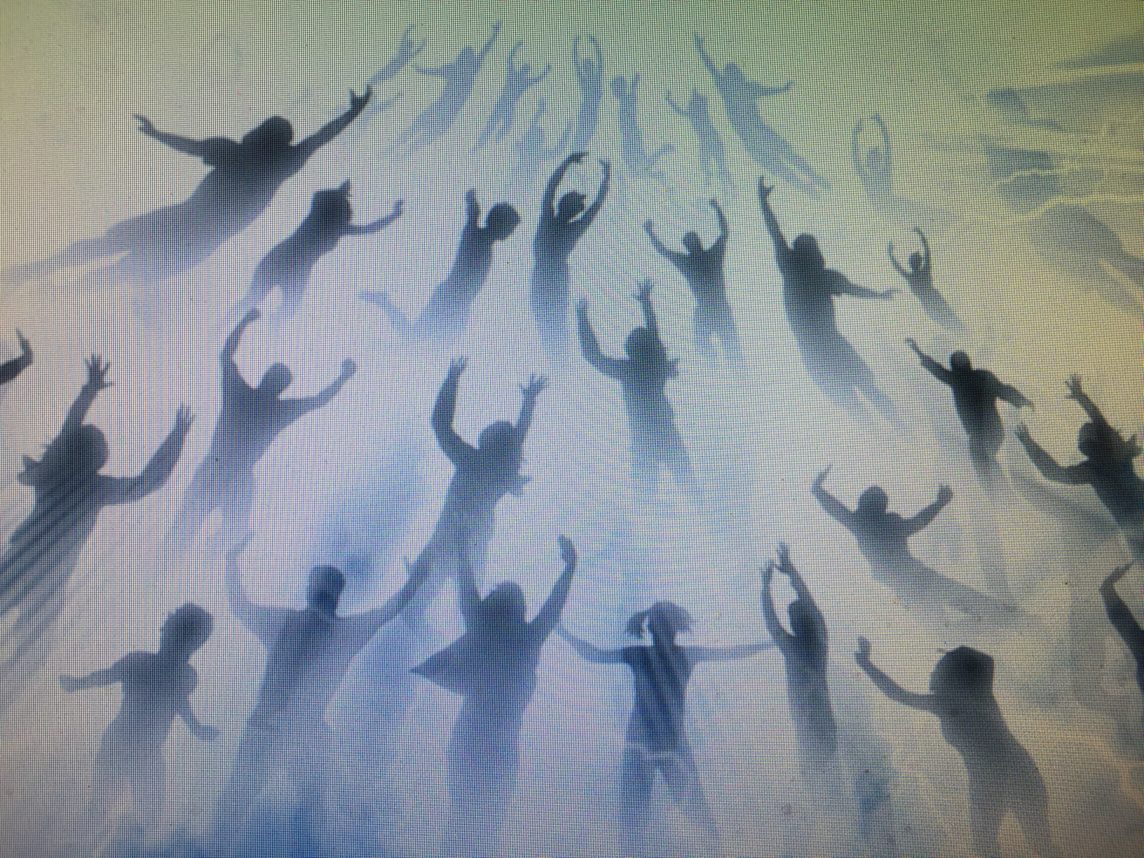
The “Rapture” is the belief that in the end of days after a final cataclysmic battle led by the Antichrist and engulfing the world, believers in Jesus Christ (both the dead and the living) suddenly will be resurrected and will meet their Lord in the air, all before the time of God’s wrath. This end-time will be characterized by famine, earthquakes, an epidemic of new diseases, dissention in society and between nations, and war – a time of chaotic misery from which the people will crave delivery and a savior.

Everything Trump does makes this country and the world less safe including his withdrawal from international agreements, his bellicose talk against North Korea, his love-affair with Vladimir Putin, his divide and conquer strategy pitting whites against peoples of color, his cozying up to alt-right fanatics and neo-Nazis, his attacks on non-white immigrants, and his constant delegitimization of the media and the institutions of our democracy. All may be understood by evangelical white Christians as preparing the ground for a cataclysmic event that will usher in the end-of-days “Rapture” followed by the second coming of Jesus Christ.

Evangelicals don’t talk about this, but “The Rapture” is fundamental to their evangelical Christian theology and is the only explanation that seems to justify why these people stick by this immoral president.


Pesach is coming – It’s time to ask the big questions!

25 Sunday Mar 2018

Posted by rabbijohnrosove in American Jewish Life, American Politics and Life, Ethics, Health and Well-Being, Holidays, Jewish Identity, Social Justice

≈ 1 Comment

To be curious is the first quality of the wise. Wise people know that they do not know and they learn something from everyone they meet (Avot 5:1).

The Passover Seder will soon be upon us, and there is much about the Seder itself that is a mystery. Nothing is as it seems. Everything stands for something else. Deeper truths are there for the seeker. Everything in the Seder suggests questions.

I have compiled a list of questions that might be sent in advance to your Seder participants or asked around the table during the Seder itself. These aren’t exhaustive. Add your own questions.

As no marathon runner would show up at the starting line without preparation and training, neither should we show up at our Seder tables without thinking seriously in advance about the themes and truths of this season. Now is the time to begin the questioning and probing.

Afikoman – When we break the Matzah

Questions: What part of us is broken? What work do we need to do to effect tikun hanefesh – i.e. restoration of ourselves? What t’shuvah – i.e. return, realignment of our lives, re-establishment of important relationships – do we need to perform to bring about wholeness? What’s broken in the world – i.e. what remains unfair, unjust, unresolved, in need of our loving care and attention – and what am I/are we going to do about it?

Mah Nishtanah – How is this night different from all other nights?

Questions: How am I different this year from previous years? What has changed in my life this year, for better and/or for worse? What ‘silver lining’ can I find in my disappointments, frustrations, loss, illness, pain, and suffering? What conditions in our communities, nation and world have worsened since last we sat down for the Pesach meal?

Ha-Chacham – The Wise Child

Questions: Who inspired you this past year to learn? Who has been your greatest teacher and why? What are the lessons you have learned from others that have touched you most in the year gone by?

Ha-Rasha – The Evil Child

Questions: Since Judaism teaches that the first step leading to evil is taken when we separate ourselves from the Jewish community and refuse to participate in acts that help to restore justice in the world, have we individually stepped away from activism? Have we become overcome by cynicism and despair? Do we believe that people and society succumb inevitably to the worst qualities in the human condition, or do we retain hope that there can be a more just and compassionate world? Are we optimistic or pessimistic? Do we believe that people and society can change for the better? Are we doing something to further good works, or have we turned away into ourselves alone and given up?

Cheirut – Thoughts about Freedom

Questions: If fear is an impediment to freedom, what frightens me? What frightens the people I love? What frightens the Jewish people? Are our fears justified, or are they remnants of experiences in our individual and/or people’s past? Do they still apply? Are we tied to the horrors of our individual and communal traumas, or have we broken free from them? What are legitimate fears and how must we confront them?

Tzafun – The Hidden Matzah

Questions: What have we kept hidden in our lives from others? Are our deepest secrets left well-enough alone, or should we share them with the people closest to us? To what degree are we willing to be vulnerable? Have we discovered the hidden presence of God? Have we allowed ourselves to be surprised and open to wonder and awe? If so, how has such recognition changed us?

Sh’fach et chamat’cha – Pour out your Wrath

Questions: Is there a place for hatred, anger and resentment in our Seder this year? How have these negative emotions affected our relationships with each other, the Jewish community, the Jewish people, the Palestinians, the State of Israel, with any “other”? Have we become our own worst enemy because we harbor hatred, anger and resentment? Do the Seder themes and symbolism address our deeply seated anger, hatred and resentment?

Ba-shanah Ha-ba-ah Bi-y’ru-shalayim – Next Year in Jerusalem

Questions: What are your hopes and dreams for yourself, our community, country, the Jewish people, the State of Israel, and the world? What are you prepared to do in the next year to make real your hopes and dreams?

“The Tail Wagging the Dog”

16 Friday Mar 2018

Posted by rabbijohnrosove in American Politics and Life

≈ Leave a comment

Given the daily chaos, firings and mania in the Trump White House, the loss of solid Republican seats in special elections around the country, the investigation focusing more and more on Trump and his business dealings, and the disturbed nature of the man who sits in the Oval Office, the words of one of our nation’s founding generation are apt for us now – and a warning:

“If tyranny and oppression come to this land, it will be in the guise of fighting a foreign enemy.”

-James Madison, fourth US president (16 Mar 1751-1836)

Jaspar Johns’ Flags and American Aspirations

04 Sunday Mar 2018

Posted by rabbijohnrosove in American Politics and Life, Ethics, Social Justice, Women's Rights

≈ 1 Comment

My wife, friends and I visited the Los Angeles Broad Museum’s exhibit of Jaspar John’s work last evening and over dinner we considered what the flag means to us in this era of Trump. I’ll offer my own view in a moment, but I want to put Johns’ work in context.

He produced these variations of American flags in the early-mid 1950s in the midst of the Cold War, and a number of galleriers in those years were hesitant to show them out of fear of reprisal from hard-right cold war warriors who might accuse Johns and the galleries of anti-Americanism.

As my wife and friends are all baby-boomers, we grew up in our teens associating the American flag with the Vietnam War. We were never flag burners, but the flag held very negative associations in those years with the Law and Order crowd of Richard Nixon and Vietnam Hawks.

Today, Donald Trump’s tyrannical and chaotic regime and the damage he is doing to the “American brand” could also tarnish the image of the American flag as a symbol of the United States in this country and around the world.

Today, I regard the American flag as an aspirational symbol of American democracy, the US Constitution, Bill of Rights, and the freedoms it promises. I regard it as the embodiment of the long march towards equality and justice for those who have been excluded from America’s mainstream since the Revolutionary War politically, racially, religiously, and socio-economically. This includes all minorities, peoples of color, Muslims, women, LGBTQ, and yes – us Jews too.

Those who know me forgive my eternal optimism even though I am not blind to the damage Trump and company are doing to America, the environment, and the good image of our country around the world.

My hope is that in the 2018 mid-term elections, that the masses come out to vote and that the democrats take control of both houses of Congress, and then impeach, convict and remove this President from office. Though we would be then stuck with our current Vice-President whose extremist vision of America is dangerous too, a Democratic Congress can stop the descent of these United States into the darkness of pre-enlightenment years while getting ready for a new President in 2020 who can reverse much of the actions of Trump by executive order.

As I stood looking at all Jaspar Johns’ works, not only was I stimulated, provoked, and inspired by his artistry and vision, but thoughts about who we are as a people and nation came flooding through me.

I recommend visiting the exhibit. Before going, be sure to download the Broad podcast so you can follow the commentary as you move through the galleries. You will need tickets and reservations in advance.

Elevating Speech – D’var Torah Ki Tisa

01 Thursday Mar 2018

Posted by rabbijohnrosove in American Politics and Life, Divrei Torah, Ethics, Social Justice

≈ 1 Comment

This week I spent an hour with 225 ninth and tenth grade students at the Los Angeles County High School for the Arts talking specifically about why words matter. We discussed the ethics of speech, the dangers in social media, and how what we say privately and publicly have in the last several years coarsened to the detriment of civility our society.

I showed them a passage from the California Civil Code section 44 that defines “Defamation” as

“an act of communication that causes someone to be shamed, ridiculed, held in contempt, lowered in the estimation of the community, or to lose employment status or earnings or otherwise suffer a damaged reputation.”

We discussed the difference between someone who incessantly lies as opposed to calling out such a person publicly as “liar.” One young lady rightly explained that the first describes a bad behavior and the second attacks a person and fits the definition of “defamation.”

I began my talk with this elite group of young people (thousands applied to this school for 600 spots) by sharing with them language from a blog that followed an op-ed by David Brooks of the NY Times.

In his piece that he called “Respect First, Then Gun Control” (NY Times February 19) Brooks talked about the importance of civility as opposed to rudeness. In response, a blogger named Drew Magary went ballistic. I happened to agree with Magary’s position (which is not the purpose of me raising this matter here), but I found his piece offensive and defamatory (see “The Importance of Rudeness | GQ – https://www.gq.com/story/on-rudeness)

Here is some of what Magary wrote:

“So let’s talk about rudeness for a moment, because we live in rude times. The president is a pig. His underlings are nothing but a bunch of opportunists and enablers. And the rest of GOP is staffed by a wide range of scum, from camera-friendly establishment monsters like Paul Ryan to outright crackpots like this guy. When the president’s own little pukeson decides to endorse a conspiracy theorist truthering the motives of the Marjory Stoneman Douglas teenagers, I feel like that’s a much greater sign of the end of civilization than someone rightfully telling a lady at the Times that she should take the L.

None of these people deserve civility. In fact, civility only serves to enable them. The fact that Trump can go party at his f_ _ _ing country club on the same weekend 17 teenagers were slaughtered inside a school, and have NO ONE surrounding him say an unkind word to him, is damnable.”

Again – I happen to agree with Magary’s moral positions, but he went on using the vilest of language reflecting the vulgarization of this era in American life. His are angry words, and I understand that because I’m angry too, but uncontrolled rage can get us the opposite of what we really want besides an opportunity to vent.

This week’s Torah portion, Ki Tisa, highlights Moses’ anger at his people at the scene of the golden calf.

We learn that Moses had brought down the tablets from Mount Sinai after spending forty days and nights communing with God. As he was returning to the Israelite camp he heard the celebratory voices around a golden calf and then saw the revelry. Enraged by the idolatry, he smashed the tablets, burned the golden calf, ground it to powder, and force fed it to the guilty Israelites before he killed ten thousand Israelites who participated in this calumny. (Exodus 32:15-20).

In the next chapter we learn that Moses pitched his tent outside the camp (Exodus 33:7) “…because he was tired of the people’s constant complaining and criticism.” (Yerushalmi B’chorim 3:3)

God then approached Moses and said: “I want you to change your mind, go back to the camp, and deal with the people face to face.” (Midrash Rabbah (45:2) based on Exodus 33:11)

In other words, God was saying: ‘Moses – get it together and control your rage.’

Of course Moses was angry just as so many Americans are angry at Congress’ and this President’s inaction to curb gun violence in America.

I don’t at all blame Moses for his weariness and impatience with the people. He had dealt with their obstinacy since leaving Egypt. He’d had enough. God reminded him, however, that leading a community while angry is no way to lead.

I’ve learned that once leaders lose their temper they lose not just the argument they are advocating but the faith of the people in their leadership.

The worst thing a leader can do is to respond to others with whom we disagree intemperately, impatiently, angrily, and judgmentally. Inner calm is a virtue, and demeaning an opponent personally who we may dislike intensely is nevertheless from an ethical perspective the greatest sin.

I made this point loud and clear to these 225 students. ‘Use your words,’ I said, ‘but say what you say with calm and focused dignity, thoughtfully, and without demeaning the “other.”

Judaism ascribes Moses’ loss of the right to enter the Promised Land as a result of his hitting the rock from anger instead of speaking words to it as God had commanded him.

The Talmud says: “If a person loses his temper – If she is originally wise, she loses her wisdom, and if he is a prophet, he loses his prophecy.” (Babylonian Talmud, Pesachim 66b).

The coarsening of our society is a sign of our society’s demise, and I believe each of us should do everything we can to avoid being engulfed in that spirit. It’s bad for us and it’s bad for everyone.

Shabbat shalom.



← Older posts
Newer posts →

Enter your email address to subscribe to this blog and receive notifications of new posts by email.

Join 367 other subscribers

Archive

  • February 2026 (4)
  • January 2026 (8)
  • December 2025 (4)
  • November 2025 (6)
  • October 2025 (8)
  • September 2025 (3)
  • August 2025 (6)
  • July 2025 (4)
  • June 2025 (5)
  • May 2025 (4)
  • April 2025 (6)
  • March 2025 (8)
  • February 2025 (4)
  • January 2025 (8)
  • December 2024 (5)
  • November 2024 (5)
  • October 2024 (3)
  • September 2024 (7)
  • August 2024 (5)
  • July 2024 (7)
  • June 2024 (5)
  • May 2024 (5)
  • April 2024 (4)
  • March 2024 (8)
  • February 2024 (6)
  • January 2024 (5)
  • December 2023 (4)
  • November 2023 (4)
  • October 2023 (9)
  • September 2023 (8)
  • August 2023 (8)
  • July 2023 (10)
  • June 2023 (7)
  • May 2023 (6)
  • April 2023 (8)
  • March 2023 (5)
  • February 2023 (9)
  • January 2023 (8)
  • December 2022 (10)
  • November 2022 (5)
  • October 2022 (5)
  • September 2022 (10)
  • August 2022 (8)
  • July 2022 (8)
  • June 2022 (5)
  • May 2022 (6)
  • April 2022 (8)
  • March 2022 (11)
  • February 2022 (3)
  • January 2022 (7)
  • December 2021 (6)
  • November 2021 (9)
  • October 2021 (8)
  • September 2021 (6)
  • August 2021 (7)
  • July 2021 (7)
  • June 2021 (6)
  • May 2021 (11)
  • April 2021 (4)
  • March 2021 (9)
  • February 2021 (9)
  • January 2021 (14)
  • December 2020 (5)
  • November 2020 (12)
  • October 2020 (13)
  • September 2020 (17)
  • August 2020 (8)
  • July 2020 (8)
  • June 2020 (8)
  • May 2020 (8)
  • April 2020 (11)
  • March 2020 (13)
  • February 2020 (13)
  • January 2020 (15)
  • December 2019 (11)
  • November 2019 (9)
  • October 2019 (5)
  • September 2019 (10)
  • August 2019 (9)
  • July 2019 (8)
  • June 2019 (12)
  • May 2019 (9)
  • April 2019 (9)
  • March 2019 (16)
  • February 2019 (9)
  • January 2019 (19)
  • December 2018 (19)
  • November 2018 (9)
  • October 2018 (17)
  • September 2018 (12)
  • August 2018 (11)
  • July 2018 (10)
  • June 2018 (16)
  • May 2018 (15)
  • April 2018 (18)
  • March 2018 (8)
  • February 2018 (11)
  • January 2018 (10)
  • December 2017 (6)
  • November 2017 (12)
  • October 2017 (8)
  • September 2017 (17)
  • August 2017 (10)
  • July 2017 (10)
  • June 2017 (12)
  • May 2017 (11)
  • April 2017 (12)
  • March 2017 (10)
  • February 2017 (14)
  • January 2017 (22)
  • December 2016 (13)
  • November 2016 (12)
  • October 2016 (8)
  • September 2016 (6)
  • August 2016 (6)
  • July 2016 (10)
  • June 2016 (10)
  • May 2016 (11)
  • April 2016 (13)
  • March 2016 (10)
  • February 2016 (11)
  • January 2016 (9)
  • December 2015 (10)
  • November 2015 (12)
  • October 2015 (8)
  • September 2015 (7)
  • August 2015 (10)
  • July 2015 (7)
  • June 2015 (8)
  • May 2015 (10)
  • April 2015 (9)
  • March 2015 (12)
  • February 2015 (10)
  • January 2015 (12)
  • December 2014 (7)
  • November 2014 (13)
  • October 2014 (9)
  • September 2014 (8)
  • August 2014 (11)
  • July 2014 (10)
  • June 2014 (13)
  • May 2014 (9)
  • April 2014 (17)
  • March 2014 (9)
  • February 2014 (12)
  • January 2014 (15)
  • December 2013 (13)
  • November 2013 (16)
  • October 2013 (7)
  • September 2013 (8)
  • August 2013 (12)
  • July 2013 (8)
  • June 2013 (11)
  • May 2013 (11)
  • April 2013 (12)
  • March 2013 (11)
  • February 2013 (6)
  • January 2013 (9)
  • December 2012 (12)
  • November 2012 (11)
  • October 2012 (6)
  • September 2012 (11)
  • August 2012 (8)
  • July 2012 (11)
  • June 2012 (10)
  • May 2012 (11)
  • April 2012 (13)
  • March 2012 (10)
  • February 2012 (9)
  • January 2012 (14)
  • December 2011 (16)
  • November 2011 (23)
  • October 2011 (21)
  • September 2011 (19)
  • August 2011 (31)
  • July 2011 (8)

Categories

  • American Jewish Life (458)
  • American Politics and Life (417)
  • Art (30)
  • Beauty in Nature (24)
  • Book Recommendations (52)
  • Divrei Torah (159)
  • Ethics (490)
  • Film Reviews (6)
  • Health and Well-Being (156)
  • Holidays (136)
  • Human rights (57)
  • Inuyim – Prayer reflections and ruminations (95)
  • Israel and Palestine (358)
  • Israel/Zionism (502)
  • Jewish History (441)
  • Jewish Identity (372)
  • Jewish-Christian Relations (51)
  • Jewish-Islamic Relations (57)
  • Life Cycle (53)
  • Musings about God/Faith/Religious life (190)
  • Poetry (86)
  • Quote of the Day (101)
  • Social Justice (355)
  • Stories (74)
  • Tributes (30)
  • Uncategorized (831)
  • Women's Rights (152)

Blogroll

  • Americans for Peace Now
  • Association of Reform Zionists of America (ARZA)
  • Congregation Darchei Noam
  • Haaretz
  • J Street
  • Jerusalem Post
  • Jerusalem Report
  • Kehillat Mevesseret Zion
  • Temple Israel of Hollywood
  • The IRAC
  • The Jewish Daily Forward
  • The LA Jewish Journal
  • The RAC
  • URJ
  • World Union for Progressive Judaism

Blog at WordPress.com.

  • Subscribe Subscribed
    • Rabbi John Rosove's Blog
    • Join 367 other subscribers
    • Already have a WordPress.com account? Log in now.
    • Rabbi John Rosove's Blog
    • Subscribe Subscribed
    • Sign up
    • Log in
    • Report this content
    • View site in Reader
    • Manage subscriptions
    • Collapse this bar
 

Loading Comments...