• About

Rabbi John Rosove's Blog

Rabbi John Rosove's Blog

Category Archives: Poetry

Bannon’s Demagogic Vision of America

11 Monday Sep 2017

Posted by rabbijohnrosove in American Politics and Life, Ethics, Poetry, Social Justice

≈ Leave a comment

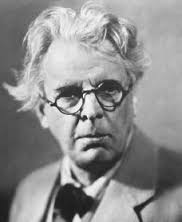
In watching Steve Bannon dueling with Charlie Rose on 60 Minutes, I was reminded of this famous Yeats poem and wondered what further damage Bannon and his minions will do to the soul of America.

“Things fall apart; the center cannot hold; / Mere anarchy is loosed upon the world. / The blood-dimmed tide is loosed, / And everywhere the ceremony of innocence is drowned; / The best lack all conviction, while the worst are full of passionate intensity.”

images

William Butler Yeats

Love, Sweet Love!

14 Friday Apr 2017

Posted by rabbijohnrosove in Art, Divrei Torah, Holidays, Life Cycle, Musings about God/Faith/Religious life, Poetry

≈ Leave a comment

“The world is not as worthy as the day on which the Song of Songs was given to Israel, for all the writings are holy, but the Song of Songs is the Holy of Holies.”

So said Rabbi Akiva (2nd century Palestine), who believed that The Song of Songs, a love poem in the Hebrew Bible, traditionally attributed to King Solomon as a young man, is an allegory between two lovers, God and Israel.

The allegorical interpretation of The Song of Songs is why The Song of Songs is read each year on the Shabbat during Pesach, this Shabbat, for it’s then that we celebrate our people’s redemption and liberation from bondage on the one hand and the Kabbalistic idea of the hoped-for-redemption of God within God’s Divine Self on the other.

All that being said, this extraordinarily enriched poetry seems to be a purely secular poem (God’s Name is never mentioned) celebrating young, sensuous and erotic love and the passionate draw of two lovers yearning for relief from their existential loneliness:

“For love is strong as death, / Harsh as the grave. / Its tongues are flames, a fierce / And holy blaze”  (Song of Songs 8:6 – Translation by Marcia Falk)

Rabbi Avraham Isaac Kook wrote of a higher metaphysical love represented by the Song of Songs in this way (Translation by Ben Zion Bokser):

“Expanses divine my soul craves. / Confine me not in cages, / of substance or of spirit. / I am love-sick / I thirst, / I thirst for God, / as a deer for water brooks.

Alas, who can describe my pain? / Who will be a violin / to express the songs of my grief?

I am bound to the world, / all creatures, / all people are my friends.

Many parts of my soul / are intertwined with them, / But how can I share with them my light.”

Tonight – Friday, April 14 at 6:30 PM,  at Temple Israel of Hollywood, we will be celebrating as part of our Kabbalat Shabbat service the Song of Songs with beautiful music set to its verse. We have invited members of our community who are celebrating milestone wedding anniversaries to join us, and we will offer them a blessing. If you are free and would like to join us, please do come.

Shabbat shalom and Moadim L’simchah!

Maror-Bitterness

10 Monday Apr 2017

Posted by rabbijohnrosove in American Jewish Life, American Politics and Life, Holidays, Inuyim - Prayer reflections and ruminations, Jewish History, Jewish Identity, Poetry, Social Justice

≈ Leave a comment

The Haggadah is an exilic document. For Jews, as long as the world is filled with injustice, cruelty, violence, and war, our work is not done.

Judaism teaches that the messianic era will come only when justice, compassion, and peace characterize relationships between individuals, peoples, and nations, when the hearts of parents turn to their children and the hearts of children turn to their parents (Malachi 3:23-24).

Through intention, determination, righteous deeds, and moral activism, our Jewish mission and the essential message of the Passover Seder is, through remembrance that we were once slaves, to address every injustice, every act of cruelty and every insensitivity to bring nearer the day when the prophetic admonishments will no longer be necessary.

My poem “Maror-Bitterness” that follows, is one in a series of d’rashot (commentaries) published this week in the Los Angeles Jewish Journal by a number of Los Angeles rabbis who reflected on the symbols of the Seder (“Rabbis Dish on the Seder Plate – April 7-13, 2017. Pages 36-38 – jewishjournal.com/culture/religion/passover/217641/rabbis-dish-seder-plate/). I recommend them all.

Maror-Bitterness

The Almighty called to the children of Jacob:

“I have taken notice of you / And seen your suffering / And sent to you my prophet / To relieve you of your maror-bitterness.

I carried you on eagles’ wings / And shielded you from the pursuers’ arrows / So that whenever you taste the maror / You will remember / Who I am / And who you are / And why you are free.

As I took notice of your ancestors / I call upon you today / The descendants of slaves / Who know the heart of strangers / And their fear and desperation / And do for them as I have done for you / And liberate them / The oppressed and the tempest-tossed / The poor and the discarded / The old and the lonely / The abused and the addict / The victim of violence and injustice / And everyone who tastes daily the maror-bitterness / That you know so very well.

As you sit around your Seder tables / I call upon you to act / With open, pure and loving hearts / On My behalf / And be My witnesses / And bring healing and peace into the world.”

Poem by John L. Rosove, Temple Israel of Hollywood, Los Angeles

“Speak Proudly to Your Children” – Audre Lorde

09 Sunday Apr 2017

Posted by rabbijohnrosove in American Politics and Life, Holidays, Jewish History, Jewish Identity, Poetry, Social Justice

≈ Leave a comment

As we contemplate the massive refugee crisis and the bigotry and fear that Trump has stoked in his efforts to exclude these tempest-tossed human beings from entering the United States, and as we remember that 36 times (double chai) the Hebrew Bible reminds us that we  were strangers in Egypt and therefore (per Jewish tradition) that we must resist becoming cruel, this poem by the African American poet Audre Lorde (1934-1992) speaks powerfully to the heart and soul of every compassionate human being:

“Speak proudly to your children / Where ever you may find them / Tell them / You are the offspring of slaves.”


Moses and God’s Tears – A Poetic Midrash for Vayikra

31 Friday Mar 2017

Posted by rabbijohnrosove in Divrei Torah, Musings about God/Faith/Religious life, Poetry

≈ 2 Comments

So often God called Moses. / Three times they met; / at the flaming bush, / on Sinai amidst rock and stone, / and before the Tent of Meeting / that Moses might intuit God’s mind / and soothe God’s heart / as a lover comforts his beloved.

Since creation / God yearned to bridge the chasm / when the Creator pulled away / and opened space / to share the universe.

Yet the Almighty remained alone / exiled within the Divine Self / when the vessels shattered / and matter was flung to the far reaches of space.

The upper spheres were divorced from the lower, /  male from female, / the primal Father from the primal Mother, / Tiferet from Malchut, / Hakadosh Baruch Hu from Shechinah, /  Adonai from Knesset Yisrael.

Before time and speech, / God appointed the soul of the Shepherd-Prince Moses / to be prophet / and endowed him with hearing-sight, / wide-ranging wisdom and intuitive knowledge.

No one but Moses / had ever been so chosen or / to come so near to God.

Moses saw with his ears / heard with his eyes / tasted with his mind / and remained whole in the Light.

The prophet descended the mountain aglow, / the primordial Light shielding him behind a veil / bearing on his forehead divine ink-drops / radiating and illuminating the earth’s four corners.

Moses descended upon angel’s wings, / weightless and cradling the lettered-stone / inside the eye of raging winds.

Though a Prince in Egypt / Moses’ destiny was as a lonely shepherd / gathering sheep / and drawing the children of Israel to God.

God needed much from Moses – / to bring the plagues / and show that there is no God but God, / and liberate the people, / and bring them to Sinai, / and inspire with the Word, / and create God’s house / that light might abide within every heart / and restore wholeness in the world.

After all of God’s expectations and demands / we might expect Moses’ strength to be depleted, / to be exhausted to the bone and ready to say; / “Enough! O Redeemer – find a new prophet! / I can no longer bear the burden / and be Your voice and create bridges / You are Almighty God / I am but flesh / My strength is gone / My time expired!”

“Nonsense!” proclaimed the Eternal. / “I am not yet ready for your retirement! / My world remains shattered, / My light obscured, / my heart broken and aching. / I need you to teach My people / and all people / and instill in their hearts / a love that heals My wound / for I cannot do this for Myself.”

Alas, the Creator-Redeemer’s needs were clear / to be close to Moses and the people / that the prophet and Israel together / might wipe away God’s tears / and restore God’s heart to wholeness / and heal God’s Name to Itself / and bring peace.

Poem composed by Rabbi John L. Rosove

Notes about this poetic Midrash:

The first word that appears in this week’s Torah portion Vayikra (vav – yud – kuf – resh – aleph – “And God called Moses…”) ends with an unusually small aleph. This anomaly in what is called the k’tiv (written text) gave rise to much rabbinic interpretation over the centuries.

Rashi explained that the small aleph teaches the humility of Moses. Others said that the aleph is an introduction to the Levitical laws of sacrifice, which requires humility. A Midrash suggests that when Moses descended from Mount Sinai carrying the tablets of the law, he emitted a keren or (“a ray of light”) compelling Moses to shield his face with a veil because the people could not look upon him in such a state. The source of that ray of light was divine ink left over when Moses wrote a small aleph instead of one of normal size. The Midrash explains that Moses had sought to lessen his own stature by using a small aleph, but God restored the extra drops of divine ink by placing them upon Moses’ forehead.

The Midrashic literature comments at length about Moses’ experience meeting panim el panim (lit. “face to face” – metaphorically “soul to soul”) with God. Moses was first among God’s prophets. Though each prophet spoke God’s words, there never was another prophet like Moses nor, as the Torah explains, was there ever again a more humble human being on earth than Moses.

I am not normally an envious person. However, I have always envied the experience of the prophet and most especially Moses’ meeting with God on the mountain. It is my unquenchable yearning to know and my fascination with prophecy itself that inspired me to write this Midrash.

For those of you wishing more insight into Biblical prophecy, I recommend Rabbi Abraham Joshua Heschel’s “The Prophets” – publ. Jewish Publication Society, New York, 1962.

Shabbat shalom. 

In the black night – A poem for Vayishlach

15 Thursday Dec 2016

Posted by rabbijohnrosove in Divrei Torah, Inuyim - Prayer reflections and ruminations, Poetry

≈ Leave a comment

In the black night
the river runs cold
slowly passing me by
over formerly sharp-edged stones
worn smooth by centuries of churning
as if through earthy veins
and I Jacob, alone
shiver and wait
to meet my brother
and daylight.

Will there be war?
Will the angels carry my soul
up the ladder
leaving my blood
to soak the ground?

A presence!?
And I struggle
as if in my mother’s womb
and my dreams.

We played together as children
my brother Esau and me
as innocents
and I confess tonight
how I wronged him
and wrenched from him his birthright
as this Being has done to me
between my thighs.

I was so young
driven by ego and need
blinded by ambition
my mother’s dreams
and my father’s silence.

I so craved to be first born
adored by my father
to assume his place when he died
that my name be remembered
and define a people.

How Esau suffered and wailed
and I didn’t care;
Whatever his dreams
they were nothing to me
my heart was hard
his life be damned!

I’ve learned that Esau and I
each alone
is a palga gufa/half a soul
without the other
torn away
as two souls separated at creation
seeking reunification
in a great spiritual sea
the yin missing the yang
the dark and light never touching
the mind divorced from body
the soul in exile
without a beating bleating heart
and no access to the thirty-two paths
to carry us up the ladder
and through the spheres.

It’s come to this
To struggle again
To live or die.

Tonight
I’m ready for death
or submission.

Compassionate One
protect Esau and your servant
my brother and me
as one
and return us to each other.

El na r’fa na lanu!
Grant us peace and rest
I’m very tired.

Poem by Rabbi John Rosove originally was published in the CCAR Journal: Reform Jewish Quarterly, Spring, 2010, pages 113-115


Isaac and Rebekah – a poem

25 Friday Nov 2016

Posted by rabbijohnrosove in Divrei Torah, Inuyim - Prayer reflections and ruminations, Poetry

≈ Leave a comment

I wrote this poem a few years ago based on the story of Isaac as it appears in this week’s parasha. I read it again today and found it somehow comforting and hopeful in these days, and so I offer it again.

My father Abraham set out alone,
Leaving everything he knew,
seeking a better place
where he’d never been
because God promised him
a blessing and a future.

But my heart is broken.
I yearn for solace.
My mother is dead
because my father stole me away
before dawn
while she slept.

Her servants reported to her
that he placed me
upon the pyre
as a burnt offering
to his God.

But an angel saved me.

How she loved me,
filling me up
like a goblet
with laughter
and tears.

And now I am alone
amidst the wheat and rocks,
beneath the sun and stirred-up clouds
swirling above
like disturbed angels.

Can You hear me –
Merciless God?
Comfort me now
and bend Your word
that she may return
as we were.

Looking up
I see a camel caravan
and people walking
like small sticks in the sand.

There is my father’s servant Eliezer
and a young girl.

Lasuach basadeh –
I pray and weep
beneath the afternoon sun
and swirling clouds,
and angels singing.

Rebekah to Eliezer –
‘Who is that man
crying alone
in the field?’

‘He is my master Isaac,
your intended one,
whose seed you will carry
as God promised his father.’

Vatipol min hagamal –
“And she alighted from her camel”
and veiled herself
for a wedding.

I entered her
in my mother’s tent,
and she comforted me.

Thank You, God!

Brothers

27 Thursday Oct 2016

Posted by rabbijohnrosove in Divrei Torah, Ethics, Musings about God/Faith/Religious life, Poetry

≈ Leave a comment

After God created the heavens and the earth, tragedy struck in a catastrophe that has never been forgotten, a tragedy now ingrained in our DNA and  repeated in every generation.

The tale of Cain and Abel is a story of envy, despair, and evil that has stained the human condition (Genesis 4:1-15).

As dramatic as this story is, in only fifteen verses does the episode unfold and resolve. The narrative gives only bare details of Cain’s and Abel’s lives and their fates. Abel (Havel) was a keeper of sheep. His Hebrew name means “vapor,” reflecting his short and purposeless life.

Cain was a farmer and tiller of the soil, the same ground that he polluted when he murdered his brother and his brother’s blood soaked the earth.

We learn that the brothers each had brought to God offerings. Cain was first – Abel followed. God rejected Cain’s gift and received Abel’s joyfully. Cain felt humiliated and shunned by the God he yearned to serve.

Why did God reject Cain’s gift? We don’t know. God, however, seemed surprised by Cain’s strong reaction and asked: “Why are you so upset? Why has your face fallen? Is it not thus: If you intend good, bear-it-aloft, but if you do not intend good, at the entrance is sin, a crouching-demon, toward you his lust–but you can rule over him.” (vs 6-7) [An enigmatic ancient poetic passage – see below]

A shame! Instead of sympathy God gave Cain a lecture. Yet, we can’t really blame Cain for his distress. He felt rejected and utterly alone. Even Cain’s parents were missing from the scene, so he struck out against the one closest to him – the only one there – his brother Abel.

Cain and Abel had spoken or argued, but we’re not told about what. The rabbis offer several explanations.

One said that the brothers had agreed to divide the world. Cain took all the land and Abel took everything that moved: but then they fought out of greed for more.

Cain said: “The land upon which you stand is mine. Get off – you may fly if you like, for I don’t own the air. But the land is mine and not for your use.”

Abel shot back: “The clothes you wear are made from the wool of my flock. Strip down. Walk naked. You’ve no right to the product of my sheep.”

A second sage said that each brother owned both land and movable property and that they fought about on whose land the Temple in Jerusalem would be built.

“The Temple should be built on my land,” said one.

“No. It must be built on mine,” said the other.

Their battle thus became a religious war each claiming that God was on his side.

A third rabbi said that Abel had a twin sister, a magnificently beautiful and alluring woman, and since there was no other woman on earth, each wanted her.

Cain argued: “I must have her because I am the first born.”

Abel too felt entitled: “She’s mine because she was born with me. Together we must stay.”

The rabbis regard Cain and Abel as symbols. Each explanation is an argument for what drives people to hate and kill each other; materialism, religious fanaticism, and sexual obsession.

“Cain rose up against Abel and slew him.” (v 8)

The Midrash claimed that Abel was the physically stronger man, and as he was about to kill Cain, Cain pleaded for his life: “We are the only two in the world. What will you tell our parents if you kill me?”

From fear or perhaps pity, Abel lowered his weapon, and at that moment Cain murdered him.

After the deed (as if God didn’t know), the Almighty asked: “Where is Abel your brother?”

Cain was cold and disengaged: “I know not; am I my brother’s keeper?” (v 9)

God expected moral accountability, but as he had turned on his brother, so too did Cain turn on God:

“You hold watch over all creatures, and yet You demand an accounting of me! True, I killed him, but You created the evil inclination within me. It’s Your fault! Why did You permit me to slay him? You slew him yourself, for had You looked favorably on my offering, I wouldn’t have had reason to envy and kill him.”

God emphasized to Cain the heinous significance of his murderous act, but Cain didn’t understand.

God said: “The voice of your brother’s blood(s) cry to Me from the ground.” (v 10)

The Hebrew for blood (dam) is written in the plural (damim) meaning that killing one human being is equivalent to the murder of every generation to come, of an entire world, genocide. And given that Cain killed his brother, murder is also fratricide.

As tragic as this tale is, the ending is abruptly positive. Adam and Eve chose life again and bore their third son, Seth, in the place of Abel. We are considered Seth’s descendants (v 25) and neither carry the legacy of victim or aggressor. That is for each of us to decide.

 
Note: The above is a creative compilation of the Biblical text and rabbinic commentary. The translation of the poem – vs 6-7 – is borrowed from Everett Fox’s translation of The Five Books of Moses – The Schocken Bible: Volume I.

Is there really nothing new under the sun?

21 Friday Oct 2016

Posted by rabbijohnrosove in American Jewish Life, Divrei Torah, Holidays, Jewish Identity, Poetry

≈ 4 Comments

“Havel havalim amar Kohelet; havel havalim hakol havel – Utter futility! Said Kohelet – Utter futility! All is futile! What real value is there in all the gains a person makes beneath the sun? One generation goes, another comes, but the earth remains the same forever…only that shall happen which has happened, only that occur which has occurred; Ein chadash tachat hashamesh – there is nothing new beneath the sun!”
Ecclesiastes 1:2-9

Depressing, realistic, cynical – or all three?

In the mid-1990s, I taught a year-long weekly seminar at my synagogue on the book of Ecclesiastes and its rabbinic commentary in Kohelet Rabbah. I began with thirty-five students. After a year, five remained.

I was assured by a number of the students that the drop in enrollment wasn’t because I was a bad teacher, though I wondered.

The following year, I taught another year-long seminar on the thought and writings of Rabbi Abraham Heschel. We began with about fifty students and retained most everyone.

I confess that I was relieved and thank Heschel for saving me!

What was the difference between the two classes? Those who delved into the thought of Ecclesiastes wanted to kill themselves whereas Heschel inspired them! Ecclesiastes  depressed the “Kohelet drop-outs” because they didn’t want to spend their Sundays engaged with cynicism/realism (depending how you read the book). They voted down Ecclesiastes with their feet. I have always, by the way, found the book fascinating – but that’s me!

The scroll of Ecclesiastes is the text, nevertheless, from the collection of Writings that we read every year during the festival of Sukkot. Given it’s depressing themes, why would we do that? Sukkot, after all, is called “Z’man sim’cha-tei-nu – a time of our joy.” We greet one another with these words during the holiday: “Moadim l’simchah – May you be joyful during this time.”

Some scholars suggest that Ecclesiastes was an argument against the ancient Greek pagan world when bacchanalian orgies and wild celebrations were taking place. The rabbis thought that reading Ecclesiastes would kick the Jew in the gut and slap his face, recalling Cher slapping the love-sick John Cusack in “Moonstruck” and shouting – “Snap out of it!”

The theme of the changing seasons, as described in the first chapter of the scroll, may be the real reason this text was matched with Sukkot, though Ecclesiastes is a philosophical oddity and counter to the rabbinic worldview. Its philosophy is Greek, not Jewish – though the Rabbinic Midrash attempts valiantly to spin the book as a reflection of rabbinic theology. One can imagine Kohelet taking the Aristotelian and modern scientific view that nothing has ever been created or destroyed, that God as Creator is a necessary truth for the masses of Jews who need not only to believe in a commanding God but also recognize that there must be a higher moral authority when ordering Jewish society, thus giving ultimate meaning to our lives.

The question is – was Ecclesiastes right when he proclaimed – “There is nothing new under the sun!” Did he mean to say that this is the world as it’s always been and ever will be and that nothing we think, feel and create as human beings is ever new?

The 1996 Nobel Prize acceptance speech for literature by the Polish writer Wislawa Szymborska is eloquent. She insisted that, yes, there is something new under the sun – each and every day. She addressed Kohelet directly in these words:

“I sometimes dream of situations that can’t possibly come true. I audaciously imagine, for example, that I get a chance to chat with Ecclesiastes, the author of that moving lament on the vanity of all human endeavors. I bow very deeply before him, because he is one of the greatest poets, for me at least. Then I grab his hand. ‘There’s nothing new under the sun’ That’s what you wrote, Ecclesiastes. But you yourself were born new under the sun. And the poem you created is also new under the sun, since no one wrote it down before you. And all your readers are also new under the sun, since those who lived before you couldn’t read your poem. And that cypress under which you’re sitting hasn’t been growing since the dawn of time. It came into being by the way of another cypress similar to yours, but not exactly the same. And Ecclesiastes, I’d also like to ask you what new thing under the sun you’re planning to work on now? A further supplement to thoughts you’ve already expressed? Or maybe you’re tempted to contradict some of them now? In your earlier work you mentioned joy – so what if it’s fleeting?  So maybe your new-under-the-sun poem will be about joy?  Have you taken notes yet, do you have drafts?  I doubt that you’ll say, ‘I’ve written everything down, I’ve got nothing left to add.’ There’s no poet in the world who can say this, least of all a great poet like yourself.”

The Kotzker Rebbe was once asked if he had the power to revive the dead. He answered: “Reviving the dead isn’t the problem; reviving the living is far more difficult!”

Certainly, nature has set its course; but the human being is a thinking, creating and transcendent being, and we do indeed, I believe, have the capacity to create ourselves anew in every moment and thus improve ourselves (tikkun hanefesh) and the world (tikkun olam).

This series of Holidays from the beginning of Elul through the High Holidays, Sukkot and Simchat Torah is our season for the Jewish people to celebrate spiritual rebirth and renewal. Our world view is a challenge to Kohelet. Yes, there is something new under the sun! Everything!

Moadim l’simchah and Shabbat Shalom.

Reflections on Hate and the Trump for President Campaign

16 Sunday Oct 2016

Posted by rabbijohnrosove in American Politics and Life, Ethics, Health and Well-Being, Poetry, Quote of the Day

≈ 3 Comments

When Donald Trump turned on Hillary Clinton in the 2nd Presidential Debate and said “You have hate in your heart” his obvious projection revealed what is in Trump’s own heart. Not only is he consumed with himself, as classical narcissists are, but anyone who isn’t fawning all over him and those who criticize him, as far as he is concerned, are sorely deficient, bad, sad, a disaster, and worthy of being pummeled, slandered, and attacked mercilessly – the sign of a true playground bully.

I have considered the corrosive nature of hatred, and having just emerged from Yom Kippur when the Jewish people strives to self-critique, improve our lives and exorcise negativity and destructive impulses from our hearts, minds, and souls, I searched my book of quotations on the theme of hate, and I offer these pearls of wisdom.

I begin with a famous statement of German Pastor Martin Niemoller who criticized Hitler in the 1930s and suffered seven years in a concentration camp as a result:

“First they came for the Socialists, and I did not speak out—
Because I was not a Socialist.
Then they came for the Trade Unionists, and I did not speak out—
Because I was not a Trade Unionist.
Then they came for the Jews, and I did not speak out—
Because I was not a Jew.
Then they came for me—and there was no one left to speak for me.”
– Pastor Martin Niemoller, German Protestant thinker, teacher and activist

“Thou shalt not hate another in one’s heart!”
–Leviticus 19:18

“I feel fairly certain that my hatred harms me more than the people whom I hate.”
-Max Frisch, Swiss architect, playwright, and novelist

“One of the reasons people cling to their hate so stubbornly is because they sense, once hate is gone, they will be forced to deal with pain.”
–James Baldwin, American novelist, writer

“If you hate a person, you hate something in him that is part of yourself. What isn’t part of ourselves doesn’t disturb us.”
–Hermann Hesse, German poet, novelist, painter

“Hatred like love feeds on the merest trifles. Everything adds to it. Just as the being we love can do no wrong, so the one we hate can do no right.”
–Honoré de Balzac, French novelist, playwright

“Never let yourself hate any person. It is the most devastating weapon of one’s enemies.”
-Katherine Hepburn’s father

“Love, friendship, respect, do not unite people as much as a common hatred for something.”
-Anton Chekhov, Russian short-story writer and dramatist

“I have decided to stick to love…Hate is too great a burden to bear.”
– The Reverend Martin Luther King Jr.

“It is human nature to hate the person whom you have hurt.”
-Publius Cornelius Tacitus, Roman Senator and historian (c.55-c.120)

“In time we hate that which we often fear.”
-William Shakespeare

“People hate those to whom they have to lie.”
-Victor Hugo, French poet, novelist, and dramatist

“There is a revisionist theory, one of those depth-psychology distortions or half-truths that crop up like toadstools whenever the emotions get infected by the mind that says we hate worst those who have done the most for us. According to this belittling and demeaning theory, gratitude is a festering sore.”
-Wallace Stegner, American novelist and writer

“If you understand each other you will be kind to each other. Knowing a person well never leads to hate and almost always leads to love.”
-John Steinbeck, American novelist

“Hate, it has caused a lot of problems in the world, but has not solved one yet.”
-Maya Angelou, American poet

“Hatred is the coward’s revenge for being intimidated.”
-George Bernard Shaw, Irish playwright, critic and polemicist

“Never waste a minute thinking about people you don’t like.”
-President Dwight D. Eisenhower

“I can forgive the whites in America for hating the blacks; I cannot forgive them, however, for making the blacks believe that they are worthy of being hated.”
-James Baldwin, American writer

“Now hatred is by far the longest pleasure;
People love in haste, but they detest at leisure.”
–Lord Byron, British poet

“I used to think that people who regarded everyone benignly were a mite simple or oblivious or just plain lax — until I tried it myself. Then I realized that they made it only look easy. Even the Berditchever Rebbe, revered as a man who could strike a rock and bring forth a stream, was continually honing his intentions. ‘Until I remove the thread of hatred from my heart,’ he said of his daily meditations, ‘I am, in my own eyes, as if I did not exist.’”
-Marc Barasch, American author, editor, and activist

“I shall allow no man to belittle my soul by making me hate him.”
-Booker T. Washington, African-American educator, author, orator

“There is no fire like passion, there is no shark like hatred, there is no snare like folly, there is no torrent like greed.”
-Gautama Buddha

“No one is born hating another person because of the colour of his skin, or his background, or his religion. People must learn to hate, and if they can learn to hate, they can be taught to love, for love comes more naturally to their human heart than its opposite.”
-Nelson Mandela, South African President
← Older posts
Newer posts →

Enter your email address to subscribe to this blog and receive notifications of new posts by email.

Join 367 other subscribers

Archive

  • February 2026 (4)
  • January 2026 (8)
  • December 2025 (4)
  • November 2025 (6)
  • October 2025 (8)
  • September 2025 (3)
  • August 2025 (6)
  • July 2025 (4)
  • June 2025 (5)
  • May 2025 (4)
  • April 2025 (6)
  • March 2025 (8)
  • February 2025 (4)
  • January 2025 (8)
  • December 2024 (5)
  • November 2024 (5)
  • October 2024 (3)
  • September 2024 (7)
  • August 2024 (5)
  • July 2024 (7)
  • June 2024 (5)
  • May 2024 (5)
  • April 2024 (4)
  • March 2024 (8)
  • February 2024 (6)
  • January 2024 (5)
  • December 2023 (4)
  • November 2023 (4)
  • October 2023 (9)
  • September 2023 (8)
  • August 2023 (8)
  • July 2023 (10)
  • June 2023 (7)
  • May 2023 (6)
  • April 2023 (8)
  • March 2023 (5)
  • February 2023 (9)
  • January 2023 (8)
  • December 2022 (10)
  • November 2022 (5)
  • October 2022 (5)
  • September 2022 (10)
  • August 2022 (8)
  • July 2022 (8)
  • June 2022 (5)
  • May 2022 (6)
  • April 2022 (8)
  • March 2022 (11)
  • February 2022 (3)
  • January 2022 (7)
  • December 2021 (6)
  • November 2021 (9)
  • October 2021 (8)
  • September 2021 (6)
  • August 2021 (7)
  • July 2021 (7)
  • June 2021 (6)
  • May 2021 (11)
  • April 2021 (4)
  • March 2021 (9)
  • February 2021 (9)
  • January 2021 (14)
  • December 2020 (5)
  • November 2020 (12)
  • October 2020 (13)
  • September 2020 (17)
  • August 2020 (8)
  • July 2020 (8)
  • June 2020 (8)
  • May 2020 (8)
  • April 2020 (11)
  • March 2020 (13)
  • February 2020 (13)
  • January 2020 (15)
  • December 2019 (11)
  • November 2019 (9)
  • October 2019 (5)
  • September 2019 (10)
  • August 2019 (9)
  • July 2019 (8)
  • June 2019 (12)
  • May 2019 (9)
  • April 2019 (9)
  • March 2019 (16)
  • February 2019 (9)
  • January 2019 (19)
  • December 2018 (19)
  • November 2018 (9)
  • October 2018 (17)
  • September 2018 (12)
  • August 2018 (11)
  • July 2018 (10)
  • June 2018 (16)
  • May 2018 (15)
  • April 2018 (18)
  • March 2018 (8)
  • February 2018 (11)
  • January 2018 (10)
  • December 2017 (6)
  • November 2017 (12)
  • October 2017 (8)
  • September 2017 (17)
  • August 2017 (10)
  • July 2017 (10)
  • June 2017 (12)
  • May 2017 (11)
  • April 2017 (12)
  • March 2017 (10)
  • February 2017 (14)
  • January 2017 (22)
  • December 2016 (13)
  • November 2016 (12)
  • October 2016 (8)
  • September 2016 (6)
  • August 2016 (6)
  • July 2016 (10)
  • June 2016 (10)
  • May 2016 (11)
  • April 2016 (13)
  • March 2016 (10)
  • February 2016 (11)
  • January 2016 (9)
  • December 2015 (10)
  • November 2015 (12)
  • October 2015 (8)
  • September 2015 (7)
  • August 2015 (10)
  • July 2015 (7)
  • June 2015 (8)
  • May 2015 (10)
  • April 2015 (9)
  • March 2015 (12)
  • February 2015 (10)
  • January 2015 (12)
  • December 2014 (7)
  • November 2014 (13)
  • October 2014 (9)
  • September 2014 (8)
  • August 2014 (11)
  • July 2014 (10)
  • June 2014 (13)
  • May 2014 (9)
  • April 2014 (17)
  • March 2014 (9)
  • February 2014 (12)
  • January 2014 (15)
  • December 2013 (13)
  • November 2013 (16)
  • October 2013 (7)
  • September 2013 (8)
  • August 2013 (12)
  • July 2013 (8)
  • June 2013 (11)
  • May 2013 (11)
  • April 2013 (12)
  • March 2013 (11)
  • February 2013 (6)
  • January 2013 (9)
  • December 2012 (12)
  • November 2012 (11)
  • October 2012 (6)
  • September 2012 (11)
  • August 2012 (8)
  • July 2012 (11)
  • June 2012 (10)
  • May 2012 (11)
  • April 2012 (13)
  • March 2012 (10)
  • February 2012 (9)
  • January 2012 (14)
  • December 2011 (16)
  • November 2011 (23)
  • October 2011 (21)
  • September 2011 (19)
  • August 2011 (31)
  • July 2011 (8)

Categories

  • American Jewish Life (458)
  • American Politics and Life (417)
  • Art (30)
  • Beauty in Nature (24)
  • Book Recommendations (52)
  • Divrei Torah (159)
  • Ethics (490)
  • Film Reviews (6)
  • Health and Well-Being (156)
  • Holidays (136)
  • Human rights (57)
  • Inuyim – Prayer reflections and ruminations (95)
  • Israel and Palestine (358)
  • Israel/Zionism (502)
  • Jewish History (441)
  • Jewish Identity (372)
  • Jewish-Christian Relations (51)
  • Jewish-Islamic Relations (57)
  • Life Cycle (53)
  • Musings about God/Faith/Religious life (190)
  • Poetry (86)
  • Quote of the Day (101)
  • Social Justice (355)
  • Stories (74)
  • Tributes (30)
  • Uncategorized (831)
  • Women's Rights (152)

Blogroll

  • Americans for Peace Now
  • Association of Reform Zionists of America (ARZA)
  • Congregation Darchei Noam
  • Haaretz
  • J Street
  • Jerusalem Post
  • Jerusalem Report
  • Kehillat Mevesseret Zion
  • Temple Israel of Hollywood
  • The IRAC
  • The Jewish Daily Forward
  • The LA Jewish Journal
  • The RAC
  • URJ
  • World Union for Progressive Judaism

Blog at WordPress.com.

  • Subscribe Subscribed
    • Rabbi John Rosove's Blog
    • Join 367 other subscribers
    • Already have a WordPress.com account? Log in now.
    • Rabbi John Rosove's Blog
    • Subscribe Subscribed
    • Sign up
    • Log in
    • Report this content
    • View site in Reader
    • Manage subscriptions
    • Collapse this bar
 

Loading Comments...