• About

Rabbi John Rosove's Blog

Rabbi John Rosove's Blog

Author Archives: rabbijohnrosove

I Protest President Trump’s Call-up of the California National Guard

08 Sunday Jun 2025

Posted by rabbijohnrosove in Uncategorized

≈ 2 Comments

Tags

donald-trump, history, news, politics, trump

President Trump has wanted to use the US military and states’ National Guard as a show of his concentrated federal power since his first term. He even wanted to shoot demonstrators in the legs who were protesting police brutality against the George Floyd murder by police in a demonstration outside the White House. Now, he is getting his long-held wish to hold a military parade on the streets of Washington, D.C. next week on his 79th birthday just as autocrats around the world love to do to intimidate and threaten civilian populations in their countries.

Yesterday and today, while circumventing the legitimate authority of California Governor Gavin Newsom to call up the California National Guard (if it would be needed –  Governor Newsom does not believe it is needed), Trump has himself called up 2000 National Guard troops and deployed them in Los Angeles citing a rarely used provision within Title 10 of the U.S. Code on Armed Services  ”10 U.S.C. 12406,”  that has been activated only when “there is a rebellion or danger of a rebellion against the authority of the Government of the United States.” That is NOT happening in Los Angeles County. Governor Newsom has stated that local police departments are acting responsibly, as opposed to the charges of the President.

The White House sent out this letter yesterday, insulting the Democratic leadership of the State of California, and falsely characterizing the situation in Los Angeles as out of control. The letter is transparent. It is part of Trump’s retributive justice against blue states generally and Democratic political leadership in California specifically. Of course, the great irony of this White House statement is that Trump pardoned hundreds of convicted criminals serving prison time for attacking the government of the United States, killing and injuring dozens of police officers who were guarding the nation’s Capitol on January 6, 2021:

“In recent days, violent mobs have attacked ICE Officers and Federal Law Enforcement Agents carrying out basic deportation operations in Los Angeles, California. These operations are essential to halting and reversing the invasion of illegal criminals into the United States. In the wake of this violence, California’s feckless Democrat leaders have completely abdicated their responsibility to protect their citizens. That is why President Trump has signed a Presidential Memorandum deploying 2,000 National Guardsmen to address the lawlessness that has been allowed to fester. The Trump Administration has a zero tolerance policy for criminal behavior and violence, especially when that violence is aimed at law enforcement officers trying to do their jobs. These criminals will be arrested and swiftly brought to justice. The Commander-in-Chief will ensure the laws of the United States are executed fully and completely.” -Karoline Leavitt, White House Press Secretary

Erwin Chemerinsky, the dean of the law school at the University of California, Berkeley was quoted this morning in the NY Times (link to the full article is below):

“For the federal government to take over the California National Guard, without the request of the governor, to put down protests is truly chilling. It is using the military domestically to stop dissent.”

I agree.

A friend rightly compared Trump’s action this weekend to the arson attack on the home of the German parliament in Berlin on Monday, February 27, 1933, four weeks after Adolf Hitler was sworn in as Chancellor of Germany. The fire, allegedly set by the Nazis themselves, was used to weaponize the NAZIs on their rapid march to destroy what was left of democracy in Germany.

Though I do not believe that we in America are experiencing 1930s Germany, the desired march towards autocracy by this President is obvious.

Now is the time for us to protest Trump’s over-reach. We best remember the warning of the German theologian and Lutheran Pastor Martin Niemöller (1892-1984) who aptly wrote about the consequences of passivity in the face of anti-democratic governance and brutality:

“First they came for the socialists, and I did not speak out – because I was not a socialist. Then they came for the trade unionists, and I did not speak out – because I was not a trade unionist. Then they came for the Jews, and Id did not speak out – because I was not a Jew. Then they came for me – and there was no one left to speak for me.”

Read the NY Times piece on this action here: https://www.nytimes.com/2025/06/07/us/trump-national-guard-deploy-rare.html?smid=nytcore-ios-share&referringSource=articleShare

“We all want to change the world” – by Kareem Abdul-Jabaar – A Review

01 Sunday Jun 2025

Posted by rabbijohnrosove in Uncategorized

≈ Leave a comment

Tags

antisemitism, gaza, Israel, palestine, politics

Kareem Abdul-Jabaar’s newly published book We all want to change the world – My Journey through Social Justice Movements from the 1960s to Today is a sweeping, thoughtful, self-revelatory, honest, and inspiring review of most of the major social justice movements and human rights challenges in the United States since the 1950s when Kareem was coming of age as a African American athlete in New York City. One of the greatest basketball players in the history of the NBA, Kareem is now among the most prolific writers, probing thinkers and public intellectuals in America.

I read Kareem’s Substack newsletters from start to finish each time he publishes (twice weekly) and I find him always smart, rational, intellectually honest, thorough in his research, moral, and entertaining with his short videos of extraordinary athletic feats, musical selections, and cultural moments. Just as his Substack newsletter is worth reading, so is his newest book.

Kareem covers the impact on American society of the movements for Free Speech, Civil Rights, anti-Vietnam War, Women’s Liberation and Gay Liberation, and the cultural, emotional and psychological mindsets that spawned the courageous leadership that furthered human rights and opportunities in the United States for discriminated groups of Americans.

Kareem describes his personal mantra as that inspired by civil rights activist Fannie Lou Hamer’s adage: “No one is free unless everyone is free,” and what Dr. King said in another way: “Injustice anywhere is a threat to justice everywhere.”

As a young black man growing up in the 1950s and 1960s in New York City, becoming a famous athlete, meeting Dr. King, Mohammad Ali, and other leading black sports, entertainment and human rights figures, and reading constantly from the time he was a teen-ager, the shy, intellectual, self-reflective and compassionate young man felt compelled to think not only about himself and his athletic career and the moral compromises that many fellow black athletes felt they had to make in order to further their careers, but about every individual struggling for dignity beyond the stereotypes and cultural definitions that oppressed them.

Kareem wrote:

“Writing [the chapter on Civil Rights as My Gateway Movement] was especially challenging for me. As I chronicled the history of decade after decade of civil rights abuses and the martyrs who gave up their lives in pursuit of the freedoms already promised by our Constitution, I felt the rising heat of frustration and anger from my younger days. I needed to take frequent breaks to remind myself that frustration and anger by themselves accomplish nothing. Injustice is fueled by indifference, but passion without a plan is just as destructive. For me, the fiery passion of my youth needed to be channeled in order for me to do my part to bring about justice.”

This book is well-researched and well-written, and it lays out the historical facts and events of each of the human rights movements Kareem discusses in detail. He first presents those events historically, then dives into the emotional, social, and psychological challenges the leaders and followers of each movement confronted. For me, about three years younger than Kareem (age 78), I remember so much of what he describes, and I appreciate his insights about the forces that propelled the leadership of each movement to do what they did, as well as the baked-in cultural norms that reflected (and still reflects) the thinking of massive numbers of Americans.

Among other self-revelatory sections of the book, Kareem describes himself as a feminist. He wrote:

“As a Black teenager growing up in New York City, I loved books, movies, television, and music. Looking back on all that I was exposed to, I see now how those popular art forms conspired to produce a pounding thrum of dangerous misogyny, an insistent earworm that ran through my generation as it had so many generations before. With this evolving women’s movement, as more and more voices joined the chorus protesting misogyny, our heads were cleared enough to choose for ourselves. That’s how it was for me.”

In his epilogue, Kareem confessed:

“The biggest challenge I had in writing this book was the frequent breaks I had to take due to the build-up of frustration and anger. Again and again in my research, I saw the same pattern: basic human rights denied, indignities and disrespect piled on, and the refusal of oppressors to acknowledge why they were wrong. The worst was the complicity of so many people who disagreed with the discrimination in principle but who were too complacent to act. They might justify their collusion with ‘What can I do?’ but they already know the answer. They just don’t like it.”  

He concludes the book discussing the ongoing need for open and public protest in all the areas he discussed:

“The Founders enshrined the right to protest in our Constitution. They did that because they knew that the forces of self-interest and corruption would always try and to subvert the ideals of democracy they laid out.”

Kareem can be forgiven for the human rights issues he did not include in his book. However, there is one that Kareem does not discuss in this volume – the oldest of all hatreds, antisemitism. I’ve wondered why he didn’t discuss it specifically since it has become a major issue in North America, on college and university campuses, and around the world especially since Hamas’s brutal attack, murder and rape of 1200 Israelis and others on October 7, 2023 in Southern Israel and reactions to Israel and Jews as a consequence of the ensuing war between Hamas and Israel.

On October 9, 2023, two days after the Hamas attack, Kareem wrote in his Substack newsletter of his support of Israel. He condemned Hamas categorically, and elsewhere he described antisemitism as “especially heinous.” Kareem was the 2022 winner of Canada’s “Friends of Simon Wiesenthal Center’s first Ally Against Anti-Semitism Award,” so his pro-Jewish and pro-Israel bona fides are undisputed. Given Kareem’s 1.1 million Substack readers and the likely large number of people of color, athletes, and liberal-left readers who will read this book (as well as interested moderates and conservatives), I would have appreciated his discussion of antisemitism, its nature and history going back thousands of years and reemerging today in the United States, especially in this post-October 7th period in which so many on the far left publicly have identified with Hamas against Israel and Zionism and so many on the far right who openly court and identify with neo-Nazis and right-wing extremists, including the sitting President of the United States.

Hamas is among the most brutal, undemocratic, unenlightened, Jew-hating, extremist Muslim terrorist organizations in the world. It is one thing for decent people to want peace and justice for the Palestinian people in some kind of a demilitarized state of their own alongside a secure and democratic Jewish State of Israel, but it is something else entirely to support Hamas and its call for a free “Palestine from the River to the Sea.” That position means the destruction of the State of Israel and the murder of Jews. It is antisemitic Jew-hatred.  

There is a strong human rights case to be made about this oldest of hatreds that would have merited Kareem’s inclusion of a discussion of antisemitism in his book. Historically, the evidence is clear that in every country in which Jews have been discriminated against, attacked and accused of corrupting the soul of a people or nation, human rights generally and democracy specifically have been diminished and/or destroyed. To me, antisemitism would have been an obvious chapter to write about. I’m disappointed that Kareem didn’t take the opportunity to address Jew-hatred head-on, especially because I know he understands what antisemitism is and its “heinous” character. It was a missed opportunity to educate those very groups and individuals in which antisemitism has taken root and found a home in recent years on both the far left and the far right.

Eurovision 2025 Final: Israel’s Yuval Raphael Finishes in Second Place as Hundreds Protest Gaza War in Basel – Haaretz

18 Sunday May 2025

Posted by rabbijohnrosove in Uncategorized

≈ Leave a comment

Tags

eurovision, eurovision-2025, Israel, music, palestine

My Introductory Notes: This article from Haaretz today (May 18, 2025) describes the 2nd place finish of Israel’s spectacular new-comer star, Yuval Raphael, in the 2025 Eurovision Competition. She was not expected to place second, but her song and her beautiful voice, won the day. I post at the end the link to Yuval’s official entry into the competition.

No one from a singer’s host country is permitted to vote for his/her own country’s entry, so Yuval won on the merits, despite anti-Israel demonstrations inside and outside the concert hall.

Yuval survived the October 7, 2023 Hamas massacre of 1200 Israeli young people at the Music Festival in Southern Israel by hiding for 8 hours underneath the bodies of fellow concert-goers who had been murdered.

Yuval had never performed before any large audience, so to ascend so quickly to represent the people and State of Israel at this international competition before 6500 people in the hall and millions watching on television is a remarkable accomplishment. She did so with courage and grace, and her voice is spectacular – resonant, beautiful and open, entering the heart.

Here is the Haaretz article:

The Eurovision Song Contest final ended on Saturday night in Basel, Switzerland. Israel’s Yuval Raphael’s performance of “New Day Will Rise,” a song written by Keren Peles, finished in second place, with Austria taking the lead.

The competition venue, which holds around 6,500 spectators, featured performances by several frontrunners, including Sweden, Austria and France.

Audience voting opened at the start of the performances. A combination of public votes and national jury scores determined the final results. Viewers could vote up to 20 times using the official app, phone, or text message. Jury votes had already been cast during a rehearsal held Friday night.

Austria was crowned the unexpected winner, after Wasted Love by JJ received a total of 436 points. Israel received 357 points. The public votes awarded Israel 297 points – more than any other country.

Raphael, 24, was at the Nova music festival during the October 7 attack by Hamas militants on southern Israel that killed 1,200 people and saw 251 taken hostage.

During the attack, she hid in a shelter near Kibbutz Be’eri and sustained shrapnel injuries. She was one of only 11 survivors from that shelter, having hidden under the bodies of victims for eight hours.

She later shared her harrowing experience in a speech before the United Nations Human Rights Council. Witnesses said that on Saturday, two protesters—a man and a woman from Holland — splashed red paint and began shouting during Raphael’s performance. Security guards quickly led the protesters out of the venue.

Since Thursday’s second semifinal, Israel had dropped to seventh place in the betting rankings, with Finland and Estonia overtaking it. Raphael was scheduled to perform fourth out of 26 entries – a relatively early slot that, according to past trends, tends to reduce a country’s chances of winning.

During Friday’s jury rehearsal – and similarly in Thursday’s semifinal dress rehearsal – a few audible boos and other disturbances could be heard during Yuval Raphael’s performance. However, no disruptions were heard during rehearsals for the press.

After a relatively quiet week, a pro-Palestinian protest took place in Basel ahead of the final. Several hundred people gathered in central Basel to express solidarity with the Palestinian people and to oppose Israel’s participation in the contest. Demonstrators chanted slogans such as “Boycott apartheid Israel,” “No stage for genocide,” and “Free Palestine.”Swiss police declined to provide Haaretz with information regarding the investigation of a pro-Palestinian demonstrator who made a throat-slitting gesture toward Raphael and the Israeli delegation on Sunday. “The public prosecutor’s office is handling the case, and for tactical reasons, we cannot provide further information at this stage,” the police stated repeatedly.

https://www.google.com/search?q=Israel%27s+Yuval+Raphael%27s+song+at+Eurovision&rlz=1C1GGRV_enUS934US991&oq=Israel%27s+Yuval+Raphael%27s+song+at+Eurovision&aqs=chrome..69i57j33i160l5.11033j0j4&sourceid=chrome&ie=UTF-8#fpstate=ive&vld=cid:2cf0822c,vid:Q3BELu4z6-U,st:0

Like an Old Car

16 Friday May 2025

Posted by rabbijohnrosove in Uncategorized

≈ 2 Comments

Tags

family, health, healthcare, life, mental-health

As we age, we’re like old cars – hopefully classic cars – but regardless of whether we regard ourselves as old Chevy’s or Cadillacs, the reality is that just as those jalopies break down and need replacement parts and tune-ups to keep running effectively, so too is it for each of us.

I passed my 75th birthday last December, and though I feel good enough, the reality of aging is ever-present and something I don’t take for granted.

I first got the shock of my life at the age of 59 when I was diagnosed with a relatively advanced stage of prostate cancer. I had surgery to remove it and then I had to confront (for the first time in my life) that had modern science, a great doctor and competent and compassionate nurses not taken care of me, I would have died young, like my father before me who succumbed to his second heart attack at the age of 53.

As I’ve aged, I think much more than ever before about my parents, aunts and uncles, and grandparents too, and the maladies of aging they experienced in their generations. Thanks to medical research and development in so many areas of bodily and mental health over many decades, longevity and good health have increased in modern societies if we’re treated, that is, by competent physicians, nurse practitioners, nurses, psychiatrists, psychologists, and state-of-the-science hospitals and clinics. How we take care of ourselves, how much exercise we do each day, whether we eat well and in moderation, forgo alcohol and drugs, get adequate sleep, enjoy positive mutually supportive relationships with family and friends, control our stress levels, do productive and creative work, have good genes, and get appropriate bio-medical support – all taken together – make a substantial difference in our quality of life, happiness and contentment, health, energy and longevity.

I regard my body and mind often like the first car I co-owned with my brother – a 1955 Chevy. I loved that car, and when Barbara and I led a congregational tour to Cuba years ago, seeing those 1950s models rumble along on the streets of Havana, held together by spit and wire, made me happy and nostalgic for my early years.

Last week, after returning from an overseas trip, to catch up on my health issues, I saw a different doctor every day. But – whether I complain about the effort it takes to go to one physician after another, given my respect for their competence, expertise and treatment, I much prefer that to the alternative. I used to say when I played golf regularly, especially when I had a mediocre hitting day that was frustrating no matter what I did to make adjustments in my focus, stance and swing: “Better this side of the grass.”

I depend now more than ever on the expertise of those physicians and the bio-medical assistance they prescribe to sustain me as a positive thinking half-glass-full 75 year-old Jew that I now am, a positive quality that propelled me from my youngest years to be productive and to find meaning in my life. I’m grateful not only to them, but most especially to my family, friends and community. They sustain and inspire me.

May we all “live long and prosper,” and be for each of us the embodiment of wisdom, strength, love and support that we can offer to one another.

“Rededicating Ourselves to Deepening Interfaith Relationships: A Pledge Sponsored by the International Council of Christians and Jews”

11 Sunday May 2025

Posted by rabbijohnrosove in Uncategorized

≈ 1 Comment

Tags

bible, christianity, Israel, palestine, religion

 I signed this pledge today and invite my readers to do so as well, wherever you live around the world, whether you are Jewish, Christian or Muslim. Please read this commitment to Interfaith Relationships carefully, and if you believe in this declaration of commitment, click onto the link at the end of the statement and include your signature. I thank you in advance.

An Invitation to Recommit to Interfaith Relationships in These Tumultuous Times

In this year of 2025 in the Western calendar, defining religious observances for Jews, Christians, and Muslims occur within days of each other. Jews commemorate liberation from slavery at special Passover meals. Christians celebrate freedom from the slavery of death brought by the resurrection of Jesus. Muslims celebrate Eid-al-Fitr as the joyful culmination of Ramadan, uniting in prayer, charity, and reinvigorated communal experience. This convergence provides a moment that our world in turmoil desperately needs, a moment to continue the progress of the past several decades in deepening interfaith relationships.

Our world is living through a time when relations among people of different faith traditions are under great stress. The ICCJ, being especially dedicated to dialogue between Jews and Christians, as well as trilateral dialogue with Muslims, believes that the violent and polarized world of today urgently needs such dialogues to continue and, indeed, to intensify in the months and years ahead.

The ICCJ has composed a declaration of recommitment to the work of dialogue, including specific practices to enhance it.

We invite any individual, organization, or institution that cherishes interreligious amity to join us in our resolve by endorsing the declaration and enacting its values in their own lives and circumstances.

A Pledge Sponsored by the International Council of Christians and Jews

The First and Second World Wars killed over one hundred million people and made refugees of hundreds of millions more. Empires fell. Nations were born. Weapons with unimaginable power were devised, threatening the very existence of life on our planet. Nonetheless, from this carnage and chaos positive initiatives arose, including in many places an historically unprecedented transformation in relationships between Jews and Christians.

Appalled and traumatized by the industrialized slaughter of two-thirds of European Jewry, people in both communities sought rapprochement after nearly two millennia of estrangement and antipathy. Christians had to confront a long history of anti-Jewish rhetoric and violence, while Jews had to risk hoping that Christian overtures were truly sincere. Crucial turning points were a conference in Seelisberg, Switzerland in 1947, which led to the founding of the International Council of Christians and Jews, and the Catholic Church’s 1965 Second Vatican Council declaration Nostra Aetate and the 1967 report of the Faith and Order Commission of the World Council of Churches, “The Church and the Jewish People.”

The quest for open dialogue and sincere friendship between Jews and Christians raised many moral, theological, and social questions and shed new light on each community’s self-understanding. After centuries of mutual ignorance and polemic, it took time to build trust and to learn how to speak to one another. Gradually, a unique era of dialogue, understanding, and mutual enrichment began. As never before, unfolding differently in various parts of the world, Christians and Jews, while forming civic collaborations and deep personal friendships, studied together in exceptional depth, some becoming expert in the other’s history and texts. These dialogue partners explored religious ideas that previously were avoided. Understanding themselves to be journeying together in God’s covenantal presence, they found new respect for each other’s religious integrity, leading many churches to disavow missions to convert Jews. Such efforts and experiences were models to engage with other religious communities, especially Muslims.

Over the years there have been disputes and missteps. The journey has been a complicated and uneven one. The post-Shoah geographic concentration of Jews in Israel and major cities in the United States means that most Christians around the world cannot personally engage in interreligious dialogue with Jews. In various times and places, religious radicalism dehumanizes people by setting them against each other along religious lines. Even though peace often seems an impossible dream, there are Jews, Christians, and Muslims who have nevertheless steadfastly pursued dialogue and friendship for decades. Their courageous efforts are signs of hope to people everywhere.

The war between Israel and Hamas in the wake of October 7, 2023, which has longstanding regional and intercontinental aspects, has shaken interreligious amity to a degree not seen since World War II, and will have long-term consequences. Among some Christians and Jews old stereotypes and suspicions about each other have resurfaced. Around the globe, antisemitic bigotries and even violence have surged, provoking fear. Although people view and are impacted by the current crises in diverse ways, all are haunted by the tragic death toll. Yet we who cultivate interreligious friendships yearn for and must prepare and work for the day when peace will dawn and both Palestinians and Israelis, Christians, Muslims, and Jews, will prosper in peace and security.

THE SIGNATORIES OF THIS PLEDGE RESOLVE that interreligious dialogue cannot be a victim of these or any other attacks or conflicts. Indeed, dialogue is more important than ever. We believe it to be God’s will and our holy calling. Wherever we live and whatever our circumstances, we pledge to:

  • Be blessings for one another and therefore for the world,
  • Support one another in our covenantal responsibilities to God,
  • Share each other’s joys and sorrows,
  • Actively oppose religious prejudice, including especially antisemitism, Islamophobia, or anti-Christianity, and bear truthful witness for each other when misrepresented or defamed,
  • Review our religious teachings, rituals, and practices to address any elements that caricature or teach disrespect for each other, or that in any way racialize or dehumanize anyone,
  • Continue and deepen the joint study of subjects that urgently need attention, such as: Christianity as more of a credal religion in comparison to Jewish self-understanding as a peoplehood, the land and state of Israel in Jewish and Christian spirituality, the meaning of the Jewish identity of Jesus for Jews and Christians today, the ongoing implications of the Shoah for Christians and for Jews, their bonds in the scriptural Word of God, their traditions of ethical reasoning, and how they can speak and act together for the good of humanity and creation,
  • Seek to develop deeper interreligious friendships with Muslims, and
  • Better discern the divine Presence in each other’s communities, traditions, and rituals.

In making these commitments, we pray that God will bless our efforts and continue to accompany us in our search for deepening and lasting interreligious friendship and understanding.

THE INTERNATIONAL COUNCIL OF CHRISTIANS AND JEWS (ICCJ)
MARTIN BUBER HOUSE, HEPPENHEIM

APRIL 2025

To endorse this pledge, go to – https://www.iccj.org/resources/iccj-statements/iccj-declaration-2025.html

Two Weeks in Paris

08 Thursday May 2025

Posted by rabbijohnrosove in Uncategorized

≈ 2 Comments

Tags

eiffel-tower, europe, france, paris, travel

My wife Barbara and I just returned from two weeks in Paris, our fourth visit together over the past 42 years. The maple trees were blooming, the weather temperate, the beauty of the city wondrous. We walked a lot, visited Musee D’orsay, Musee de L’orangerie, Musee Picasso, and the Louvre. The French couldn’t have been more welcoming – I worried about that given the resentment I expected as a consequence of Trump’s hostility towards America’s traditional allies abroad.

The downside, if there was one, were the crowds everywhere, except early in the morning when I walked along the Seine. Thousands of people sat in cafes everywhere in late afternoon consuming pastries and libations, talking and watching walkers-by.

Though I read the International New York Times daily and selectively read email from Israel to stay on top of the news, we took a break – as much as we could – from the daily outrages of the Trump and Netanyahu administrations. The mental relief was welcome.

It’s said that when visiting France, sojourners go to be inspired by beauty – and it is certainly so. The vistas in the city, the parks and centuries’ old cobble stone streets, and the paintings, sculptures and monuments created by the greatest artists in world history are within walking distance. Notre Dame has been open after reconstruction following the fire five years ago to visitors since the end of last year and we were stunned by its majesty. The Church of Sainte Chappelle, also on the Ile de Paris (a stone’s throw from the Church of Notre Dame), built in the 12th to 14th centuries and renovated in the 19th century, is as spectacular a religious architecture as I have ever witnessed.

Walking through the Louvre, one has to decide what exactly to see before going in because of the massive number of works. I decided to visit only High Italian Renaissance and 19th century French Masters, the two focuses I studied in my History of Art Major at UC Berkeley more than 50 years ago.

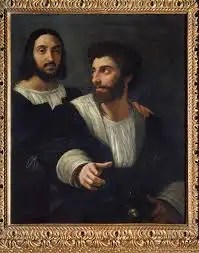
I knew I’d never get close to the Mona Lisa, but there were other pieces I wanted to see as well. The crowd around the mysterious lady watching us from every direction was so intense (150-200 people who refused to move to let others come close) that I left that gallery and sought other master works of Leonardo da Vinci and Raffaello Sanzio da Urbino, including this self-portrait with his friend that Raffael painted as a young man (between 1518 and 1520), the very year he died at the young age of 37.

My impressions as we reflected upon some the greatest of humankind’s creations in western civilization, reminded me not only of the artists’ genius, but of life’s brevity. They are, of course, all gone, but their works remain as their legacy.

Years ago I sat with Leonard Nimoy and asked him about the source of his inspiration as an artist. He said that great artists always have antenna out and receiving. The moments of creation, he noted, come from a place beyond the rational mind. He liked to quote the 19th century American Shakespearean stage actor Edwin Booth (1833-1893) who, Leonard said, heard the solemn whisper of the god of all arts:

“I shall give you hunger and pain and sleepless nights, also beauty and satisfaction known to few, and glimpses of the heavenly life. None of these shall you have continually, and of their coming and going you shall not be foretold.”

As I viewed Paris’ artistic riches, Booth’s notion of the god of all arts filled my thoughts as I marveled at the creative genius left to us in every age.

Pope Francis – May his memory be a blessing

21 Monday Apr 2025

Posted by rabbijohnrosove in Uncategorized

≈ 1 Comment

I was saddened this morning to learn of the passing of the 88 year-old Pope Francis (born Jorge Mario Bergoglio in Buenos Aires, Argentina on December 17, 1936), who took as his Papal name “Francis” on March 13, 2013, after Saint Francis of Assisi (d. 1226), a Catholic mystic, poet, and friar who committed himself to a life of poverty and concern for the poor, animals and the environment. Pope Francis’ humility drew him to live, upon becoming Pope, not in the Papal palace, but in a simple apartment in the Vatican. Deeply concerned about the poor within the Church and around the world and about the environment, Pope Francis issued an encyclical called “Laudato Si” in which he expressed his concerns about the negative impact of global warming and climate change.

My colleague, Rabbi Ron Kronish, an inter-religious peace-builder living in Jerusalem, wrote movingly of Pope Francis in an article he called “A Rabbi’s Appreciation of Pope Francis: A man of peace” in the Jesuit Review (April 10, 2025) from which I have drawn a few quotations of Pope Francis. For Ron’s article, see https://www.americamagazine.org/faith/2025/04/10/rabbi-kronish-ope-francis-250344

In his memoir, Life: My Story Through History (publ. 2024), Pope Francis wrote at length at the end of the first chapter about his memories of World War II and of the moral duty to welcome immigrants today:

“I want to repeat this, I want to shout it out: Please, let us welcome our brothers and sisters when they knock at the door. Because if they are properly integrated, if they are supported and looked after, they can make a big contribution to our lives. Like those Polish immigrants I knew as a child who fled the war, today’s migrants are just people looking for a better place who often find death instead. Too often, sadly, these brothers and sisters of ours, who want a little peace, encounter neither welcome nor solidarity, only an accusing finger. It is prejudice that corrupts the soul; it is wickedness that kills, and it is a dead end, a perversion. Let us not forget, for example, what happened to our Jewish brothers and sisters. And in their case, memories are plentiful.”

Pope Francis devoted an entire chapter to “The Extermination of the Jews” in which he recalled his earliest memories of the Holocaust:

“I have become fully aware of this drama, thanks to my teachers at school, my family, the study of history, and above all thanks to the stories of survivors who over the years have told me of their experiences of imprisonment in those death camps, places where human dignity was utterly crushed. I have heard many such stories, some of them from my friend, Rabbi Abraham Skorka [an Argentinian biophysicist, rabbi and author].”

In 2014, Pope Francis visited Yad Vashem in Jerusalem where he said:

“Remember us in your mercy. Grant us the grace to be ashamed of what we have done, to be ashamed of this massive idolatry, of having destroyed our own flesh, which you formed from the earth, to which you gave life with your own breath of life. Never again, Lord, never again.”

Following the vicious Hamas massacre of Israelis and others on October 7, 2023 and the war between Israel and Hamas, Pope Francis wrote a letter to “my Jewish brothers and sisters in Israel”:

“My heart is torn at the sight of what is happening in the Holy Land, by the power of so much division and so much hatred. The whole world looks on at what is happening in that land with apprehension and pain. These are feelings that express special closeness and affection for the peoples who inhabit the land which has witnessed the history of Revelation….this war has also produced divisive attitudes, sometimes taking the form of anti-Semitism and anti-Judaism. I can only reiterate what my predecessors also clearly stated many times: the relationship that binds us to you is particular and singular, without ever obscuring, naturally, the relationship that the Church has with others and the commitment towards them too.”

Francis rejected every form of anti-Judaism and anti-Semitism

“unequivocally condemning manifestations of hatred towards Jews and Judaism as a sin against God. Together with you, we, Catholics, are very concerned about the terrible increase in attacks against Jews around the world. We had hoped that ‘never again’ would be a refrain heard by the new generations, yet now we see that the path ahead requires ever closer collaboration to eradicate these phenomena.”

He stressed the importance of pursuing peace as a religious obligation:

“In times of desolation, we have great difficulty seeing a future horizon in which light replaces darkness, in which friendship replaces hatred, in which cooperation replaces war. However, we, as Jews and Catholics, are witnesses to precisely such a horizon. And we must act, starting first and foremost from the Holy Land, where together we want to work for peace and justice, doing everything possible to create relationships capable of opening new horizons of light for everyone, Israelis and Palestinians.

Together, Jews and Catholics, we must commit ourselves to this path of friendship, solidarity and cooperation in seeking ways to repair a destroyed world, working together in every part of the world, and especially in the Holy Land, to recover the ability to see in the face of every person the image of God, in which we were created.”

Among my favorite films is the 2019 drama called “The Two Popes” in which Pope Benedict XVI, played by Anthony Hopkins, sought to convince Cardinal Jorge Mario Bergoglio, played by Jonathan Pryce, not only not to resign from the priesthood, but to take over the Papacy upon Benedict’s resignation, the first such resignation of any Pope since the 15th century. The movie, written by Anthony McCarten, is fiction as are the meetings described between the two Popes. However, their conversations, set in the Vatican, and growing friendship reflect the humanity of each Pope and their internal struggles with faith, life and history. “The Two Popes” is streaming on Netflix.

The world has lost a good man, a humble priest whose decency and deep commitment to peace and to the poor will be remembered not only by Catholics, but by the Jewish people and humankind as a whole for blessing.

What I’m Reading and Watching This Week – Kareem Abdul Jabaar and Senator Adam Schiff

18 Friday Apr 2025

Posted by rabbijohnrosove in Uncategorized

≈ Leave a comment

Tags

history, political, politics, trump

Kareem Abdul Jabaar, among the greatest NBA players in the history of basketball, has become, in my view, among the greatest public intellectuals in our nation today. Kareem writes every week in his “Official Newsletter” on sports, politics and pop culture and how they define America. In every missive, his moral compass helps clarify the meaning of what we’re experiencing as a people and nation. He also entertains with short video clips in sports, pop music, and the natural world. This week, for example, he showed a video of a fox in the dead of winter in North Dakota hunting field mice through three feet of snow, leaping high into the air and diving head-first after the wild canine hears the slightest rustle of sound beneath the snow-surface, and then coming up with a mouse in its mouth 75 percent of the time.  

This week (April 18, 2025) Kareem also wrote a “Halleluyah” piece about Harvard President Alan Garber refusing to bend the knee to Trump. And he notes that the Wall Street Journal predicted that Trump will be impeached a third time – hard to believe, but he makes the case writing:

“Defying the U.S. Supreme Court is the most blatant admission that Trump is angling to be a dictator. Will he be impeached before he’s amassed enough power to overturn the government—which he’s been doing for months—or will the GOP put their country ahead of their careers before it’s too late?”

Kareem is smart and his newsletters are always thoughtful, informative and entertaining.

And then there is my friend and Senator Adam Schiff, who every night posts a YouTube of between five and ten minutes in which he reviews the outrage of the day perpetrated by Donald Trump and his administration. Always focused and thoughtful, Adam offers his viewpoint about each particular event. In this one, he describes President Trump’s blatant disobeying of lawful court orders, as Trump’s advisors and allies cheer him on, following the mind-numbing injustice of the case of Kilmar Abrego Garcia who remains trapped in a jail in El Salvador. Watch that video here: https://www.youtube.com/watch?v=HGTIELDTHOo

I add two quotations from more than one hundred years ago in American history that inform us about what we are facing as a people and nation in these exceptionally disturbing days of federal government stupidity, illegality and overreach. The first is from the writings of the former Chief Justice of the United States, Charles Evans Hughes (1862-1948), who anticipated the current moment in our history nearly a century ago, and what is required of us today:

“No greater mistake can be made than to think that our institutions are fixed or may not be changed for the worse. … Increasing prosperity tends to breed indifference and to corrupt moral soundness. Glaring inequalities in condition create discontent and strain the democratic relation. The vicious are the willing, and the ignorant are unconscious instruments of political artifice. Selfishness and demagoguery take advantage of liberty. The selfish hand constantly seeks to control government, and every increase of governmental power, even to meet just needs, furnishes opportunity for abuse and stimulates the effort to bend it to improper uses. … The peril of this nation is not in any foreign foe. We, the people, are its power, its peril, and its hope.”

The second are the words of Carl Schurz (1829-1906), the German-American revolutionary, statesman, and reformer:

“We have come to a point where it is loyalty to resist and treason to submit.”

Both Kareem Abdul Jabaar and Senator Adam Schiff are, among others across the nation, leading the way in our resistance.

Dear Canadian Friends

15 Tuesday Apr 2025

Posted by rabbijohnrosove in Uncategorized

≈ 2 Comments

My friend and California Senator Adam Schiff, one of our greatest Americans and a very proud Jew, posts nightly 5-10 minute explanations of the distortions and dangers presented to American democracy and decency by the Trump Administration. This one (link below) is a message of gratitude to our Canadian neighbors, and I wanted you all to see it and remember that the vast majority of United States citizens do not take you for granted and that we are outraged by Trump’s disrespectful treatment of you as Canadians, our historic and ongoing friend, partner and neighbor.

Speaking personally, my mother was born in Canada, and she came with her mother and 9 brothers and sisters to Los Angeles in 1932 immediately after her father died. He had lost everything in the Great Depression and her older siblings believed they would have more opportunity to survive as a very large family in Southern California. I’ve been thinking that though I do not intend to leave the United States (I will fight in the best way I know how, through my writing, for the goodness of our nation, our pluralistic and Constitutional democracy), I may have the right to be a Canadian citizen because of my mother’s birth and life in Canada until the age of 15 years.  Who knows – perhaps one day I’ll live amongst you.

In friendship and gratitude for all the reasons Senator Schiff describes, and more.

Watch Senator Schiff here – https://www.youtube.com/watch?v=hcrL88Jwhsg

Wiping Clean the “Human Stain” – A Pesach Message

10 Thursday Apr 2025

Posted by rabbijohnrosove in Uncategorized

≈ 2 Comments

Tags

gaza, hamas, Israel, palestine, politics

Fear, anger, outrage, disgust, rage, anxiety, worry – these are among the feelings millions of Americans have been experiencing since Trump took control of the federal government, appointed incompetent sycophants to his Cabinet, began firing hundreds of thousands of federal workers, dismembering whole government departments and agencies, crashing the economy, obliterating the life savings of millions of seniors, threatening America’s social safety net, and wrecking the international global trading system.

And then there’s the endless war in Gaza that PM Netanyahu refuses to end thereby callously forsaking the lives of the remaining hostages, withholding desperately needed humanitarian aid from the most vulnerable Palestinian civilians in Gaza, and allowing more killings in Gaza and the destruction of Palestinian lives and villages in the West Bank.

In his novel The Human Stain, Philip Roth wrote cynically:

“…we leave a stain, we leave a trail, we leave our imprint. Impurity, cruelty, abuse, error, … – there’s no other way to be here. Nothing to do with disobedience. Nothing to do with grace or salvation or redemption. It’s in everyone. Indwelling. Inherent, Defining. The stain that is there before its mark. Without the sign it is there. The stain so intrinsic it doesn’t require a mark. The stain that precedes disobedience, that impasses disobedience and perplexes all explanation and understanding. It’s why all the cleansing is a job. A barbaric joke at that. The fantasy of purity is appalling. It’s insane. What is the quest to purify, if not more impurity?” (p. 242)

Roth’s dystopic characterization of the human condition is soul-crushing and contrary to fundamental Jewish values promoting goodness, justice, compassion, and human decency.

Years ago at a convention of Reform Rabbis in Jerusalem that met between Purim and Pesach, Yossi Klein Halevi offered this teaching about the truths at the core of each holiday. Purim, he said, reminds Jews that there are indeed evil actors in the world whose hatred of our people threatens us and we cannot be naïve about their worst intentions. Pesach reminds us, he said, that as a people who have long known enslavement and suffering must never forget that it’s our duty to remain compassionate despite the cruelty around us.

Pesach reminds us also that we need each other, our families, friends, and community as we face the multitude of moral challenges before us. When we open the door for Elijah, we’re reminded that not all is lost, that hope abides despite the human stain that leaves its corrosive residue in the heart, and that it’s our moral and Jewish duty to act justly, to love mercy, and to pursue peace.

Our role today, along with the millions of Americans who marched last weekend against the despotic over-reach of this corrupt and heartless American President, is to be, like them, on the right side of history. And it is to be grateful for the thousands of lawyers and law firms, the hundreds of college and university presidents and faculties, and the many decent public servants in Congress, state capitals and local communities across the United States who are resisting tyranny.

As Jews who love Israel, it is our place to act in solidarity with the hundreds of thousands of Israeli demonstrators marching weekly and calling for an immediate end to Israel’s longest war, the return of the hostages, the restoration of humanitarian aid for Palestinian civilians in Gaza, and on behalf of Israeli democracy.  

When the ancient Israelites escaped Egypt with Pharaoh’s troops in pursuit, they came to the Sea of Reeds, a natural blockade to their liberation. Moses turned to God in prayer and asked for Divine agency. However, Nachshon ben Aminadav took history into his own hands and leaped into the sea, whereupon the Holy One took note of Nachshon’s courage and parted the waters that the people might escape upon dry land.

The Babylonian Talmud (Shabbat 54b), many centuries later, reflected on the moral responsibility of our people to take action whenever they confronted injustice, corruption, and hard-heartedness:

“If a person can protest the misdeeds of one’s household, yet does not, that one becomes guilty with them. If a person can protest the deeds of one’s towns-people, and does not, that one is guilty with them. If a person can protest the deeds of the entire world, and does not, that one is guilty with them.”

Chag Pesach Sameach!

← Older posts
Newer posts →

Enter your email address to subscribe to this blog and receive notifications of new posts by email.

Join 366 other subscribers

Archive

  • March 2026 (2)
  • February 2026 (6)
  • January 2026 (8)
  • December 2025 (4)
  • November 2025 (6)
  • October 2025 (8)
  • September 2025 (3)
  • August 2025 (6)
  • July 2025 (4)
  • June 2025 (5)
  • May 2025 (4)
  • April 2025 (6)
  • March 2025 (8)
  • February 2025 (4)
  • January 2025 (8)
  • December 2024 (5)
  • November 2024 (5)
  • October 2024 (3)
  • September 2024 (7)
  • August 2024 (5)
  • July 2024 (7)
  • June 2024 (5)
  • May 2024 (5)
  • April 2024 (4)
  • March 2024 (8)
  • February 2024 (6)
  • January 2024 (5)
  • December 2023 (4)
  • November 2023 (4)
  • October 2023 (9)
  • September 2023 (8)
  • August 2023 (8)
  • July 2023 (10)
  • June 2023 (7)
  • May 2023 (6)
  • April 2023 (8)
  • March 2023 (5)
  • February 2023 (9)
  • January 2023 (8)
  • December 2022 (10)
  • November 2022 (5)
  • October 2022 (5)
  • September 2022 (10)
  • August 2022 (8)
  • July 2022 (8)
  • June 2022 (5)
  • May 2022 (6)
  • April 2022 (8)
  • March 2022 (11)
  • February 2022 (3)
  • January 2022 (7)
  • December 2021 (6)
  • November 2021 (9)
  • October 2021 (8)
  • September 2021 (6)
  • August 2021 (7)
  • July 2021 (7)
  • June 2021 (6)
  • May 2021 (11)
  • April 2021 (4)
  • March 2021 (9)
  • February 2021 (9)
  • January 2021 (14)
  • December 2020 (5)
  • November 2020 (12)
  • October 2020 (13)
  • September 2020 (17)
  • August 2020 (8)
  • July 2020 (8)
  • June 2020 (8)
  • May 2020 (8)
  • April 2020 (11)
  • March 2020 (13)
  • February 2020 (13)
  • January 2020 (15)
  • December 2019 (11)
  • November 2019 (9)
  • October 2019 (5)
  • September 2019 (10)
  • August 2019 (9)
  • July 2019 (8)
  • June 2019 (12)
  • May 2019 (9)
  • April 2019 (9)
  • March 2019 (16)
  • February 2019 (9)
  • January 2019 (19)
  • December 2018 (19)
  • November 2018 (9)
  • October 2018 (17)
  • September 2018 (12)
  • August 2018 (11)
  • July 2018 (10)
  • June 2018 (16)
  • May 2018 (15)
  • April 2018 (18)
  • March 2018 (8)
  • February 2018 (11)
  • January 2018 (10)
  • December 2017 (6)
  • November 2017 (12)
  • October 2017 (8)
  • September 2017 (17)
  • August 2017 (10)
  • July 2017 (10)
  • June 2017 (12)
  • May 2017 (11)
  • April 2017 (12)
  • March 2017 (10)
  • February 2017 (14)
  • January 2017 (22)
  • December 2016 (13)
  • November 2016 (12)
  • October 2016 (8)
  • September 2016 (6)
  • August 2016 (6)
  • July 2016 (10)
  • June 2016 (10)
  • May 2016 (11)
  • April 2016 (13)
  • March 2016 (10)
  • February 2016 (11)
  • January 2016 (9)
  • December 2015 (10)
  • November 2015 (12)
  • October 2015 (8)
  • September 2015 (7)
  • August 2015 (10)
  • July 2015 (7)
  • June 2015 (8)
  • May 2015 (10)
  • April 2015 (9)
  • March 2015 (12)
  • February 2015 (10)
  • January 2015 (12)
  • December 2014 (7)
  • November 2014 (13)
  • October 2014 (9)
  • September 2014 (8)
  • August 2014 (11)
  • July 2014 (10)
  • June 2014 (13)
  • May 2014 (9)
  • April 2014 (17)
  • March 2014 (9)
  • February 2014 (12)
  • January 2014 (15)
  • December 2013 (13)
  • November 2013 (16)
  • October 2013 (7)
  • September 2013 (8)
  • August 2013 (12)
  • July 2013 (8)
  • June 2013 (11)
  • May 2013 (11)
  • April 2013 (12)
  • March 2013 (11)
  • February 2013 (6)
  • January 2013 (9)
  • December 2012 (12)
  • November 2012 (11)
  • October 2012 (6)
  • September 2012 (11)
  • August 2012 (8)
  • July 2012 (11)
  • June 2012 (10)
  • May 2012 (11)
  • April 2012 (13)
  • March 2012 (10)
  • February 2012 (9)
  • January 2012 (14)
  • December 2011 (16)
  • November 2011 (23)
  • October 2011 (21)
  • September 2011 (19)
  • August 2011 (31)
  • July 2011 (8)

Categories

  • American Jewish Life (458)
  • American Politics and Life (417)
  • Art (30)
  • Beauty in Nature (24)
  • Book Recommendations (52)
  • Divrei Torah (159)
  • Ethics (490)
  • Film Reviews (6)
  • Health and Well-Being (156)
  • Holidays (136)
  • Human rights (57)
  • Inuyim – Prayer reflections and ruminations (95)
  • Israel and Palestine (358)
  • Israel/Zionism (502)
  • Jewish History (441)
  • Jewish Identity (372)
  • Jewish-Christian Relations (51)
  • Jewish-Islamic Relations (57)
  • Life Cycle (53)
  • Musings about God/Faith/Religious life (190)
  • Poetry (86)
  • Quote of the Day (101)
  • Social Justice (355)
  • Stories (74)
  • Tributes (30)
  • Uncategorized (835)
  • Women's Rights (152)

Blogroll

  • Americans for Peace Now
  • Association of Reform Zionists of America (ARZA)
  • Congregation Darchei Noam
  • Haaretz
  • J Street
  • Jerusalem Post
  • Jerusalem Report
  • Kehillat Mevesseret Zion
  • Temple Israel of Hollywood
  • The IRAC
  • The Jewish Daily Forward
  • The LA Jewish Journal
  • The RAC
  • URJ
  • World Union for Progressive Judaism

Blog at WordPress.com.

  • Subscribe Subscribed
    • Rabbi John Rosove's Blog
    • Join 366 other subscribers
    • Already have a WordPress.com account? Log in now.
    • Rabbi John Rosove's Blog
    • Subscribe Subscribed
    • Sign up
    • Log in
    • Report this content
    • View site in Reader
    • Manage subscriptions
    • Collapse this bar
 

Loading Comments...