• About

Rabbi John Rosove's Blog

Rabbi John Rosove's Blog

Tag Archives: Israel

“Three Accusations against Israel: Apartheid, Settler Colonialism, and Genocide under Legal and Historical Scrutiny”

05 Monday Oct 2026

Posted by rabbijohnrosove in Uncategorized

≈ 1 Comment

Tags

gaza, genocide, Israel, palestine, politics

Published – September 17, 2026 by Günther Jikeli and Philippe Karpe

This is an important study by two scholars of antisemitism and international law about the three charges made against Israel. I recommend that you read the entire paper. The Abstract is as follows, and the bios of the two scholars are below.

Abstract

This article examines three recurrent classifications of Israel and its conduct: apartheid, settler colonialism, and genocide. It treats apartheid and genocide as legal classifications with defined elements and settler colonialism as a historical-comparative framework. After reviewing the principal arguments and evidence, it concludes that apartheid and genocide are not established and that settler colonialism is an inadequate classification, including in the settings where each accusation is strongest. 

The evidence does not establish apartheid in Israel’s citizenship regime or in the West Bank. [my emphasis] The latter presents the stronger case because of prolonged occupation, settlements, unequal legal arrangements, and movement toward de facto annexation. Yet Palestinian self-government, the negotiated origins of the present structure, security considerations, judicial review, and repeated negotiations over withdrawal and statehood leave the required purpose or intent to establish or maintain systematic racial domination and oppression unproven. Settler colonialism illuminates aspects of pre-state settlement, Palestinian displacement, and the post-1967 West Bank settlement enterprise, but does not adequately account for Zionism’s national and refugee character, Jewish historical attachment, or the absence of a conventional or functionally equivalent metropole. Even in the West Bank, divergent territorial strategies and negotiations over withdrawal complicate the claim of a continuous project of permanent incorporation. The record establishes extensive Palestinian death, injury, deprivation, and civilian suffering, but does not establish the specific intent to destroy Palestinians, in whole or in substantial part, as such, required for genocide under the Convention.

More broadly, expansive definitions and selective evidence allow the three accusations to reinforce one another, shift the burden of proof, and erode the distinctions they are meant to capture, converting bounded legal and historical categories into comprehensive claims about the illegitimacy of Israel as such.

Read the full paper here – https://papers.ssrn.com/sol3/papers.cfm?abstract_id=7501120

Authors’ Bios

Günther Jikeli – Interim Director 2025-2026, Borns Jewish Studies Program, Erna B. Rosenfeld Associate Professor for the Study of Antisemitism at Indiana University’s Institute for the Study of Contemporary Antisemitism, Associate Professor in the Borns Jewish Studies Program and Germanic Studies. He is a historian and sociologist of modern Europe, with particular interests in the history of antisemitism and in critical antisemitism studies. His research focuses on online and offline forms of contemporary antisemitism. He runs the research lab “Social Media & Hate.”

Philippe Karpe – Senior Researcher and international expert at CIRAD-UR GREEN (Gestion des Ressources Renouvelables et Environnement). He is also a lecturer (University of Strasbourg (France) and University of Hokkaido (Japan). He holds a PhD in law and an Accreditation to Supervise Research in Law. Conducted over about thirty years, his research has covered several successive legal topics, including the protection and promotion of human rights, (especially those of the indigenous peoples, peasants, rural youth and women), the compliance with human rights obligations by businesses (with a focus on land grabbing and biopiracy), the legal recognition of the local, minority and indigenous customs and the relations between Human and Nature.

‘Fauda’ is a must-see series

27 Sunday Sep 2026

Posted by rabbijohnrosove in Uncategorized

≈ 4 Comments

Tags

gaza, hamas, Israel, palestine, politics

I have watched all 59 episodes of Fauda, including the fifth season that was released a few weeks ago on Netflix. If one wants to understand Israelis, this series is a must see, especially those who focus only on the results of Israel’s just war against Hamas in Gaza.

What is remarkable about the fifth season of Fauda is that the series ranks as Netflix’s top 10 across many Arab countries. In the second week of September, it was the No. 1 show in Lebanon, No. 4 in Jordan and Qatar, No. 5 in the United Arab Emirates, and No. 9 in Kuwait.

One has to wonder what is so appealing about Fauda in the Arab world. Yes, it is great television, as it is multi-layered, emotionally raw, psychologically complex, and historically important. The show does not spare us in showing and inferring the brutality that innocent Israelis suffered on 7 October 2023 at the hands of Hamas. Perhaps, more than any of us might have imagined, Israel’s suffering has penetrated into the hearts and minds of Israel’s neighbors, many of which have no formal relations with the Jewish state.

Do we need to really watch this show? I say, “Yes” lest we forget the brutality of Hamas and what provoked Israeli fears and its military response.

I encourage you to watch every episode, react as you will, and then reflect about the dire need for peace for Israel and the Palestinian people, not peace at any price. Rather, peace with dignity, justice, and security for Israel and the Palestinian people so that attacks such as what Hamas did and the war that resulted can never happen again.

A disclaimer – two of the young people who were murdered by Hamas at the Nova Music Festival, attended by thousands of young people, Norelle and Roya Manzuri (z’l), grew up in my synagogue’s elementary school before their family returned to Israel.

I know I am not alone. Virtually every Israeli knew someone who was murdered and taken as hostages on that day, and much of the Jewish Diaspora also knew someone who lost their life or was taken as a hostage into Gaza’s tunnels.

The following is a review of the series by Israel’s daily newspaper Ma’ariv Online (September 14, 2026)

Fifth season of ‘Fauda’ sparks viral international reactions to October 7-focused episodes

Within a day of its release on Netflix, the series had already ranked seventh among the platform’s 10 most-watched shows in 43 countries and was leading to new understandings of the massacre.

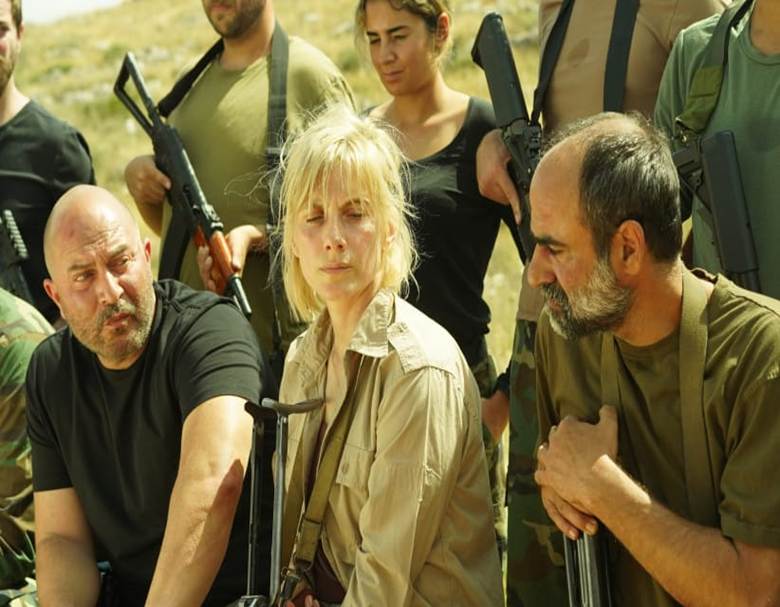
Lior Raz and Mélanie Laurent in season five of Fauda. (photo credit: COURTESY OF YES) By MAARIV ONLINE SEPTEMBER 14, 2026

The fifth season of the Israeli television series Fauda sparked controversy and a new understanding of the October 7 massacre around the world after it devoted several episodes to October 7, with episodes 7 and 8 focusing specifically on the Hamas-led attack. 

Both episodes received a 9.3 rating on IMDb, sparking widespread reactions on social media. Within a day of its release on Netflix, the series had already ranked seventh among the platform’s 10 most watched shows in 43 countries.

Israeli social media influencer Lee Malach wrote: “My entire feed is filled with tweets from Dutch and German people; I have no idea why, about the October 7 episodes of ‘Fauda.’ They are in total shock over what happened here, and the posts are difficult to read and very supportive of Israel. It is crazy to me how little these people know about what happened here and how much they talk about the subject.”

Show brings new understanding of massacre 

Brazilian cartoonist Luciano Pires wrote: “I watched the fifth season of ‘Fauda.’ It has always been an unsettling series. But the fifth season is particularly shocking and painful. Episodes 7 and 8 recreate the October 7 massacre, making them far more difficult to watch than a fictional drama. After all, we have all seen dozens of real videos from the attack, many of them filmed by the terrorists themselves, and they were horrifying enough. But this time, the fictional work takes us directly into the horror.”

Pires also reflected on what filming the scenes may have meant for the show’s Israeli cast and crew.

Lior Raz (left) with Melanie Laurent and Yaakov Zada-Daniel in a scene from season five of Fauda. (credit: COURTESY OF YES, CREDIT ELIA SPINOPOLOS)

He continued: “I was genuinely horrified, not only by watching the massacre through the eyes of the victims, but also by thinking about the Israeli actors, many of whom are Jewish. The image accompanying this post shows actor Yaakov Zada Daniel, who plays the operative Eli, as he enters his home in a kibbutz attacked by Hamas terrorists. It is a breathtaking moment. He was not acting out a scene about a distant tragedy; he was recreating on camera an event that struck his country, his family, his friends, and the series’ own production team. Idan Amedi, an actor in the series, was seriously wounded during the fighting in Gaza. Matan Meir, a member of the production team, was killed in the war.”

Pires concluded: “Perhaps that is why these episodes have a different quality. They do not feel like an attempt to imagine the horror. They take us directly into it.”

The episodes also prompted strong reactions from viewers in Italy. One man wrote: “I could barely keep my eyes open.” Another woman wrote: “Yesterday, a friend called me and told me the same thing. She added, ‘Who knows, perhaps this series will help people understand the atrocities committed by Hamas on October 7.’ And I replied, ‘I’m afraid it won’t.’ P.S. My friend is neither Jewish nor Israeli, but she is free and knows how to use her own mind.” Some users also shared real footage of the massacre in southern Israel in their replies.

An influencer from India wrote: “Sleepless nights. Can someone please erase my memory of this episode?? I can’t stop thinking and worrying. Episode eight of ‘Fauda’ really disturbed me. I don’t understand how there are still Hamas supporters among us. God, please help me get over this series.” Another user responded: “I am a huge fan of ‘Fauda’ and of Israel, but I don’t have the courage to watch the fifth season.”

Viewers argue series only showed small portion of attack

A different user from India argued that the series had shown only a small portion of the violence committed during the attack.

The user wrote: “Contrary to claims that the fifth season of ‘Fauda’ went too far, I think it is remarkably restrained. The series offers only a small glimpse into the atrocities of October 7. The reality was far more disturbing: murder, abductions, sexual violence, brutal abuse, torture, and the deliberate targeting of innocent civilians. 

“It spared viewers descriptions of women who were gang raped and burned alive, families who were tied together and whose bodies were dismembered, the killing of pregnant women and children, the sexual desecration of bodies, the mutilation of genitalia, and horrific injuries suffered by children. Many children were also abducted, including infants as young as nine months old. Kfir Bibas was only nine months old when he was kidnapped; he was later murdered in captivity alongside his four-year-old brother, Ariel. The series did not show fathers who had kerosene poured over them and begged for their lives moments before being set on fire as their attackers laughed.”

The user continued: “No film or television series can truly recreate the horror of such a pogrom. ‘Fauda’ is a fictional work, but it draws inspiration from real events. October 7 was not a fictional story; it was a real tragedy, and the victims deserve to be remembered as events truly occurred.”

A woman from the UK responded: “I just finished watching episodes 7 and 8. This will stay with me forever. What Israelis went through… and the world simply does not care.”

A social media user from Texas asked his followers whether they had watched the season and what they thought of it. Responses included: “Well made, but heartbreaking. Not for the faint of heart,” and “Episodes 7 and 8 are simply unforgettable.”

He concluded: “It seems that episodes 7 and 8 of ‘Fauda’ moved everyone; it looks like a phenomenal season, as usual.”

“Never despair! Never! It is forbidden to give up hope” – Rabbi Nachman of Breslov

22 Tuesday Sep 2026

Posted by rabbijohnrosove in Uncategorized

≈ Leave a comment

Tags

Israel, judaism, palestine, politics, zionism

In this era of growing cynicism, a-historical and ignorant thinking, moral relativity, and pessimism, we Americans, Jews, Israelis and people around the world have a critical choice before us – to succumb to the malignant forces in our respective governments and political leadership, or to act on the appeal that President Abraham Lincoln famously said in his first inaugural address in 1861 to act according to the “better angels of our nature.” As Rabbi Nachman so passionately advised, we are “forbidden to give up hope” for a better world order.

Rabbi Jonathan Sacks wrote about the nature and importance of hope:

“There is nothing inevitable or even rational about hope. It cannot be inferred from any facts about the past or present. Those with a tragic sense of life hold that hope is an illusion, a childish fantasy, and that a mature response to our place in the universe is to accept its fundamental meaninglessness and cultivate the stoic virtue of acceptance. Judaism insists otherwise: that the reality that underlies the universe is not deaf to our prayers, blind to our aspirations, indifferent to our existence. We are not wrong to strive to perfect the world, refusing to accept the inevitability of suffering and injustice … Hope is one of the very greatest Jewish contributions to Western civilization, so much so that I have called Judaism ‘the voice of hope in the conversation of humankind.’”

As we begin this new Jewish year, Judaism reminds us not to lose hope no matter what is happening in our lives or in the world around us. The Jewish people’s longevity is evidence enough that hope abides. Otherwise, we would have vanished long ago from the pages of history.

Hope is emphasized throughout Jewish history, tradition, liturgy, theology, ethics, culture, and art despite our people’s suffering from antisemitism, persecution, expulsion, murder, war, terrorism, and assimilation. How else can one explain the consistency and dogged determination of Jewish rebirth after so many catastrophic events, except through unalloyed hope?

Hope has buttressed our people’s spirit from the ancient Hebrew enslavement to the Exodus from Egypt; from our people’s wandering in the desert to the forging of the Covenant at Sinai; from the frequent rebellions against Moses’ leadership to the ancient Israelite’s entrance into the Promised Land; from the destruction of the First and Second Temples in Jerusalem to the creation of a thriving Diaspora; from the Crusades, Inquisition, and pogroms to our immigration to the New World and Palestine; from the fires of the Holocaust to the establishment of the State of Israel; from the suppression of Soviet Jewry to their massive emigration to the United States and the Jewish Homeland; from terrorism and war in Israel to our undying “hoped-for” peace.

In every instance, the Jewish people’s will to survive, to reaffirm who we are, to re-create ourselves as a people, and to adapt to and then thrive in new circumstances are evidence of our people’s determination, willfulness, familial and community cohesion, values, and hope.

What is it about hope that persists in the Jewish heart? It would seem to anyone who knows Jewish history that hope is defiance against reason and against the lived experience of our people, an illusion based in magical thinking.

However, despite our people’s history, hope gives us the confidence to carry on, take chances, plan for the long term, create families, bring children into the world, support Jewish community and the State of Israel, and stand against cynicism, pessimism, and despair no matter what challenges we face and what obstacles make progress seem improbable.

The first chapters in the Book of Genesis set the stage almost four millennia ago. God exists. Moral values infuse creation (after each day the biblical text tells us “וירא אלוהים כי טוב – and God saw that it is good”). Order and purpose are at the core of our nature as human beings and our perception of our moral role in the universe. Although humankind consistently struggles morally and ethically, our people’s wrestling with good and evil (we are called ישראל – Yisrael, a people that struggles) and our consistent searching for the efficacy of transcendent values infuse the Jewish heart and soul with hope that we can overcome every malignant force that allies itself against us.

Our keeping focus on the kind of world we want to inhabit while doing everything possible to prepare ourselves for the fulfillment of a higher moral and ethical vision, which is what we Jews have done over the millennia, inspires hope in the Jewish heart and renewed energy, a sense of purpose, and a positive attitude.

There is no place for a moral person to hide in a world challenged “to do justice, to be compassionate, and to walk with humility before the Eternal” (Micah 6:8). Judaism calls upon us to overcome cynicism, pessimism, and despair, and to bring hope to others through our performance of deeds of loving-kindness and our advocacy of justice.

Judaism and the Jewish people’s lived experience teach that we are at our best when we’re driven by the pursuit of justice infused with compassion, that no matter what our personal circumstances, tradition calls upon us to right the wrongs that produce human misery. Those who help others become, as a result, more resilient in the presence of evil. It is when we reach out to others that we are elevated to our highest humanity. Through activism we also become less fearful and anxious, perhaps more saddened by the suffering we encounter in the world, but unbowed as we struggle on behalf of the well-being of those we seek to help.

There are so many inspiring stories across cultures and nations of how one individual changed the course of history for the better. All great social movements started with a single person whose will and hope thrust them forward to do great deeds.

Theodor Herzl, the father of modern political Zionism as a response to rampant antisemitism in Europe, envisioned the return of the Jewish people to the Land of Israel and, in 1898, predicted that a Jewish and democratic state would be established in Palestine in fifty years.

Rosa Parks refused to give up her seat to a white man on a Montgomery, Alabama bus in 1955 and became a symbol of African American courage, pride, and dignity, leading eventually to the passage of the Civil Rights Act of 1964 and the Voting Rights Act of 1965.

Think also of the courageous Russian opposition leader, lawyer, and anti-corruption activist Alexei Navalny, who, on 20 August 2020, was poisoned on the presumed orders of President Vladimir Putin of Russia with a Novichok nerve agent and was hospitalized in serious condition. He was whisked away to Germany to recover, and then he returned to Russia to lead the opposition once again against Putin’s autocratic and deadly rule. Navalny knew he would be arrested as he descended from the airplane at Moscow’s airport. He was imprisoned and then murdered, allegedly on Putin’s orders, because Navalny represented hope against tyranny.

Activism for the good is founded upon memory of past sufferings, on our ability to rise after a tough ordeal, on the faith that we can recover and be stronger than we were, and on our capacity to remain hopeful without illusion. We Jews have good reason to despair and be cynical and pessimistic in the shadow of our history of persecution, suffering, victimization, and wandering, but Judaism forbids it.

Elie Wiesel put it this way in his Nobel Prize for Peace acceptance speech: “Because I remember, I despair. Because I remember, I have the duty to reject despair.”

Dr. Martin Luther King said in his final address in Memphis on 3 April 1968, less than twenty-four hours before he was assassinated: “We’ve got some difficult days ahead. But it really doesn’t matter with me now; because I’ve been to the mountaintop … I’ve seen The Promised Land. I may not get there with you. But I want you to know tonight, that we, as a people, will get to The Promised Land.”

Dr. Jerome Groopman distinguished the difference between hope and optimism: “Hope differs from optimism. Hope does not arise from being told to ‘think positively,’ or from hearing an overly rosy forecast. Hope, unlike optimism, is rooted in unalloyed reality … Hope is the elevating feeling we experience when we see – in the mind’s eye – a path to a better future. Hope acknowledges the significant obstacles and deep pitfalls along the way. True hope has no room for delusion.”

In this New Year 5787, despite the rampant corruption, cynicism, political extremism and polarization, wars and violence all around us, we Jews continue to hope. It is hope itself that will save us from the toxicity of cynicism and despair.

L’shanah tovah.

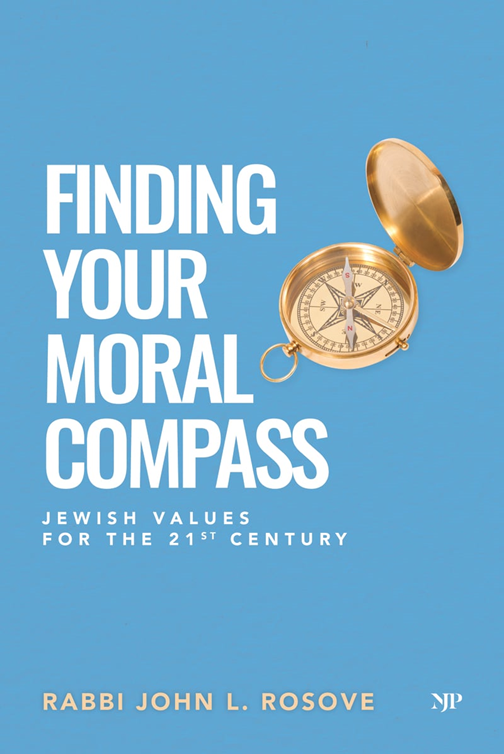
Note: This blog is edited from the final chapter of my book Finding Your Moral Compass – Jewish Values for the Twenty-First Century (Toronto: University of Toronto New Jewish Press, 2026). See the most recent review of my book here –  https://www.jewishbookcouncil.org/book/finding-your-moral-compass-jewish-values-for-the-21st-century. The book is available through the Jewish Book Council of America, the book’s publisher or on Amazon.


An Open Letter to Progressive Politicians about Israel and Palestine

25 Tuesday Aug 2026

Posted by rabbijohnrosove in Uncategorized

≈ 1 Comment

Tags

gaza, Israel, palestine, politics, zionism

To Progressive Democratic and Democratic-Socialist Candidates for Congress and Senate,

We American Jews who love and support Israel but oppose the policies of the most right-wing extremist and messianic government in Israel’s history, and who believe in the right of the Palestinian people to a state of their own alongside Israel need to know your response to a number of questions before we decide whether to vote for you.

Though winning the majority in the House and Senate for Democrats is a very high priority for us in order effectively to resist the Trump Administration’s assault on American democracy and our democratic norms, the rule of law, the US Constitution, health care, civil rights, immigrant rights, human rights, the environment, the destruction of America’s good name internationally, and to be a bulwark in stopping the most self-dealing and corrupt American president and administration in our 250 years as a nation, for many of us American Jews who care deeply about the importance of the American-Israel relationship, some of you have taken positions against the State of Israel that question its legitimacy and its right to self-defense following 7 October 2023.

After the Yom Kippur War of 1973 when Egypt and Syria simultaneously attacked Israel and the United States came to Israel’s aid to prevent its destruction, I was asked what I would do if the United States ever turned against Israel. At the time the question suggested a reality I could not imagine because it was widely accepted in the United States that it was in America’s self-interest to support Israel as a bulwark of democracy in the Middle East and that Israel shared with the United States common democratic values.

I, along with many American Jews who historically have voted in majority percentages for Democratic Party candidates, are therefore deeply worried that there are growing numbers of candidates for Congress and the Senate in the progressive political left who have unabashedly turned away from support for Israel and blurred the lines between the extremist Netanyahu government and the State of Israel as a whole. These candidates are forcing those of us in the pro-Israel, pro-peace and pro-democracy movement to choose between voting for you as Democratic Party candidates or supporting the people and State of Israel, a choice we never thought we would have to make.

It is therefore very important for us to know your true beliefs and attitude towards the State of Israel.

I ask you therefore to respond publicly to the following questions:

  • Do you believe that Israel has the right to exist as a Jewish and democratic state, and that the Land of Israel is the historic homeland of the Jewish people?
  • Do you believe that the Palestinian people have a right to a demilitarized state of some kind in their historic homeland alongside Israel?
  • Do you believe that your support for the rights of the Palestinian people is a zero-sum game that precludes you from advocating for Israel as a long-term American ally?
  • Do you support the principle of two states for two peoples (i.e. Israel and Palestine) in their shared national homeland?
  • Do you oppose or support the global Boycott Divestiture and Sanctions (BDS) movement that denies the right of the Jewish people to a state anywhere between the Jordan River and the Mediterranean Sea?
  • Do you condemn categorically Hamas’s and Islamic Jihad’s attack against Israeli civilians on 7 October 2023 in which they murdered and raped more than 1200 babies, children, women, young and old people, and took more than 250 hostages into tunnels under Gaza for many months of captivity in inhumane conditions?
  • Do you believe that what occurred on 7 October 2023, the worst attack against the Jewish people in more than one hundred years of the Israel-Arab conflict, that Israel had the right to respond militarily in its self-defense against Hamas and Islamic Jihad?
  • Though Israel’s response tragically destroyed the Gaza Strip and created a humanitarian disaster that many supporters of Israel criticized harshly, do you believe that Israel committed genocide against the Palestinians? If so, on what basis do you make this claim given that the accusation has not been adjudicated by the International Criminal Court? (1)
  • Do you condemn both Israeli settler violence against Palestinian civilians and Palestinian violence against Israeli civilians in the West Bank? (2)
  • Do you condemn nations the human rights record of which are far worse than anything Israel has done (e.g. North Korea, Syria, Myanmar, China, Saudi Arabia, Russia, Sudan, Turkey, Yemen, Belarus, Eritrea, Afghanistan, Somalia, and more)?
  • Do you believe that Hamas should have any role in a future Palestinian government given its continuing rejection of Israel’s legitimacy?

To your constituents:

For those of you who feel as I do and living in congressional districts and states in which candidates for Congress and the Senate have been hostile to Jews and Israel, and who have not adequately responded to the above questions, I ask you to forward this blog to them and their campaigns and insist that they respond to the questions above in detail.

Notes:

  1. The Genocide Convention defines “Genocide” as the committing of certain acts “with intent to destroy, in whole or in part, a national, ethnical, racial or religious group.” The key determining factor in characterizing a war as a “genocide” requires “intent.” Given that Hamas deliberately built its tunnels underneath homes, apartment buildings, schools, hospitals, health clinics, and mosques, it is unclear without an impartial inquiry that there was a crime committed by Israel that is as serious as “genocide”. For candidates for office in the US to cavalierly accuse Israel of genocide in its war against Hamas in order to politically align themselves with anti-Israel forces on the progressive left is slanderous. This does not mean that war crimes were not committed or that actions were taken that broke international law. On 8 October 2023, I heard anti-Israel and pro-Palestinian forces in the United States already calling Israel’s military response to Hamas a “genocide.” At that point, the war had not actually even begun. Further, in Israel Arab-Israeli citizens have rights, and though they are discriminated against, there is no effort by the Israeli government to expel them from Israel. And in the West Bank, there has been no action such as what happened in Gaza against the Palestinian Arab people. Reasonable and fair-minded people ought to wait for an objective evaluation by the International Criminal Court to determine what was done and what the intent was in the prosecution of the war against Hamas before making a judgment concerning “Genocide.”
  2. Violent attacks are occurring by terrorists in both the Jewish and Arab populations against each other in the West Bank. However, Jewish settlers are attacking Palestinian civilians and their property with far more frequency than Palestinians are attacking Jewish settlers in the West Bank.

Seekers of Meaning Television Show and Podcast

17 Friday Jul 2026

Posted by rabbijohnrosove in Uncategorized

≈ Leave a comment

Tags

bible, god, Israel, judaism, politics

I was interviewed this week by my colleague Rabbi Richard Address, the convener of The Seekers of Meaning Television Show and Podcast as part of a series of interviews he conducts on Jewish Sacred Aging. He invited me to discuss with him my newest book, Finding Your Moral Compass – Jewish Values for the 21st Century, published by the University of Toronto New Jewish Press (2026).

I wish to thank Richard for giving me the opportunity to speak with him and his audience about a subject that I have spent my life struggling to understand as a moral and ethical human being, a Jew, rabbi, liberal Zionist leader in the United States, and as a lover of the people and State of Israel.

This book, representing more than 50 years of my learning, teaching adults and children, and leading Jewish communities in San Francisco, Washington D.C., and Los Angeles, is a source book written in a relatable manner for our people as well as for Christians, Muslims, and anyone who wishes to understand what liberal Judaism and liberal Zionism mean.

I offer 40 short chapters on 40 foundational values that Judaism has addressed over a period of 3000 years. I include classic Jewish texts set within the context of my experience from childhood to leading congregations and in my leadership as a former national chair of the Association of Reform Zionists of America and as a former co-chair of the Clergy Cabinet of the pro-Israel, pro-democracy, and pro-peace American political organization J Street. At the end of each chapter, I offer quotations from world religions and literature on each value and discussion questions for high school through adult learners in synagogues, churches, mosques, and universities, for Jews-by-choice and those interested in the essential values that characterize liberal Judaism in North America today.

The book is available from the University of Toronto New Jewish Press or on Amazon. I hope you will acquire a copy for yourself and for anyone you believe may benefit from reading it. Thanks in advance.

You can read pre-publication endorsements that I offered on earlier blog here: https://rabbijohnrosove.blog/2026/04/28/my-book-is-now-published/

To watch or listen to my interview with Rabbi Address, here is the link: https://vimeo.com/1209978419?share=copy&fl=sv&fe=ci

The Case for “Aspirational Zionism”

12 Sunday Jul 2026

Posted by rabbijohnrosove in Uncategorized

≈ 2 Comments

Tags

gaza, Israel, palestine, politics, zionism

“Everything depends on how we live in our land and how we behave here. Our brethren in the Diaspora want to see here what is missing there in the cultural and spiritual and moral life of Galut [Diaspora]; … If they do not feel that our values here are unwavering, we will not find a path to their hearts … Eretz Yisrael [the Land of Israel] must give the Diaspora something more than Jews of any other country can give: something with a spirit of holiness, above and beyond the usual and commonplace.”

So said Chaim Nachman Bialik in Tel Aviv in January 1926 as he prepared to tour the United States and raise money for the Jewish settlement in Palestine. Bialik’s aspirations for the Jewish people in the Land of Israel beg the question: Has Israel lived up to Bialik’s and the founders of the Jewish state’s expectations and dreams?

In many ways it has. Israel remains a parliamentary democracy, though Israel needs a constitution that delineates clearly the separation of governmental powers and that spells out human rights for all its citizens and inhabitants.

Israel absorbed millions of Jews from around the world, built great universities and a thriving modern culture. It is a world center of innovation in medical, communications, environmental, and agricultural technologies; pharmaceuticals; computer software development; and start-up companies of every kind. Israel claims more PhDs per capita than any other country in the world, and despite multiple wars and terrorism, Israel’s economy has attracted international companies and businesses to build there. After the murderous Hamas attack on 7 October 2023 Israel re-established itself as the most powerful and strategic military in the Middle East.

Despite these significant accomplishments, Israel today is not the source of pride and inspiration for a portion of US Jews. Why?

Part of the answer has to do with what North America has become for Jews. Here we are beneficiaries of a vibrant and multicultural society that respects religious and minority rights despite the dramatic rise in antisemitism in recent years and the fact, according to polls, that American Jews are feeling increasingly unsafe. Nevertheless, many Jews no longer feel they need Israel as an anchor for their Jewish identity. Some feel that Israel has taken them for granted and that their voice and concerns are not heard by the Israeli government. Others have turned away because of Israel’s destruction of Gaza, the killing of tens of thousands of Palestinian civilians there, and Jewish settler violence against Palestinian civilians in the West Bank.

I was born a year after the state was established and raised on “the crisis narrative” of Jewish history. The Holocaust hovered as a dark shadow over my childhood and has been a defining existential experience that taught Jews that when we are powerless, we are vulnerable to destruction. I was raised with the understanding that Israel could not lose a single war and that it had to fight for its existence over and over again. It had to have the strongest military and maintain its qualitative military and technological edge over every other Middle East nation. Since the founding of Israel in 1948, its survival has been the number one priority for Israelis and world Jewry and the need for security the number one policy requirement of every Israeli ruling coalition government.

We come to this crisis mode honestly. We Jews are a traumatized people from experiences ancient and modern. Our wounds are deep and our memories are long. Our closets are filled with ghosts of antisemites past and present. We understand that Iran, Hamas, Hezbollah, the Houthis, and Palestinian extremists are foes committed to Israel’s destruction.

The crisis narrative has served to unify world Jewry and propel us to activism on Israel’s behalf. However, the crisis model is no longer adequate by itself to assure the loyalty and commitment to Israel of many diaspora Jews who do not respond well to traditional aggressive Israeli advocacy. They are less worried about overt military threats and delegitimization, and are more concerned with social justice, equal rights, religious pluralism, and the compassionate treatment of those on the periphery of Israeli society: the Palestinians of Gaza, the West Bank and East Jerusalem, and Israel’s poor, its Arab citizens, women, and immigrant workers.

Dr. Tal Becker, an associate at the Washington Institute for Near East Policy and a fellow at the Shalom Hartman Institute in Jerusalem, has written:

“The conventional [crisis-based] narrative is both narrow and shallow. Narrow, in that its focus is on the physical existence of the Jewish people in their homeland, not on the breadth of what this sovereign project might offer for the collective Jewish experience. Shallow, in that it pursues Jewish survival for its own sake but tells no deeper story as to why that survival is important and worth fighting for.”

Dr. Becker argued for a values-based conversation about Israel that differs in four ways from the crisis narrative that has dominated discussion about Israel since 1948.

First, the values-based conversation asks what it will take to address Israel’s challenges and build a moral and just society that reflects in policies our liberal values as a people and the democratic Jewish state. In a crisis-driven narrative, how minorities are treated is unlikely to be addressed unless these minorities are a threat to Israel’s survival or a propaganda weapon for Israel’s opponents. But in a values-based conversation, the way a Jewish society relates to its minorities is an independent question that commands our attention.

Second, the crisis model always turns on the measures the Israeli government and military need to repel the dangers Israel faces. However, Judaism deals with values and reasoned argument. In a democratic society we have to be able to accept the Jew who questions the propriety of Israel’s forceful response against Israel’s enemies and its West Bank settlement policies and not presume that such a person is committing an act of betrayal against the Jewish people, any more than the Jew who supports these policies without a second thought is guilty of moral bankruptcy.  

A Jew’s intent, however, is a critical element in this conversation. Criticism of Israeli government policies from love of the country, its people, and respect for and support of the Zionist project is far different than criticism from hate and rejection of the right of the Jewish people to a state of our own in our historic homeland. The vast majority of North American Jewry, according to polls, believes that one can be loyal to Israel and critical of its government policies just as they can be critical of their own government and remain loyal to their country.

Third, a values-based conversation focuses on the meaning of one’s criticism of Israel. In a crisis model, any criticism of Israel and its policies is problematic. If the only focus of Israel’s policies is on confronting the external dangers, public Jewish criticism is regarded as demoralizing and fodder for Israel’s enemies. In the crisis model, the plurality of Jewish voices is regarded as a mortal danger to the survival of Israel and the Jewish people. A values conversation, to the contrary, supports the plurality of voices if criticism comes from love and not hate.

The love-based argument is nothing new to the Zionist project and Judaism itself. However, in recent years intolerance of diverse opinions has grown dramatically within Israel and has bled into discussions about Israel in North America.

Put in a different way, for those operating from a crisis-mindset, Jewish unity is defined narrowly by the common threats we face as a people and nation. A values narrative regards Jewish unity in terms of a common moral and social justice engagement that unites our people, not because we agree with each other or because the one overriding issue is survival but based on a shared commitment as Jews and supporters and lovers of the Jewish people and state to engage together in a complicated, divisive, agonizing, and exhilarating process of writing the next chapter of Jewish history in a way that is worthy of our tradition and experience as a people.

Fourth, the moral imperative of the values narrative is Kedoshim tihiyu – holiness. If the conversation shifted out of the crisis mode to a values mode, a new Zionist paradigm reflecting a new stage in Zionist, Israeli and Jewish history would emerge. This new stage, per Dr. Becker, is “Aspirational Zionism.”

Aspirational Zionism asks these questions:

How do Jewish values augment Israel’s democratic and pluralistic society? How do the moral aspirations of the biblical prophet and the compassionate impulse of the rabbinic tradition interface with contemporary ethical challenges? How do Jews in Israel and around the world fight the sinister intentions of our enemies bent on our destruction without sacrificing our moral sensibilities? How do we as a people genuinely pursue peace and diplomacy as a moral and quintessentially Jewish obligation despite the threat of war and terrorism? How does Israel respond ethically in an era in which the Jewish people have reclaimed sovereignty and power for the first time in two thousand years in our historic homeland? And how do we support our Israeli brothers and sisters while advocating on behalf of the equal rights and dignity of Israel’s minorities and the Palestinian people?

It is distressing that inside Israel, many pressing moral issues have been set aside by successive governments operating in the crisis mode. They argue that the crisis necessarily dictates the choices the government and security forces make. When the crisis subsides, they say, Israel will be able to deal with the growth in poverty, the second-class treatment of Israel’s Arab citizens, the abuse of Palestinians living under occupation in the West Bank and East Jerusalem, and the soul-crushing humanitarian crisis in Gaza.

Ironically, it seems that the Jewish world’s obsession with a crisis-based approach is creating its own crisis. The lack of sufficient attention to values is alienating many diaspora Jews, young and senior, and is harming Israel’s image and legitimacy on the world stage.

In reading the words of Bialik, I am struck by how true a statement it was when he uttered it in 1926. We need a new focus in Jewish life relative to Israel – a new kind of Zionism, aspirational, moral, liberal, and democratic that emphasizes Jewish values beyond crisis, beyond the vagaries of war, terrorism, and occupation, and beyond the exigencies of the moment that fulfills the raison d’être of the Jew in history, to be a just and compassionate people in our historic homeland.

This blog is edited from a chapter in my book Finding Your Moral Compass – Jewish Values for the 21st Century (Toronto: University of Toronto New Jewish Press, 2026), 255-67.

Fifty Years Ago – 4 July, 1976 – Memories

26 Friday Jun 2026

Posted by rabbijohnrosove in Uncategorized

≈ 1 Comment

Tags

gaza, Israel, palestine, politics, zionism

Fifty years ago, I was working (as a rabbinic student) on the programming staff of the Reform Jewish movement’s summer Camp Swig in Saratoga, California. As I recall, all of us were planning to celebrate with our campers the 200th anniversary of the United States on 4 July. We had heard, however, about what had happened a week before on 27 June and discussed how to teach our campers about what was taking place.

An Air France Airbus with 248 passengers was hijacked by members of the terrorist Popular Front for the Liberation of Palestine to Entebbe, Uganda, that was governed at the time by the dictator Idi Amin. The entire awful story of that hijacking and the extraordinary Israeli response and rescue can be read here – https://en.wikipedia.org/wiki/Entebbe_raid

The plane departed from Tel Aviv and carried 246 mainly Jewish and Israeli passengers with a crew of 12. The plane flew to Athens, Greece, and picked up an additional 58 passengers, including the four PFLP hijackers and two German revolutionaries. The flight was on its way to Paris, but soon after take-off, it was diverted to Benghazi, Libya and then to Entebbe, Uganda where it was greeted happily and warmly by Idi Amin who had, in his earlier years, trained in Israel.

As noted in the resource above, the hijackers “demanded the release of 53 Palestinian and pro-Palestinian [terrorists], 40 of whom were prisoners in Israel. They threatened that if these demands were not met, they would begin to kill all the hostages beginning on 1 July 1976.”

The hijackers did a “selection” of the Israelis and Jews from everyone else, reminiscent of what the Nazis did in the death camps. The account reads as follows:

“On 30 June, the hijackers released 48 hostages. The released were picked from among the non-Israeli group – mainly elderly and sick passengers and mothers with children. Forty-seven of them were flown by a chartered Air France [jet] out of Entebbe to Paris, and one passenger was treated in hospital for a day. On 1 July, after the Israeli government had conveyed its agreement to negotiations, the hostage-takers extended their deadline to noon on 4 July and released another group of 100 non-Israeli captives who again were flown to Paris a few hours later. Among the 106 hostages staying behind with their captors at the Entebbe airport were the 12 members of the Air France crew who refused to leave, about ten young French passengers, and the Israeli group of some 84 people.”

What the Israeli government secretly ordered, however, under the command of then Prime Minister Yitzhak Rabin on 3 July was what was a very risky but ultimately a successful rescue attempt of all but one of the hostages (an elderly Jewish woman) under the nose of Amin and the terrorists that resulted in only one Israeli combat death, the commander of the rescue team, Yonatan Netanyahu, the older brother of the current Prime Minister. Israelis and the Jewish world were exultant when it was reported that the plane carrying the remaining hostages lifted off and was on its way out of Entebbe.

That event eclipsed for us at Camp Swig the celebration of the 200th anniversary of the United States, but we celebrated both events. The Entebbe rescue remains one of the most extraordinary episodes in the history of the State of Israel.

So much has changed during these past 50 years in Israel, the Jewish world, for the Palestinians, and the United States. To list here those changes would take volumes, and indeed, volumes have been written and are still being written. However, on that 200th anniversary of the United States (4 July, 1976), my memories of what Israel did to save Israelis and Jews remain uppermost in my heart, mind and pride.

Pre-Order my New Book – “Finding Your Moral Compass – Jewish Values for the 21st Century”

13 Monday Apr 2026

Posted by rabbijohnrosove in Uncategorized

≈ 2 Comments

Tags

bible, christianity, Faith, god, Israel

If we’re not careful, the world – as it has become – can corrupt our moral values. The number of wars and the consequential killing of hundreds of thousands of civilians around the world, the breakdown of social discourse and political polarization, the growth of hatred and intolerance, racism, misogyny, antisemitism, Islamophobia, and homophobia, the pervasive character of social media, AI, and the collapse of traditional news media, the denial of scientific and objective truth, all have a destructive impact on what it means to be a moral, just and compassionate human being. It is not an exaggeration to say that this period is as confusing and disheartening a time in our history that most of us alive today have never experienced before.

This is why I wrote Finding Your Moral Compass – Jewish Values for the 21st Century. (see below for link to the University of Toronto Press – Publication date – Late April)  

The book is composed of 40 short chapters on 40 foundational Jewish values in an easy-to-read and relatable format for every age group of Jews and non-Jews alike. It is a volume I hope will be included in people’s home libraries as a source book that can stimulate, provoke, inform, and inspire discussion around the dinner and kitchen tables, between parents and their teenage, college-age, and young adult children, in synagogue classes and book groups, in Jewish Community Centers and Jewish organizations, in high schools and universities, in churches and mosques, and in every appropriate group setting.

I wrote this book to affirm where I believe we ought to stand as responsible and accountable human beings. I wrote it as well because injustice and cruelty require an ethical, just and compassionate response. And I wrote it for those who wish to be vehicles for higher moral and spiritual purposes.

I address the values of faith, civility, wisdom, and courage; humility, gratitude, and compassion; repentance, forgiveness, and love. I write about the distortions to one’s values that excessive wealth and power can cause, of our necessary commitment to the stranger and the poor regardless of the other’s ethnic and national background based upon the principle that every human being is endowed with a divine spark and therefore worthy of dignity and respect. I consider Judaism’s historic commitment to social justice and moral leadership, and I conclude with essays about memory and hope as core Jewish values.

I apply each value to real life challenges that we face regularly based upon my more than 50 years leading synagogue communities, interacting with congregants of every age, ethnic, religious, and national background, studying and teaching Judaism, Jewish history, Jewish ethics, philosophy and theology, and I conclude each essay with thoughts by Jewish and non-Jewish thinkers, literary figures and social justice giants from across the centuries, as well as questions for individual reflection and group discussion.

I hope you will acquire and share this book and take heart that with a clear moral compass we can improve the quality of our lives and the moral character, open-heartedness and compassion of our communities.

Pre-Order Here (Paperback and Ebook – see Table of Contents) – https://utppublishing.com/doi/book/10.3138/9781487569273#

My Conflicting Reflections about this War against Iran

06 Friday Mar 2026

Posted by rabbijohnrosove in Uncategorized

≈ 4 Comments

Tags

iran, Israel, middle-east, news, politics

Like so many of you, I have been flooded by conflicting thoughts, worries, fears, and even relief since President Trump unilaterally, with Israel, began this war against Iran. To help clarify for myself all that is free-floating through my mind and heart, I began writing down every issue as they occurred to me.

Here, in no particular order – except the first bullet point, that is always upper most in my heart, and the very last – are what I have been thinking during the past week:

  • I mourn deeply the loss of every American soldier, every Israeli soldier and civilian, every Arab civilian, and every Iranian civilian who have died in this war, and I pray for the recovery of the injured – many hundreds of people likely have been killed so far and many many more injured;
  • For years, it has been clear that the Ayatollah’s regime is murderous, fanatic and extremist. Iran’s leaders promised the destruction of the State of Israel according to a “Palestine Countdown Clock” that was set up in a Tehran square in 2017 and has been ticking towards 2040 when the extremist regime would destroy the Jewish State. I am thrilled and relieved that the Ayatollah and so many of Iran’s hate-filled leaders are now gone and that each day brings greater destruction to Iran’s nuclear facilities, missiles, and military infrastructure;  
  • All that said, and I acknowledge the problematic contradiction in what I am saying next, from a strictly American perspective, Iran posed no immediate threat to the United States and this war-of-choice is deeply problematic. In the hands of experienced diplomats and negotiators (Steve Witkoff and Jared Kushner are NOT that), perhaps there might have been success in avoiding this war altogether and in reaching an agreement that contained Iran’s nuclear ambitions as did the admittedly imperfect 2015 Iran Deal negotiated by the Obama Administration and supported by Russia, China, and the EU, and was canceled unilaterally by Trump in his first administration with nothing to replace the deal even contemplated;
  • Though other American presidents also started wars and used the US military against foreign nations and terrorist groups without Congressional approval, this war should have involved a full and open debate in the United States Congress per the US Constitution’s Article #1 giving Congress the authority to declare war and not the President. Trump’s amassing of half the United States military in the Middle East at the cost of billions of dollars without Congressional approval is one more serious assault on our constitutional democracy;
  • Trump’s war goals are still unclear and have been from the start. His motives could cover a wide array of issues: regime change, the destruction of the Iranian terrorist network, the destruction of Iran’s nuclear materials, capabilities, and missiles, the seizing of Iran’s oil, his desire to claim victory over Iran as a personal legacy no other American President was willing or capable of doing, a “wag the dog” strategy to distract Americans from the corruption and over-reach of ICE, the unlawful expulsion of US citizens and legal residents, the corruption and weaponization of the federal judicial system against Trump’s critics, the unrelenting affordability crisis, his involvement in the Epstein sex scandal, and (forgive my lapse into this conspiracy suspicion) Trump’s possible effort to cause domestic chaos to create an excuse to cancel the mid-term elections that he knows will be won by Democrats in the House and, likely, the Senate;
  • Trump has been unclear also about how long this war will continue – a few weeks, months?  
  • Trump appears to have no plan for how Iran will be governed, and by whom when the war ends, and there seems to be no recognition of the remaining power of the Iranian Revolutionary Guard that includes upwards of 200,000 entrenched members;
  • Secretary of State Marco Rubio’s dangerous, but likely accurate statement last week that the US was only following Israel’s decision to go to war against Iran plays out a classic antisemitic trope that America’s foreign policy is controlled by Jews and Israel. I fear consequently an even greater level of antisemitism in the United States and that American support for Israel will become a central issue in the mid-term elections in both the Democratic and Republican Parties thereby threatening the security of the American Jewish community in ways most of us have not experienced in our lifetimes; 
  • This war has shined a light on the moral hypocrisy of the far left that only days after the greatest atrocity was committed against the Jewish people since the Holocaust on October 7, 2023, called the terrorist, anti-democratic, misogynist, homophobic, and brutal organization Hamas to be “freedom fighters”, but did not say a word or lift a banner of protest when the Ayatollah unleashed his military to murder between 20,000 and 30,000 peaceful Iranian civilian protesters in January. Those far-left supporters of Hamas can only be regarded as antisemites;
  • Trump’s impulsive desire to go into Iran fast, do maximum military damage, and get out (as he did in Venezuela) defies the nature and complexity of Iran that has a population of 90 million people. The Iranian system is, in fact, still functioning despite the economic collapse there and the decapitation of its long-term brutal leadership. The street demonstrations have not resumed as yet. Nor has there been any significant defection by members of the Iranian Revolutionary Guard and Iranian security services into the protesters’ ranks suggesting that the Iranian regime (in what is left of it) has no intention of negotiating an end to the conflict anytime soon, and likely intends to wait this war out and make it a war of attrition against the United States and Israel;
  • Trump is likely aware of the economic and political constraints facing him here in the US, and he no doubt fears his political support in MAGA might collapse if the war goes on for too long with increasing numbers of American deaths and a rise in prices of items across the country. The stock and oil markets have not responded positively to this new American war in the Middle East. Official Washington is worried about how the regional crisis and Iran’s closure of the Strait of Hormuz will affect global shipping and make supply chains more and more expensive, thus spiking inflation worldwide;
  • All wars have massive unintended and tragic consequences, and the Trump Administration’s lack of fore-thought about what comes next in Iran is dangerous and morally and politically irresponsible;
  • Trump’s M.O. is being repeated yet again in this war with Iran. He loves to destroy and leave behind a mess. It ought to be clear after his first 15 months in office that he is surrounded by incompetent appointees and advisors and a sycophantic Republican-controlled Congress who do not give him the advice, counsel, and honest criticism any President needs to make reasoned, thoughtful, strategic, constitutional, legal, and moral decisions that are in the best interests of the United States and our western alliances;
  • Finally, I hope and pray that the United States finishes what it hopes to do as quickly as possible, that innocent life is spared, that pro-western leadership emerges to take Iran forward as part of the family of nations, and that this war does not inspire greater anti-Israel sentiment and antisemitism in the United States and around the world.

We Jews are now between two of our holidays, Purim and Pesach (commencing on Wednesday evening, April 1). Purim reminds us that there really are evil actors out to destroy us and that we cannot be naïve to their murderous designs. Pesach reminds us that we were once enslaved by Pharaoh in Egypt and suffered mightily, but we cannot forget to be compassionate towards others. We have to be able to hold both dispositions at once, to be on guard and to sustain our empathy – often a very difficult challenge in times of stress and war.

The Midrashic literature tells the story that as the Egyptian army drowned in the Sea of Reeds in pursuit of the Israelite slaves after the Ten Plagues, the Angels surrounding God’s Throne of Glory began cheering. The Holy One, incensed by their celebration, turned to them with rebuke saying: “You celebrate while my creatures are perishing?”

Should the United States and Israeli military succeed in eliminating the threat of Iran, we Americans and Jews have every right to feel grateful that an evil empire has been removed from the face of the earth, but we also must remember to mourn the loss of every innocent life and not become hard-hearted.

I confess to holding at once far too many conflicting feelings and thoughts since this war began. However, I have confidence in both the American and Israeli military capabilities though I have no confidence in either our own American leadership or in the Israel government’s extremist right-wing leadership. I stand, nevertheless, with the United States in this war and with the people of Israel and the Jewish state, and I pray for their security. Our Israeli brothers and sisters have had enough of war.

The Psalmist (122:6) reminds us “שאלו שלום ירושלים – Sha-alu shalom Yerushalayim – Pray for the peace of Jerusalem.”

REFORM JEWISH MOVEMENT CONDEMNS KNESSET VOTE TO CRIMINALIZE EGALITARIAN PRAYER AT THE WESTERN WALL 

27 Friday Feb 2026

Posted by rabbijohnrosove in Uncategorized

≈ 1 Comment

Tags

bible, Israel, palestine, politics, zionism

Introduction: Despite all the pressing events confronting the world, the United States, and the Jewish community, the following is vitally important as well for the sake of the unity of the Jewish people, the democratic character of the State of Israel, and the health of Judaism itself that is being boldly threatened by the most extremist right wing anti-pluralistic small ultra-Orthodox minority of the Jewish people in Israel. Inside the statement by the world-wide Reform Jewish movement (along with the Conservative Movement) below is a link to take you to the Israeli Embassies and Consulates around the world to register your protest against legislation being moved in readings in the Israeli Knesset that would do terrible damage to the unity of the Jewish people. I ask that you find your Consulate General and write today as part of this international effort to put pressure upon Prime Minister Netanyahu and his ruling government to stop this madness immediately. Thank you.

February 26, 2026

The Reform Movement unequivocally condemns the preliminary vote in the Israeli Knesset to advance legislation that would criminalize egalitarian Jewish worship at the Western Wall, one of Judaism’s holiest and most enduring symbols. If enacted, the proposed bill by MK Avi Maoz of the far-right Noam party would render forms of Jewish prayer not sanctioned by the ultra-Orthodox Chief Rabbinate punishable by up to seven years in prison. 

This alarming proposal represents an unprecedented attempt to criminalize mainstream Jewish worship in the Jewish state. It is a direct affront to Jews in Israel, North America, and across the globe who pray in egalitarian settings. 

The Kotel does not belong to one stream of Judaism. It is a national symbol and a spiritual inheritance of the entire Jewish people. The existence of a dignified egalitarian prayer space alongside gender-segregated sections does not diminish the rights of Orthodox or ultra-Orthodox Jews to worship according to their tradition. Religious freedom in Israel must not be treated as a zero-sum proposition. 

The global implications of this bill cannot be overstated. Outside Israel—especially in North America—85 percent of Jews worship in egalitarian communities. Criminalizing those forms of prayer at Judaism’s holiest accessible site would alienate millions of Jews from the State of Israel at a time when Jewish unity is both fragile and essential. Only months ago, at the October 2025 World Zionist Congress, representatives of global Jewish communities overwhelmingly supported restoring direct access to the Ezrat Yisrael—the section designated for egalitarian worship. This legislation moves decisively in the opposite direction. 

At the same time, this is not primarily a Diaspora issue. The bill would directly harm and potentially imprison Israelis who choose pluralistic expressions of Judaism or who visit the Kotel and its outer plaza for heritage visits, IDF ceremonies, and tourism. The number of Israelis seeking egalitarian prayer continues to grow. This legislation would label their Judaism illegitimate and even criminal. 

The debate over this legislation raises a fundamental question: Will Israel be a state of the Jewish people—or a state for only one interpretation of Judaism? For North American Jews, engagement on this issue is not interference; it is investment. Jewish sovereignty must reflect the diversity, dignity, and shared destiny of the Jewish people everywhere. 

This proposal risks setting a broader precedent. If codified, it could embolden efforts to restrict recognition of non-Orthodox conversions, limit public funding for pluralistic institutions, and expand rabbinic court jurisdiction in ways that further erode religious freedom. This is not an isolated fight but part of a larger ideological project. 

We call on Prime Minister Benjamin Netanyahu to use his authority to prevent this legislation from advancing and to instruct members of his coalition to reject this brazen attempt to criminalize egalitarian prayer. Enacting such a law would severely damage Klal Yisrael—the unity of the Jewish people—and undermine Israel’s foundational commitment to freedom of religion and conscience. 

The Reform Movement remains steadfast in our love for and commitment to the State of Israel. Precisely because of that commitment, we will continue to advocate for a Zionism that reflects the full diversity of the Jewish people and safeguards the right of every Jew to approach the Holy One in their own voice. 

We urge the global Jewish community to take immediate action.  Join our Reform and Conservative partners worldwide in calling on Israeli leaders and diplomats to halt this dangerous legislation and uphold Israel’s promise as a homeland for all Jews.  

Central Conference of American Rabbis
Rabbi David Lyon, President (he/him)
Rabbi Hara Person, Chief Executive (she/hers)

Union for Reform Judaism
Rabbi Rick Jacobs, President (he/him)
Shelley Niceley Groff, Chair (she/her)

American Conference of Cantors
Cantor Josh Breitzer, President (he/him)
Rachel Roth, Chief Executive Officer (she/her)

Association of Reform Jewish Educators
Rabbi Stacy Rigler, RJE, CEO
Stacy Rosenthal, RJE, President

Men of Reform Judaism   

Larry Pepper, President (he/him)
Steven Portnoy, Executive Director (he/him)

Women of Reform Judaism   
Karen Sim, President  (she/her)
Rabbi Liz P. G. Hirsch, CEO (she/her)

Women’s Rabbinic Network
Rabbi Lisa Delson, Co-President
Rabbi Simone Schicker, Co-President
Rabbi Mary L. Zamore, Executive Director

← Older posts

Enter your email address to subscribe to this blog and receive notifications of new posts by email.

Join 359 other subscribers

Archive

  • October 2026 (1)
  • September 2026 (6)
  • August 2026 (2)
  • July 2026 (4)
  • June 2026 (3)
  • April 2026 (4)
  • March 2026 (6)
  • February 2026 (6)
  • January 2026 (8)
  • December 2025 (4)
  • November 2025 (6)
  • October 2025 (8)
  • September 2025 (3)
  • August 2025 (6)
  • July 2025 (4)
  • June 2025 (5)
  • May 2025 (4)
  • April 2025 (6)
  • March 2025 (8)
  • February 2025 (4)
  • January 2025 (8)
  • December 2024 (5)
  • November 2024 (5)
  • October 2024 (3)
  • September 2024 (7)
  • August 2024 (5)
  • July 2024 (7)
  • June 2024 (5)
  • May 2024 (5)
  • April 2024 (4)
  • March 2024 (8)
  • February 2024 (6)
  • January 2024 (5)
  • December 2023 (4)
  • November 2023 (4)
  • October 2023 (9)
  • September 2023 (8)
  • August 2023 (8)
  • July 2023 (10)
  • June 2023 (7)
  • May 2023 (6)
  • April 2023 (8)
  • March 2023 (5)
  • February 2023 (9)
  • January 2023 (8)
  • December 2022 (10)
  • November 2022 (5)
  • October 2022 (5)
  • September 2022 (10)
  • August 2022 (8)
  • July 2022 (8)
  • June 2022 (5)
  • May 2022 (6)
  • April 2022 (8)
  • March 2022 (11)
  • February 2022 (3)
  • January 2022 (7)
  • December 2021 (6)
  • November 2021 (9)
  • October 2021 (8)
  • September 2021 (6)
  • August 2021 (7)
  • July 2021 (7)
  • June 2021 (6)
  • May 2021 (11)
  • April 2021 (4)
  • March 2021 (9)
  • February 2021 (9)
  • January 2021 (14)
  • December 2020 (5)
  • November 2020 (12)
  • October 2020 (13)
  • September 2020 (17)
  • August 2020 (8)
  • July 2020 (8)
  • June 2020 (8)
  • May 2020 (8)
  • April 2020 (11)
  • March 2020 (13)
  • February 2020 (13)
  • January 2020 (15)
  • December 2019 (11)
  • November 2019 (9)
  • October 2019 (5)
  • September 2019 (10)
  • August 2019 (9)
  • July 2019 (8)
  • June 2019 (12)
  • May 2019 (9)
  • April 2019 (9)
  • March 2019 (16)
  • February 2019 (9)
  • January 2019 (19)
  • December 2018 (19)
  • November 2018 (9)
  • October 2018 (17)
  • September 2018 (12)
  • August 2018 (11)
  • July 2018 (10)
  • June 2018 (16)
  • May 2018 (15)
  • April 2018 (18)
  • March 2018 (8)
  • February 2018 (11)
  • January 2018 (10)
  • December 2017 (6)
  • November 2017 (12)
  • October 2017 (8)
  • September 2017 (17)
  • August 2017 (10)
  • July 2017 (10)
  • June 2017 (12)
  • May 2017 (11)
  • April 2017 (12)
  • March 2017 (10)
  • February 2017 (14)
  • January 2017 (22)
  • December 2016 (13)
  • November 2016 (12)
  • October 2016 (8)
  • September 2016 (6)
  • August 2016 (6)
  • July 2016 (10)
  • June 2016 (10)
  • May 2016 (11)
  • April 2016 (13)
  • March 2016 (10)
  • February 2016 (11)
  • January 2016 (9)
  • December 2015 (10)
  • November 2015 (12)
  • October 2015 (8)
  • September 2015 (7)
  • August 2015 (10)
  • July 2015 (7)
  • June 2015 (8)
  • May 2015 (10)
  • April 2015 (9)
  • March 2015 (12)
  • February 2015 (10)
  • January 2015 (12)
  • December 2014 (7)
  • November 2014 (13)
  • October 2014 (9)
  • September 2014 (8)
  • August 2014 (11)
  • July 2014 (10)
  • June 2014 (13)
  • May 2014 (9)
  • April 2014 (17)
  • March 2014 (9)
  • February 2014 (12)
  • January 2014 (15)
  • December 2013 (13)
  • November 2013 (16)
  • October 2013 (7)
  • September 2013 (8)
  • August 2013 (12)
  • July 2013 (8)
  • June 2013 (11)
  • May 2013 (11)
  • April 2013 (12)
  • March 2013 (11)
  • February 2013 (6)
  • January 2013 (9)
  • December 2012 (12)
  • November 2012 (11)
  • October 2012 (6)
  • September 2012 (11)
  • August 2012 (8)
  • July 2012 (11)
  • June 2012 (10)
  • May 2012 (11)
  • April 2012 (13)
  • March 2012 (10)
  • February 2012 (9)
  • January 2012 (14)
  • December 2011 (16)
  • November 2011 (23)
  • October 2011 (21)
  • September 2011 (19)
  • August 2011 (31)
  • July 2011 (8)

Categories

  • American Jewish Life (458)
  • American Politics and Life (417)
  • Art (30)
  • Beauty in Nature (24)
  • Book Recommendations (52)
  • Divrei Torah (159)
  • Ethics (490)
  • Film Reviews (6)
  • Health and Well-Being (156)
  • Holidays (136)
  • Human rights (57)
  • Inuyim – Prayer reflections and ruminations (95)
  • Israel and Palestine (358)
  • Israel/Zionism (502)
  • Jewish History (441)
  • Jewish Identity (372)
  • Jewish-Christian Relations (51)
  • Jewish-Islamic Relations (57)
  • Life Cycle (53)
  • Musings about God/Faith/Religious life (190)
  • Poetry (86)
  • Quote of the Day (101)
  • Social Justice (355)
  • Stories (74)
  • Tributes (30)
  • Uncategorized (859)
  • Women's Rights (152)

Blogroll

  • Americans for Peace Now
  • Association of Reform Zionists of America (ARZA)
  • Congregation Darchei Noam
  • Haaretz
  • J Street
  • Jerusalem Post
  • Jerusalem Report
  • Kehillat Mevesseret Zion
  • Temple Israel of Hollywood
  • The IRAC
  • The Jewish Daily Forward
  • The LA Jewish Journal
  • The RAC
  • URJ
  • World Union for Progressive Judaism

Blog at WordPress.com.

  • Subscribe Subscribed
    Rabbi John Rosove's Blog
    Join 359 other subscribers

    Have a WordPress.com account? Log in now.

  • Rabbi John Rosove's Blog
    View site in Reader
    Manage subscriptionsSign upLog in
    Report this content
    Collapse this bar
Loading Comments...