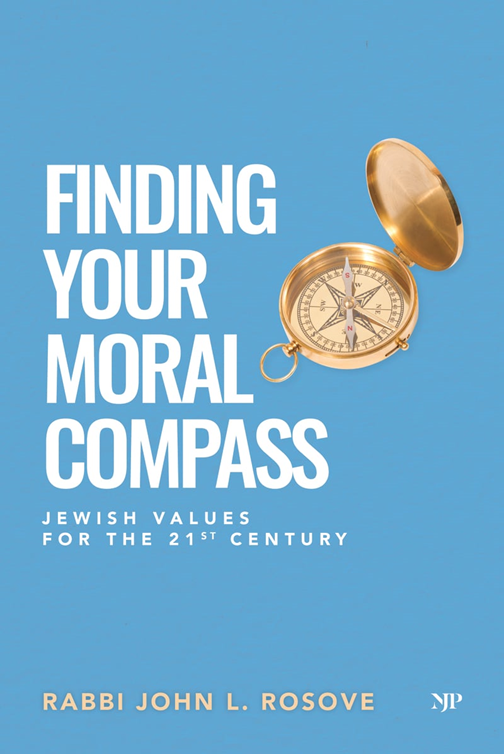
• About

Rabbi John Rosove's Blog

Rabbi John Rosove's Blog

Category Archives: Uncategorized

Trump’s Unprecedented Assault on the Rule of Law – Erwin Chemerinsky

11 Thursday Dec 2025

Posted by rabbijohnrosove in Uncategorized

≈ 1 Comment

My friend, Erwin Chemerinsky, the Dean of the Berkeley Law School and a national expert on the US Constitution, wrote yesterday the following article that offers a master class on the Trump Administration’s assault on the United States Constitution, the rule of law, and our democracy.

His Contrarian Substack article (December 10, 2025) is worth reading and disseminating widely – https://contrarian.substack.com/p/the-assault-on-the-rule-of-law

FORGIVENESS AND RECONCILIATION – A Poem in Memory of Pope John XXIII and my Aunt and Uncle

08 Monday Dec 2025

Posted by rabbijohnrosove in Uncategorized

≈ Leave a comment

Tags

bible, christianity, Faith, god, jesus

Pope John XXIII (1881-1963)

The encounter between the biblical Joseph and his brothers twenty years after they sold him into slavery, an event that inspired me to write the poem below, is among the most emotionally dramatic and heartfelt meetings between brothers in all of scripture. The resolution of their conflict has important implications for us and for the numerous religious, cultural, ethnic, and national groups in America and around the world. In this era of polarization, inter-group and inter-religious distrust and tensions, the story of Joseph and his brothers can be regarded as a corrective healing template. See the book of Genesis, chapters 37 to 50.

Pope John XXIII (1881-1963) thought so much of the encounter between Joseph and his brothers that he quoted the text: “I am Joseph, your brother” (Heb. אני יוסף אחיכם – Ani Yosef Achichem) (Genesis 45:4) to a delegation of 130 American Jewish leaders associated with the United Jewish Appeal in the Vatican on October 17, 1960, five years before the Second Vatican Council published its revolutionary document Nostra Aetate (“In Our Time” or “In Our Age”) in 1965. That document augured the Catholic Church’s modern approach to non-Christian religions, particularly Judaism and Islam, but also to other Christian religious streams. The document emphasized our shared humanity, common values, and the importance of interfaith dialogue, and it affirmed Judaism’s, Christianity’s, and Islam’s shared spiritual roots in the biblical Abraham while rejecting historical condemnations of one religion or other religious streams. 

The moral message in the Joseph stories and in Nostra Aetate is simple – the more commonality we feel with those who are unlike us, the more empathy we will experience and the greater will be the likelihood that we will reach out and act with a sense of shared responsibility in times of need, persecution, poverty, hate, bigotry, and a people’s powerlessness.  

The bronze bust of Pope John XXIII pictured above was given by the Pope to my aunt and uncle – Dr. Max W. and Fay Bay – when they met with the Pontiff in the Vatican in the early 1960s. My uncle was the President of the Jewish Federation Council of Greater Los Angeles and my aunt was a beloved and respected leader in the Women’s Division of the United Jewish Appeal when they represented Los Angeles Jewry in a meeting with the Pope.

Fay and Max left the bust to me in their will, and I treasure it because it represents a new era in the relationship between the worldwide Catholic Church and the Jewish people, and it recalls my loving memories of my mother’s oldest sister (there were ten siblings) and her husband.

Here is my poem:

I can’t stop the dreams in the night / Even while awake I gaze the light / My mother died my father sighed / And wondered about my dreams.

Trusting a man along the way / I found my brothers lying in wait / To banish me from family and home / And send me far away.

They could not utter even my name / They cast me down and spat me away / They broke my father’s heart and claimed / That I had passed away.

My name was written in the stars / But I became a slave and was scarred / And as flesh in a woman’s lustful heart / Who also cast me away.

Her master incensed sent me to Sheol / But still a seer I glimpsed a glow / And blessings bubbled into my dreams / As I wondered about my way.

Alas I was given a royal reprieve / And brought to a place beside the King / I served him long and faithfully / And continued to dream my dreams.

My heart shut down over twenty odd years / My love poured into cold desert tears / I amassed power and instilled much fear / While serving at the pleasure of the King.

My brothers came their faces forlorn / Begging for bread before the throne / Thinking me Viceroy with scepter in hand / Not Joseph of their family clan.

My grandfather re-dug his father’s wells / Seeing my brothers the waters swelled / Into my steeped-up and hardened heart / I opened to love again.

I forgave them all and brought them near / Saved them from their desert fears / Settled them safely amongst their peers / As God intended over all those years.

  • Poem composed by Rabbi John L Rosove

IN THE BLACK NIGHT – A Poem for Parashat Vayishlach

03 Wednesday Dec 2025

Posted by rabbijohnrosove in Uncategorized

≈ Leave a comment

Tags

bible, Faith, genesis, god, jacob

Introduction:

I originally posted my poem “In The Black Night” on this blog on Friday, November 15, 2013 during the week in which Jews around the world read Parashat Vayishlach (Genesis 32:4-36:43) as part of the annual cycle of Torah readings. I re-read it this week in which again we read Vayishlach.

My poem addresses not only the biblical relationship between the fraternal twins Jacob and Esau from the perspective of Jacob, but also the relationship between competing political parties, peoples, and nationalities.

I offer it again now because it ought to be obvious how destructive and corrupting to human relationships are the impulses of ego, need, and ambition.

“In the black night / the river runs cold / slowly passing me by / over formerly sharp-edged stones / worn smooth by centuries of churning, / as if through earthy veins – / and I Jacob, alone, / shiver and wait / to meet my brother / and daylight.

Will there be war? / And will the angels carry my soul / up the rungs of the ladder / leaving my blood / to soak the earthy crust?

A presence!? / And I struggle yet again / as if in my mother’s womb / and in my dreams.

We played together as children once, / my brother Esau and me / as innocents, / and I confess tonight / how I wronged him / and wrenched from him his birthright / as this Being has done to me / between my thighs.

I was so young / driven by ego and need, / blinded by ambition, / my mother’s dreams / and my father’s silence.

I so craved to be first born / adored by my father, / to assume his place when he died / that my name be remembered / and define a people.

How Esau suffered and wailed / and I didn’t care. / Whatever his dreams / they were nothing to me – / my heart was hard – / his life be damned!

But, after all these years / I’ve learned that Esau and I / each alone is / a palga gufa – a half soul / without the other – / torn away / as two souls separated at creation / seeking reunification / in a sea of souls – / the yin missing the yang – / the dark and light never to touch – / the mind divorced from body – / the soul in exile – / without a beating bleating heart / to witness – / and no access to the thirty-two paths / to carry us together / up the ladder / and through the spheres. 

It’s come to this! / To struggle again – / To live or die.

Tonight / I’m ready for death / or submission.

Compassionate One: / protect Esau and your servant – / my brother and me / as one – / and return us to each other. 

El na r’fa na lanu! / Grant us peace and rest! / I’m very tired!”

Originally published in the CCAR Journal: Reform Jewish Quarterly, Spring, 2010, pages 113-115.

The Altruistic Personality Revisited

30 Sunday Nov 2025

Posted by rabbijohnrosove in Uncategorized

≈ Leave a comment

Tags

history, holocaust, Israel, palestine, politics

There are moments of decision that come to each of us when a moral choice must be made. Most of the time, those decisions have no great impact and we can make them easily without worrying about the risks such an action would carry for us or for the people near and dear to us. But there are other times in which our actions do have significant consequences and risks for us and our dear ones, and that our actions will define us for better or worse.

This blog was inspired (or better – provoked) by President Trump‘s and his administration’s ongoing efforts to bully large swaths of America’s citizenry and bend to his will government workers, the Justice department, politicians, educators, scientists, legal firms, universities, cultural, artistic, racial, and immigrant groups, and most recently six members of Congress – all respected veterans and former intelligence officials – who urged in a video disseminated widely that all members of the military not to obey unlawful orders, per the military code. President Trump’s irascible threat that they should be charged with treason and punished with execution is the most recent and stunning outrage.

Some have compared what is happening now in the United States to Germany in the 1930s when all democratic norms were destroyed in Hitler’s rapid and irrepressible march to dictatorship and the persecution and murder of Jews and others who resisted the Nazis. I don’t know if this claim is an accurate comparison or not. I have my doubts given the complexities of American democracy and the independence of federal, state, and local centers of authority that still exist, and given the noble actions of many judges at every level and of hundreds of attorneys who have filed law suits against Trump’s unconstitutional actions, though Trump is following the autocratic playbook closely, per Project 2025. I will leave the comparison to historians.

Without a doubt in my reading of history, however, the most extreme acts of moral courage, resistance and defiance against a murderous regime were taken by the many thousands of rescuers who hid or helped Jews during the Holocaust at great personal risk to themselves, their families and communities.

Years ago I read The Altruistic Personality: Rescuers of Jews in Nazi Europe – What Led Ordinary Men and Women to Risk Their Lives on Behalf of Others? by Samuel P. and Pearl M. Oliner with an Introduction by Rabbi Harold Schulweis (New York: The Free Press, 1988). Rabbi Schulweis, a moral giant in his generation, invited the Oliners to speak at his synagogue – Valley Beth Shalom in Los Angeles – and he invited the Board of Rabbis of Southern California to meet the authors and learn about their work.

It is written on the cover the following biographical notes about the authors and the purpose and content of the book:

“Samuel [Oliner] was ten years old when his entire family was murdered by the Nazis in Poland. Thanks to the help of a Polish Christian woman, he found a place to hide through the war – and survive. His experience left him with a profound, lifelong sense of wonder and a question that was the origin of this book.

In a time of extreme danger, what had led this woman, and a few thousand like her, to risk her own life and the lives of her family to help those who were marked for death – even total strangers – while others stood passively by?

To answer that complex and critically important question, Samuel and Pearl Oliner undertook the massive Altruistic Personality Project, which interviewed over 700 rescuers and nonrescuers living in Poland, France, Germany, the Netherlands, and Italy during the Nazi occupation.

Samuel (1930-2021) was a Professor of Sociology at Humboldt State University. Pearl (1931-2021) was a Professor of Education at Humboldt State University.

By comparing and contrasting rescuers and bystanders, [the Oliners] discovered that those who intervened were distinguished by certain common characteristics, including a deep-seated, wide-ranging empathy to others developed in their childhood homes, where moral and ethical values were not only strongly held, but acted upon by their parents. Unlike their neighbors who were concerned with their own survival and chose not to become involved, rescuers felt a more extensive concern and responsibility for the fate of the others and believed that what they did would make a difference…the Altruistic Personality explores the experiences and motivations of those uncommon individuals who aided Jews without compensation of any kind-and with full knowledge of the fatal consequences that would befall them if their actions were discovered.”

Altruism is based on a faith in a higher moral authority to which one is committed and the standards of which permeate one’s attitudes and behavior towards others, especially those outside one’s personal cultural, religious, ethnic, and national communities, and regardless of one’s personal self-interest and safety. This faith and moral commitment can come from one’s religious faith, parents, family, and other community groups to which a person belonged.

The Oliners learned in their research that rescuers did not consider themselves to be moral heroes. In their interviews these uncommon individuals explained that they could not do other than what they did and be able to live with themselves, regardless of the great risks involved. Rescuers felt instinctively and intuitively the difference between moral right and wrong and acted always according to their deeply held moral values nurtured and emphasized since childhood. They present to us a powerful model of quiet defiance and resistance.

The following are selected passages from this book:

“I did nothing unusual; anyone would have done the same thing in my place.” A Dutchman [said] who sheltered a Jewish family for two years.” (p. 113)

“Rescuers did differ from others in their interpretation of religious teaching and religious commitment, which emphasized the common humanity of all people and therefore [rescuers] supported efforts to help Jews.” (p. 156)

“I found it incomprehensible and inadmissible that for religious reasons or as a result of a religious choice, Jews would be persecuted. It’s like saving somebody who is drowning. You don’t ask them what God they pray to. You just go and save them.” (p. 166)

“…the language of care dominated [for most rescuers]: Pity, compassion, concern, affection made up the vocabulary of 76 percent of rescuers…”(p. 168)

“Rescuers described their early family relationships in general and their relationships with their mothers in particular as closer significantly more often than did non-rescuers. Rescuers also felt significantly closer to their fathers than did bystanders. From such family relationships, more rescuers learned the satisfactions accruing from personal bonds with others.” (p. 173)

“What distinguished rescuers from non-rescuers was their tendency to be moved by pain. Sadness and helplessness aroused their empathy. More frequently than others, rescuers were likely to say ‘I can’t feel good if others around me feel sad,’ ‘seeing people cry upsets me,’ ‘I get very upset when I see an animal in pain,’ ‘It upsets me to see helpless people,’ and ‘I get angry when I see someone hurt.’” (p. 174)

“…parents [in disciplining their children] of rescuers depended significantly less on physical punishment and significantly more on reasoning.” (p. 179)

“Involvement, commitment, care, and responsibility are the hallmarks of extensive persons [or ‘expansive persons’ – An extensive/expansive person is often friendly, outgoing, talkative, or generous by nature.] Disassociation, detachment, and exclusiveness are the hallmarks of constricted persons. Rescuers were marked by extensivity [or expansiveness], whereas non-rescuers and bystanders in particular, were marked by constrictedness, by an ego that perceived most of the world beyond [his/her] own boundaries as peripheral.” (p. 186)

“Constricted people experience the external world as largely peripheral except insofar as it may be instrumentally useful. More centered on themselves and their own needs, they pay scant attention to others… contractedness begins in early life. Family attachments are weak, and discipline relies heavily on physical punishment, the latter often routine and gratuitous. Reasoning and explaining [of parents to their children when a child does wrong] are infrequent [for the contracted personality]. Family values center on the self and social convention; relationships with others are guarded and generally viewed as commodity exchanges. Stereotypes regarding outsiders are common.” (p. 251)

“Moral courage is thus the conspicuous characteristic only of the independent, autonomous, ego-integrated liberal.” (p. 256)

Again, I am not making a direct comparison between what is taking place today in the United States with Germany in the 1930s. We Americans are, nevertheless, being challenged morally in ways most of us alive today have not experienced or imagined possible ever in our lifetimes. Our political leaders as well as university presidents and their boards, law firms, entertainment companies, journalists and the media, scientists and the men and women serving in the armed forces systematically are being morally challenged by a President whose clear intent is for Americans to bend the knee to his autocratic will.

The book may explain one important reason why so many Americans continue to support President Trump, though a Gallup poll released yesterday shows that Trump’s approval rating has sunk to a historic low of 36 percent with disapproval at 60 percent, and that the MAGA coalition is fracturing.

The book, though published in 1988, is still available and I recommend it highly.

An Attitude of the Heart

25 Tuesday Nov 2025

Posted by rabbijohnrosove in Uncategorized

≈ 1 Comment

Gratitude (Hebrew – הכרת הטוב – literally, “recognition of/knowing the good”) is not to be regarded as a quid pro quo – rather, as an attitude of the heart towards others who are kind and generous.

I offer a few choice quotations on this most important of virtues.

“I can no other answer make but thanks, / and thanks, / and thanks, / and ever thanks.” -William Shakespeare

“Cultivate the habit of being grateful for every good thing that comes to you, and to give thanks continuously. And because all things have contributed to your advancement, you should include all things in your gratitude.” -Ralph Waldo Emerson

“When a Jew breaks a leg, he should thank God that he did not break both; and when he breaks both legs, he should thank God that he didn’t break his neck.” -Yiddish proverb

“In the time to come all prayers of petition will be annulled, but the prayer of gratitude will not be annulled.” –Midrash Rabbah Vayikra 9:7

“A chasid once was asked: ‘What is stealing?’ He thought for a moment and then replied, ‘A person steals when s/he enjoys the benefits of the earth without giving thanks to God.‘” -Cited in Bechol Levavcha by Rabbi Harvey Fields

“How strange we are in the world, and how presumptuous our doings! Only one response can maintain us: gratefulness for witnessing the wonder, for the gift of our unearned right to serve, to adore, and to fulfill. It is gratefulness which makes the soul great.” -Rabbi Abraham Joshua Heschel

Happy Thanksgiving.

Living with Uncertainty and Doubt in this Era of Increasing Autocracy

23 Sunday Nov 2025

Posted by rabbijohnrosove in Uncategorized

≈ 1 Comment

Tags

democracy, donald-trump, news, politics, trump

To say we are living in a confusing, destabilizing, polarizing, and dangerous era is stating the obvious. In thinking back over the past thirty years, I offer an expanded list of events that I believe contributed to bringing us to this inflection moment in American history, mostly negative events (sorry to say), but many positive ones too (I have not included foreign happenings except for those that have affected directly the United States and the stability of our nation).  

The positive events:

  • The election of the first African American president of the United States;
  • The recovery from the 2008-9 economic crisis;
  • The normalization of LGBTQ rights;
  • The passage of the Affordable Care Act;
  • The Iran Nuclear deal;
  • The largest march in American history for women’s rights following the installation of Donald Trump as President on January 21, 2017;
  • The galvanizing of the Me-Too and Black Lives Matter movements;
  • The passage of climate change legislation and the international Paris Climate Accord;
  • The nomination of the first woman of a major political party for president of the United States and the installation of the first woman and person of color as vice-president in US history;
  • The multiple and successful law suits brought against unconstitutional and illegal actions taken by the Trump Administration;
  • The end of the Gaza War and the return of the Israeli hostages;
  • The November elections in New Jersey, Virginia, Pennsylvania, and California;
  • The “No Kings” march.

The negative events:

  • The 9/11/2001 terrorist attack;
  • The Afghan and Iraqi wars in which 7000 Americans, 200,000 Afghanis, and 600,000 Iraqis were killed during the United States’ longest wars against Al Qaida and extremist Muslim terrorists;
  • The 2008-9 US economic meltdown, mortgage crisis, and bank failures;
  • The rulings of the Roberts’ Supreme Court that have compromised American democracy including Citizens United, the Dobbs decision overturning Roe v Wade, the discarding of key elements of the 1965 Voting Rights Act, the gutting of affirmative action in college decisions, the expansion of gun rights, the granting of presidential immunity, and the MAGA assault on voting rights;
  • Multiple mass shootings in cities across the country;
  • Increasing income inequality, the accumulation of massive wealth of the top one percent, regressive tax policies, and the exploding federal debt;
  • The rise of social media (for better and worse) reflecting negative and positive human impulses;
  • The spread of opinion-laced “information” through media bubbles and the diminishing viability of   classic news sources (e.g. newspapers, network evening news broadcasts, etc.);
  • The rise of Donald Trump and the MAGA movement;
  • The multiple indictments and double-impeachment of a sitting American president;
  • The Covid plague and death of 1.2 million Americans;
  • The violent rebellion against the legitimate election of a president on January 6, 2021 led by the sitting president who refused to accept his electoral defeat;
  • Russia’s aggression and nearly four-year war against Ukraine;
  • The Hamas invasion of Israel and the murder of 1200 Israelis and foreign workers on October 7, 2023, the taking of 250 hostages, and the ensuing 2-year Israel-Hamas war resulting in the death of more than one thousand Israeli soldiers and tens of thousands of Palestinian civilians;
  • The dramatic rise in antisemitism, anti-Zionism, and anti-Israel hatred on the far political right and far political left;
  • The rise in racism, misogyny, homophobia, and Islamophobia;
  • Trump’s pardoning of all those tried and sentenced for violence and sedition against the United States on January 6, 2021;
  • The return of Trump 2.0 in the 2024 presidential election that has brought a systematic attack on American democracy and norms, the Constitution, media, the Justice and Defense departments, most federal agencies, American foreign aid, the State Department, EPA, HHS, the American military and intelligence services, the human rights of immigrants and peoples of color, the killing of people without due process in international waters based on the assertion that they are narco-terrorists, the threat of ICE and the use of the military in cities and states, Trump’s weaponizing of the Justice Department against his political critics and enemies, and Trump’s call for the execution of six members of Congress (all distinguished military veterans and intelligence officers) who cut a video telling service members not to follow illegal orders;
  • Trump’s cancellation of the Iran Deal, Biden’s Climate Change legislation, and the US withdrawal from the Paris Climate Accord;
  • The attack from the far political right-wing on the Judeo-Christian ethic;
  • The normalization of white Christian nationalist supremacy in the US;
  • The massive grift and enrichment of the President, his family and wealthy friends in the amount of billions of dollars in an ongoing violation of the US Constitution’s Emolument clause.

Like so many of you, I have responded with disgust, anger, anxiety, exhaustion, and despair at the plethora of bad news, the cruelty, inhumanity, indecency, and ongoing assault against the US Constitution and American democratic norms that permeates our politics and culture in these days. I have asked myself why millions of Americans and their congressional representatives accept without protest the developing autocracy of Donald Trump who has in these first ten months of his second presidency done so much damage to American democracy and our democratic traditions.

I am reminded of the Irish poet William Butler Yeats’ (1865-1939) famous poem The Second Coming that he wrote in 1919 shortly after the First World War ended and as the Irish War of Independence began. The poem was inspired by that era’s turmoil, chaos and societal collapse (not unlike our own times):

“Things fall apart; the center cannot hold; / Mere anarchy is loosed upon the world. / The blood-dimmed tide is loosed, / And everywhere the ceremony of innocence is drowned; / The best lack all conviction, while the worst are full of passionate intensity.”

It seems to me that there are two primary motivating needs of tens of millions of Americans who have supported or acquiesced to Trump’s growing autocracy and immorality. In times of flux and chaos, people crave, on the one hand, certainty, and on the other a sense of security with like-minded culturally similar others.

My childhood Rabbi Leonard Beerman (1921-2014) offered a profound bit of wisdom, as he always did, long ago when he wrote:

“I live with uncertainty and doubt. But what I have learned is that doubt may be the most civilizing force we have available to us, for it is doubt that protects us from the arrogance of utter rightness, from the barbarism of blind loyalties, all of which threaten the human possibility.”

The writer Kathryn Schultz (b. 1954) explains in her book Being Wrong why certainty is so appealing to so many:

“The simplest truth about certainty is that it feels good. It gives us the comforting illusion that our environment is stable and knowable, and that therefore we are safe within it. Just as important, it makes us feel informed, intelligent, and powerful…Uncertainty leaves us stranded in a universe that is too big, too open, too ill-defined…Where certainty reassures us with answers, doubt confronts us with questions, not only about our future but also about our past: about the decisions we made, the beliefs we held, the people and groups to whom we offered our allegiance, the very way we lived our lives…the unconsulting fact [is] that …we can’t shield ourselves and our loved ones from error, accident, and disaster…our attraction to certainty is best understood as an aversion to uncertainty.” (p. 169)

That is where autocrats step in. They claim certainty about everything, contrary to what the French philosopher Charles Bernard Renouvier (1815-1903) poignantly said: “Properly speaking, there is no certainty; there are only people who are certain.”

Of course, there are always options, some are better and some are worse, but it’s upon us, an informed citizenry, to understand the advantages and disadvantages of each based upon the facts, science, reason, human rights, and the principles of equality, justice, compassion, empathy, and peace.  

As elections begin to appear on the political horizon, it’s important for us all to consider what constitutes great leadership. As concisely as I can characterize it, great leadership requires not just vision and high moral rectitude, but the love of truth and a sacred commitment to further the common good. There are times when all leaders must stand up against the crowd, take a political risk knowing that they can lose everything, power, position, and the respect of their followers. Great leaders, however, bear the responsibility to act on behalf of the best interests of the public and to set a high moral standard for themselves and their colleagues.

Rabbi Jonathan Sacks, in his superb book that I highly recommend, Lessons in Leadership – A Weekly Reading of the Jewish Bible (Jerusalem: Koren Publishers, 2015) put it simply: “To lead is to serve. Greatness is humility.” (p. 190)

As the election season begins in the United States, and would-be leaders announce their candidacies, polls rejecting the Trump administration’s positions on virtually all the issues of concern to American voters, along with the millions who turned out to march on “No Kings Day,” and the important work of so many American lawyers and judges who have advocated for and ruled on behalf of American constitutional and state law and against autocratic over-reach, ought to give us a measure of hope and remind us how much agency we still have.

In electing candidates worthy of our support as servant-leaders, we can reverse the anti-democratic actions and trends that have plagued the United States in recent decades, and begin to restore American democracy despite the horrific damage that has been done.

Aging and Change – It happens to us all

20 Thursday Nov 2025

Posted by rabbijohnrosove in Uncategorized

≈ 4 Comments

Tags

family, life, love, mental-health, writing

As I’ve aged I have had much more time to think, write, spend time with family and friends, and do whatever I wish to do whenever I wish to do it. As a consequence, I’ve developed a greater sense of realism about those changes occurring in my mind, body, heart, and spirit. I’m particularly aware of the many ways in which I’m stronger than I once was, as well as the ways in which I have lost strength. Physically, though I walk 3-4 miles most mornings, I have lost, to my consternation, a measure of physical stamina that I once had without thinking much about it. For example, when playing on the floor with my grandchildren, getting up to a standing position now requires that I strategize three or four moves and then consciously play them out before reaching a standing position. When I was a young father and I stood up suddenly, often with one of my then young boys in my arms, I took such strength for granted.

These days I have the most energy in the morning, and that vigor carries me comfortably into the mid-afternoon. It is in those early hours that my thinking is sharpest and my spirit is the most unencumbered. By evening, most every day, unless I ingest a strong cup of dark French roast coffee before an evening out, I’m utterly exhausted. It didn’t used to be this way. When I served as a congregational rabbi, I went day after day, from early morning to night-time propelled like an energizer bunny, never slowing down, shifting focus easily from one thing to another without skipping a beat, being everywhere all-at-once all-the-time.

I’m in fairly good shape for my age (my doctors tell me) so I can’t complain. Just as my “boomer” contemporaries and slightly older “silent generation” friends understand only too well, none of us is as young as we used to be. Part of me is saddened and frustrated in my recognition of that truth.

The worst part of getting older for me, and I suspect for most of us, is that so many of the people I’ve loved have become ill and/or died. I consequently appreciate the people I care most about far more deeply than ever before.

As I’ve thought about how I’ve lived my life to this stage, I’ve struggled to accept all the changes with equanimity and greater patience. I’ve sought also to learn from my limitations and weaknesses, and from the lived experiences of others older than myself.

I wrote in this blog a month ago, for example, about the great Jane Goodall (see – https://rabbijohnrosove.blog/2025/10/12/dr-jane-goodall-lessons-about-life-and-aging/) and how successfully she maximized every opportunity and how with grace and high energy she drew meaning and joy from every experience. She was a great model in how to live one’s life fully and well.

One other thing that I appreciate more and more with the passing months and years – reading history, not only because life as it was lived in other eras is fascinating in its own right, but because history has much to teach us about the greatest figures of those by-gone times. In studying the past, we revisit the reoccurring themes that are part of the human condition regardless of time, place, and circumstance.

I’ve been watching Ken Burns’ “The American Revolution” on PBS, and as I learn more than I have ever known before about what Burns characterizes as the greatest historical event since the time of Jesus Christ, I’m amazed at the ease with which I am able to project myself back to those days, weeks, months, and years of our nation’s founding. In viewing the painted portraits of significant British and American leaders, though painted in an idealized classical style, it is striking to me that everyone of historic importance was far younger than me today when they made the most consequential contributions and personal sacrifices on behalf of the future of the United States and humankind. George Washington was only 43 when he assumed command of the revolutionary forces in 1775, and Benjamin Franklin was only 70 at the signing of the Declaration of Independence, 6 years younger than me now.

It is true about every one of us who, if we live long enough, we confront change in our society, the world, and in ourselves. Indeed, we change every day – sometimes without our being particularly aware of it as it happens – but there come those moments, inevitably, when the changes become clear. Change is an axiom of living. We can’t avoid it, and if we’re wise, we struggle and learn to accept it – even relish in it.

I offer below reflections by some of history’s greatest thinkers about the challenges of change that they came to understand. These statements have been helpful to me, and perhaps they will be to you too, whether you are old or young, or anywhere in-between.

“Life belongs to the living, and he who lives must be prepared for changes.” -Johann Wolfgang von Goethe (1749-1832)

“If you don’t take change by the hand, it will take you by the throat.” -Winston Churchill (1874-1965)

“All changes, even the most longed for, have their melancholy; for what we leave behind us is a part of ourselves; we must die to one life before we can enter another.” -Anatole France (1844-1924)

“Everything flows, and nothing abides; everything gives way, and nothing stays fixed.” -Heraclitus (circa 500 BCE)

“If you don’t like something, change it. If you can’t change it, change your attitude.” -Maya Angelou (1928-2014)

And this from a centenarian: “Comprehend the changing of times—never stay stuck in the past or its difficulties.” -Concepción Calvillo de Nava (b. 1920-)

Project Rozana – A Compassionate Opportunity to Advance Medical Care and Save Lives in Gaza

10 Monday Nov 2025

Posted by rabbijohnrosove in Uncategorized

≈ Leave a comment

94 percent of all hospitals and health clinics in the Gaza Strip either were destroyed or severely damaged in the two-year Israel-Hamas War. However, there is an important independent health organization, free from the influence of Hamas, that includes Israelis and Palestinians working together to bring medical care, improve and save the lives of thousands of Palestinian civilians in the Gaza Strip.

Project Rozana was formed 12 years ago in Australia and has chapters in the US, UK, Germany, Canada, Palestine, and Israel. A webinar this past Sunday, November 8, 2025, was led by Ken Bob, Chair of Project Rozana USA, and Mohammad Asideh, Director of the Mobile Rozana Clinic Project.

Mohammad spoke from Ramallah and described the mission to bring badly needed medical care to tens of thousands of Palestinian civilians – men, women, children, babies, and seniors.

See my introductory blog describing Project Rozana here –

Help Save Lives in Gaza – Become a Supporter of Rozana International

The Webinar with Ken and Mohammad – watch the full recording here

For those so moved who would like to donate to this life-saving project, you can make a donation online here or send checks to the US office of Project Rozana in New York at 17 State St., Suite 4000, New York, NY 10004. For any questions, please don’t hesitate to contact the US Rozana leadership at usaoffice@rozana.org

The Talmud and Qoran say that saving a single life is equivalent to saving an entire world. Project Rozana enables each of us to do so. I hope you will support financially this life-saving project with a year-end contribution.

Antisemitism Today and How to Respond

04 Tuesday Nov 2025

Posted by rabbijohnrosove in Uncategorized

≈ 1 Comment

Tags

antisemitism, gaza, Israel, palestine, politics

We are today witnessing a dramatic rise in antisemitism in the United States and around the world that most Jews alive have never seen, experienced or imagined before. This millennia-old shape-shifting hatred that appears in different forms in every era continues to permeate our politics and culture.

It is important to understand what modern Jew-hatred is and what it is not. To that end, despite it being a complex psychological, cultural, religious, political, and historic phenomenon unlike any other hatred in world history, I offer a few comments below that I believe help clarify what this hatred is, what it is not, and what we Jews (and others) should do as we confront it.

“There are a number of modern and classic iterations of antisemitism that continue to be promulgated by the [political] far left and far right. They include Holocaust denial, offensive stereotypes of Jews (such as casting a Jewish individual as a Christ-killer, a puppet master, imposter, and swindler who manipulates national events for malign purposes, a foreigner, a controller of banking, the media, government, and the wealthy elite), denying the Jewish people our right to self-determination, applying double standards to Jews and Israel that are not applied to any other nation, using the symbols and images associated with classic antisemitism to characterize Israel and/or Israelis, drawing comparisons of contemporary Israeli policy to that of the Nazis, and holding Jews collectively responsible for actions of the State of Israel.” –Rabbi John Rosove, “From the West to the East – A Memoir of a Liberal American Rabbi” (West of West Books, 2024)

“The antisemite was a coward, afraid of himself, of his own consciousness, of his own liberty, of his instincts, of his responsibilities, of solitariness, of change, of society, and the world — of everything except the Jews. The antisemite doesn’t hate Jews because of some bad experience with flesh-and-blood Jews, but uses a preexisting ‘idea of the Jew’ as a prism for ordering his troubled world. Antisemitism was thus a psychic liberation from responsibility for one’s conscience, a rebellion against the burdens of rationalism….If the Jew did not exist, the antisemite would invent him.” -Jean Paul Sartre, Anti-Semite and Jew (1946)

“Jews know that democracy is their best protection. Less democracy means less protection for all minorities, and even if the dictator makes a big show of being the Jews’ protector and a friend of Israel, it’s at best temporary and conditional. No one is ever safe with a dictator, certainly not the Jews.” -Anshel Pfeffer, Haaretz, July 29, 2022

“Today, anti-Zionism is often a form of antisemitism, but not always. After all, there are plenty of anti-Zionist Jews who identify as Jews proudly. However, the single-minded blind obsession with Israel often bleeds into hatred of Jews and normalizes Jew-hatred. Of course, not all criticism of Israel is illegitimate or unwarranted, and certainly not antisemitic, but some of it is, and on some college campuses and on-line forums a lot of it is. We need to be able to appreciate subtlety, nuance, and historical context, and to distinguish between legitimate critique and the new mutated form of antisemitism dressed up in the garment of pathological anti-Zionism.” -Rabbi Ammiel Hirsch – Podcast “In These Times” with Natan Sharansky (2022)

“What we generally call antisemitism is a 19th-century coinage that helped turn an ancient religious hatred into a racial hatred. As racial hatred came to be considered uncouth after World War II, anti-Zionism (that is, blanket opposition to a Jewish state, not criticism of particular Israeli policies) became a more acceptable way of opposing Jewish political interests and denigrating Jews. Should Israel cease to exist, new forms of bigotry will surely develop for the next stage of anti-Judaism, adapted to the prevailing beliefs of the times. The common denominator in each of these mutations is an idea, based in fantasy and conspiracy, about Jewish power. The old-fashioned religious antisemite believed Jews had the power to kill Christ. The 19th-century antisemites who were the forerunners to the Nazis believed Jews had the power to start wars, manipulate kings and swindle native people of their patrimony. Present-day anti-Zionists attribute to Israel and its supporters in the United States vast powers that they do not possess, like the power to draw America into war. On the far right, antisemites think that Jews are engaged in an immense scheme to replace white, working-class America with immigrant labor. Tucker Carlson and others have taken this conspiracy theory mainstream, even if they are careful to leave out the part about Jews… the foul antisemitism of the right, yoked to its old themes of nativism, protectionism, nationalism and isolationism, is erupting into the public square like a burst sewage pipe.” –Bret Stephens – What an Antisemite’s Fantasy Says About Jewish Reality – NYT – Jan. 21, 2022

“In 2025 America, antisemitism is real – sometimes in plain sight, sometimes encoded and winked at, and sometimes expressed as obsessive hatred of Israel and Zionism. The problem transcends left-right politics – stretching from Nick Fuentes and “great replacement” conspiracists on the far-right to those on the far-left who cast Jews globally as oppressors. We see it everywhere – from chants in the streets to online memes in our social media feeds and conspiracies festering in the darker corners of the web. As we wage this critical fight, we must take care not to undermine either our own interests or the health of American democracy. And we must be honest that – at times – the fight against antisemitism is itself being politicized and weaponized. If we are not careful in our approach, we risk ending up less safe, less free, and more isolated.

We cannot define legitimate criticism of the Israeli government as antisemitism – especially not in law. Weaponizing antisemitism as justification to slam the gates shut [on immigration into the United States] is not “protecting Jews,” it is erasing a core American ideal that granted us protection. To allow right-wing actors – including those willing to defend and platform dangerous figures like Nick Fuentes – to chip away at those pillars in the name of “protecting Jews” is not only hypocritical and ironic – it is deeply, dangerously self-defeating. Not all the anger coming at the Jewish community today is rooted in ancient hatred. Some of it is rooted in protest against the policies of the government of Israel – policies that many Jews disagree with as well. While some protest on the left crosses a line into antisemitic narratives, that doesn’t negate the legitimate reasons for much of the protest. We cannot fight antisemitism by censoring political speech, by withdrawing from civil rights coalitions, by letting the far-right weaponize our fear, or by refusing to look at our own agency and responsibility. We should be honest that both the left and right ends of the spectrum have some antisemitic elements and not allow this important issue to be made into a political football. We need to defend democracy. Defend free speech. Build alliances. Protect the rule of law. And we need to do all this out of a firm conviction that Jewish safety in America will not come from isolating ourselves or policing ideas. It will come only from solidarity, partnership, and the deep and universal American promise that freedom and equality are not for some, but for all.” –Jeremy Ben-Ami, “Can We Do Better at Fighting Antisemitism,” Word on the Street, November 2, 2025)

Help Save Lives in Gaza – Become a Supporter of Rozana International

31 Friday Oct 2025

Posted by rabbijohnrosove in Uncategorized

≈ Leave a comment

Tags

gaza, genocide, Israel, palestine, politics

In the last number of weeks, Rozana International began operating a mobile clinic in Gaza to begin to address the overwhelming health tragedy there. Rozana’s staff of two doctors and a nurse—all Palestinian Gaza residents—are treating 100 Palestinian patients every day in a large tent; men, women and children who were bombed out of their homes and who themselves are living in makeshift shelters. In this fragile setting, a team of local medical professionals is on the ground every day—treating injuries and addressing urgent health needs. With a planned increase in staff and sufficient supplies, the clinic looks to serve 10,000 patients a month.

Rozana International is an organization that uses health diplomacy to strengthen ties of communication and cooperation between Israelis and Palestinians. I have been a supporter for about ten years and believe not only in its humanitarian mission but in its success as a way to help Palestinians in dire need of medical help, but also as an Non-Governmental-Organization (NGO) that brings out the best in Israelis and Palestinians, working together to save lives.

On Sunday, November 9, I invite you to join a webinar with Mohammed Asideh, Rozana’s director of advocacy and the head of Rozana’s Palestine NGO office in Ramallah. He is in charge of Rozana’s Gaza Mobile clinic.

Rozana’s short-term aspiration, once the first clinic is fully operational, is to open and fund a second clinic to handle minor surgeries that are not getting the attention of the severely diminished hospital system. Rozana also has separate funding to provide a “warm line” for a lactation counseling pilot project for Gazan mothers. These projects are the building blocks that will allow Rozana to establish a permanent Rozana Palestinian NGO office in Gaza. When that happens, it will allow Rozana to play a significant humanitarian role there going forward. 

Rozana Palestine’s operations include a variety of policies that comply with U.S. government guidelines regarding counterterrorism and money laundering.

Both the Quran and the Talmud teach that if we are able to save even one life, we save the entire world. We who support Rozana believe that precept must include our Palestinian brothers and sisters. Despite the ongoing tragedy of the Israel-Hamas war in Gaza, the creation of Rozana’s Mobile Clinic gives Americans of all faith traditions and those with no faith tradition as well the opportunity to help save Palestinian lives.

I believe in Rozana, its leadership, its health care physicians and nurses, and what it has done so successfully over many years in bringing Israelis and Palestinians together in partnership. It is an organization worthy of our support.

Please join us in this Webinar to learn more about Rozana’s life-saving work. You will be moved. To register – join us on November 9 at 1:00 PM EST .

Thank you.

← Older posts

Enter your email address to subscribe to this blog and receive notifications of new posts by email.

Join 365 other subscribers

Archive

  • December 2025 (3)
  • November 2025 (6)
  • October 2025 (8)
  • September 2025 (3)
  • August 2025 (6)
  • July 2025 (4)
  • June 2025 (5)
  • May 2025 (4)
  • April 2025 (6)
  • March 2025 (8)
  • February 2025 (4)
  • January 2025 (8)
  • December 2024 (5)
  • November 2024 (5)
  • October 2024 (3)
  • September 2024 (7)
  • August 2024 (5)
  • July 2024 (7)
  • June 2024 (5)
  • May 2024 (5)
  • April 2024 (4)
  • March 2024 (8)
  • February 2024 (6)
  • January 2024 (5)
  • December 2023 (4)
  • November 2023 (4)
  • October 2023 (9)
  • September 2023 (8)
  • August 2023 (8)
  • July 2023 (10)
  • June 2023 (7)
  • May 2023 (6)
  • April 2023 (8)
  • March 2023 (5)
  • February 2023 (9)
  • January 2023 (8)
  • December 2022 (10)
  • November 2022 (5)
  • October 2022 (5)
  • September 2022 (10)
  • August 2022 (8)
  • July 2022 (8)
  • June 2022 (5)
  • May 2022 (6)
  • April 2022 (8)
  • March 2022 (11)
  • February 2022 (3)
  • January 2022 (7)
  • December 2021 (6)
  • November 2021 (9)
  • October 2021 (8)
  • September 2021 (6)
  • August 2021 (7)
  • July 2021 (7)
  • June 2021 (6)
  • May 2021 (11)
  • April 2021 (4)
  • March 2021 (9)
  • February 2021 (9)
  • January 2021 (14)
  • December 2020 (5)
  • November 2020 (12)
  • October 2020 (13)
  • September 2020 (17)
  • August 2020 (8)
  • July 2020 (8)
  • June 2020 (8)
  • May 2020 (8)
  • April 2020 (11)
  • March 2020 (13)
  • February 2020 (13)
  • January 2020 (15)
  • December 2019 (11)
  • November 2019 (9)
  • October 2019 (5)
  • September 2019 (10)
  • August 2019 (9)
  • July 2019 (8)
  • June 2019 (12)
  • May 2019 (9)
  • April 2019 (9)
  • March 2019 (16)
  • February 2019 (9)
  • January 2019 (19)
  • December 2018 (19)
  • November 2018 (9)
  • October 2018 (17)
  • September 2018 (12)
  • August 2018 (11)
  • July 2018 (10)
  • June 2018 (16)
  • May 2018 (15)
  • April 2018 (18)
  • March 2018 (8)
  • February 2018 (11)
  • January 2018 (10)
  • December 2017 (6)
  • November 2017 (12)
  • October 2017 (8)
  • September 2017 (17)
  • August 2017 (10)
  • July 2017 (10)
  • June 2017 (12)
  • May 2017 (11)
  • April 2017 (12)
  • March 2017 (10)
  • February 2017 (14)
  • January 2017 (22)
  • December 2016 (13)
  • November 2016 (12)
  • October 2016 (8)
  • September 2016 (6)
  • August 2016 (6)
  • July 2016 (10)
  • June 2016 (10)
  • May 2016 (11)
  • April 2016 (13)
  • March 2016 (10)
  • February 2016 (11)
  • January 2016 (9)
  • December 2015 (10)
  • November 2015 (12)
  • October 2015 (8)
  • September 2015 (7)
  • August 2015 (10)
  • July 2015 (7)
  • June 2015 (8)
  • May 2015 (10)
  • April 2015 (9)
  • March 2015 (12)
  • February 2015 (10)
  • January 2015 (12)
  • December 2014 (7)
  • November 2014 (13)
  • October 2014 (9)
  • September 2014 (8)
  • August 2014 (11)
  • July 2014 (10)
  • June 2014 (13)
  • May 2014 (9)
  • April 2014 (17)
  • March 2014 (9)
  • February 2014 (12)
  • January 2014 (15)
  • December 2013 (13)
  • November 2013 (16)
  • October 2013 (7)
  • September 2013 (8)
  • August 2013 (12)
  • July 2013 (8)
  • June 2013 (11)
  • May 2013 (11)
  • April 2013 (12)
  • March 2013 (11)
  • February 2013 (6)
  • January 2013 (9)
  • December 2012 (12)
  • November 2012 (11)
  • October 2012 (6)
  • September 2012 (11)
  • August 2012 (8)
  • July 2012 (11)
  • June 2012 (10)
  • May 2012 (11)
  • April 2012 (13)
  • March 2012 (10)
  • February 2012 (9)
  • January 2012 (14)
  • December 2011 (16)
  • November 2011 (23)
  • October 2011 (21)
  • September 2011 (19)
  • August 2011 (31)
  • July 2011 (8)

Categories

  • American Jewish Life (458)
  • American Politics and Life (417)
  • Art (30)
  • Beauty in Nature (24)
  • Book Recommendations (52)
  • Divrei Torah (159)
  • Ethics (490)
  • Film Reviews (6)
  • Health and Well-Being (156)
  • Holidays (136)
  • Human rights (57)
  • Inuyim – Prayer reflections and ruminations (95)
  • Israel and Palestine (358)
  • Israel/Zionism (502)
  • Jewish History (441)
  • Jewish Identity (372)
  • Jewish-Christian Relations (51)
  • Jewish-Islamic Relations (57)
  • Life Cycle (53)
  • Musings about God/Faith/Religious life (190)
  • Poetry (86)
  • Quote of the Day (101)
  • Social Justice (355)
  • Stories (74)
  • Tributes (30)
  • Uncategorized (818)
  • Women's Rights (152)

Blogroll

  • Americans for Peace Now
  • Association of Reform Zionists of America (ARZA)
  • Congregation Darchei Noam
  • Haaretz
  • J Street
  • Jerusalem Post
  • Jerusalem Report
  • Kehillat Mevesseret Zion
  • Temple Israel of Hollywood
  • The IRAC
  • The Jewish Daily Forward
  • The LA Jewish Journal
  • The RAC
  • URJ
  • World Union for Progressive Judaism

Blog at WordPress.com.

  • Subscribe Subscribed
    • Rabbi John Rosove's Blog
    • Join 365 other subscribers
    • Already have a WordPress.com account? Log in now.
    • Rabbi John Rosove's Blog
    • Subscribe Subscribed
    • Sign up
    • Log in
    • Report this content
    • View site in Reader
    • Manage subscriptions
    • Collapse this bar
 

Loading Comments...