A 400 Year-old Reflection about Paris – John Donne

Tags

, , ,

“…all mankind is of one author, and is one volume; when one man dies, one chapter is not torn out of the book, but translated into a better language; and every chapter must be so translated; God employs several translators; some pieces are translated by age, some by sickness, some by war, some by justice; but God’s hand is in every translation, and his hand shall bind up all our scattered leaves again, for that library where every book shall lie open to one another; …

No man is an island, entire of itself; every man is a piece of the continent, a part of the main; if a clod be washed away by the sea, Europe is the less, as well as if a promontory were, as well as if a manor of thy friend’s or of thine own were; any man’s death diminishes me, because I am involved in mankind, and therefore never send to know for whom the bell tolls; it tolls for thee.”

MEDITATION XVII. Donne, John (1572-1631). From The Works of John Donne. vol III. Henry Alford, ed. London: John W. Parker, 1839. Pages 574-5.

Note: I have not changed the original English nor adjusted the gender exclusivity of John Donne’s original.

The Paris Tragedy – Religious Liberty in Israel – The Troubled Obama-Netanyahu Marriage

Tags

, , , , ,

I recommend the following three important articles published this past week, all of which add insight in these troubled times.

  1. Five Lessons From the Paris Tragedy Times of Israel and the Algemeiner – David Harris of the AJC important lessons from the terrorist attack on France this past week.https://www.algemeiner.com/2015/11/15/five-lessons-from-the-paris-tragedy/
  1. Netanyahu, Don’t Surrender to ultra-Orthodox Ultimatums Haaretz‎ – Rabbi Eric Yoffie challenges PM Netanyahu to stand his ground before Israel’s ultra-Orthodox Rabbis regarding religious equality and diversity in the state of Israel. http://www.haaretz.com/opinion/.premium-1.685825
  1. Scenes From a Marriage, Huffington Post –Amir Tibon and Tal Shalev offer an in-depth dissection of the difficult relationship between President Obama and Prime Minister Netanyahu. http://highline.huffingtonpost.com/articles/en/bibi-obama/

Is a One-State Solution Completely Implausible?

Tags

, ,

Daniel Polisar, the Provost of the right-leaning Shalem College in Jerusalem, just published a report titled “What do the Palestinians Want?” (link below) in which he reviews Palestinian attitudes about Israel and Jews.

Israeli polls show the mirror image of Israeli Jewish attitudes about Palestinians.

Meta-surveys suggest that Palestinians don’t think highly of Israelis and Jews, and Israeli Jews don’t have much sympathy for Palestinians.

Alarmed by the Polisar report, I sent it to Noah Efron, the host of TLV1’s “The Promised Podcast” based in Tel Aviv, and suggested that they discuss it on a segment. They obliged, and Noah and his colleagues, Dan Futterman, the head of the Moriah Fund, and Bradley Burston, an Haaretz Journalist (and incidentally, an old friend from my college years at UC Berkeley) addressed the issue in today’s (November 12) broadcast.

They discussed, among other things, the agenda of the author of the report, the credibility of the figures, the meaning of the surveys, and what political implications they might augur for the future.

They wondered aloud about the three possibilities facing Israel and the Palestinians  – a two-states for two peoples solution (Is it possible?); a single-state for two peoples (Is it implausible?); and the status-quo (Is it sustainable?)

It ought to be kept in mind as you read and listen that Israelis and Palestinians have lived in stressful times ever since the Rabin assassination twenty years ago. Polls taken during times of violence and heightened anxiety are likely to measure more extreme attitudes than might be the case during more peaceful times. Additionally, the vast majority of the Palestinian population and much of the Israeli Jewish population are under the age of 25 years, and thus have never known times of quiet and peace, so the possibility of co-existence is foreign.

Both Polisar’s article and “The Promised Podcast” are worthy of our attention.

What Do Palestinians Want? — mosaicmagazine.com/essay/2015/11/what-do-palestinians-want/

The Promised Podcast — “They Really Don’t Like Us!” Edition – (this segment begins at 14 minutes into the Podcast) – http://tlv1.fm/full-show/2015/11/12/the-they-really-dont-like-us-edition/?utm_source=A+View+from+Moriah+Newsletter&utm_campaign=e4f659d8ab-Newsletter&utm_medium=email&utm_term=0_5acf0b619c-e4f659d8ab-92533981

Sarah Zoabi – A Brave Israeli-Arab and Proud Zionist Speaks Out in Support of Israel

Tags

, , ,

These two videos of Sarah Zoabi, an Israeli-Arab citizen from Nazareth, are eloquent expressions of her Arab-Israeli-Zionist identity, by which she means that the Jewish people have a right to a state of their own. They are extraordinary examples of courage in speaking out as an Arab-Israeli in an environment in which she, like her son Mohammed who has done as she has done, will likely receive death threats. Sarah believes that for an Arab to live as a citizen in the state of Israel is “paradise.”

She explains that Israeli Arab citizens enjoy freedoms in the democratic state of Israel that do not exist in any other Arab country ruled by dictators. She acknowledges, as well, that Israeli society is not perfect explaining that “perfect countries exist in theory and not reality.”

Sarah calls upon all Israeli minorities to join together and publicly express their support for their democratic state of Israel.

Kol hakavod to you, Sarah. The Jewish people needs more people like you to speak out.

https://www.facebook.com/theisraelproject/videos/10154262718827316/

https://www.facebook.com/mirilavi/videos/10154436057032715/

Should Israel Split Itself in Half? A Thought Experiment

Tags

, , ,

TLV1’s “The Promised” broadcast reported last week that Eran Tashiv, the head of the program for national security and economy at the Israeli Institute for National Security Studies (IINSS), imagined just such a scenario recently in a Haaretz column which he wrote as a kind of thought experiment, describing what would happen should two different Jewish states be organized along contrasting religious and national lines. Each smaller state, he opined, might be content with itself and even happier after a divorce from the other half. His thought experiment begs the central question – would splitting Israel in two be better or worse for the Jewish people than what we have today? (see http://tlv1.fm/the-promised-podcast/2015/11/07/partition-ambition/)

Tashiv suggests that one Jewish state might be called “Judaea” and include the Jerusalem area going south, the West Bank settlements, and the cities of Ashdod, Beersheva and Ashkelon. Its population would number approximately 3.4 million people and include all the occupied West Bank Palestinians.

The other Jewish state might be called “Dan” and include Tel Aviv going north, Haifa, the Jezreel Valley, the Sea of Galilee, Rishon L’Tziyon, and Petach Tikvah, and  total 4.9 million people including Israeli Arab citizens in the Galilee and elsewhere who have been loyal citizens of the state of Israel since 1948.

“Judaea” would end up being primarily a right-wing ultra-orthodox state governed, most likely, according to halachah (traditional Jewish law), a Jewish version of Iran and Turkey. The occupation of the West Bank, with its 2 million hostile Palestinians, would become the responsibility of “Judaea.”

“Dan,” however, would include Israel’s cultural, political and secular middle and left-wing and likely would remain a social democracy. “Dan” would produce, based on current demographic, educational and economic conditions, twice the GNP of “Judaea.”

In effect, there would be one state (“Dan”) that is secular, liberal, modern, and economically thriving living alongside another state (“Judaea”) that is ultra-Orthodox, halachic, nationalist, and poor.

This splitting of the state of Israel in half, of course, will never happen because the IDF, the West Bank occupation, the thriving economy of the “Dan” sector, and classic Zionist ideology won’t allow it.

The cultural, religious and political divisions embodied in these two states of “Dan” and “Judaea” are, of course, not clean. There are both economically successful western-oriented Mizrachim (aligned most naturally with the ideology of “Judaea”) and successful Ashkenazim who would be citizens in “Judaea,” just as economically struggling secular Ashkenazim (aligned most naturally with the ideology of “Dan”) would share life with below the poverty level ultra-Orthodox citizens in “Dan.”

It is ironic that PM Netanyahu, who set the conditions for the thriving hi-tech economy when he served as Finance Minister during the Ariel Sharon era, and Naftali Bennett, the head of the Jewish Home Party that represents religious nationalists and the settler movement and who is himself a successful hi-tech entrepreneur, are two of the principle leaders of the current government and would be the leaders of the right-wing nationalist halachic state of “Judaea.” It ought to be noted, as well, that the policies of then Finance Minister Netanyahu are responsible for the widening economic gap between the wealthy and poor of Israel and the diminishing and struggling Israeli middle class.

In “The Promised” broadcast, Times of Israel journalist Miriam Herschlag suggested that this discussion about creating two Jewish states is taking place especially now because we Jews are testing the boundaries of what constitutes our “family” and we are wondering what to do with those fellow Jews about whom we feel we can no longer be engaged and with whom we are constantly quarreling about the meaning of Jewish and Israeli identity. We wonder if there is some end-point on our people’s emotional map where at last we say: “No – we’re too far apart ethically, religiously, nationally, and politically, and our differences require us to separate and get a divorce!”

Many Israelis from across the political, national and religious spectrum might welcome a separation because they feel that increasingly someone else is taking over their country and that Israeli culture is moving either too far to the ideological left or ideological right.

Don Futterman, the head of the Moriah Fund and a regular participant on the “The Promised” broadcast, pointed to another serious and consequential fault-line in Israeli society that exacerbates current tensions. He noted that Israel’s economic stability and success has become overly dependent upon certain sectors, leaving the ultra-Orthodox and Arab communities (especially under-employed Arab women) behind. Both sectors need to be integrated more fully into the Israeli work force in order to move their families out of poverty and enhance Israel’s national security.

Splitting Israel in half is neither possible nor desirable because it would mean our giving up on the Zionist dream of the Jewish people united in a Jewish, diverse, pluralistic and democratic state.

The truth is that we are stuck with each other whether we like it or not, and we better learn to live together or the Zionist experiment will end up on the trash heap of Jewish history.

A Weeping Isaac Alone in the Field – A Paradigm for Our Times

Tags

, , , , , , , ,

Chayei Sarah is a monumental Torah portion in the Book of Genesis (23:1-25:18) that establishes Hevron as one of our people’s holiest cities in the land of Israel and tells the story of the betrothal of Isaac and Rebekah. Thus, for the first time in Jewish history we witness the passing of the baton of history from one generation to the next.

We, the current generation, however, have yet to fulfill our Jewish destiny. Hevron today is a hot spot of Palestinian and Jewish rage, of extremism and violence, of polarization and hate. Until there is peace (shalom) between the tribes of Israel and shalom/salem (not hudna – i.e. “quiet”) between Israel and the Palestinians, we will not have fulfilled our raison d’etre as a people to be rod’fei shalom, pursuers of peace.

The current violence cannot be the way forward, nor can suspicion, distrust and hatred of the “other” define the character of our people’s and the Palestinian people’s hearts and souls.

I offer a poetic midrash on Isaac’s and Rebekah’s encounter leading to their marriage. I love this story because their meeting is pure and sweet, and it suggests a paradigm of what is possible not only between individuals, but between the tribes that comprise the Jewish people today (e.g. Haredi, Orthodox, Mizrachi, Ashkenazi, Reform, Reconstructionist, Conservative, secular, atheist, liberal and right-wing Zionists, American, Israeli, European, Latin, etc.), and the peoples of the Middle East who know far too much polarization, suspicion, distrust, and hatred of each other.

A Weeping Isaac Alone in the Field

To be alone amidst shifting wheat / And rocks and sun / Beneath stirred-up clouds / And singing angels / Audible only by the wind.

I’ve secluded myself / As my father did / When he went out / Alone leaving all he knew / For a place he’d never been / That God would show him.

I can do nothing else / Because Father broke my heart / And crushed my soul / When he betrayed me / By stealing me away one morning / Before my mother awoke / And nearly offered me to his God.

When my mother learned / Her soul passed from the world.

O how she loved me! / And filled me up / With laughter, love and tears.

Bereft now / I’m desolate in this world / And this field.

O Compassionate One – Do You hear me / From this arid place / Filled with snakes and beasts, hatred and vengeance?

I sit here needing YOU.

As if in response, / Suddenly from afar / Appears a caravan / Of people and camels, / Led by Eliezer, Abraham’s servant, / With a young girl.

Isaac, burdened by grief / Neither looks nor sees.

He sits still / Lasuach basadeh / Meditating / And weeping / Beneath the afternoon sun / And swirling clouds / And singing angels / Whom he cannot hear.

Rebekah asks: / ‘Who is that man crying alone in the field?’

Eliezer says: / ‘He is my master Isaac, / Your intended one, / Whose seed you will carry / Into the future.’

“Vatipol min hagamal – And she fell from her camel” / Shocked and afraid / Onto the hard ground / Yearning.

She veiled her face / Bowed her head / And Rebekah and Isaac entered / Sarah’s tent, / And she comforted him.

The Problems of Little People in this Crazy World

Tags

,

Among my favorite lines in all of film history is Rick’s (Humphrey Bogart) sober farewell to Ilsa (Ingrid Berman) in Casablanca as they stand on the tarmac in Nazi-occupied Morocco:

“Ilsa – I’m no good at being noble, but it doesn’t take much to see that the problems of three little people don’t amount to a hill of beans in this crazy world.”

So much about what is important is covered by this line: the virtues of humility, maintaining perspective and selflessly pursuing noble work.

It is important for all of us, in good times and bad, to discern the difference between serious problems and those minor inconveniences and aggravations that plague us. Serious problems sear the heart, mind, body, and soul, and deeply impact our lives. Inconveniences pass away in time and have little meaningful long-term impact.

Nevertheless, I know that I am not alone in confessing those minor inconveniences that drive me, at times, to distraction. Like most people, I have my fair share of pet peeves.

For the record, here are 19 of my pet peeves. Perhaps you share one or more with me. Perhaps you do the offending behavior, and, if by my noting them you see fit to adjust what you do, I thank you profusely for myself and on behalf of us all who feel as I do. If not, then have a nice day!

In the Car

• Drivers in heavy traffic who don’t keep up with the car in front of them and sail through at the final second of a yellow light leaving me behind to wait for the next green;

• Those waiting to turn left on a busy street who inch forward only a few feet into the crosswalk as they wait for oncoming traffic to pass, and as the yellow light turns red casually make the turn leaving everyone behind to wait for the next light. They could easily have moved forward far enough for one or two additional cars to get into the intersection so as to take advantage of the light, but like Walter Mitty, their heads seem to be up in the clouds and are unaware that anyone is behind them;

• People who never let you move into their lane of traffic (i.e. usually young men between 18 and 40);

• People who inexplicably give me the finger for something I probably did but did unintentionally;

• Drivers who move 10 mph below the speed limit on single-lane roads with a double yellow median and don’t pull over to let all those cars that have lined up behind them pass;

In Restaurants

• Waiters who are constantly filling water glasses even when little water has been consumed, picking up empty dishes while diners are still eating at the table, offering pepper (there’s already a pepper shaker on every table), and incessantly disturbing and interrupting what are obviously intimate, serious and intense conversations. In Europe, waiters leave you alone after taking orders and delivering food. Why can’t American waiters (usually nice people, btw) do the same thing? In case you are wondering, I am a fair and generous tipper and will even tip well those who do all the above because I know they are just trying to make a living;

• Very loud people at the next table who make it difficult to carry on a quiet conversation at my table;

Cell phones

• People talking in a very loud voice on their cellphones in airport lounges, on airplanes, in hospital and doctors’ waiting rooms, and restaurants (yes – I know. I just said this);

• Those who don’t turn off their ringers and beeps in classes, religious services, theaters, even after having been asked to do so;

Use of Language

• Teens and young adults who add to every third sentence “…like…”;

• Those who end half their statements with “Right?” as if we don’t understand what they just said;

General

• Nasty people;

• People who insist on telling their “truth” even if what they say unnecessarily hurts the feelings of or embarrasses another person;

• People who are always complaining about others (I know – I’m doing that right now!!!);

• People who constantly self-reference and turn every conversation around to be about themselves;

• People who talk at you and not with you;

• People who are certain they are right and are resistant to hearing and absorbing evidence to the contrary;

• People who can’t apologize;

• Bullies.

If you care to share your pet peeves, I’m all ears! Just keep it clean, and don’t be nasty!

Iran’s Closing Technology Gap – J Street’s Response

Tags

, , , , , ,

This past week the Israeli daily Haaretz reported about a closed-door meeting in Tel Aviv in which Major General Herzl Halevi was quoted as warning that Iran’s technology war with the state of Israel is rapidly “narrowing the quality gap.” http://www.haaretz.com/israel-news/.premium-1.683442

This was the first time, Haaretz noted, that a senior official of the Israeli Defense Forces has ever made such an assessment. Major General Halevi was quoted as saying, “Our engineers are fighting Iranian engineers, today, and it’s becoming increasing significant….They use the most cutting-edge technology. It’s not carrier pigeons; it’s the most advanced communication systems, with the best encryption on top of that. It changes every couple of days.”

Upon my return from Israel a week ago where I was a delegate of the Association of Reform Zionists of America (ARZA) at World Zionist Congress (WZC) in Jerusalem, I met with Israeli members of my community to discuss the WZC, my experience in Israel and their concerns and anxieties about their Israeli families and friends.

Knowing of my position as the national co-chair of the J Street Rabbinic Cabinet (composed of 850 rabbis from all of American Jewry’s religious streams), some took the occasion to share their skepticism about J Street’s support of the Iran Agreement and Israel’s overall security interests. One insisted that J Street supports the Boycott, Divestment and Sanctions movement against Israel. This is false and has always been false (see J Street’s policy position against BDS – http://jstreet.org/blog/post/the-boycott-divestment-and-sanctions-bds-movement_1.)

J Street is a pro-Israel pro-peace organization based in Washington, D.C. that advocates before the American government a two-state for two-peoples diplomatic resolution of the Israeli-Palestinian conflict as the only way that Israel can continue to be a Jewish and democratic state and assure its security and future.

I emphasized that J Street’s goal has always been to prevent Iran from getting a nuclear bomb and that Israel must maintain its technological and military superiority over all nations in the Middle East as a matter of both Israel’s and America’s security interests. As the Iran Deal was being closed, J Street sent its policy platform to Capitol Hill (see https://s3.amazonaws.com/s3.jstreet.org/images/next-steps-on-iran.pdf), and called upon our government “to implement the nuclear agreement while advancing policies that complement that effort and advance priorities that strengthen the security interests of the United States, our ally Israel, and our partners in the region.”

J Street advocated upon the close of the Nuclear Agreement

…acting quickly and in unison with the Administration this year to renew the Memorandum of Understanding with Israel on American military aid – set to expire just as the next administration takes office — and lengthening the duration of a new M.O.U. would underscore that the United States Government, across the board, is solidly committed to ensuring Israel’s military capacity and kinetic advantages for the long haul, no matter which party controls the government in either Washington, D.C. or Jerusalem.” (https://s3.amazonaws.com/s3.jstreet.org/images/next-steps-on-iran.pdf)

J Street also issued recently a statement supporting Senator Ben Cardin’s new Iran Policy Oversight Bill:

“The bill’s provisions closely track the policy prescriptions J Street put forward immediately after last month’s key votes on the accord in Congress. Comprehensive reporting on Iran’s activities, enhancement of the President’s existing non-nuclear sanctions powers and further strengthening already unprecedented US security and intelligence cooperation with Israel are steps that will bolster the agreement and its critical objective of ensuring that Iran never acquires a nuclear weapon.” (http://jstreet.org/blog/post/j-street-welcomes-iran-policy-oversight-bill_1)

J Street is uncompromising in its support of Israel:

“American assistance to Israel, including maintaining Israel’s qualitative military edge, is an important anchor for a peace process based on providing Israel with the confidence and assurance to move forward on a solution based on land for peace. J Street consistently advocates for robust US foreign aid to Israel, and J Street also strongly supports continued aid to the Palestinian Authority which is essential to Israeli security.” (http://jstreet.org/policy/pages/usisrael-special-relationship–aid)

Watson – you see but you do not observe! Parashat Vayera

Tags

, ,

This week’s Torah portion Vayera reminds me of Sherlock Holmes’ famous statement to his loyal friend Dr. Watson: “Watson – you see but you do not observe!”

Most of us are like Watson. At first sight, we see only the surface of things, an object’s size, shape, color, line, texture, and form.

Jewish mysticism teaches, however, that nothing is as it appears to the eye – every physical thing is but a reflection of something deeper, more complex, wondrous, and enriched than we imagine it to be.

The great Jewish scholar, Dr. Jacob Neusner, described the 2nd century law code, the Mishnah, as an ideal spiritual architecture underpinning the physical world. Every letter, word, phrase, and law, he said, embraces the seen and the unseen, the explicit and implicit – all existence.

This week’s Torah portion, Vayera, is about seeing in all its dimensions. It concerns especially what God sees and what God wants us to see;  the physical and the metaphysical, the material and what can be grasped only through intuition.

The 3-letter Hebrew root of the title of Vayera (“And God appeared…”) is resh-aleph-heh. The root appears 11 times in the portion in a variety of forms (Genesis 18:1-22:24). In 9 of the 11, it is used in connection with God and angels (i.e. God’s messengers).

Abraham greets three God-like men who ‘appear’ near his tent. God goes to Sodom and ‘sees’ whether the people have turned away from their evil. Lot ‘saw’ two of God’s messengers. Sarah ‘saw’ Ishmael and feared he had receive the inheritance in place of her son Isaac. Hagar ‘saw’ a well of water that would save her son, Ishmael, from certain death. Abraham and Isaac both were able to ‘see’ the cloud hovering upon a mountain called Moriah, the place (Makom – another word for God) where there would be ‘vision.’

In those 9 of 11 occurrences, there is divine revelation. These chapters of Vayera point to our patriarch Abraham as a grand ‘seer’ graced with intuitive insight. In every one of these spiritual encounters, we sense newness and spiritual awakening, and that phenomenon inspires within the heart the virtues of appreciation and gratitude and within the soul the experience of awe and wonder.

When the heart opens this way and the soul ‘sees,’ we mere mortals are drawn more deeply into what it means to be human and to sense what God requires of us ethically and spiritually in the world.

Abraham, the prophet and patriarch, must have had a highly developed intuitive sensibility. If only we could hear God’s voice and know what Abraham experienced in those moments!

The 18th century British poet and painter, William Blake, in his book The Marriage of Heaven and Hell, imagined a conversation with the prophets Isaiah and Ezekiel:

“…the prophets Isaiah and Ezekiel dined with me, and I asked them how they dared so roundly to assert that God spoke to them; and whether they did not think at the time that they would be misunderstood…?  To which Isaiah answered: ‘I saw no God nor heard any in a finite organic perception; but my senses discovered the infinite in everything.”

Blake’s way is also the way of the Jewish mystic who senses always the holy in the mundane and glimpses the Godly in the human situation. I suspect this was Abraham’s experience as he welcomed the three visitors to his tent. He saw them as human beings, but they were really angels. Thus, Abraham set the way of the Jew and became our example.

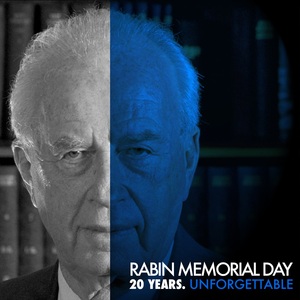
Yizkhak Rabin 20-Year Memorial – A Message from The Israel Movement for Progressive Judaism

Tags

, ,

Having just spent face to face time with the leadership of the Israel Movement for Progressive Judaism (IMPJ) in Jerusalem as partners with ARZENU (the world Reform Zionist movement) at the World Zionist Congress, I wanted to forward this message from Rabbi Gilad Kariv, the Executive Director of the Israeli Reform movement, in memory of the late Prime Minister Yitzhak Rabin.

It has become so very clear that PM Rabin’s assassination was a destructive turning point in the quest for peace with the Palestinians, and though hopes for a settlement of the Israeli-Palestinian conflict are now low in the near-term, we cannot stop advocating for a two-state solution. Rabin’s memory will forever be tied with hopes for mutual recognition and peace.

Click here to view it in your browser.

fb-rabin(en)-20-2015


Dear John,

The IMPJ remembers and mourns the assassination of Prime Minister Itzhak Rabin, 20 years ago. Upon recognizing 20 years to the assignation, MARAM – the Reform Rabbinic Council in Israel put out a public statement. following is an excerpt from it:

Our hearts bleed as we recall the fact that this heinous murder was supposedly committed in the name of the Torah. We condemn any attempt to hinder the democratic fabric in Israel in the name of our Jewish tradition… only in a truly democratic society which respects and defends human rights, will our timeless Jewish values be fulfilled; only the fortification and reinforcement of Israeli democracy will ensure the future of the Jewish people and all Israeli citizens, in their sovereign homeland.

May his memory be a blessing.

Sincerely,

Rabbi Gilad Kariv
Gilad Signature English
Executive Director