Like so many of you, I have been flooded by conflicting thoughts, worries, fears, and even relief since President Trump unilaterally, with Israel, began this war against Iran. To help clarify for myself all that is free-floating through my mind and heart, I began writing down every issue as they occurred to me.
Here, in no particular order – except the first bullet point, that is always upper most in my heart, and the very last – are what I have been thinking during the past week:
I mourn deeply the loss of every American soldier, every Israeli soldier and civilian, every Arab civilian, and every Iranian civilian who have died in this war, and I pray for the recovery of the injured – many hundreds of people likely have been killed so far and many many more injured;
For years, it has been clear that the Ayatollah’s regime is murderous, fanatic and extremist. Iran’s leaders promised the destruction of the State of Israel according to a “Palestine Countdown Clock” that was set up in a Tehran square in 2017 and has been ticking towards 2040 when the extremist regime would destroy the Jewish State. I am thrilled and relieved that the Ayatollah and so many of Iran’s hate-filled leaders are now gone and that each day brings greater destruction to Iran’s nuclear facilities, missiles, and military infrastructure;
All that said, and I acknowledge the problematic contradiction in what I am saying next, from a strictly American perspective, Iran posed no immediate threat to the United States and this war-of-choice is deeply problematic. In the hands of experienced diplomats and negotiators (Steve Witkoff and Jared Kushner are NOT that), perhaps there might have been success in avoiding this war altogether and in reaching an agreement that contained Iran’s nuclear ambitions as did the admittedly imperfect 2015 Iran Deal negotiated by the Obama Administration and supported by Russia, China, and the EU, and was canceled unilaterally by Trump in his first administration with nothing to replace the deal even contemplated;
Though other American presidents also started wars and used the US military against foreign nations and terrorist groups without Congressional approval, this war should have involved a full and open debate in the United States Congress per the US Constitution’s Article #1 giving Congress the authority to declare war and not the President. Trump’s amassing of half the United States military in the Middle East at the cost of billions of dollars without Congressional approval is one more serious assault on our constitutional democracy;
Trump’s war goals are still unclear and have been from the start. His motives could cover a wide array of issues: regime change, the destruction of the Iranian terrorist network, the destruction of Iran’s nuclear materials, capabilities, and missiles, the seizing of Iran’s oil, his desire to claim victory over Iran as a personal legacy no other American President was willing or capable of doing, a “wag the dog” strategy to distract Americans from the corruption and over-reach of ICE, the unlawful expulsion of US citizens and legal residents, the corruption and weaponization of the federal judicial system against Trump’s critics, the unrelenting affordability crisis, his involvement in the Epstein sex scandal, and (forgive my lapse into this conspiracy suspicion) Trump’s possible effort to cause domestic chaos to create an excuse to cancel the mid-term elections that he knows will be won by Democrats in the House and, likely, the Senate;
Trump has been unclear also about how long this war will continue – a few weeks, months?
Trump appears to have no plan for how Iran will be governed, and by whom when the war ends, and there seems to be no recognition of the remaining power of the Iranian Revolutionary Guard that includes upwards of 200,000 entrenched members;
Secretary of State Marco Rubio’s dangerous, but likely accurate statement last week that the US was only following Israel’s decision to go to war against Iran plays out a classic antisemitic trope that America’s foreign policy is controlled by Jews and Israel. I fear consequently an even greater level of antisemitism in the United States and that American support for Israel will become a central issue in the mid-term elections in both the Democratic and Republican Parties thereby threatening the security of the American Jewish community in ways most of us have not experienced in our lifetimes;
This war has shined a light on the moral hypocrisy of the far left that only days after the greatest atrocity was committed against the Jewish people since the Holocaust on October 7, 2023, called the terrorist, anti-democratic, misogynist, homophobic, and brutal organization Hamas to be “freedom fighters”, but did not say a word or lift a banner of protest when the Ayatollah unleashed his military to murder between 20,000 and 30,000 peaceful Iranian civilian protesters in January. Those far-left supporters of Hamas can only be regarded as antisemites;
Trump’s impulsive desire to go into Iran fast, do maximum military damage, and get out (as he did in Venezuela) defies the nature and complexity of Iran that has a population of 90 million people. The Iranian system is, in fact, still functioning despite the economic collapse there and the decapitation of its long-term brutal leadership. The street demonstrations have not resumed as yet. Nor has there been any significant defection by members of the Iranian Revolutionary Guard and Iranian security services into the protesters’ ranks suggesting that the Iranian regime (in what is left of it) has no intention of negotiating an end to the conflict anytime soon, and likely intends to wait this war out and make it a war of attrition against the United States and Israel;
Trump is likely aware of the economic and political constraints facing him here in the US, and he no doubt fears his political support in MAGA might collapse if the war goes on for too long with increasing numbers of American deaths and a rise in prices of items across the country. The stock and oil markets have not responded positively to this new American war in the Middle East. Official Washington is worried about how the regional crisis and Iran’s closure of the Strait of Hormuz will affect global shipping and make supply chains more and more expensive, thus spiking inflation worldwide;
All wars have massive unintended and tragic consequences, and the Trump Administration’s lack of fore-thought about what comes next in Iran is dangerous and morally and politically irresponsible;
Trump’s M.O. is being repeated yet again in this war with Iran. He loves to destroy and leave behind a mess. It ought to be clear after his first 15 months in office that he is surrounded by incompetent appointees and advisors and a sycophantic Republican-controlled Congress who do not give him the advice, counsel, and honest criticism any President needs to make reasoned, thoughtful, strategic, constitutional, legal, and moral decisions that are in the best interests of the United States and our western alliances;
Finally, I hope and pray that the United States finishes what it hopes to do as quickly as possible, that innocent life is spared, that pro-western leadership emerges to take Iran forward as part of the family of nations, and that this war does not inspire greater anti-Israel sentiment and antisemitism in the United States and around the world.
We Jews are now between two of our holidays, Purim and Pesach (commencing on Wednesday evening, April 1). Purim reminds us that there really are evil actors out to destroy us and that we cannot be naïve to their murderous designs. Pesach reminds us that we were once enslaved by Pharaoh in Egypt and suffered mightily, but we cannot forget to be compassionate towards others. We have to be able to hold both dispositions at once, to be on guard and to sustain our empathy – often a very difficult challenge in times of stress and war.
The Midrashic literature tells the story that as the Egyptian army drowned in the Sea of Reeds in pursuit of the Israelite slaves after the Ten Plagues, the Angels surrounding God’s Throne of Glory began cheering. The Holy One, incensed by their celebration, turned to them with rebuke saying: “You celebrate while my creatures are perishing?”
Should the United States and Israeli military succeed in eliminating the threat of Iran, we Americans and Jews have every right to feel grateful that an evil empire has been removed from the face of the earth, but we also must remember to mourn the loss of every innocent life and not become hard-hearted.
I confess to holding at once far too many conflicting feelings and thoughts since this war began. However, I have confidence in both the American and Israeli military capabilities though I have no confidence in either our own American leadership or in the Israel government’s extremist right-wing leadership. I stand, nevertheless, with the United States in this war and with the people of Israel and the Jewish state, and I pray for their security. Our Israeli brothers and sisters have had enough of war.
The Psalmist (122:6) reminds us “שאלו שלום ירושלים – Sha-alu shalom Yerushalayim – Pray for the peace of Jerusalem.”
Introduction: Despite all the pressing events confronting the world, the United States, and the Jewish community, the following is vitally important as well for the sake of the unity of the Jewish people, the democratic character of the State of Israel, and the health of Judaism itself that is being boldly threatened by the most extremist right wing anti-pluralistic small ultra-Orthodox minority of the Jewish people in Israel. Inside the statement by the world-wide Reform Jewish movement (along with the Conservative Movement) below is a link to take you to the Israeli Embassies and Consulates around the world to register your protest against legislation being moved in readings in the Israeli Knesset that would do terrible damage to the unity of the Jewish people. I ask that you find your Consulate General and write today as part of this international effort to put pressure upon Prime Minister Netanyahu and his ruling government to stop this madness immediately. Thank you.
February 26, 2026
The Reform Movement unequivocally condemns the preliminary vote in the Israeli Knesset to advance legislation that would criminalize egalitarian Jewish worship at the Western Wall, one of Judaism’s holiest and most enduring symbols. If enacted, the proposed bill by MK Avi Maoz of the far-right Noam party would render forms of Jewish prayer not sanctioned by the ultra-Orthodox Chief Rabbinate punishable by up to seven years in prison.
This alarming proposal represents an unprecedented attempt to criminalize mainstream Jewish worship in the Jewish state. It is a direct affront to Jews in Israel, North America, and across the globe who pray in egalitarian settings.
The Kotel does not belong to one stream of Judaism. It is a national symbol and a spiritual inheritance of the entire Jewish people. The existence of a dignified egalitarian prayer space alongside gender-segregated sections does not diminish the rights of Orthodox or ultra-Orthodox Jews to worship according to their tradition. Religious freedom in Israel must not be treated as a zero-sum proposition.
The global implications of this bill cannot be overstated. Outside Israel—especially in North America—85 percent of Jews worship in egalitarian communities. Criminalizing those forms of prayer at Judaism’s holiest accessible site would alienate millions of Jews from the State of Israel at a time when Jewish unity is both fragile and essential. Only months ago, at the October 2025 World Zionist Congress, representatives of global Jewish communities overwhelmingly supported restoring direct access to the Ezrat Yisrael—the section designated for egalitarian worship. This legislation moves decisively in the opposite direction.
At the same time, this is not primarily a Diaspora issue. The bill would directly harm and potentially imprison Israelis who choose pluralistic expressions of Judaism or who visit the Kotel and its outer plaza for heritage visits, IDF ceremonies, and tourism. The number of Israelis seeking egalitarian prayer continues to grow. This legislation would label their Judaism illegitimate and even criminal.
The debate over this legislation raises a fundamental question: Will Israel be a state of the Jewish people—or a state for only one interpretation of Judaism? For North American Jews, engagement on this issue is not interference; it is investment. Jewish sovereignty must reflect the diversity, dignity, and shared destiny of the Jewish people everywhere.
This proposal risks setting a broader precedent. If codified, it could embolden efforts to restrict recognition of non-Orthodox conversions, limit public funding for pluralistic institutions, and expand rabbinic court jurisdiction in ways that further erode religious freedom. This is not an isolated fight but part of a larger ideological project.
We call on Prime Minister Benjamin Netanyahu to use his authority to prevent this legislation from advancing and to instruct members of his coalition to reject this brazen attempt to criminalize egalitarian prayer. Enacting such a law would severely damage Klal Yisrael—the unity of the Jewish people—and undermine Israel’s foundational commitment to freedom of religion and conscience.
The Reform Movement remains steadfast in our love for and commitment to the State of Israel. Precisely because of that commitment, we will continue to advocate for a Zionism that reflects the full diversity of the Jewish people and safeguards the right of every Jew to approach the Holy One in their own voice.
We urge the global Jewish community to take immediate action. Join our Reform and Conservative partners worldwide in calling on Israeli leaders and diplomats to halt this dangerous legislation and uphold Israel’s promise as a homeland for all Jews.
Central Conference of American Rabbis Rabbi David Lyon, President (he/him) Rabbi Hara Person, Chief Executive (she/hers)
Union for Reform Judaism Rabbi Rick Jacobs, President (he/him) Shelley Niceley Groff, Chair (she/her)
American Conference of Cantors Cantor Josh Breitzer, President (he/him) Rachel Roth, Chief Executive Officer (she/her)
Association of Reform Jewish Educators Rabbi Stacy Rigler, RJE, CEO Stacy Rosenthal, RJE, President Men of Reform Judaism Larry Pepper, President (he/him) Steven Portnoy, Executive Director (he/him)
Women of Reform Judaism Karen Sim, President (she/her) Rabbi Liz P. G. Hirsch, CEO (she/her)
Women’s Rabbinic Network Rabbi Lisa Delson, Co-President Rabbi Simone Schicker, Co-President Rabbi Mary L. Zamore, Executive Director
A rare interview with Fadwa Barghouti, whose imprisoned husband represents the best hope for peace on the Palestinian side – By Jo-Ann Mort, The New Republic (January 26, 2026)
In 1999, I met Marwan Barghouti with a group of 20 American Reform Rabbis in his office in Ramallah. None of us ever heard of him before. He was then Fatah’s 39-year old leader in the West Bank. I was asked by our group leader, Rabbi Ammiel Hirsch, then the Executive Director of the Association of Reform Zionists of America (ARZA), to act as the interlocutor for our group.
Barghouti warmly welcomed us to his offices. He spoke to us in both Hebrew and English.
I asked him first whether he believed in and supported a 2-state final resolution of the Israeli-Palestinian conflict. He answered that he did.
“What obstacles, if any, do you see in the way of a diplomatic agreement?” I asked.
“None,” he said, “but the issue of Jerusalem and refugees will be difficult to solve.”
Jo-Ann Mort has written an important piece about Barghouti in The New Republic that I hope will add to the pressure upon the Israeli government to release Barghouti from prison. Jo-Ann rightly notes that Barghouti is a singular figure in Palestinian politics and more popular than any other Palestinian leader who could unify the Palestinians in negotiations with Israel. She interviewed Barghouti’s wife and Ami Ayalon, a former Shin Bet leader (2000–2005), a former admiral of the Israeli Navy, and a former Labor Party politician who advocates for Barghouti’s release from Israel’s prison.
Jo-Ann analyzes here whyfreeing Marwan Barghouti, may be the key to a “livable and reconcilable” future for both peoples.
I recommend her piece highly and that if you know decision makers in the United States and Israel that you share her article with them.
Introductory note: The following is an edited presentation I made on February 5 to Congregation Beth Torah, a Reform synagogue in Ventura, California.
The trauma of October 7th remains palpable in Israel and for so many of us in the Jewish Diaspora despite the official end of the war in Gaza, though fighting continues there and there’s growing violence in the West Bank. Israeli society is struggling to absorb the horrors of that deadliest and most traumatic day for Jews since the founding of the State of Israel and the Holocaust. Border communities still bear the scars of destruction and displacement. The trauma of war affects virtually every Israeli. To have seen the starving and tortured faces of some hostages as they were released recalled the old black and white photographs taken when the camps were liberated in 1945.
Israelis now find themselves at a crossroad in their history, and so too do we American Jews. For the first time in American Jewish history since the founding of Israel, many liberal American Jews are shaken not only by what happened on October 7 and being blamed by anti-Israeli antisemites for the attack starting on October 8, but by Israel’s overwhelming military response against Hamas that killed tens of thousands of Hamas terrorists and tens of thousands of innocent Palestinian civilians.
American Jews must understand that this longest war in Israel’s history was a legitimate response to Hamas’ butchery of Israelis in the south and what the Israeli government and the IDF most feared might happen immediately after October 7, that they were fighting for the existence of the state itself. They knew Hamas intended to expand its attack and cruelty, that there were realistic threats as well by Hezbollah and Iran to join the war, and that a sympathetic uprising could ignite in the West Bank forcing Israel to fight simultaneously on three fronts. It was unclear whether Israel could meet those threats.
The IDF was disorganized and its command believed it had to distribute its authority to a far lower level of officers than it had ever done before, a decision that reduced the IDF’s customary safeguards to protect Palestinian civilians who were being used by Hamas as human shields. They believed that Israel had to fight with overwhelming fire power to disrupt Hamas’s chain of command and reach its leaders hiding everywhere in more than 400 miles of tunnels everywhere under homes, apartment buildings, schools, community centers, hospitals, and mosques. If Israel didn’t succeed in disrupting Hamas immediately and demonstrating to Hezbollah and Iran how capable the IDF still was, Israel’s leadership feared that tens of thousands of Israelis could be killed.
Both Israelis and American Jews are only now beginning to ask about the impact this war has had on Israelis and Palestinian civilians and what long-term psychological damage has been done to both peoples. We’re trying here in Diaspora communities as well to figure out where we stand as American Jews and how much we want to say publicly about our fears and moral concerns in relationship to the war, the illiberal social and ethical trends that have grown in Israel, and the growth of antisemitism on the far right and far left.
Taking a 10,000-foot view, the significance of this period in Jewish history is unparalleled in the modern era except for the three years from 1945 to 1948 when the Jewish people went from our lowest nadir after the Shoah to the establishment of the Jewish State. That wide swing of the pendulum is testimony to the Jewish people’s durability and ability to survive, adapt and thrive after catastrophic events.
It will take time for Israelis, most especially, to heal from the losses and trauma of the war. Whatever happens, however, there must include a pathway to a demilitarized Palestinian state of some kind in Gaza and the West Bank in the context of a larger Middle East peace agreement that includes Israel and Saudi Arabia and all of Israel’s moderate Arab neighbors. The vast majority of Israelis, however, are no longer speaking about the viability of a Palestinian state. They fear, legitimately, that any such state could well be taken over by Islamic extremists bent on Israel’s destruction.
The war, in part, solidified for now the hold that right-wing Israeli political parties and the extremist settler movement have on Israeli politics. Should those extremist and messianic forces have their way in the next Israeli election in October, more terrorism and war with the Palestinians and Islamic extremists will be inevitable and Israel’s democracy will be threatened.
Israelis are facing many significant challenges including what to do about the humanitarian crisis in Gaza, the lack of a consensus about the role of the Palestinian Authority in the future governance of Gaza and the West Bank, Israel’s severely damaged international standing, what we in the American Jewish community think and feel about Israel and Zionism, and the dramatic rise in antisemitism around the world.
Among the greatest and immediate internal challenges facing Israel is that it has yet to set up an objective state commission of inquiry into what happened leading up to October 7 and Israel’s conduct in the war. Israel needs a power-house independent authority to undertake this inquiry to restore the people’s confidence that every lesson has been learned, that leadership failings are exposed, conclusions are drawn, and whether military excesses and war crimes were committed.
In considering Israel’s culpability, we Jews in the Diaspora who love Israel have to be able to distinguish between two kinds of criticism leveled against Israel’s conduct of the war. There’s criticism from Israel’s friends that the IDF went too far, bombed Gaza too heavily, and that Israeli commanders and soldiers, in the heat of battle, crossed red lines against international moral and legal standards of war. Israelis and right wing American Jews need to address this legitimate criticism from Israel’s friends and not characterize it either as anti-Israeli or antisemitic.
The second kind of criticism comes from those who believe that the Jewish State has no moral legitimacy to exist, that it is a colonial and foreign entity in the heart of the Islamic Middle East, and no right to defend itself. That criticism is not only anti-Zionist and anti-Israel, but is antisemitic because it denies to the Jewish people what is the right of every people in the world, to define ourselves and our narrative, and to have a nation state in our historic Homeland.
Despite the loss of a thousand young Israeli soldiers in the war, the murder and suffering of surviving hostages and their families, and the massive carnage and loss of life and property in Gaza, there are a few positive things for Israel and the Jewish people that have come from this war.
Immediately after October 7, Israel’s civil society came together from across all political and religious lines to support one another. In Diaspora communities $1.4 billion was raised for Israel representing the single largest set of contributions on behalf of Israel in our history, and 300,000 Jews and friends of Israel convened in Washington, D.C. in solidarity with Israel, the largest Jewish demonstration since the 1987 Soviet Jewry rally on the Mall.
Many American Jews felt a reconnection to Zionism, Israel, and their Jewish identity. More than 70% of Jewish Diaspora adults feel emotionally attached to Israel, and 60% said Israel make them proud to be Jewish. 70% said that it is sometimes hard to support actions taken by Israel or its government. 74% of American Jews between 18-49 support self-determination for both Israelis and the Palestinians, and 88% believe that “Israel has the right to exist as a Jewish, democratic state.” But, 14% of Jews ages 18 to 34 identify as anti-Zionist, an increase from 8% five years ago.
In the early weeks and months of the war, many American Jews sought out the organized Jewish community for identification and support, began reading books about Israel, attending classes and on-line seminars on Zionism, Israel, Middle East history and politics. Non-Jews chose to convert to Judaism in numbers greater than we’ve experienced in a generation.
However, too many American synagogues have become unsafe spaces where rabbis and congregants are unable to discuss civilly the wide range of views concerning Israel, Zionism, antisemitism, the war, the Israeli government, illiberal trends in Israeli and American Jewish communities, and the Israeli-Palestinian and Israeli-Arab conflicts.
It ought to be clear to everyone that we North American Jews and Israelis are in a significant transformative era. Whereas in years past, Israelis were happy simply to take Diaspora Jewish dollars and welcome American Jewish political support in Congress and the administration for Israel’s security needs. In a recent Israeli poll, 80 percent of Israeli Jews now feel strongly that the Israel-Diaspora relationship is important to them personally.
Though we Jews are one people, there exists today a wide chasm between most Israelis and most liberal American Jews. That reality requires us American Jews to understand that since October 7, Israelis as a whole have thought of themselves, perhaps for the first time in their lives, as victims who responded to Hamas from a place of fear, anxiety, rage, hostility, and a desire for revenge. From that embattled position many Israelis have justified themselves morally in responding militarily in Gaza to whatever the Israeli government and the IDF did. In the initial months of the war, I felt as Israelis felt. Feeling victimized perhaps explains why the vast majority of the Israeli media did not focus throughout the war on the destruction of Gaza and the huge loss of life there, and why Palestinian society has historically tolerated and embraced terrorism as a legitimate response against Israel and the Jewish people.
Consequently, Israel has lost the affections of a small minority of the American Jewish community, especially among our young people. At the beginning of the war, a colleague called me distraught because his college-age son had joined the Jewish Voice for Peace, an anti-Israel and anti-Zionist Jewish organization. His son claimed to want no part of Israel in his life and even said that Israel should never have been created. My colleague was deeply upset and asked me what I thought he ought to say to his young adult son. A number of my congregants called me as well with the same question about their college age and twenty-something sons and daughters.
I responded this way:
“First – these are your kids. Your relationship with them is what’s most important now. Don’t say or do anything to alienate them from you. Love them a lot, which means listening to them without having to instruct or correct them. Recognize that we’re all struggling in this new era of American Jewish history. Remember that they’re at the beginning of their adult journeys as Jews and they likely will evolve and change their thinking just as we’ve done over the course of our lives. You’ve instilled in them liberal Jewish values focused upon justice, compassion, and peace. This is not the end of their engagement with Jewish life or in their relationship with Israel. They already know how you feel and what you believe about Israel. If they’re open to reading about why Israel matters to the American Jewish community, to our identity and security in the Diaspora, and what liberal Reform Zionism has to offer them, there are books that deal directly with these challenges.”
The greater question confronting us now is how to better educate ourselves and our young people about Israel and Zionism. The best thing is to go there and meet Israelis face to face from the right, left, and center, with Palestinian-Israeli citizens and Palestinian Arabs living under occupation in the West Bank, with Israeli and Palestinian journalists, members of the Knesset, and our Israeli Reform movement rabbis and leadership, including the leadership of the Israel Religious Action Center, the social justice arm of Israel’s Reform movement, who advocate daily before the Knesset and courts and in the media on behalf of pluralism, equality, inclusion, and democracy in Israeli society.
There are many questions all Diaspora Jews, young and senior alike, need now to be asking:
What does it means for us to belong to the Jewish people and have a Jewish state?
How ought we to respond to those who feel we Jews are colonialists and interlopers in our historic Homeland?
How do we rebuild trust in our Jewish institutions, clergy and teachers who many young people regard with suspicion and distrust because we haven’t been honest enough about Israel and the Israeli-Palestinian conflict when they grew up?
How do we understand anti-Zionism, anti-Israel sentiment and antisemitism today?
Our message as American liberal Zionists and lovers of the people and State of Israel has to be clear and unrelenting – DON’T GIVE UP ON ISRAEL. We have a moral and Jewish duty to fight for Israel despite her imperfections just as we have a moral duty to fight for American democracy despite its obvious imperfections.
As Reform Jews, we have the duty also to join with our growing Israeli Reform movement in its fight for religious pluralism, democracy, inclusion, and equality in the Jewish state, and to pursue with those Israelis who believe in the necessity of creating a new pathway to peace with the Palestinians, the Arab and moderate Muslim world.
My Zionism grew from a particular time in history. I was born a year after the State was established and was raised on “the crisis narrative” of Jewish history. The Holocaust hovered over my childhood and formative years and has been a defining experience affecting the post-war Jewish psyche. The Shoah taught Jews everywhere that powerlessness risks death and the State of Israel is our surest protection against deadly forces that would destroy us.
By the time I was 17, Israel had fought three wars. When I was 23 and living in Jerusalem, Israel was nearly overtaken by Egyptian and Syrian forces in the Yom Kippur War. I understood then that Israel could not lose a single war on the battlefield, that her security and survival must be the number one priority for Israelis and world Jewry, and that to ignore the real threats to the Jewish people can never be an option.
Though I grew up with the “crisis narrative” of contemporary and historic Jewish experience, that narrative is no longer sustainable despite what happened on October 7.
I agree with Dr. Tal Becker, an associate at the Washington Institute for Near East Policy and a Fellow at the Shalom Hartman Institute in Jerusalem, who writes that the crisis narrative “is both narrow and shallow.” It’s narrow because the singular focus on survival keeps us from talking about “the breadth of what this sovereign project [on the land] might offer for the collective Jewish experience.” And it’s shallow because “it pursues Jewish survival for its own sake but tells no deeper story as to why that survival is important and worth fighting for.”
Dr. Becker argues that to achieve a vision of Jewish unity behind an Israel that we can support, we need to focus on values and ask what it will take to address Israel’s challenges and build a moral and just society in which the policies, politics, and culture reflect our liberal Jewish values, tradition, and experience as a people.
For those operating strictly out of the crisis mindset, Jewish unity is defined narrowly by who stands with us against common threats. But the values narrative defines Jewish unity in terms of a moral engagement that we share – not because we agree or because the one overriding issue confronting us is survival, but because we’re committed to engage in a process of writing together the next chapter of Jewish history.
It’s difficult to find the balance between our particular Jewish interests—the concerns and identity we have as a nation and “tribe”—and our concerns for democracy and the wellbeing of all. Yet the tension between the particular and the universal, the tribal and the humanitarian, runs throughout Jewish tradition and history. A values-based discussion about what Israel should be can bring about a new Zionist paradigm.
“Aspirational Zionism” evokes these questions that can take us to the heart of a democratic nationalism:
How do our liberal Jewish values augment Israel’s democratic, diverse, and pluralistic society?
How do we bring the moral aspirations of Judaism into contemporary challenges like Israel’s relationship with the Palestinians and Arab-Israeli citizens?
How do we fight our anti-Israeli, anti-Zionist, and antisemitic enemies without our sacrificing our Jewish moral sensibilities and democratic values?
How do we genuinely pursue peace as a moral obligation despite the threat of terror and war?
How do we preserve a Jewish majority in Israel while supporting social justice, a shared society with Arab-Israeli citizens, and the human rights of all?
Nationalism has become shorthand for self-interested exclusion, oppression, and supremacy, but democratic nations are what we make them. In this spirit we can insist on and fight for an Israel that lives up to its founding principles of democracy, justice, and peace; an Israel that reflects the best of Jewish culture and tradition.
We liberal American Jews can be fully Zionist even as we ask the hard questions like those above. That’s the Israel and the Zionism I support and grew up with, and our support for our Reform Zionist movement in the United States and in Israel in our Israeli Reform movement’s synagogues, youth programs, pre-army educational programs, kibbutzim, and social justice work are what give me hope for Israel and the Jewish people.
There are moments of decision that come to each of us when a moral choice must be made. Most of the time, those decisions have no great impact and we can make them easily without worrying about the risks such an action would carry for us or for the people near and dear to us. But there are other times in which our actions do have significant consequences and risks for us and our dear ones, and that our actions will define us for better or worse.
This blog was inspired (or better – provoked) by President Trump‘s and his administration’s ongoing efforts to bully large swaths of America’s citizenry and bend to his will government workers, the Justice department, politicians, educators, scientists, legal firms, universities, cultural, artistic, racial, and immigrant groups, and most recently six members of Congress – all respected veterans and former intelligence officials – who urged in a video disseminated widely that all members of the military not to obey unlawful orders, per the military code. President Trump’s irascible threat that they should be charged with treason and punished with execution is the most recent and stunning outrage.
Some have compared what is happening now in the United States to Germany in the 1930s when all democratic norms were destroyed in Hitler’s rapid and irrepressible march to dictatorship and the persecution and murder of Jews and others who resisted the Nazis. I don’t know if this claim is an accurate comparison or not. I have my doubts given the complexities of American democracy and the independence of federal, state, and local centers of authority that still exist, and given the noble actions of many judges at every level and of hundreds of attorneys who have filed law suits against Trump’s unconstitutional actions, though Trump is following the autocratic playbook closely, per Project 2025. I will leave the comparison to historians.
Without a doubt in my reading of history, however, the most extreme acts of moral courage, resistance and defiance against a murderous regime were taken by the many thousands of rescuers who hid or helped Jews during the Holocaust at great personal risk to themselves, their families and communities.
Years ago I read The Altruistic Personality: Rescuers of Jews in Nazi Europe – What Led Ordinary Men and Women to Risk Their Lives on Behalf of Others? by Samuel P. and Pearl M. Oliner with an Introduction by Rabbi Harold Schulweis (New York: The Free Press, 1988). Rabbi Schulweis, a moral giant in his generation, invited the Oliners to speak at his synagogue – Valley Beth Shalom in Los Angeles – and he invited the Board of Rabbis of Southern California to meet the authors and learn about their work.
It is written on the cover the following biographical notes about the authors and the purpose and content of the book:
“Samuel [Oliner] was ten years old when his entire family was murdered by the Nazis in Poland. Thanks to the help of a Polish Christian woman, he found a place to hide through the war – and survive. His experience left him with a profound, lifelong sense of wonder and a question that was the origin of this book.
In a time of extreme danger, what had led this woman, and a few thousand like her, to risk her own life and the lives of her family to help those who were marked for death – even total strangers – while others stood passively by?
To answer that complex and critically important question, Samuel and Pearl Oliner undertook the massive Altruistic Personality Project, which interviewed over 700 rescuers and nonrescuers living in Poland, France, Germany, the Netherlands, and Italy during the Nazi occupation.
Samuel (1930-2021) was a Professor of Sociology at Humboldt State University. Pearl (1931-2021) was a Professor of Education at Humboldt State University.
By comparing and contrasting rescuers and bystanders, [the Oliners] discovered that those who intervened were distinguished by certain common characteristics, including a deep-seated, wide-ranging empathy to others developed in their childhood homes, where moral and ethical values were not only strongly held, but acted upon by their parents. Unlike their neighbors who were concerned with their own survival and chose not to become involved, rescuers felt a more extensive concern and responsibility for the fate of the others and believed that what they did would make a difference…the Altruistic Personality explores the experiences and motivations of those uncommon individuals who aided Jews without compensation of any kind-and with full knowledge of the fatal consequences that would befall them if their actions were discovered.”
Altruism is based on a faith in a higher moral authority to which one is committed and the standards of which permeate one’s attitudes and behavior towards others, especially those outside one’s personal cultural, religious, ethnic, and national communities, and regardless of one’s personal self-interest and safety. This faith and moral commitment can come from one’s religious faith, parents, family, and other community groups to which a person belonged.
The Oliners learned in their research that rescuers did not consider themselves to be moral heroes. In their interviews these uncommon individuals explained that they could not do other than what they did and be able to live with themselves, regardless of the great risks involved. Rescuers felt instinctively and intuitively the difference between moral right and wrong and acted always according to their deeply held moral values nurtured and emphasized since childhood. They present to us a powerful model of quiet defiance and resistance.
The following are selected passages from this book:
“I did nothing unusual; anyone would have done the same thing in my place.” A Dutchman [said] who sheltered a Jewish family for two years.” (p. 113)
“Rescuers did differ from others in their interpretation of religious teaching and religious commitment, which emphasized the common humanity of all people and therefore [rescuers] supported efforts to help Jews.” (p. 156)
“I found it incomprehensible and inadmissible that for religious reasons or as a result of a religious choice, Jews would be persecuted. It’s like saving somebody who is drowning. You don’t ask them what God they pray to. You just go and save them.” (p. 166)
“…the language of care dominated [for most rescuers]: Pity, compassion, concern, affection made up the vocabulary of 76 percent of rescuers…”(p. 168)
“Rescuers described their early family relationships in general and their relationships with their mothers in particular as closer significantly more often than did non-rescuers. Rescuers also felt significantly closer to their fathers than did bystanders. From such family relationships, more rescuers learned the satisfactions accruing from personal bonds with others.” (p. 173)
“What distinguished rescuers from non-rescuers was their tendency to be moved by pain. Sadness and helplessness aroused their empathy. More frequently than others, rescuers were likely to say ‘I can’t feel good if others around me feel sad,’ ‘seeing people cry upsets me,’ ‘I get very upset when I see an animal in pain,’ ‘It upsets me to see helpless people,’ and ‘I get angry when I see someone hurt.’” (p. 174)
“…parents [in disciplining their children] of rescuers depended significantly less on physical punishment and significantly more on reasoning.” (p. 179)
“Involvement, commitment, care, and responsibility are the hallmarks of extensive persons [or ‘expansive persons’ – An extensive/expansive person is often friendly, outgoing, talkative, or generous by nature.] Disassociation, detachment, and exclusiveness are the hallmarks of constricted persons. Rescuers were marked by extensivity [or expansiveness], whereas non-rescuers and bystanders in particular, were marked by constrictedness, by an ego that perceived most of the world beyond [his/her] own boundaries as peripheral.” (p. 186)
“Constricted people experience the external world as largely peripheral except insofar as it may be instrumentally useful. More centered on themselves and their own needs, they pay scant attention to others… contractedness begins in early life. Family attachments are weak, and discipline relies heavily on physical punishment, the latter often routine and gratuitous. Reasoning and explaining [of parents to their children when a child does wrong] are infrequent [for the contracted personality]. Family values center on the self and social convention; relationships with others are guarded and generally viewed as commodity exchanges. Stereotypes regarding outsiders are common.” (p. 251)
“Moral courage is thus the conspicuous characteristic only of the independent, autonomous, ego-integrated liberal.” (p. 256)
Again, I am not making a direct comparison between what is taking place today in the United States with Germany in the 1930s. We Americans are, nevertheless, being challenged morally in ways most of us alive today have not experienced or imagined possible ever in our lifetimes. Our political leaders as well as university presidents and their boards, law firms, entertainment companies, journalists and the media, scientists and the men and women serving in the armed forces systematically are being morally challenged by a President whose clear intent is for Americans to bend the knee to his autocratic will.
The book may explain one important reason why so many Americans continue to support President Trump, though a Gallup poll released yesterday shows that Trump’s approval rating has sunk to a historic low of 36 percent with disapproval at 60 percent, and that the MAGA coalition is fracturing.
The book, though published in 1988, is still available and I recommend it highly.
We are today witnessing a dramatic rise in antisemitism in the United States and around the world that most Jews alive have never seen, experienced or imagined before. This millennia-old shape-shifting hatred that appears in different forms in every era continues to permeate our politics and culture.
It is important to understand what modern Jew-hatred is and what it is not. To that end, despite it being a complex psychological, cultural, religious, political, and historic phenomenon unlike any other hatred in world history, I offer a few comments below that I believe help clarify what this hatred is, what it is not, and what we Jews (and others) should do as we confront it.
“There are a number of modern and classic iterations of antisemitism that continue to be promulgated by the [political] far left and far right. They include Holocaust denial, offensive stereotypes of Jews (such as casting a Jewish individual as a Christ-killer, a puppet master, imposter, and swindler who manipulates national events for malign purposes, a foreigner, a controller of banking, the media, government, and the wealthy elite), denying the Jewish people our right to self-determination, applying double standards to Jews and Israel that are not applied to any other nation, using the symbols and images associated with classic antisemitism to characterize Israel and/or Israelis, drawing comparisons of contemporary Israeli policy to that of the Nazis, and holding Jews collectively responsible for actions of the State of Israel.” –Rabbi John Rosove, “From the West to the East – A Memoir of a Liberal American Rabbi” (West of West Books, 2024)
“The antisemite was a coward, afraid of himself, of his own consciousness, of his own liberty, of his instincts, of his responsibilities, of solitariness, of change, of society, and the world — of everything except the Jews. The antisemite doesn’t hate Jews because of some bad experience with flesh-and-blood Jews, but uses a preexisting ‘idea of the Jew’ as a prism for ordering his troubled world. Antisemitism was thus a psychic liberation from responsibility for one’s conscience, a rebellion against the burdens of rationalism….If the Jew did not exist, the antisemite would invent him.” -Jean Paul Sartre, Anti-Semite and Jew (1946)
“Jews know that democracy is their best protection. Less democracy means less protection for all minorities, and even if the dictator makes a big show of being the Jews’ protector and a friend of Israel, it’s at best temporary and conditional. No one is ever safe with a dictator, certainly not the Jews.” -Anshel Pfeffer, Haaretz, July 29, 2022
“Today, anti-Zionism is often a form of antisemitism, but not always. After all, there are plenty of anti-Zionist Jews who identify as Jews proudly. However, the single-minded blind obsession with Israel often bleeds into hatred of Jews and normalizes Jew-hatred. Of course, not all criticism of Israel is illegitimate or unwarranted, and certainly not antisemitic, but some of it is, and on some college campuses and on-line forums a lot of it is. We need to be able to appreciate subtlety, nuance, and historical context, and to distinguish between legitimate critique and the new mutated form of antisemitism dressed up in the garment of pathological anti-Zionism.” -Rabbi Ammiel Hirsch – Podcast “In These Times” with Natan Sharansky (2022)
“What we generally call antisemitism is a 19th-century coinage that helped turn an ancient religious hatred into a racial hatred. As racial hatred came to be considered uncouth after World War II, anti-Zionism (that is, blanket opposition to a Jewish state, not criticism of particular Israeli policies) became a more acceptable way of opposing Jewish political interests and denigrating Jews. Should Israel cease to exist, new forms of bigotry will surely develop for the next stage of anti-Judaism, adapted to the prevailing beliefs of the times. The common denominator in each of these mutations is an idea, based in fantasy and conspiracy, about Jewish power. The old-fashioned religious antisemite believed Jews had the power to kill Christ. The 19th-century antisemites who were the forerunners to the Nazis believed Jews had the power to start wars, manipulate kings and swindle native people of their patrimony. Present-day anti-Zionists attribute to Israel and its supporters in the United States vast powers that they do not possess, like the power to draw America into war. On the far right, antisemites think that Jews are engaged in an immense scheme to replace white, working-class America with immigrant labor. Tucker Carlson and others have taken this conspiracy theory mainstream, even if they are careful to leave out the part about Jews… the foul antisemitism of the right, yoked to its old themes of nativism, protectionism, nationalism and isolationism, is erupting into the public square like a burst sewage pipe.” –Bret Stephens – What an Antisemite’s Fantasy Says About Jewish Reality – NYT – Jan. 21, 2022
“In 2025 America, antisemitism is real – sometimes in plain sight, sometimes encoded and winked at, and sometimes expressed as obsessive hatred of Israel and Zionism. The problem transcends left-right politics – stretching from Nick Fuentes and “great replacement” conspiracists on the far-right to those on the far-left who cast Jews globally as oppressors. We see it everywhere – from chants in the streets to online memes in our social media feeds and conspiracies festering in the darker corners of the web. As we wage this critical fight, we must take care not to undermine either our own interests or the health of American democracy. And we must be honest that – at times – the fight against antisemitism is itself being politicized and weaponized. If we are not careful in our approach, we risk ending up less safe, less free, and more isolated.
We cannot define legitimate criticism of the Israeli government as antisemitism – especially not in law. Weaponizing antisemitism as justification to slam the gates shut [on immigration into the United States] is not “protecting Jews,” it is erasing a core American ideal that granted us protection. To allow right-wing actors – including those willing to defend and platform dangerous figures like Nick Fuentes – to chip away at those pillars in the name of “protecting Jews” is not only hypocritical and ironic – it is deeply, dangerously self-defeating. Not all the anger coming at the Jewish community today is rooted in ancient hatred. Some of it is rooted in protest against the policies of the government of Israel – policies that many Jews disagree with as well. While some protest on the left crosses a line into antisemitic narratives, that doesn’t negate the legitimate reasons for much of the protest. We cannot fight antisemitism by censoring political speech, by withdrawing from civil rights coalitions, by letting the far-right weaponize our fear, or by refusing to look at our own agency and responsibility. We should be honest that both the left and right ends of the spectrum have some antisemitic elements and not allow this important issue to be made into a political football. We need to defend democracy. Defend free speech. Build alliances. Protect the rule of law. And we need to do all this out of a firm conviction that Jewish safety in America will not come from isolating ourselves or policing ideas. It will come only from solidarity, partnership, and the deep and universal American promise that freedom and equality are not for some, but for all.” –Jeremy Ben-Ami, “Can We Do Better at Fighting Antisemitism,” Word on the Street, November 2, 2025)
In the last number of weeks, Rozana International began operating a mobile clinic in Gaza to begin to address the overwhelming health tragedy there. Rozana’s staff of two doctors and a nurse—all Palestinian Gaza residents—are treating 100 Palestinian patients every day in a large tent; men, women and children who were bombed out of their homes and who themselves are living in makeshift shelters. In this fragile setting, a team of local medical professionals is on the ground every day—treating injuries and addressing urgent health needs. With a planned increase in staff and sufficient supplies, the clinic looks to serve 10,000 patients a month.
Rozana International is an organization that uses health diplomacy to strengthen ties of communication and cooperation between Israelis and Palestinians. I have been a supporter for about ten years and believe not only in its humanitarian mission but in its success as a way to help Palestinians in dire need of medical help, but also as an Non-Governmental-Organization (NGO) that brings out the best in Israelis and Palestinians, working together to save lives.
On Sunday, November 9, I invite you to join a webinar with Mohammed Asideh, Rozana’s director of advocacy and the head of Rozana’s Palestine NGO office in Ramallah. He is in charge of Rozana’s Gaza Mobile clinic.
Rozana’s short-term aspiration, once the first clinic is fully operational, is to open and fund a second clinic to handle minor surgeries that are not getting the attention of the severely diminished hospital system. Rozana also has separate funding to provide a “warm line” for a lactation counseling pilot project for Gazan mothers. These projects are the building blocks that will allow Rozana to establish a permanent Rozana Palestinian NGO office in Gaza. When that happens, it will allow Rozana to play a significant humanitarian role there going forward.
Rozana Palestine’s operations include a variety of policies that comply with U.S. government guidelines regarding counterterrorism and money laundering.
Both the Quran and the Talmud teach that if we are able to save even one life, we save the entire world. We who support Rozana believe that precept must include our Palestinian brothers and sisters. Despite the ongoing tragedy of the Israel-Hamas war in Gaza, the creation of Rozana’s Mobile Clinic gives Americans of all faith traditions and those with no faith tradition as well the opportunity to help save Palestinian lives.
I believe in Rozana, its leadership, its health care physicians and nurses, and what it has done so successfully over many years in bringing Israelis and Palestinians together in partnership. It is an organization worthy of our support.
Please join us in this Webinar to learn more about Rozana’s life-saving work. You will be moved. To register – join us on November 9 at 1:00 PM EST .
In response to a landmark congressional letter to President Trump led by Senator Adam Schiff (Democrat – California) and signed by 46 Democratic Senators (all but Senator Futterman of Pennsylvania) voicing clear opposition to potential Israeli annexation of the West Bank or Gaza, J Street President Jeremy Ben-Ami issued the following statement:
“This is a tremendous show of unity across the Democratic caucus. Together, Democrats are sending a clear message to extremists in the Israeli government: If they think they can get away with annexation without consequences, it’s time to think again.
The letter demonstrates a broad, principled commitment to Israel’s long-term security, aspirations for Palestinian statehood, a viable path to peace, and a sustainable US-Israel relationship rooted in shared democratic values. We applaud the senators’ leadership in making clear that illegal, unilateral annexation runs counter to American values and would harm Israel’s interests by reversing the progress toward regional integration achieved by the Gaza ceasefire and weakening the US-Israel relationship.
J Street has long believed that Israel’s future as a secure, democratic homeland for the Jewish people depends on the Palestinian people’s ability to live in freedom and dignity in a state of their own in the West Bank and Gaza. Extremists who want to claim the entire land for Israel are pursuing annexation to make that outcome impossible, locking in endless conflict, destroying Israel’s democratic character and entrenching Israel’s status as a pariah state.
We urge the Trump Administration to continue making clear that any steps toward annexation are unacceptable and undermine progress made through the ceasefire, and to prioritize the pursuit of a renewed diplomatic effort to achieve a regional peace.”
Note: J Street is a pro-Israel, pro-democracy and pro-peace political organization in Washington, D.C. that affirms that only a negotiated resolution of the Israeli-Palestinian conflict that is agreed to by Israelis and Palestinians peacefully working together can the legitimate needs and national aspirations of both peoples be met. J Street endorses more than 200 Members of Congress and has chapters in most major American cities as well as chapters on more than 40 college and university campuses across the country. For more information about J Street policies and advocacy work, go to http://www.Jstreet.org.
I signed onto this important letter as a proud American Jew and Reform Rabbi, liberal Zionist and supporter of the people and State of Israel, despite my strong criticism of the most extreme right-wing messianic and anti-democratic government in the history of the State of Israel. As I discussed in detail in my Kol Nidre sermon at Temple Israel of Hollywood (for those interested, you can view it on YouTube here – https://www.youtube.com/watch?v=28uW3QLeE28), I believe that this is the time for the American Jewish community and especially young liberal and progressive American Jews who feel alienated from Israel and the organized American Jewish community, to stay engaged with Judaism, the Jewish people and the State of Israel at this most horrific inflection moment in modern Jewish history and in the context of the dramatic increase of antisemitism in the United States and around the world in decades. To date, hundreds of American Rabbis have signed onto the following letter and more are signing on every day. It will be released soon. No letter of this kind has been written or signed before by so many American rabbis.
“As rabbis from across the United States committed to the security and prosperity of the Jewish people, we are writing in our personal capacities to declare that we cannot remain silent in the face of rising anti-Zionism and its political normalization throughout our nation. When public figures like New York mayoral candidate Zohran Mamdani refuse to condemn violent slogans, deny Israel’s legitimacy, and accuse the Jewish state of genocide, they, in the words of New York Board of Rabbis president Rabbi Ammiel Hirsch, “Delegitimize the Jewish community and encourage and exacerbate hostility toward Judaism and Jews.”
As prominent New York City Rabbi Elliot Cosgrove stated in a recent sermon, “Zionism, Israel, Jewish self-determination—these are not political preferences or partisan talking points. They are constituent building blocks and inseparable strands of my Jewish identity. To accept me as a Jew but to ask me to check my concern for the people and state of Israel at the door is a nonsensical proposition and an offensive one, no different than asking me to reject God, Torah, mitzvot, or any other pillar of my faith.”
We will not accept a culture that treats Jewish self-determination as a negotiable ideal or Jewish inclusion as something to be “granted.” The safety and dignity of Jews in every city depend on rejecting that false choice.
Therefore, we call on all Americans who value peace and equality to participate fully in the democratic process in order to stand up for candidates who reject antisemitic and anti-Zionist rhetoric, and who affirm Israel’s right to exist in peace and security.
We also call on our interfaith and communal partners to stand with the Jewish community in rejecting this dangerous rhetoric and to affirm the rights of Jews to live securely and with dignity.
Now is the time for everyone to unite across political and moral divides, and to reject the language that seeks to delegitimize our Jewish identity and our community.”
Introductory Note: I delivered this sermon on Kol Nidre at Temple Israel of Hollywood where I served as Senior Rabbi from 1988 to 2019. The YouTube above is available to watch or the written text below.
Shanah tovah.
It’s so good to look out from this bimah once again and see so many friendly faces. I’ve missed you.
I thank our Board of Trustees and my clergy colleagues for extending to me the invitation to speak with you on this holiest of nights. I’m honored to have this privilege. The adage that you can’t go home again doesn’t apply to me here. Temple Israel was and remains a home away from home for my family and me. Our sons were educated here, and now our two grandchildren are enrolled in our schools. L’dor va-dor.
Since I became Rabbi Emeritus six-plus years ago so much has happened in each of our lives and our families, in the life of this community, in our country, Israel and the Middle East, and around the world.
And here we are, together again at this annual reunion, as we begin Yom Kippur and Temple Israel’s 100th anniversary year.
Tonight commences our day of fasting, reflection, self-criticism, and renewal, and is an opportunity to count our blessings too, to cherish each other, to remember those who have passed on who have been dear to us, and those who built this community and left it to us as part of their legacy.
Particularly in these soul-crushing and heart-breaking times in which we’re trying to make moral sense in this new era that began on October 7th two years ago, it’s important to remind ourselves who we are and who we’ve been as Jews over our long history.
Judaism includes many things, a moral and legal tradition founded upon the principle of tikun olam (repairing the world), a religion and faith, a culture, history, languages, a Homeland, literature, art and music.
Though twice we were forcibly exiled from the Land of Israel, we’ve kept the Holy City of Jerusalem in our hearts. In exile we’ve suffered persecutions, but we survived as Jews despite all those who sought to destroy us.
Our liturgies, philosophies, theologies, and ideologies evolved as we’ve lived and adapted in lands throughout the world.
We are therefore not a religious and faith community alone. We’re a people and civilization distinguished by our moral values, ideas, and sense of community, lived experience and history no less significant than the Greek, Roman, Ottoman, and British empires, though we’ve never occupied as much territory as any of them.
I was asked to speak tonight about Israel, the war, Zionism, and our relationship as American Jews to the Jewish State, and I confess that after accepting the invitation, I asked myself how I ought to speak about this most horrific inflection moment in modern Jewish history and in the history of Israel.
To start, the 20-point peace plan unveiled on Monday at the White House, has many good things in it, including an end to the war, the immediate return of the hostages, a plan for the day after in Gaza, the surrender of Hamas, a surge of humanitarian aid, no forced displacement of Palestinians from Gaza, an eventual Israeli withdrawal from Gaza, a recognition of the Palestinian aspiration of self-determination and a “credible pathway” toward statehood, and the support of the Arab world, not a small thing at all.
The proposal needs Hamas to support it and we’ll know soon enough if it does. Word is that it intends to reject it, but even if Hamas accepts the plan, it’s likely that Prime Minister Netanyahu and Hamas’ leadership will, for their own domestic political reasons, drag their feet and put obstacles in the way, or even derail the initiative altogether.
A significant weakness of the plan is that no Palestinians were involved in developing the agreement and there was no mention of the future of the West Bank. For true peace and a two-state solution ever to emerge, Israelis and the Palestinians must work face-to-face, from the ground up, not top down with one of the parties excluded, as Trump’s plan does.
After the press conference, PM Netanyahu, speaking in Hebrew, rejected Palestinian statehood as he has done throughout his political career.
I fear, therefore, that the status quo before Monday’s announcement hasn’t really changed, though I would love to be wrong.
My initial intent in speaking with you tonight was not to talk policy; rather, to reflect about who we are as Jews, and what impact the Hamas attack on October 7, 2023 and these two years of war have had on our identity as liberal American Jews, our Jewish values, and our relationship with the people and State of Israel.
Since October 7th, like so many of you, I have continually felt despondent, outraged, grief-stricken, vengeful, and deeply worried about the families of those murdered on that day, the well-being of our hostages and young soldiers and their families, and about the thousands of innocent Gazans who have lost their loved ones, homes, and communities.
I’ve been a Zionist since my earliest years. My family was among the earliest pioneers to Palestine starting in 1880, and I have many dear Israeli friends. I’ve studied, taught and written about Zionism, the State of Israel, and Jewish history, about Jewish texts, literature and values. But, nothing has pierced my heart and soul like what we have experienced during these past two years. Consequently, no sermon I have ever given has been more difficult and painful for me to write than this one.
The founding of the State of Israel only three years after the greatest tragedy ever to befall our people, transformed who we were to become as Jews in this era. The new state returned us to our ancient Homeland and to history. Israel gave us confidence and agency. It restored our pride as a people. It offered us protection from antisemitic hate and violence. And it became a laboratory in which our people’s ethical tradition could be tested in the context of our attaining power and sovereignty for the first time in two thousand years.
But, what happened on October 7th represented the greatest existential threat in most of our lifetimes to everything we have been as a people in the modern era.
Israeli commanders feared in the initial days after the attack not only that Hamas would continue its savage rampage going north killing Jews with the ultimate goal of destroying the Jewish state, but that Israel’s enemies on all sides would join the war in a coordinated attack. Such a combined assault would have overwhelmed Israel’s defensive capacity.
Even before that awful day, Zionism and the State of Israel had come to be regarded by many in the United States and around the world cynically, with derision and in the most pejorative terms. That downward trend intensified and metastasized almost immediately as Israel began fighting back. Those hostile to Israel have for years sought to re-frame Israel’s narrative as discriminatory, racist, colonialist, and as a cancerous foreign element in the heart of the Islamic Middle East that had no legitimate right to exist.
An increasing number of progressive left-wing Americans, people many of us thought were our friends and social justice allies, agreed openly with the harshest Israel critics, justifying morally what Hamas did and some even celebrating Hamas by calling its brutal and savage terrorists, inexplicably, “freedom fighters.”
Every people has the right of self-definition, and we liberal American Jews and Zionists who support and love the State of Israel have that right as well. Especially now after two years of war, a dramatic rise in antisemitism around the world, and Israel being labeled a pariah nation, we Jews cannot allow Israel haters, antisemites and right-wing extremist Jews to define us or to determine the inner life of the Jewish people. We need to be able to restate our liberal Jewish narrative and lead with it whenever we discuss with those who know much or little about the history of the Jewish people, Judaism, Zionism, and the State of Israel.
I want to express to you tonight as clearly as I can, from the deepest place in my being, in an effort to reclaim our narrative, why I remain a liberal American Jew, a liberal Zionist and a supporter of the people and State of Israel despite my very strong protest against the policies of the most extremist, anti-democratic, right-wing, messianic, and myopic ruling coalition government in the history of the Jewish state.
As a liberal American Jew, I believe in the right of the Jewish people to a state of our own in our historic Homeland and in the right of Israel militarily to defend itself whenever it’s attacked by terrorists and hostile states set on its destruction.
As a liberal American Jew, I affirm that the universal humanitarian values advocated by the ancient prophets of Israel, developed by rabbinic tradition over the past two millennia, and included in Israel’s Declaration of Independence, including equality, justice, compassion, empathy, human rights, and peace – all foundational virtues in Judaism – must be the core values guiding all of the Israeli government’s policies and reforms, its military and civil society.
As an American Jew, I acknowledge that I am not an Israeli citizen. I do not pay Israeli taxes nor do I send my children and grandchildren to the Israeli military. Nor do many of us American Jews know people who were murdered on October 7, though two of the young people killed at the Supernova music festival, Norelle and Roya Manzuri (aleihen b’shalom), grew up here in our own Briskin Elementary School.
Few American Jews have family members who were taken as hostages, and few among us have been subjected to missile attacks forcing us to run quickly with our children and babies in our arms into shelters with only seconds to spare before the explosions and the walls of our home shake.
Only Israeli citizens have the right to take the hard decisions that impact their lives and well-being. However, as an American Jew who loves Israel and who cares deeply about Israel’s citizens and future, I insist that I do have the right to share my ideas and criticism of Israeli government policies and trends that I believe are harmful to Israel as a Jewish and democratic state, that threaten our security and well-being as Diaspora Jews, and are contrary to our liberal Jewish and democratic values.
I had little doubt that Israel had to respond militarily in order dramatically to reduce Hamas as a military threat to enable Israelis safely to return to their homes in southern Israel, just as Israel had to defang Hezbollah in Lebanon to allow Israelis to return safely to their homes in the north.
However, I’ve been haunted ever since I read words written soon after the war began by a dear Israeli friend, Nadav Tamir, who wrote:
“After October 7th, I understood the anger and desire for revenge, but I feared Hamas would win the battle for our souls if they succeeded in making us as murderous and vengeful as they are…” (1)
I knew Hamas couldn’t win this war on the battlefield. Thankfully, Israel is too strong and strategic a military power, but like my friend, I worried too that Hamas would succeed in corrupting the heart and soul of the Jewish people.
This war began as a just war of self-defense against a cruel and vicious enemy that committed massive war crimes against our people. Israel’s initial war goals were to bring the hostages home and to degrade Hamas’ ability ever to attack Israel again as it did on that day.
Like many Israelis and American Jews, I too have felt the need for revenge, but I’ve asked myself at what cost to my heart and soul and to the soul of the Jewish people should I or any of us continue to harbor such self-destructive emotions? And at what moral cost to our people have these two years of violence and killing had upon Israelis and the Jewish people around the world?
Earlier this year, 600 retired Israeli security military and intelligence officials wrote to President Trump to urge him to apply pressure on Israel to end the war because they believed that Hamas was no longer a military or strategic threat to Israel and that there was nothing more to be gained in continuing the battle, that the war was harming Israel’s international legitimacy, causing immense suffering for Gazan civilians, and that the war was no longer a “just war.”
But, despite their advice and expertise, the fighting has gone on and on. Though Trump has now tried to end this war, over the past two years, Israeli bombers, missiles and tanks have utterly destroyed Gaza, house after house, apartment building after apartment building. Water, electricity and sewage infrastructure no longer exist. It’s estimated that 90 percent of all homes, 436,000 residences, are either destroyed or damaged beyond repair with tens of thousands of innocent Palestinian civilians dead – men, women, children, babies, the elderly, entire families wiped from the face of the earth. They and so many of our own Israeli soldiers and hostages that have been killed could have been saved had the war ended long ago.
If all of this isn’t awful enough, from March to May of this year, the Israeli government withheld all humanitarian aid from Gaza allegedly to force Hamas to release the hostages and to surrender. But that tactic backfired. We’ve seen the images of starving children. Even if Hamas doctored some of the photographs for its corrupt propaganda purposes, is there really any doubt that thousands of children were starving because Israel used humanitarian aid as a weapon of war? This tactic was not only immoral and un-Jewish, but according to international law, a war crime.
After heavy criticism from the United States, Israel opened the gates and aid began flowing again on hundreds of trucks daily into Gaza, but far more is needed to address the horrific long-term effects of famine.
It is American policy that Israel and all recipients of United States’ weapons must adhere by law to standards concerning humanitarian aid and the use of force. As painful as it is for me to say this because I have always supported American military aid to Israel throughout my life, I support those 27 Democratic Party Senators who in July voted to block the sale of U.S.-made heavy bombs, guidance kits for bombs, and assault rifles to stem Israel’s use of these offensive weapons to harm civilians, block humanitarian aid, and contribute to mass starvation in Gaza. Though the bill didn’t pass in the Senate, the intent of those Senators was to put maximum pressure on President Trump, Prime Minister Netanyahu and his extremist government to end this war.
Those 27 Senators are friends of Israel. In their vote to withhold offensive weapons they carefully distinguished between those weapons and the defensive weapon systems of Iron Dome, Arrow, and David’s Sling that save Israeli lives. These Senators should not be accused of being anti-Israel as some in the American Jewish community have done. They are not that. They instead should be praised for acting on behalf of the best interests of Israel and the Palestinian civilians of Gaza and for applying necessary pressure on the Israeli government to do what is just and compassionate.
Many of us are aware also of the organized right-wing extremist settler violence and murder of Palestinian civilians in the West Bank, the demolition and burning of their homes, orchards and fields with impunity and often with the participation of uniformed Israeli soldiers. The intent of these violent settlers, with the backing of this extremist Israeli government, is to drive Palestinians out of the West Bank altogether, from their homes and villages in which they have lived for generations, to make way for more Jewish settlements and the eventual annexation of the West Bank into a Greater Israel, also contrary to international law.
Several weeks ago, I was stunned when Prime Minister Netanyahu arrogantly boasted that Israel will become “Super Sparta” – a reference to the ancient hyper-militaristic, self-reliant society that was isolated from the rest of the world. The “Super Sparta” vision prizes armed-force prowess above all else and is not a vision for Israel’s future that most of us would recognize or of what early Zionists hoped for Israel to become as a nation amongst nations. It’s a road-map to deepen Israel’s pariah status around the world and to accelerate Israel’s moral and political decline.
It ought to be clear by now that given the massive destruction and killing that continues day after day that Israel has crossed red lines and committed war crimes. War crimes are committed in every war, and in this war, it’s likely that rogue commanders and rogue soldiers have shot civilians without provocation, and missiles and bombs have destroyed buildings inhabited by Hamas commanders without nearly enough concern for the number of civilians who would certainly be killed. Those commanders and soldiers should be held accountable when the war is over.
We Jews know better. Our own people have been the victims of war crimes throughout our history. Judaism gave the world a system of justice and a moral tradition of compassion based upon the principle that every human being is created b’tzelem Elohim, in the divine image, and therefore is of infinite value and worth.
Israeli soldiers have long been trained in what’s called Tohar HaNeshek, purity of arms, meaning that every means and every effort must be taken at all times by every commander and soldier to preserve innocent human life. (2)
To their great moral credit, hundreds of Israeli reserve soldiers are now refusing to report for military duty because they know that Israel is now fighting a cruel and unjust war. The vast majority of Israelis too, according to polls, are demanding that the war, killing and suffering end, and the remaining hostages be returned home.
This war has shaken Israelis and world Jewry to our core. The wounds of each of our peoples, of Israel and Palestine, are going to be difficult to heal or overcome for generations.
In the United States and around the world, we Jews are dealing also with a rise of antisemitism – much of it exacerbated by this war – that most Jews alive today have never seen, experienced or imagined before.
The Palestinian-Israeli struggle is amongst the oldest unresolved conflicts in the world. The Israeli historian and writer Fania Oz-Salzberger put it exactly right when she wrote a month ago:
“Here’s a truth to reckon with: neither Israelis nor Palestinians are going to disappear any time soon. No one can destroy their respective claims to a sovereign state in their ancestral homeland, which happens to be the same land. Barring a cataclysmic event, there will be no river-to-sea Palestine and no Greater Israel. This is a conflict that can only be solved by territorial and political compromise.” (3)
There are serious ideas, in addition to what we heard on Monday, that have been developed over the last number of years between Palestinians and Israelis working together, from the bottom-up, who recognize and accept each other’s legitimate national aspirations, needs and rights. Despite whatever despondency I have felt, there are two related ideas that I actually find hopeful and visionary.
One is called “Eretz L’kulam – A Land for All: Two States, One Homeland”, a political vision developed by Israeli Jews and Israeli Palestinian Arab citizens. The proponents of the idea envision two democratic and sovereign states alongside each other – Israel and Palestine – linked together in a confederation much the way the European Union functions. (4)
The second idea is a “23-State Solution” that includes all the western Arab states and Israel in coalition with each other, complete recognition of Israel for the first time in Israel’s history by most of the Arab and Muslim world, and the creation of a demilitarized Palestinian state, perhaps as part of the confederal model. (5)
This isn’t the time or place to discuss the details of these ideas, but it’s important to know that there are creative and pragmatic ideas that can offer hope and a way forward. After the holidays, this sermon will be posted on our synagogue’s website and on my personal blog (6), and I will include links to both of these proposals that spell out the details, if you are interested.
All ideas about how to resolve this conflict are, of course, not risk-free, but the status quo is unsustainable. Violent rejectionist Jewish Israelis and violent rejectionist Palestinian Arabs will have to be controlled harshly by each state’s respective police forces in any future negotiated agreement.
To be Jewish, especially in these times, means, in part, to lift ourselves up out of the morass of confusion and despair, to reclaim our virtue as critical and creative thinkers who raise moral questions and seek practical solutions, and who can argue with one another without withdrawing from the fight or being intimidated by Israeli zealots or their supporters in the United States who slander us as self-hating Jews, antisemites, Kapos, and traitors because we dare to be critical of Israeli policies and actions as a matter of conscience and moral outrage about this war that long ago should have ended.
We Jews have always viewed our purpose through an aspirational lens. We have striven as a people to be better than we are, that we do not ever settle for the status quo, and that we stay committed to correct moral wrongs and move forward as best we can.
Some of our own young liberal and progressive American Jews, however, are decoupling the State of Israel from their Jewish identity, and others are closing the door behind them and disavowing being Jewish altogether. Many are walking away from the American Jewish community because they believe that we rabbis and teachers, Jewish leaders of synagogues, national Jewish organizations and Jewish summer camps, who taught them Judaism’s moral principles emphasizing compassion and empathy, justice, human rights, and peace are, in their minds, hypocrites because we have not been nearly critical enough, or critical at all, of Israel’s bad behavior in this never-ending war.
I want to speak now to you, our young generation of Jews.
I understand how many of you feel and why you feel as you do. But, I believe that this is not the time to turn your backs on our people, on Judaism, on liberal Zionism, or on the State of Israel.
Our Jewish moral and ethical principles transcend any specific point in time or series of events. Judaism is not what we see in war or as a consequence of our having to cope with antisemitism, though both can teach us much about ourselves as Jews.
Judaism is what we rabbis, teachers, synagogues and Jewish summer camps tried to impart to you, our young people, about the vitality in living an enriched Jewish life, about the multitude of ways to be spiritual beings within Jewish community, about the wisdom our sages, mystics, and great thinkers have left for us, about ways to live the rhythms of our holidays and life cycles, and about the meaning of the establishment of the State of Israel as the greatest single accomplishment of the Jewish people in two thousand years.
Though you may wish to turn away, I hope you will decide to stay engaged in whatever way is meaningful to you because we need you, your way of thinking, and your critical moral voice.
Another thing about us Jews – our struggles are nothing new. We are, after all, Yisrael – a people who wrestles with God and with the moral challenges and complexities we face every day as individuals and as a people.
We Jews have always recognized the wide chasm between what is and what ought to be. The best of us, however, have not sat on the side-lines nor given up without entering the fight on behalf of our people and for human rights, justice and peace for all peoples and nations, including the Palestinians.
We live in a violent and corrupt world. It’s understandable that so many of us want to turn away from the news out of the Middle East and throw up our hands and shout “enough already!”
But, once we do that and we’ve had a chance to breathe and restore our moral and emotional equilibrium, it’s better for us to draw close to one another again and reaffirm our Jewish identity, our age-old principles and values, and our faith that eventually there will be a better day for Israelis and the Palestinians.
I keep reminding myself that history swings like a pendulum, from the death of the spirit to renewed life, from division to unity, from war to peace, from despair to hope, and that we Jews have lived this swinging back and forth over and over again throughout our history.
I remind myself that every human-made problem has a human solution if we apply critical and creative thinking, our understanding of the needs and truths of the “other,” and the will to compromise in order to solve the seemingly unsolvable.
As a Jewish community, each of us has the right to think what we want and to feel what we feel – as I have shared with you my thoughts and feelings here tonight – and the Jewish community ought to be a safe space for everyone to find their place and their voice, to argue with one another passionately but respectfully, to disagree without becoming disagreeable, and where even our harshly contrasting ideas and perspectives, our many different life experiences, and our generational distinctions can live alongside each other with humility as we engage in discussion, argument, criticism, and self-criticism.
Our people’s safety valve is that we talk and discuss and argue, and hopefully that we also listen to each other, especially to those with whom we disagree the most.
Our challenge as American Jews in these days is to find ways to come together and to affirm our foundational Jewish values as we struggle to cope in these painful and disturbing times and not to become numb to the barrage of terrible events that are all around us.
And it’s our challenge as well to look to the future with fortitude and hope. Our history of survival as a people teaches us to do so.
Rabbi Jonathan Sacks wrote:
“To be a Jew is to be an agent of hope in a world serially threatened by despair …No Jew knowing Jewish history can be an optimist, but no Jew worthy of the name abandons hope.” (7)
This new era in Jewish history begins with a darkly written chapter, but this is not the last chapter. It’s upon us, all of us, to write what comes next.
I wish us all the strength, perseverance, thoughtfulness, and moral courage necessary in this New Year.
I often sign-off my emails to my Israeli friends saying:
“Stay safe and sane. With love – John.”
And I say to you too, my beloved congregation:
Stay safe, sane and strong. And most importantly, hold those whom you cherish very close. We need each other.
With love – John.
G’mar chatimah tovah.
Notes:
Nadav Tamir, “Never Again”, The Times of Israel, August 22, 2025.

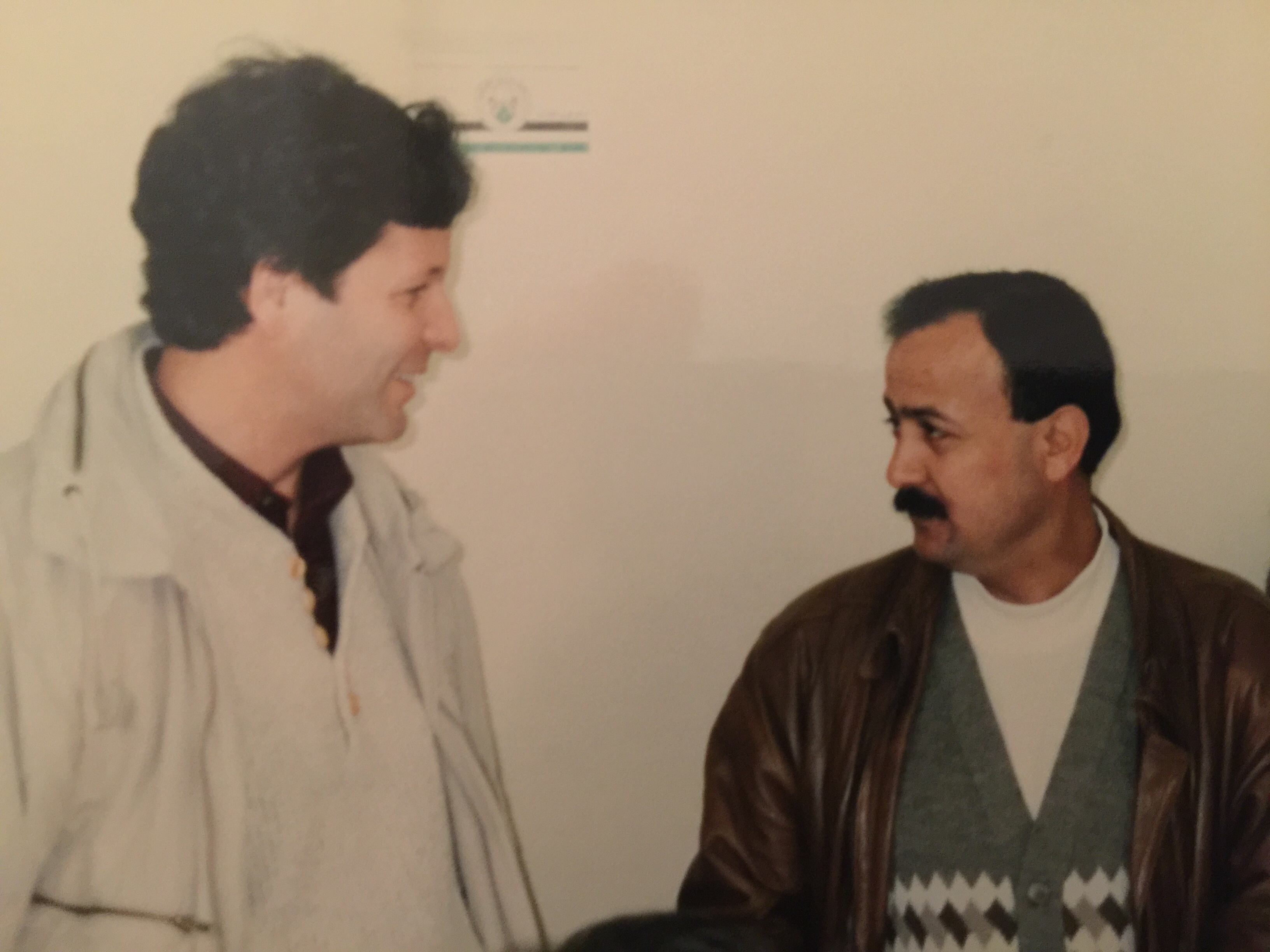
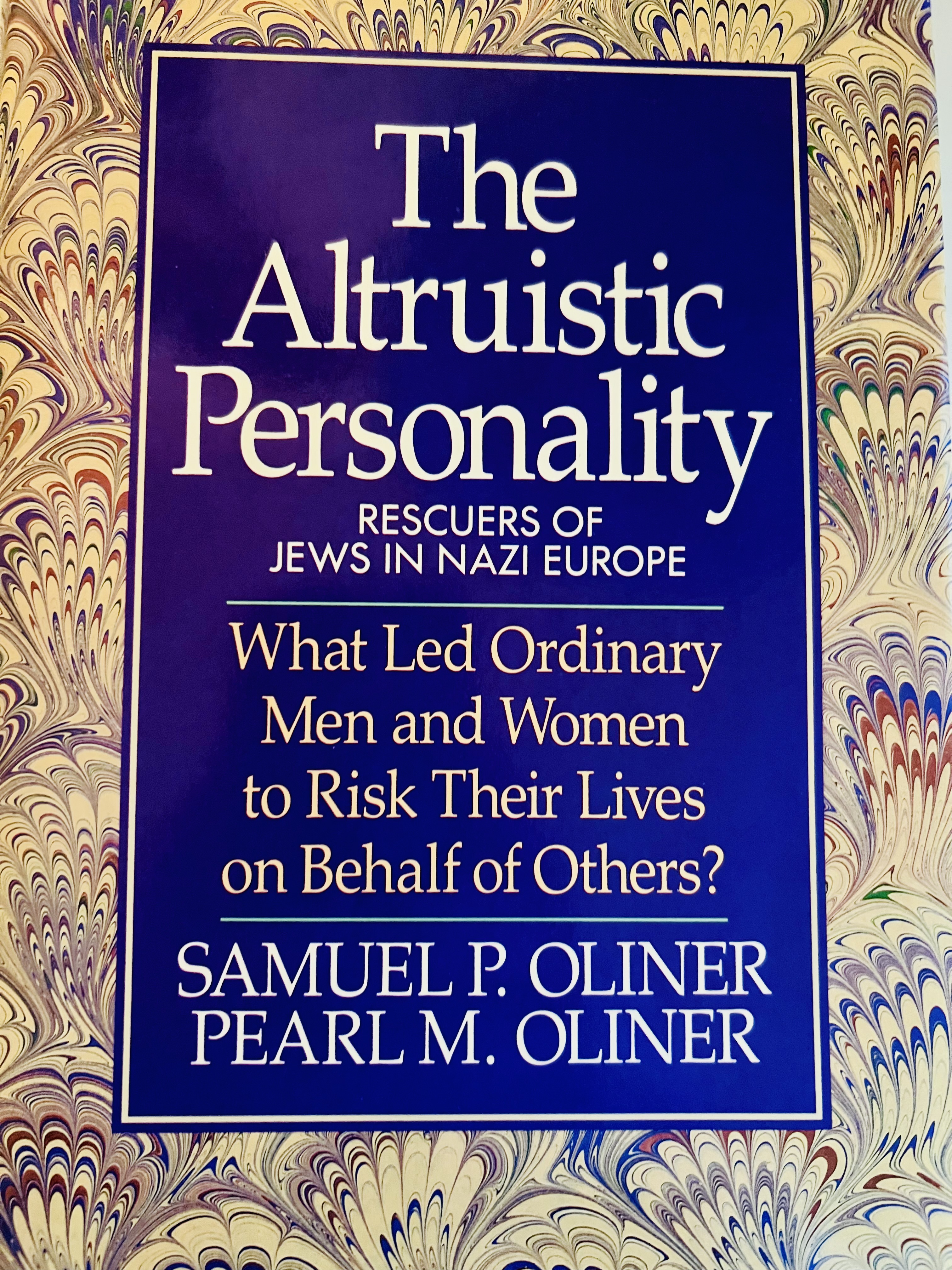
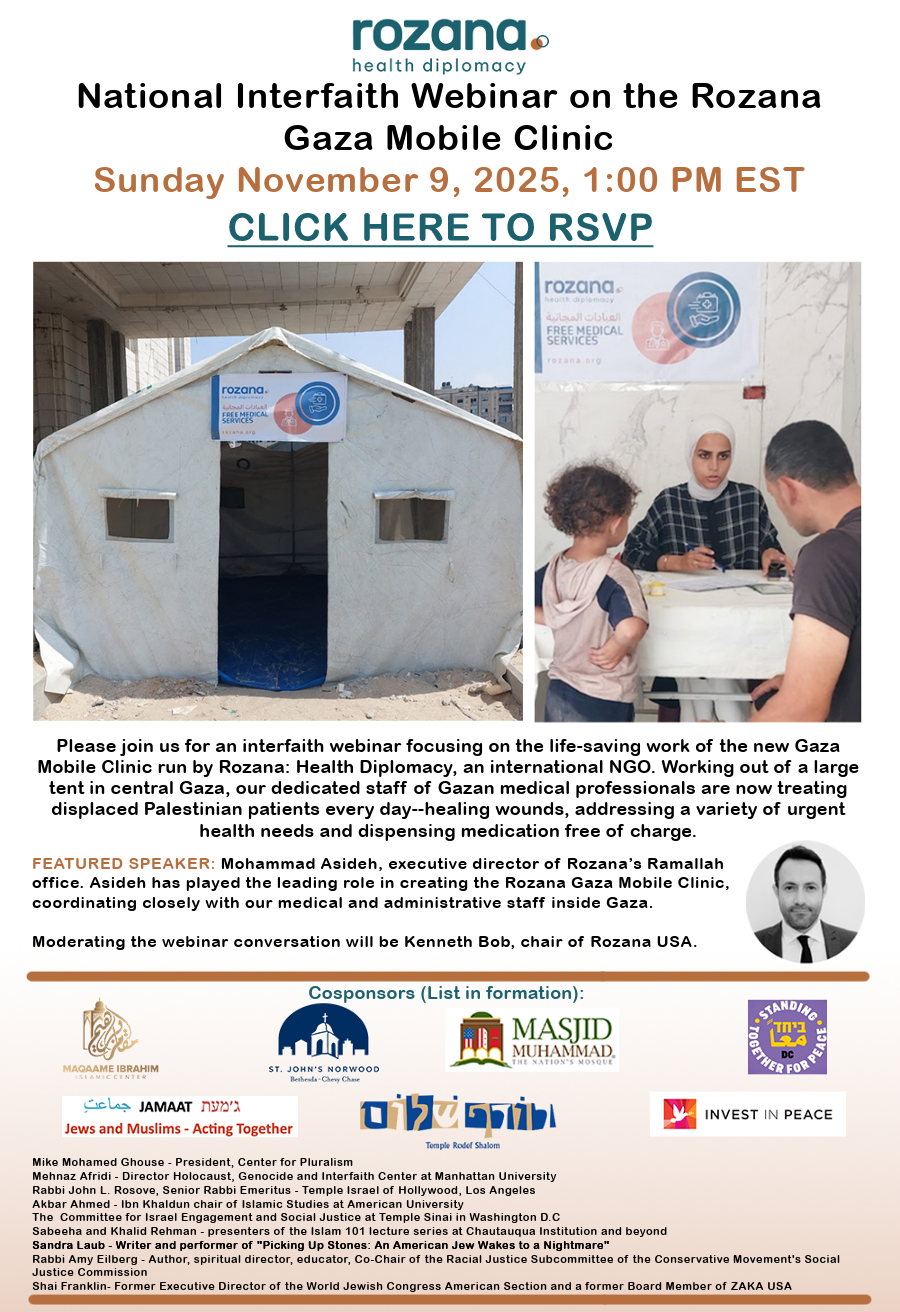
 Rabbi John Rosove's Blog