• About

Rabbi John Rosove's Blog

Rabbi John Rosove's Blog

Tag Archives: palestine

Current Thoughts on the Israel-Hamas War

28 Thursday Mar 2024

Posted by rabbijohnrosove in Uncategorized

≈ Leave a comment

Tags

Israel, middle-east, news, palestine, politics

So much has been said in the United States, the United Nations, Israel, college campuses and cities around the world about this awful war in Gaza between Israel and Hamas. It needs to be emphasized that this is a war not between Israel and the Palestinian people. It is therefore a gross mischaracterization to say that Israel is committing “genocide.” Genocide requires the intent to destroy another people. Israel’s war is against Hamas’ capacity to rule Gaza and threaten Israel, and is not about destroying the Palestinian people. The war has, of course, brought about massive tragedy in death and injury of large numbers of innocent Palestinian civilians, estimated at 20,000 of the more than 32,000+ killed (including Hamas fighters – figures provided by Hamas).

I agree with former Israeli Prime Minister Ehud Olmert who said this past week in an international webinar that Israel should not carry forward its war into Rafah in Southern Gaza where an estimated 1.25 million Palestinians are encamped. He worried about the large additional number of Palestinian civilians likely to die as Israel pursues and destroys the remainder of Hamas’ command structure and fighters. Continuing this war, he said, is not worth the cost in human life. Further, he argued that there is no guarantee that continuing the war will bring the remaining 132 Israeli and American hostages home (30 are thought to have been murdered in captivity). Freeing the hostages and bringing them home, he said, must be Israel’s first priority not only for their lives’ sake, but for the sake of restoring Israel’s governmental social contract with Israeli citizens.

It is debatable how much of Hamas’ infrastructure and command have been destroyed on this 174th day since October 7. Many in the Israeli military and intelligence services do not believe that Hamas can be destroyed ultimately. What they hope for is that Hamas will be de-fanged enough and prevented for a number of years of ever attempting to launch another October 7 attack, which its leaders have promised to do over and over again.

PM Olmert noted that had the Israeli government and IDF done its job on October 6 in interpreting correctly the intelligence they had from Gaza that Hamas was planning a major operation against Israel, this attack would have been prevented. He lays the responsibility for the Hamas massacre of 1200 Israeli civilians and abduction of 240 hostages on October 7 directly at the feet of the leaders of the IDF and Israeli intelligence services, the leaders of which have all accepted responsibility, and at the feet of PM Netanyahu who has not accepted any responsibility whatsoever. That alone ought to disqualify Netanyahu from continuing as Israel’s Prime Minister. PM Olmert believes that Netanyahu should resign immediately and new elections called.

Olmert and others are arguing now that a ceasefire that includes the immediate return of the hostages and plans for the day after the war, including a pathway towards the establishment of a demilitarized Palestinian state alongside Israel, must be the top priority for Israel not only for the sake of saving the lives of the hostages, the lives of Israeli soldiers fighting in this war and the lives of innocent Palestinian civilians, but for Israel’s own enlightened self-interest and the restoration of its international standing.

Israelis support still, in overwhelming numbers, this war as necessary to continue as a war of self-defense. PM Olmert acknowledged that not enough Israelis agree with him that the war has to end now.

One can make the case legitimately that huge mistakes were made by Israel in its massive bombing and use of 2000-pound “dumb bombs” to destroy tunnels and Hamas command structures, and that too many Palestinian civilians have died as a consequence. However, we in the west have to remember (the international media doesn’t emphasize this point enough) that Hamas deliberately embedded itself for years everywhere in Gaza, in apartment buildings and homes, community centers and mosques, schools and hospitals, and in more than 400 miles of tunnels. While the world blames Israel for the death and destruction without mentioning Hamas’ duplicity and criminality, Hamas deliberately uses Palestinian civilians as shields and cares little for the lives and well-being of its own people. Hamas could have ended this war months ago but refused to release hostages, a war crime.

Those in the liberal and progressive left in America who support Hamas are victims of moral blindness. Hamas is an autocratic ruler that executes those who have spoken out against it. It prohibits free speech, freedom of religion, LGBTQ individuals and a woman’s right to choose. It is misogynistic, sexist, homophobic, antisemitic and brutal. In this war it has refused to allow any innocent Palestinians to hide from the bombardment of Gaza in its massive expanse of tunnels, and it hoards food, water and fuel for itself and shares none of it with Palestinian civilians. It is hardly a liberal movement that those in the intersectional western community support against a democratic Israel.

One more thing. Though the world has forgotten who and what instigated this war and the international media shows repeatedly only the the death and destruction in Gaza and no longer the Hamas atrocities on October 7 against innocent Israelis, we in the west cannot forget that October 7 was the most deadly day in Jewish history since the Holocaust. The world has shifted its attention to the plight of the Palestinians in Gaza (a morally legitimate concern), but it seems to have forgotten the plight of Israelis in this war. This is not an either-or situation, though I believe that the two enemies are not morally equivalent in any way. To claim the moral high ground, all of us have to be able to hold at once the suffering of everyone (Palestinian and Israeli) in our minds, hearts and consciences.

I pray for an immediate end to this war, a return of Israeli and American hostages to their families and homes, the distribution of a massive amount of food, water, fuel and medicine to the people in Gaza, and the beginning of planning for an eventual new Middle East that rejects extremism and mollifies hate. I hope as well for an international effort to rebuild Gaza under the authority of a reconstituted Palestinian Authority, the Arab League, the United States, European Union, Israel,and even the United Nations that continues to harbor an anti-Israel animus far in excess of any other nation in the world. And I hope that the alliances begun in the Abraham Accords expand to include other western oriented Arab nations in league with Israel against an emboldened Iran and its Islamic extremist proxies.

Women Wage Peace

24 Sunday Mar 2024

Posted by rabbijohnrosove in Uncategorized

≈ Leave a comment

Tags

gaza, Israel, palestine, peace, politics

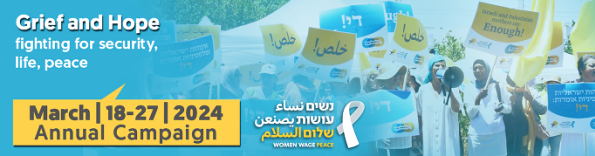
The following annual campaign for security, life and peace is in memory of Vivian Silver, a beloved and widely known Canadian-Israeli human rights activist who was murdered by Hamas terrorists on the 7th of October at Kibbutz Be’eri in Southern Israel. Please read and give generously if your heart is so moved.

“We’re not stopping without an agreement. We still mean that. Our commitment to future generations here faced an excruciating test on October 7 when our losses included one of our beloved co-founders, Vivian Silver.

Others we love have been killed in the aftermath or are still captive or are living as innocents trapped in hell. Despite the terrible shadow cast on our efforts, Women Wage Peace is not stopping.

We are working hand-in-hand with our Palestinian sisters, Women of the Sun, for lives that can be lived in peace, dignified by justice and equality.

Recently, the impact of our unwavering determination was confirmed with an official nomination, alongside Women of the Sun, for the 2024 Nobel Peace Prize.

Both movements were also honored when Time Magazine chose its twelve Women of the Year for 2024, among them Dr. Yael Admi, another co-founder of Women Wage Peace, and Reem Hajajre, the founder of Women of the Sun.

The war that erupted after October 7th has deteriorated the Israeli-Palestinian conflict to an unprecedented low, but we are determined to seize this moment as an opportunity for change. The concept of managing the conflict has failed and it is time to act for a political solution.

Your unwavering support, your own determination to believe that peace is possible when women lead, has become more than much-needed fuel for our diverse activities.

It has been a source of strength as we shift from grieving to grasping – grasping this moment as one of profound change. We are seizing this opportunity by mounting an ambitious campaign that continues to widen our connection to more Israeli and Palestinian women as well as to moderate Arab nations and the international community.

Since October 7th, our initiatives have taken different directions; some are ongoing, some will be launched soon: ƒ

1. a daily presence of WWP members in Tel Aviv’s ‘Hostage Square’, alongside tormented family members of the hostages calling for the return of the hostages, which will enable a ceasefire;

2. delivery of humanitarian aid, and a return to negotiations towards a long-term diplomatic solution; ƒ

3. empowering Arab-Israeli women as peace-builders, recognizing their crucial role in building bridges between Jewish and Arab women in Israeli society and between Jewish Israeli women and Palestinian
women; ƒ

4. joining forces with Israeli groups to bring about a courageous, moderate, peace-seeking, egalitarian government; ƒ

5. planning a public campaign to convey the message that security can be achieved only through a diplomatic solution; ƒ

6. preparing to revive our bi-national in-person workshops, once checkpoints are re-opened; ƒ

7. expanding international endorsement of our Mothers’ Call, working for an end to mutual dehumanization and creating an infrastructure to support shared processes of reconciliation; ƒ

8. last but hardly least, launching a large and complex joint project with Women of the Sun, called Women Building Bridges, with a peace-building training program for environmental, religious, and traditional leaders from both sides, supplemented by joint Israeli-Palestinian study tours.

A few of the many actions aided by last year’s crowdfunding campaign include:ƒ

-organizing a bi-national training program for peace activism, with WOS supporting lawful protest against the proposed judicial overhaul, a major threat to peace and women’s participation in decision-makingƒ;

-hosting Reem, the leader of Women of the Sun, in gatherings with hundreds of Israelis to meet our partner movement and to restore hopeƒ;

-convening an all-day event with Women of the Sun on October 4 in Jerusalem and at the Dead Sea, with 1500 Israeli and Palestinian women marching together and calling for negotiations.

Join us as we continue to wage peace. Your contribution is your powerful affirmation that where women lead, peace and justice can more easily follow.

Our Annual Crowdfunding Campaign will be launched on March 18th and continue until March 27th.

Each donation is doubled!

Watch this short video – https://www.youtube.com/watch?v=0qRoGPz1JQk

Donate here NOW – https://causematch.com/wwp24-en


ƒ

ƒ
ƒ

The Democrats Are Right. Being pro-Israel Means Being pro-Palestinian – Haaretz op-ed

20 Wednesday Mar 2024

Posted by rabbijohnrosove in Uncategorized

≈ 1 Comment

Tags

gaza, Israel, news, palestine, politics

Introductory note: This op-ed was posted today at Haaretz – for those with a subscription, here it is

Faced with an increasingly recalcitrant Netanyahu government, Senate Leader Chuck Schumer and his Democratic colleagues are leading a welcome shift in policy. Both Israel and the U.S. have a moral obligation to do better

John Rosove

Elliott Tepperman

March 20, 2024

When we woke up on October 7 to the shocking news of the Hamas terror attack in Israel, we were deeply shaken–as were Jews around the world.

As accounts of Hamas’ barbarism emerged – and as we spoke with loved ones in Israel–the anguish only grew worse. With over 1,200 murdered, well over 200 taken hostage, and hundreds of thousands displaced, the pain of the attack and its aftermath has been enduring for Israelis and Jews around the world alike.

The ensuing war against Hamas in Gaza has brought no end to the grief. Over 30,000 Palestinians have been killed, more than 1 million forced to flee their homes, and the entire population is enduring unimaginable suffering with scarce medical supplies and hundreds of thousands on the brink of starvation.

We’ve watched as Israeli Prime Minister Benjamin Netanyahu’s government has exacerbated the pain and suffering of Israelis and Palestinians alike, running counter to our Jewish values, to the foundations of the U.S.-Israel relationship, and to Israel’s own national interests.

As Jewish Americans and rabbis who care deeply for our Jewish homeland, our U.S. ally Israel, and its citizens–among whom we count our own friends and family–we understand the moral struggle U.S. lawmakers now face as they wrestle with both how to support Israelis and bring the death and suffering in Gaza to an end.

Rightfully, Capitol Hill has been spending a lot of time on the crisis since October 7, and we have been particularly proud of those U.S. senators leading the way. While so many have struggled to hold the humanity of both Israelis and Palestinians in their hearts, some are showing true, courageous leadership – precisely what this perilous hour demands.

In an unprecedented speech on the Senate floor last week, Senate Majority Leader Chuck Schumer opened his remarks saying he spoke for the “silent majority” of Jewish Americans “whose nuanced views … have never been well represented in this country’s discussions about the war in Gaza.”

In a bold but important call, he went on to urge Israelis to hold new elections, noting Netanyahu “has put himself in coalition with far-right extremists like Ministers [Bezalel] Smotrich and [Itamar] Ben-Gvir, and as a result, he has been too willing to tolerate the civilian toll in Gaza, which is pushing support for Israel worldwide to historic lows.”

Other signs of understanding that the crisis demands an overdue, different approach came last month when U.S. President Joe Biden issued National Security Memorandum 20–widely reported to have been coordinated with Maryland Democrat Senator Chris Van Hollen and inspired by his amendment to the Senate supplemental aid package. The memorandum stipulates countries receiving U.S. military aid must comply with U.S. and international law and align with our country’s interests and values. In so doing, the memorandum requires Israel to conduct the war in a way that prioritizes the safety of civilians both in its military operations and its facilitation of humanitarian aid delivery.

In a separate move, Van Hollen joined his Democratic Senate colleagues Jeff Merkley, Dick Durbin, Elizabeth Warren, and Peter Welch in calling for a comprehensive approach to immediately mitigate the humanitarian crisis in Gaza–while clearly acknowledging Israel’s right to go after Hamas and reiterating the need to free hostages held in captivity.

Another example of a welcome shift was Senators Jon Ossoff and Raphael Warnock, both Democrats from Georgia, leading 25 Senators in advocating for a “mutual ceasefire” to gain the release of the remaining Israeli hostages and stop the killing of Gazan civilians, simultaneously recognizing Hamas must “be removed from power in Gaza.”

And last week, Senators Richard Blumenthal (D-Conn.) and Chris Coons (D-Del.) published an opinion piece in Foreign Policy, stating Israel should take steps to increase the flow of humanitarian aid into Gaza and that the United States is “prepared to take more persuasive steps to ensure compliance with U.S. policy on civilian protection and humanitarian assistance.”

Most of these calls occurred in the shadow of the Senate’s passage of the bipartisan national security supplemental package, which, in addition to security aid to Israel, Taiwan, and Ukraine, included humanitarian aid for Palestinians in Gaza. Appallingly, former President Donald Trump and Speaker Mike Johnson have sought to block the bill from a vote in the House for short-term political reasons, even though it is all but certain to pass with bipartisan support.

What is clear to us, as Jewish leaders who care deeply for the safety of Israelis and the country’s future, is that the Democratic lawmakers mentioned have a deep, nuanced understanding of what it means to be pro-Israel. Faced with an increasingly recalcitrant Netanyahu government, it is not enough to spout platitudes or support symbolic resolutions. The U.S.-Israel relationship deserves and is strengthened by a more substantive approach.

These senators realize that to be pro-Israel also means being pro-Palestinian. As October 7 and its aftermath have made clear yet again, the fates of these two peoples–who share a land and a history, and neither of whom is leaving–are inextricably linked.

We in the pro-Israel community would be wise to understand, as these legislators do, that providing Palestinians with stability, security and self-determination while promoting reforms in governance and education will also serve to benefit Israel’s security in the future. Compounding an already-dire humanitarian calamity in Gaza, on Israel’s doorstep, is in nobody’s interests.

We find solace and hope in the efforts of our Congressional representatives to help bring this war to an end, the hostages home, and desperately needed aid to Gaza.

We thank them for the political courage they have displayed in recent months. Schumer himself summed up the welcome, straight-talking new direction, when he noted in his speech that we hope will be a roadmap forward, “We should not let the complexities of this conflict stop us from stating the plain truth: Palestinian civilians do not deserve to suffer for the sins of Hamas, and Israel has a moral obligation to do better. The United States has an obligation to do better.”

Rabbi John L. Rosove is a national co-chair of the J Street Rabbinic and Cantorial Cabinet. He is a past national chair of ARZA, the Association of Reform Zionists of America, and Rabbi Emeritus of Temple Israel of Hollywood.

Rabbi Elliott Tepperman is a national co-chair of the J Street Rabbinic and Cantorial Cabinet. He has been the spiritual leader of Bnai Keshet in Montclair, NJ since 2002, and he is the immediate past president of the Reconstructionist Rabbinical Association. @RavElliott

For Thursday’s State of the Union Address

06 Wednesday Mar 2024

Posted by rabbijohnrosove in Uncategorized

≈ 1 Comment

Tags

Israel, middle-east, news, palestine, politics

Introductory Notes:

The continuing war initiated by Hamas on October 7 has been a disaster for Israeli and Palestinian civilians. Hamas’ brutality, its murder of babies, pregnant women, young adults and seniors resulting on that day in the death of 1200 Israelis (mostly civilians constituting the worst attack on Jews since the Holocaust), the gang rape of countless Jewish women and men by Hamas terrorists, and the kidnapping of 240 Israelis and international workers all constitute war crimes. Israel’s justifiable military response, however, has not fulfilled the Netanyahu government’s war aims of destroying Hamas’ capacity to repeat its war crimes against Israeli/Jewish lives nor has this war successfully returned all the Israeli hostages to their families and homes. At the time of this writing, still there are 130 Israeli hostages remaining in Gaza of which it is estimated about 30 were murdered on October 7 or since, and that women hostages are still being sexually assaulted by Hamas captors.

Though any statistics cited by Hamas is wholly suspect, huge numbers of Palestinian civilians have died in the fighting including thousands of women and children. Hamas has used its own people as human shields against Israel, and Hamas’ fighters, military command centers and stockpiles have been placed deliberately in and under Gazan apartment buildings, homes, schools, mosques, community centers and hospitals, also constituting war crimes. Israel’s massive military response has no doubt cause the death of countless innocent civilians and I fear that Israel’s use of thousands of 2000-pound “dumb bombs” in populated areas seeking to kill Hamas commanders and destroying underground tunnels and weapons depots have wantonly caused untold death and suffering.

I feel it is necessary to repeat all this, which ought to be well-known by now by any reasonable observer, because the horrors of October 7 have either been forgotten or moved into many people’s rear-view mirrors. All this said, this war must be brought to a conclusion as soon as possible to stop the killing, injury and suffering of Palestinian civilians, the death of far too many Israeli soldiers and the return of the hostages.

I signed the following letter produced by J Street because it represents a compassionate, pragmatic and clear statement about what will be necessary after this war concludes in addressing long-term inequities in the West Bank and Gaza and the need for peace, justice and security for both Israel and the Palestinian people.

It should be obvious to everyone by now that Hamas is not a partner for peace with Israel. It is a murderous genocidal terrorist organization based upon an uncompromising extremist Islamic ideology fueled by hatred that seeks the destruction of the State of Israel and the murder of all Jews. And it should be obvious to everyone that Hamas has not only caused manifold suffering to the Palestinian people but represents a dictatorial intolerant anti-western philosophy that disregards the dignity and divinity of every human being. For there ever to be peace between Israel and the Palestinian people, Hamas must be pushed to the sidelines, and a reconstituted Palestinian Authority must represent the Palestinian people in Gaza and the West Bank.

This letter insists not only on an ceasefire but a return of all hostages to their families and homes. I ask my readers to read the letter carefully and appreciate the nuance contained therein as well as the clarity about what can be achieved if there is ever to be peace, justice and security over the long-term for both our two peoples. It needs to be said also that for Israel to be secure, the Palestinian people’s national aspirations for sovereignty, justice, security and peace also must be realized. Therefore, to be pro-Israel means also to be pro-Palestinian.

One more thing – Israel and the Palestinians need a strong advocate to help them negotiate together an end to their conflict. The United States must be fully engaged along with the Arab League, the EU and even the UN, despite the UN’s historic bias against Israel.

I hope President Biden will speak boldly this Thursday night about what the United States intends to do to help Israel and the Palestinians find peace with justice and security together.

Dear President Biden,

I hope you are well aware of the deep gratitude most Jewish Americans and friends of Israel feel toward you for the support you demonstrated to the state and people of Israel following the horrific October 7 Hamas attack.

You have shown amazing empathy for the victims, the hostages and their families, as well as for the trauma still being experienced by Israelis and their friends across the world.

You have also stated clearly that the government of Israel must pursue its defense of the country’s borders and people, the release of the hostages and pursuit of the perpetrators of the attack within the bounds of international law. You have urged the Israeli government to live up to standards that liberal democracies must embrace not just as a matter of law, but of morality.

It is deeply painful for many of us who care about Israel to acknowledge that the Netanyahu government has failed to uphold those moral – and possibly even legal – standards in its conduct of the war.

On Thursday, I hope you will find a way to demonstrate deep, personal concern both for the Israeli people and for the people of Gaza. I know, as you do, that the suffering of the Palestinian people and the humanitarian crisis of unimaginable proportions they are enduring is not simply due to the Israeli offensive but that Hamas bears much responsibility for the suffering as its leaders and fighters hide beneath and among the civilian population of the Gaza Strip.

Israelis, Palestinians and others in the region need more than empathy, though. They need your leadership. They look to the United States as the “indispensable player” – and those of good will hoping for a more secure and peaceful future are looking to you for a vision and a plan to get there.

To that end, I hope you will make six key points on Thursday:

  1. There must be an immediate negotiated ceasefire that stops the fighting for a considerable period, frees the remaining hostages and surges humanitarian assistance to the people of Gaza.
  2. You will do all in your power to ensure that sufficient humanitarian assistance – food, fuel, water, medicine, shelter – reaches Gazans in the coming days, with or without a ceasefire. Acknowledge that you personally understand that lives hang in the balance and that you are committed to ensuring the necessary help. In tandem, you will, I know, reiterate your deep, personal commitment to the security of the people of Israel not only from attacks by Hamas, but Hezbollah, the Houthis and other Iran-backed groups in the region.
  3. Recognize that nearly 57 years of Israeli occupation must end and declare your support for the establishment of a demilitarized Palestinian state. You can express your hope to be the American President who formally recognizes the state of Palestine and supports its admission to the United Nations. You can make clear that – for this to happen – very serious reforms are needed from the Palestinian Authority and Palestine Liberation Organization, and you should list out some of the more prominent conditions, including reform of the prisoner payments program, addressing corruption, shoring up democracy and more.
  4. Reiterate Secretary of State Blinken’s recent statement that Israeli settlements in the territory it occupies are inconsistent with international law and that the United States will take meaningful actions to crack down on settler violence and ensure that Israel stops expanding settlements in areas that will be part of a Palestinian state and ends practices such as home demolitions that undermine the possibility of ending the conflict.
  5. Outline how eventual statehood for Palestine is only one piece of a bold vision for the future of the region – one in which Israel has meaningful security, guaranteed by fully normalized relations with all its neighbors. Make clear that you intend in the coming months to pursue normalization for Israel with Saudi Arabia and other nations in the Arab and Muslim world, provided Israel agrees to a pathway to a Palestinian state. You should be the first President to formally mention and support the Arab Peace Initiative in a State of the Union.
  6. Finally, make clear to the Israeli and Palestinian people that the future is in their hands. There is a path to security, dignity and prosperity for both peoples, and there is also the path of never-ending conflict and bloodshed. The US will rally friends around the world to support the two peoples if they choose a future of peace and mutual recognition. You should make it equally clear that those not willing to sign on to that vision and respect the rule of law will no longer have our unquestioning support.

Mr. President, a balanced speech along these lines that speaks directly to the people involved – over the heads of leaders who have been obstacles to peace in the past – is not only the right policy for the United States, it meets the political moment. Your supporters and the majority of the American people want peace and security for both peoples and a regional security architecture that protects our national interests.

Please know that – in our movement – you have a partner in taking the bold steps needed to end the current nightmare and build meaningful opportunity out of this horrendous disaster.

What Winning the War Would Look Like

22 Thursday Feb 2024

Posted by rabbijohnrosove in Uncategorized

≈ Leave a comment

Tags

Israel, middle-east, news, palestine, politics

A veteran journalist wrote to me (and I assume to many other leaders in the American Jewish community) earlier this week requesting my thoughts about what “winning” the Israel-Hamas War might look like. This is my response:  

Dear …

Thank you for asking.

First, it’s important to emphasize that I’m not an Israeli citizen. My kids don’t serve in the Israeli military. I don’t pay Israeli taxes though I contribute financially to multiple Israeli causes that promote democracy, justice, religious pluralism and peace in the Jewish state. Only Israeli citizens have the responsibility to determine the nature of Israel’s policies in war and peace and on matters of security as they are the ones who must live directly with the consequences of the decisions they take. Yet, I have thoughts that I have every right to share with Israelis and Israel’s leadership about Israeli policies that I believe compromise Israel’s own liberal and enlightened principles as articulated in its Declaration of Independence. Not only that. I also have that right because what Israel does affects directly the security, standing and identity of Diaspora Jewry as is now so very clear post-October 7. The dramatic rise in the United States and around the world of antisemitism, anti-Zionism and anti-Israel sentiment challenges our Jewish security and identity.

In answering your question I’m hard-pressed to imagine a “win” in this war. Too many Israelis are dead, injured and traumatized. Too many thousands of innocent Palestinian civilians have died and been injured and southern Israeli communities and the Gaza Strip lay in ruins. Gazans are facing widespread famine and disease. Israeli society, despite the unity of the people in the initial few months of this war is still deeply polarized between right-wing super-nationalist settlers, extremist ultra-Orthodox Jews and their sympathizers as opposed to the majority of Israeli citizens who are politically, religiously and culturally centrist, center-left or center-right.

For the Jewish people to claim any kind of a “win” in the context of this awful war after October 7, however, I would hope that the following would materialize, sooner rather than later. I am well aware of the obstacles within Israeli public opinion based on a new survey published by the Israel Democracy Institute on Tuesday, February 20 as reported by Haaretz (I attach that article below with a few notes of introduction).

Here is what I believe, taken all together, that would constitute a “win” for Israel in this war:

-The return of all Israeli and international hostages to their families and communities as soon as possible;

-The defanging of Hamas as a military threat to Israel and as a brutal autocratic extremist Islamic governing authority over Gaza that subjugates its own people and has brought about the destruction of Gaza and the death and injury of tens of thousands of its own citizens;

-A ceasefire agreement based on the above;

-Massive humanitarian aid flowing into Gaza to stave off famine and disease;

-The holding of new Israeli elections ASAP resulting in the formation of a moderate and centrist ruling coalition government that includes at least one Arab Party – without Benjamin Netanyahu anywhere near the Prime Minister’s office and without super-nationalist, settler, racist right-wing and ultra-Orthodox political parties as part of the ruling government coalition;

-The holding of new refashioned Palestinian Authority elections ASAP and the formation of a moderate, non-violent and compromising government coalition – without the inclusion of Hamas or any militant political party that rejects the right of the Jewish people to a state in the Land of Israel-Palestine;

-Israel’s public endorsement of a pathway to the creation of a demilitarized Palestinian state alongside Israel in the West Bank and Gaza with its capital in East Jerusalem and the right of return of Palestinians to the State of Palestine and not Israel;

-The restoration of Israel’s international image as a nation that values democracy, pluralism, justice, human rights and peace with the Palestinian people and Israel’s neighbors;

-The Arab League’s acceptance of the State of Israel and the establishment of full diplomatic, economic and cultural relations between all western-aligned Arab nations and the Jewish state;

-An international commitment to assist the Palestinian Authority (and not Hamas) in rebuilding Gaza, and an international commitment to assist in rebuilding southern Israeli communities devastated by Hamas’ terrorist attack on October 7;

-A dramatic decrease in antisemitism abroad especially in the United States and on college and university campuses that has spiked dramatically since October 7;

-An impetus for young liberal American Jews to learn Israeli history, culture and politics and spend time living in the Jewish state thereby affirming their emotional and moral ties with Israelis and the Jewish state.

If Israelis and Palestinians, with the support of the United States, Arab League, UK, EU, and UN could embrace all the above, it would be a “win” for Israel, for the Palestinian people and for the western world.

Introductory notes to the following Haaretz Poll of Current Israeli Opinion:

Current Israeli public opinion is far from acceptance of many of the positions I list above. The details of the most recent poll – including Israeli Jews and Israeli Arab citizens – are reviewed in the following Haaretz news item.

It has to be understood when reading the details of this poll that Israel is still at war and the hostages are still being held by Hamas. Israelis are rightly focused on these immediate challenges and the majority of the population is not projecting too far out into the future. However, Israeli dissatisfaction with PM Netanyahu’s extremist right-wing super-nationalist government has grown dramatically since October 7. Saturday night protests that characterized the pre-October 7 period over almost a full year are growing weekly and calling simultaneously for negotiations that would lead to the return of the remaining hostages and for new Israeli elections.

It is estimated that the current Israeli coalition government would win only in the low 40s the number of Knesset seats (as opposed to 64 today out of 120 total Knesset mandates) if a new election were to be held today and that the opposition led by Benny Gantz of the National Unity Party would win close to 70 Knesset seats. However, PM Netanyahu has no intention of resigning or calling for new elections not only because he wants to hold onto power but also to stay out of jail should he be convicted of the three crimes of which he has been indicted. The political parties in his right-wing government know that if the government were to fall each likely would find itself with fewer seats in the next Knesset and consequently outside the future ruling coalition government. There is little to encourage any of those parties to call for new elections before the next scheduled election in October 2026.

It is likely that once the dust of the fighting in this war begins to settle there will be room for Israelis to consider more expansively what might be Israel’s future with the Palestinians and the wider Middle East.

This is clearly a fraught time and most everyone in Israel recognizes that there is no return to October 6. The massacre on October 7 and the ensuing war may well be regarded historically as among the most important inflection points in the 75-year history of the State of Israel. Those of us who love Israel and believe in Israel’s promise despite everything that has happened since October 7 must do everything we can to stay close to our Israeli brothers and sisters while advocating alongside those in Israel itself for policies that will assure Israel’s future democracy and character as a Jewish state. Too much is at stake for Israel and the Jewish people around the world to do otherwise. We need to remember as well that the State of Israel is the most remarkable achievement of the Jewish people in the past 2000 years.

Here is the Haaretz article and the most recent poll of Israeli citizens:  

Most Israelis Say ‘Absolute Victory’ in Gaza Unlikely, According to New Poll

Haaretz | Israel News – February 21, 2024

The term ‘absolute victory’ was deliberately chosen as it has become a phrase favored by Prime Minister Benjamin Netanyahu during press conferences and foreign language interviews, although he is disinclined to define what that actually means

Most Israelis do not believe an “absolute victory” in the war in Gaza is likely. This according to a new survey published by the Israel Democracy Institute on Tuesday. The survey, which was conducted on the internet and by telephone, polled 510 men and women in Hebrew and 102 in Arabic as a representative sample of the entire adult population of Israel aged 18 and older.

An End to the War?

Of those polled, 51 percent of Jewish respondents and 77.5 percent of Arab respondents said there is a low likelihood of achieving absolute victory. The term “absolute victory” was deliberately chosen as it has become a phrase favored by Prime Minister Benjamin Netanyahu during press conferences and foreign language interviews, although he is disinclined to define what that actually means strategically.

Among the Israeli Jews surveyed, those on the political right tended to agree with Netanyahu (55 percent), saying there is a high likelihood of achieving “absolute victory,” while the majority of the left (84 percent) and in the center (63 percent) said there is a low likelihood.

With the possibility of a total military victory unlikely in the eyes of most participants, the survey also asked their opinion regarding a political agreement to the end of war.

The question was posed as “Would you support or oppose an agreement to end the war which includes the release of all the hostages, long-term military quiet with guarantees from the United States, and a peace agreement with Saudi Arabia, in return for the release by Israel of large numbers of Palestinian prisoners, an extended ceasefire, and agreement to the establishment of a demilitarized Palestinian state in the long term?”

Among Jewish respondents, a majority of 55 percent oppose such an agreement, but the share of those who support it increased from 29 percent when the question was asked in January to 37 percent in February. In the Arab sample, 77 percent are in favor of a political agreement and only 9 percent are opposed.

Humanitarian Aid?

Regardless of the final outcome of the war, the question of humanitarian aid remains relevant, as the threat of famine and disease currently looms large over the population of Gaza.

With UNRWA currently embroiled in controversy, survey participants were asked their opinion regarding whether Israel should allow the transfer of humanitarian aid to Gaza residents at this time, via international bodies that are not linked to Hamas or UNRWA.

A majority of Jewish respondents (68 percent) oppose the transfer of humanitarian aid even under these conditions, while a large majority of Arab respondents (85 percent) support it. In recent months, there have been regular demonstrations held at the Kerem Shalom crossing, with protestors attempting to block aid trucks from entering the Gaza Strip.

Here again, there seems to be a strong correlation between political affiliation and one’s answer to the question, with 59 percent of those on the Left supporting allowing international bodies to transfer aid and 80 percent of those on the Right opposed.

Survey respondents who identified themselves as Center were almost evenly divided on the issue (44 percent support, 51.5 percent oppose, 4.5 “don’t know”).

Establishment of a Palestinian State?

On Wednesday, the Knesset voted to approve the government’s decision to oppose any unilateral declaration of the establishment of a Palestinian state.

The vote took place amid calls by a growing number of international leaders for the establishment of an independent and demilitarized Palestinian state. Respondents were asked where they fall on this question, with two-thirds of the Jewish sample opposing such a proposal and a large majority (73 percent) of Arabs supporting it.

The survey also questioned whether those surveyed believed that the establishment of a Palestinian state would lead to an increase in Palestinian terrorism against Israel.

Among Arab respondents, 41 percent thought that terrorism would cease altogether. It is worth noting that 35 percent of Arabs polled selected the “don’t know” option. Among Jews, the most common view (44 percent) was that terrorism would become even stronger.

Protests Returning?

Over the past several weeks, the once-massive protests against Netanyahu’s government, which were largely put on hold after Hamas’ attacks on October 7, have begun to return.

Survey respondents were asked if they thought the demonstrations would get back to their pre-war numbers with 60 percent anticipating they would come back and 30 percent saying they do not foresee such a return. On this issue, there was almost no difference between the percentage of Jews (60 percent) and Arab (64 percent) who believe the public protests will come surging back.

Compared to the high percentage of respondents who believe that wide-scale protests will re-erupt, a much smaller share think or are certain that they themselves would participate. As expected, those on the left (in the Jewish sample) consider themselves most likely to take part; 59 percent as opposed to 31 percent of the center and only 13 percent on the right.

What’s Next for the Northern Front?

As tens of thousands of residents from Israel’s northern border communities enter their fifth month of evacuation, the survey asked about future security in the north and their eventual return.

Respondents were given two possibilities for ensuring a safe return home for northern residents: an internationally mediated political agreement that distances Hezbollah from the border or an all-out attack on Hezbollah forces in Lebanon.

There was a large difference between Jewish and Arab responses to this question, with 53 percent of Jewish favoring an all-out attack and 69 percent of Arabs supporting a political agreement.

Among Jewish responses, a majority (61.5 percent) on the left support the diplomatic option that distances Hezbollah from the border, a view they share with about half of those in the center (51 percent). On the right, a solid majority (65 percent) are in favor of an Israeli offensive.

“Without enforcement, talk of two states is hollow” – Op-ed by David Makovsky, The Times of Israel

18 Sunday Feb 2024

Posted by rabbijohnrosove in Uncategorized

≈ Leave a comment

Tags

Israel, middle-east, news, palestine, politics

Opening Notes:

In the wake of October 7 and in the midst of Hamas holding more than 130 Israeli and international hostages, the fighting in Gaza and the devastation of Palestinian communities in the Gaza Strip, few in Israel are thinking seriously about a 2-state solution and the end to the Israeli-Palestinian conflict, as much as they may yearn for such an outcome. Intense skepticism about peace always animates populations in the context of war, especially one that has lasted as long as Israel’s War of Independence. The trauma inflicted on Israelis by the Hamas’ butchery, massacre and gang rapes of 1200 Israelis and Hamas’ criminal hostage taking on October 7 followed by Israel’s massive military response to destroy Hamas and the killing of tens of thousands of Palestinian civilians have traumatized both Israelis and Palestinians. But an end to this war and the return of the remaining hostages will come and hopefully sooner rather than later.

October 6 is long gone and in Israel’s rear-view mirror. The Jewish state cannot return to the former status-quo in which every few years, in response to Hamas firing thousands of missiles into uncontested Israeli settlements, Israel responded in a campaign called “mowing the grass” (i.e. taking out some of Hamas’ fire power but leaving Hamas’ infrastructure in tact). Perhaps I’m being overly optimistic and seeing only the half-full glass, but taking a 10,000-foot view I remember well the devastation and loss of Israeli life brought about by the Yom Kippur War in 1973, and only five years later the Egyptian-Israeli peace agreement and then the Jordanian-Israel peace agreement. I remember as well the violence of the first Intifada and Israel’s military response that led eventually to the Oslo peace process.

Saudi Arabia and other western-oriented Arab nations told US Secretary of State Anthony Blinken last week that they want peace with Israel and the development of a western alliance led by the United States against Iran, Hezbollah, Hamas, and other Shiite Iranian-backed militias, but the price Israel must pay is to agree to establish a path to a Palestinian state. Of course, the problems are manifold, not the least of which is that the Likud Party platform (the party of Benjamin Netanyahu), written in 1977, states: “The right of the Jewish people to the land of Israel is eternal and indisputable and is linked with the right to security and peace; therefore, Judea and Samaria [the West Bank] will not be handed to any foreign administration; between the Sea and the Jordan there will only be Israeli sovereignty.”

The “Greater Israel” position that a Jewish state must control all land from the river to the sea has always been Prime Minister Netanyahu’s position, despite his dishonest lip-service to President Obama in 2009 at Bar Ilan University where he said that he agreed to a Palestinian state. He has never favored the establishment of a State of Palestine next to Israel. He worked consistently to dismantle the Oslo peace process, expand the settlement enterprise (against international law), divide the Palestinian people by supporting Hamas, and seeking to make a contiguous Palestinian state impossible.

Palestinian ideological extremism that doesn’t accept Israel on any land between the river and the sea also is a major problem, and Hamas’ influence is a serious road-block to any peace agreement between Israel and the Palestinians.

The idea of a “divorce” between Israel and a future state of Palestine roughly along the Green Line (i.e. the 1949 armistice line) was promoted in the Oslo process and gained majority support from Israelis and Palestinians at the time. While some Israeli leaders still think a 2-state solution along these lines of divorce is still possible, another option has been developing called “Eretz l’Kulam – A Homeland for All,” known as a “Con-federal Two State” model (for details see https://www.alandforall.org/english/?d=ltr).

In both proposals, security is the over-arching concern for Israelis and Palestinians. Consequently, Hamas cannot be part of a ruling coalition of Palestinian governance. Nor can the extremism of Israel’s racist super-nationalist parties be central in any Israeli government. Non-violence must be an operating principle for both peoples. The Palestinian state would have to be demilitarized with security cooperation established between the two states.

No one can impose a solution on Israel or the Palestinians. Making peace will depend on visionary leadership amongst both peoples. Neither PM Netanyahu nor PA President Mahmud Abbas can lead the way. Neither has the vision, courage or the support of their peoples. New elections and new coalitions must come first. Getting from here to there consequently will be especially difficult. Yet, we’ve seen before in modern history that substantial transformative thinking led former enemies to make peace after WWII between the United States, Germany and Japan and after the decades-long violence in Northern Ireland. Why not between Israel and the Palestinians?

What is certain is that the status-quo is unsustainable. It may be from the ashes of this massive tragedy of massacre and war that a phoenix will arise and new possibilities will emerge to offer hope for a better and more peaceful, secure and just future.

The following article appeared in today’s The Times of Israel by David Makovsky and is worth reading. Makovsky directs the Project on Arab-Israel Relations at the Washington Institute for Near East Policy. He is the co-author with Dennis Ross of the new book Be Strong and of Good Courage: How Israel’s Most Important Leaders Shaped Its Destiny. He is also the host of the new podcast Decision Points: The U.S.-Israel Relationship.

“Most Israelis would support a deal if they thought it would succeed, but first they’d need to overcome their genuine reasons for skepticism.

The Biden administration hopes to use a hostage release deal to pivot from the Gaza war to a broader historic regional breakthrough between Israel and Saudi Arabia, notching a crucial strategic victory against destabilizing forces in the Mideast. With its public upset by Palestinian civilian casualties during the post-10/7 Israel-Hamas war, the Saudis have now made irreversible movement towards a Palestinian state a prerequisite for such a breakthrough.

In this context, the Washington Post reported on Thursday that the US and several Arab states are in rapid-fire discussions to develop a comprehensive Israeli-Palestinian peace plan with a “firm timeline” for the establishment of a Palestinian state. While this is likely a trial balloon – perhaps initiated by Arab officials – and it is far from clear if the White House will sign off on the specific dates or a detailed plan for a Palestinian state, some want a quick demonstration of progress to dampen tensions expected to rise during the month of Ramadan, which starts on March 10. The timeline for an actual agreement is short due to the upcoming American elections: the Biden administration wants to seal a Saudi deal before summer when the presidential campaign is in full swing.

This plan has, unsurprisingly, upset many in Israel, who feel this would effectively reward Hamas for its massacre of Israelis. In both the Post article and some other analyses, the Netanyahu government and Hamas are presented as the only real hang-ups to a grand deal that would reconcile Israel and many Arab states while achieving a two-state solution. 

Yet Israeli reservations about a Palestinian state go well beyond Netanyahu and are based on real and urgent concerns, security chief among them. This must be dealt with seriously by linking progress on Palestinian statehood to meeting clear security benchmarks, without which instability is certain. An American effort that does not take this into account risks misreading Israeli politics and the concerns of a majority of Israelis across the political spectrum. 

Israeli support for two states, a strong majority in the heady days of the 1990s Oslo process, has eroded for years. The national trauma of the slaughter of 1,200 Israeli innocents – some beheaded, burned alive and raped – on October 7th and the ensuing war further hardened public opinion. In January, 59% of Jewish Israelis rejected a two-state solution as part of a package of US guarantees, normalization with Arab states, and long-term military peace. Support for two states is tied to perceptions of its feasibility, and Israelis have grown increasingly skeptical: a month before October 7, only 32% of Israeli Jews thought Israel and a Palestinian state could coexist peacefully, down 14% from 2013. 

The core reason for this opposition is more practical than ideological. Many Israelis support the idea of a compromise for peace but are wary of abandoning the status quo without an agreement with a partner they trust will provide real security and actually end the conflict. While a dedicated minority view the West Bank as biblical patrimony which cannot be ceded, in January 2023 over 60% of Israelis were willing to accept mutual Israeli-Palestinian recognition of the other’s legitimate claims, an end to the conflict and the end of future claims under a two-state solution. If Israelis thought a deal would work, a majority would support it. They understand that, if successful, a two-state solution is the best way to ensure Israel’s future as a Jewish and democratic state. 

For now, though, most Israelis associate two states with a profound security risk and prefer the status quo, despite its dangers. That concern is well-founded: for the past 30 years, Israeli withdrawal from the Palestinian arena has often – albeit not always – led to violence, not peace.

Though Israel withdrew from West Bank cities during the Oslo process, the second Intifada erupted soon after US-led peace talks broke down in 2000. Over 1,000 Israelis were killed, many of them in suicide bombings. Withdrawal from Gaza in 2005 saw Hamas evict the mainstream Palestinian Authority (PA) from there in mere days in 2007 with a small core of heavily armed fighters, then spend 16 years developing rocket factories and a sprawling subterranean fortress unimpeded. This was a crucial point. When the chips were down, nobody stopped Hamas from outmuscling and outmaneuvering the PA. Israel has been living with Hamas control ever since. The year 2007 was not a moment in time. Rather, it changed the very trajectory of Gaza control. 

Beyond the Israeli-Palestinian arena. withdrawal from the Israeli security zone in southern Lebanon did not bring peace with Hezbollah. Instead, it let the group consolidate control despite a war with Israel in 2006, ignore UN Resolution 1701 to develop an arsenal of 150,000 rockets and missiles, some precision-guided, and deploy 6,000 Radwan commandos near the border. A second critical turning point from which Israel did not recover. Israel was forced to evacuate 60,000-80,000 civilians from its northern border region shortly after October 7 for fear of a similar attack.

A fail-safe mechanism

The failures of Gaza and Lebanon, underscored by Hamas’s and Hezbollah’s continued unrelenting denial of Israel’s right to exist, shattered the premise – key to any peace deal – that withdrawal makes Israel safer. The lesson for Israelis is simple: without durable and substantive enforcement of demilitarization of a future Palestinian state, any political solution to the conflict will be under permanent threat. 

To be sure, Palestinians have ample reason to distrust Israel. Israeli Prime Minister Benjamin Netanyahu publicly endorsed a two-state solution in 2009, but later renounced it, and several key figures in his cabinet oppose a Palestinian state on ideological grounds. Continued settlement expansion has also damaged perceptions of the feasibility of two states.

While this government likely cannot be swayed, American strategy needs to separate ideological opposition to a Palestinian state from the larger group of Israelis whose resistance stems from security concerns. To convince a majority of Israelis to support a two-state solution and evacuate West Bank settlements, there must be a fail-safe mechanism to ensure a Palestinian state remains demilitarized. Vague principles are insufficient.

Ensuring success for a future Palestinian state requires fixing the asymmetry between strong non-state actors and weak states that drives chronic instability in many Middle Eastern countries. Too often, those who fire the shots call them. The first step, which Israel is already doing, is to remove Hamas’s military capabilities and weaken it enough to be contained by Palestinian security forces.

Then, a future Palestinian state must provide dignity and sovereignty for the Palestinians and be strong enough to deal with extremist actors like Hamas, without militarizing and posing a security threat to Israel. This is a delicate balance without international parallels: none of the 15 demilitarized states worldwide are in conflict zones. But it is not impossible. 

Past proposals for demilitarization outlined a Palestinian state without an air force, armor, or heavy weaponry, but with strong internal security, police, and counterterrorism forces to maintain internal order. Israeli-Palestinian intelligence and occasional operational cooperation would continue. The key ingredient is a third party capable of simultaneously guaranteeing demilitarization and survival of the fledgling Palestinian state. This third party would oversee border security to prevent arms smuggling, verify demilitarization by checking for weapons factories and more, and deconflict between Israeli and Palestinian forces. After all, the US wants a Palestinian state to look like Costa Rica, but with good reason rooted in experience, Israel fears a non-careful withdrawal means a Palestinian state will be a dangerous mini-Iran. 

The six Arab states that have peace with Israel could theoretically serve this function, but there is no evidence that they want to be seen as using force against fellow Arabs. And if most Arab states will not even condemn the October 7 atrocities, what would those guarantees be worth?

Without a very serious ‘coalition of the willing’ of significant states prepared to confront bad actors, the US or NATO seem to be the only options. The US maintains a military presence in dozens of countries like Germany and South Korea on their request without eroding their sovereignty. 

The idea of deploying American troops or NATO will be unattractive to Americans and Israelis alike. Americans want to avoid dangerous foreign entanglements and Israelis have no desire to complicate US-Israel relations: they are proud that Israel defends itself by itself, and do not want American lives at risk. Israel could serve as the initial guarantor and eventually turn over authority, since it will want the ability to intervene if the PA proves unable to contain Hamas. This would likely be interpreted as an extension of the military occupation, however, and could be politically unacceptable. Hence, the need for a transition.

These critical details should not obscure the main point. Recent history indicates any discussion of a two-state solution without an accompanying enforcement mechanism is a recipe for failure. The US needs to push for a Palestinian state that actually works: otherwise Hamas and other violent extremists will overtake it and October 7 will repeat itself.”

“The Runaway” – An Israeli Short-Story – Relived Today

04 Sunday Feb 2024

Posted by rabbijohnrosove in Uncategorized

≈ Leave a comment

Tags

bible, history, Israel, palestine, west-bank

In the summer of 1972 I spent two months teaching horseback riding at Camp Alonim, the children’s camp of the Brandeis Camp Institute in southern California only forty miles north of downtown Los Angeles. The large property includes 3000 acres of undeveloped land populated by oak, pepper and eucalyptus trees, a large cactus garden, an orchard of oranges, grapefruit and avocado, open wheat fields, meadows and canyons, grazing cows and horses, all resembling the terrain of the Land of Israel.  

As a member of the barn-staff, I rode a 7 year-old Rhone mare named “Princess” and led the campers on 4 rides daily – 2 each morning and 2 in the evening, except on Shabbat. At times, I took Princess out for a run on my own. She loved to gallop at full-speed, and her gait was so even that it felt as if I was floating with the wind.

          This is me on Princess – Summer of 1972

This past Shabbat I picked from my home bookshelf an old paperback called Modern Hebrew Stories – A Bantam Dual-Language Book (NY: Bantam Books Inc., 1971) that I had read more than 50 years ago in Jerusalem during my first year of study for the rabbinate at the Hebrew Union College (HUC). Dr. Ezra Spicehandler, a Professor of Hebrew Literature, was my teacher and the Dean of HUC. He was the editor of the collection of stories.

One story that especially moved me, though I had forgotten it entirely, is called הנמלט  – The Runaway by Yizhar Smilansky (1916 –2006), known by his pen name S. Yizhar. The story focuses on the experience of a beautiful white stallion who breaks free from his boorish master’s farm and simply runs.

S. Yizhar was an acclaimed and talented prose writer in the first generation of Israeli authors. Born and raised in the agricultural settlement of Rehovot, he was awarded the Israel Prize for fine literature in 1959.  He served as an intelligence officer in the Haganah during the 1948 War of Independence and as a Member of the Knesset in the Mapai Party of David Ben-Gurion from 1949 to 1967. He was a senior lecturer of education at the Hebrew University of Jerusalem, and a full professor at Tel Aviv University.

As S. Yizhar described his story’s magnificent runaway horse, I recalled Princess, the immense joy I took in her, and I ruminated over the wider significance of the Jewish people’s return to the Land of Israel and the freedom from oppression that the white horse’s liberated run represented mythically in the history of Zionism. More specifically, I considered how this story, though written in the first half of the 20th century, carries meaning today in the midst of this awful war against Hamas.

I was so moved by S. Yizhar’s writing that I wanted to share some of the story with you so you can also experience the joy of unrestrained liberation that the writer projected onto his magnificent stallion, an ecstasy that I felt riding Princess when she would take off into the wind. 

On a personal level, taking the time to read this story on Shabbat offered me a reminder not only of my beloved Princess, but that all of us, I think, need to be able to find the means to transcend the burdens that so often oppress us and a measure of release from the torments that weigh down our hearts and spirits – as this war most certainly does for the people and State of Israel.

At the end of the story, this magnificent beast “with a flame flecked tail” that had escaped his autocratic and mean-spirited master, was found, returned to the farm and secured more tightly than ever to prevent his escape again.

S. Yizhar’s name came to be associated with a political position that morally objects to expelling Arab inhabitants from the Land of Israel-Palestine – a theme that is still poignant, especially in light of today’s extremist, supra-nationalist, messianic, Israeli settler movement that gathered this past week in the thousands in Jerusalem’s large Binyemai Ha-uma auditorium to celebrate wildly and without regard to the somber mood of the nation during this ongoing deadly war, when the hostages are still missing, and so many Israeli soldiers’ have lost their lives and been injured and Gaza is in ruins with many dead civilians. This movement of Jewish extremists claims that it will do a tikkun, a “corrective” to the 2005 unilateral withdrawal of Israeli settlements from Gaza. They intend, if given the power, to expel all Arabs from the Gaza Strip and resettle it only with Jews. S. Yizhar’s story is mythic on one level but also a real-world warning not to forget that the Land of Israel-Palestine is the Homeland not only of the Jewish people, but of the Palestinian Arabs too, and though a two-state solution seems so very far away, still the dignity of those Palestinians who are not murderous towards us Jews requires our respect as we require their respect for us as a people and nation.

Here is a portion of the story as translated from the Hebrew by Yosef Schachter (1901-1994), an Austrian rabbi, philosopher and educator who immigrated to Palestine from Vienna in 1938:

“…the runaway got away…wherever he was running. The sun had risen quite high by now, and the sea breeze was blowing in strong playful gusts. But nothing stirred; everything remained motionless, purposeless, but out there, where we couldn’t see from here, something was running. Whatever was not stirring here was running out there, running like a deer, running like a lion, like the wind, running free. And on account of him, everything had stopped dead here.

Ah, there’s so much space for running over there! What would you know about that? If only you knew, you wouldn’t stay on here another moment; you’d be twitching to tear away at a gallop. It’s so wide open for galloping out yonder, away from this place here. Ah, yes, just to gallop, plain and simple. There’s nothing simpler and more straightforward. No obligations whatsoever, no need to arrive anywhere, nowhere particular you have to get to, no duties to perform, or what they call “objectives,” no time limit, nothing at all like that. Can’t you see what that means? Don’t you realize? No? Well look here: after all…everything’s wide open on every side, to the right and to the left and straight ahead and all around, and this sense of being free encompasses you totally, the warmth and the blue and the gold. What more can one wish for? Always there’s this gentle breeze coming in from the sea, fluttering like a lively girl’s dress even if it’s a bit dusty. Of course, but it’s a fragrant dust, with the grasses and shrubs nodding their heads in approval as it puffs by and skips away, charged with the warm, bluish oxygen. Out there at last, you can start galloping to your heart’s content, to the full stretch of your imagination, and you no longer have to follow any set path or road, keep to any rut or groove or anything of that sort. There’s nothing to stop you: it’s just wide open, open and warm and vast. You don’t have to get anywhere, reach any place; all you do is just gallop. So go galloping, young man! Gallop, son! No restraint and nobody to stop you. No accounts to render and no regrets. You just live your running to the full. You become everything you have ever wanted to be deep down inside you. Out there, whatever has been quivering inside you, whatever you have ever longed to be, to attain, comes into being in that wondrous running. Nothing to stop you. You won’t stop in the noonday shade of a thick-branched sycamore to rest among the heat-weary sitting underneath it; you won’t crouch down to munch green grass, or sip a drop of water; you won’t encroach on your neighbor’s plot or whinny to your mate. There’s only you, wide open to run your race under God’s warm sky stretching before you in utter perfection. And beneath that sky, the earth stretches in warm, dusty reaches, and at last there is breathing space for anyone who craves to breathe freely. That’s all there is: a running field that is boundless, a vast openness, shoreless like the sea, the ocean, the sky, like the limitless sky itself.

I don’t know what else there is to say, and there’s no need to either… why all the talk?… It’s only that he is out there racing, he is out there running, singing as he runs, singing out to the world, and maybe he’s not singing at all, and it’s his running that’s singing his song to him, as he swallows up the distances, his drumming hooves stirring up a light dust in the gold of the warm fields under the warm golden sky out there, outside, outside, outside…

Ah, do you know what it means to run! If you’ve never run you can’t know what it’s like. Just like somebody who’s never been swimming can’t know. Once someone has run he knows how it feels and he keeps hankering for more. How all of a sudden you are in the open. All of a sudden you’re in it. Wide open, and everything is permitted. Wide open and you’re in it. All of you inside the possible. Suddenly you are lifted into the possible like… what shall I say?… like someone plunging into the sea and he’s in it, surrounded and swallowed up by it. All of him becomes what the sea is. All self becomes the sea’s self. All that’s specifically he becomes one with the vast specific, which encompasses him effortless, endlessly. If you understand what I mean. I myself understand it. One moment I do and the next, I don’t. It isn’t at all something you can understand or not understand. Hell. No. It’s being rather than understanding. That’s it. Like… I don’t know… actually it’s like being in the sea with water all around you, and you breathe the water in, battling to keep afloat on your back whether you want to or not. And it’s all the same to the sea – your caring or your not caring doesn’t affect it the least big; it remains changeless, not even scratched, not every the faintest smile. But you care. Oh yes, to you everything matters. Your heart beats are now absolutely different. All those heartbeats of if-only-I-were change into heartbeats of here-it-is-at-last, and this-is-it. THIS IS IT. And you say: O God, let it go on, don’t let it stop! (Because deep down within you there are always those shadows flitting across your heart, shadows of doubt and disbelief. It can’t be–they say to you–you’ll see it can’t be, it can’t last, you’ll see it won’t last, you’ll pay for it before long, you’ll see how soon you’ll pay for it–and they give you a thousand reasons why, those hovering shadows. It would be much better if you could look away from them before they get a hold on you and effect you. Come, let’s ignore them). And what now?

What now? You keep running, of course. O Lord, at long last here it is. This is it, and you – incredibly – are in it my son, part of the running, swept along by the if-only-I-could which you have always yearned for. Do you know what that means? What if it means to get there? But it isn’t getting there-that I am talking about!–on the contrary, you never get there. There’s no such thing as a point or line you arrive at, that your reach and stop at, as if “there” is a kind of place you come to and say, “So far” and no further!” Nothing of the sort. There’s no such thing out there. On the contrary: yonder’s the place where there is no destination. It’s the place where everywhere you are is your point of departure, the place you start out from. It’s just like…how do I know?…it’s as if somebody had run out of dry land and had come to the sea, and one starts anew. You cross over and start from the beginning. And you’re in the new, and in what is beyond it: in the different, the newly begun, the beautiful with an air of this-is-the-first-time, in the all-encompassing, the flowing.

O Lord, how he broke loose and ran! Ran like the best of dreams. Ran, broke free, free as the fullness within him, leaving everything behind – all of us: me, you (you too, my friend!), everything, the old, the necessary, all that is held to a single plot of land, the commonplace which comes and goes mechanically, dented and used. All the “this-is-not-what-we-imagined” which has vanished. All that has been left behind and saws away as it pleases – but now, finally the beginning starts, the opening – that isn’t as yet that is just now starting off and will be and will arrive and is all involved in the possible, amen, all in the “maybe, yes,” in the maybe this time. O Lord, why not, perhaps this is the time; perhaps this is the possible. Perhaps yes. Perhaps yes. Maybe we can do it now, O my God, maybe yes.

…You must know, realize it to the depths of your soul, that such a place does exist, and it’s not beyond the mighty hills, either; it’s there for anybody who wants to go there. Away from all the highways and byways. There’s the real wide world, rich and beautiful. The whole wide world rather than some measly road…

…To be alive and not sluggish. Free and not bound. To be like the dolphin slithering through the wind-tossed sea, or soaring free of heart like the falcon into the wind, with the blue airy abyss below. To be at one with the incessant chirping of the cricket,… to be swept along in this flowing movement, this running, to be carried aloft, to beat upward and fly–beyond all fences and all enclosures and all allotments, and the duties and obligations, out into the wide open. Ah, yes.”

INTERNATIONAL COURT OF JUSTICE – Separate Opinion of Judge ad hoc Aharon Barak of Israel

29 Monday Jan 2024

Posted by rabbijohnrosove in Uncategorized

≈ 2 Comments

Tags

gaza, genocide, Human rights, Israel, palestine

Introductory Notes:

South Africa’s effort to impugn the dignity of the State of Israel and the truth about its intent in the prosecution of the war against Hamas for the crime of Genocide is not only wrong on the merits, but an insult to the memory of any people who legitimately were targeted by nations for that very crime, including the Jewish people during the Shoah. I have written in a former blog that no doubt mistakes have been made by Tzahal in this terrible war that resulted tragically in the killing of many Palestinian civilians in Gaza following the atrocities committed by Hamas against Israeli civilians in southern Israel on October 7.

Former Israeli Supreme Court Justice Aharon Barak is a revered jurist in Israel representing the best in Israeli jurisprudence. He is also a survivor of the Holocaust. Justice Barak was one of the justices at the International Criminal Court in the Hague that adjudicated the charge by South Africa that Israel was committing Genocide against the Palestinian people.

The following is Justice Barak’s speech at the ICJ in its entirety. However, for the ease of reading, I eliminated all the citations. For those wishing to check those sources, see the link at the end of this blog. I have also bolded certain statements for the sake of clarity and emphasis.

From time to time, I post speeches and policy statements of others and use this blog as an educational vehicle to inform on issues of vital importance in America and Israel. This is one of those times. This 5000-word statement by Justice Barak is worth reading in its entirety. Justice Barak’s speech follows:

SEPARATE OPINION OF JUDGE AD HOC BARAK

South Africa came to the Court seeking the immediate suspension of the military operations in the Gaza Strip. It has wrongly sought to impute the crime of Cain to Abel. The Court rejected South Africa’s main contention and, instead, adopted measures that recall Israel’s existing obligations under the Genocide Convention. The Court has reaffirmed Israel’s right to defend its citizens and emphasized the importance of providing humanitarian aid to the population of Gaza. The provisional measures indicated by the Court are thus of a significantly narrower scope than those requested by South Africa.

Notably, the Court has emphasized that “all parties to the conflict in the Gaza Strip are bound by international humanitarian law”, which certainly includes Hamas. The Court has also stated that it “is gravely concerned about the fate of the hostages abducted during the attack on Israel on 7 October 2023 and held since then by Hamas and other armed groups, and calls for their immediate and unconditional release.”

GENOCIDE: AN AUTOBIOGRAPHICAL REMARK

The Genocide Convention holds a very special place in the heart and history of the Jewish people, both within and beyond the State of Israel. The term “genocide” was coined in 1942 by a Jewish lawyer from Poland, Raphael Lemkin, and the impetus for the adoption of the Genocide Convention came from the carefully planned and deliberate murder of six million Jews during the Holocaust.

I was five years old when, as part of Operation Barbarossa, the German army occupied the city in which I was born, Kaunas, in Lithuania. Within a few days, almost 30,000 Jews in Kaunas were taken from their homes and put into a ghetto. It was as if we were sentenced to death, awaiting our execution. On 26 October 1941, every Jew in the ghetto was instructed to gather in the central square, known as “Democracy Square.” Around 9,000 Jews were taken from the square on that day and executed by machine gun fire.

There was constant hunger in the overcrowded ghetto. But despite all the difficulties, there was an organized community life. It was a community of individuals condemned to death, yet in their hearts there was a spark of hope for life and a desire to preserve basic human dignity.

At the beginning of 1944, the Nazis rounded up all children under the age of 12, loaded them onto trucks and shot them during the infamous “Kinder Aktion.” It was clear that I had to leave in order to survive. I was smuggled out of the ghetto in a sack and taken to a Lithuanian farmer. A couple of weeks later my mother and I were transferred to another farmer. We had to be very discreet, so the farmer built a double wall in one of the rooms. We hid in that narrow space until we were finally liberated by the Red Army on 1 August 1944. Only five per cent of the Jews of Lithuania had survived.

Genocide is more than just a word for me; it represents calculated destruction and human behaviour at its very worst. It is the gravest possible accusation and is deeply intertwined with my personal life experience.

I have thought a lot about how this experience has affected me as a judge. In my opinion, the effect has been twofold. First, I am deeply aware of the importance of the existence of the State of Israel. If Israel had existed in 1939, the fate of the Jewish people might have been different. Second, I am a strong believer in human dignity. The Nazis and their collaborators sought to reduce us to dust and ashes. They aimed to strip us of our human dignity. However, in this, they failed. During the most challenging moments in the ghetto, we preserved our humanity and the spirit of humankind. The Nazis succeeded in murdering many of our people, but they could not take away our humanity.

The rebirth following the Holocaust is the rebirth of the human being, of the centrality of humanity and of human rights for every person. Many international instruments focusing on the rights of the individual were adopted after 1945, and the protection of human rights is also deeply rooted in the Israeli legal system.


ISRAEL’S COMMITMENT TO THE RULE OF LAW AND INTERNATIONAL HUMANITARIAN LAW

Israel is a democracy with a strong legal system and an independent judicial system. Whenever there is tension between national security interests and human rights, the former must be attained without compromising the protection of the latter. As I have written: “Security and human rights go hand in hand. There is no democracy without security; there is no democracy without human rights. Democracy is based upon a delicate balance between collective security and individual liberty”.

The need for such balancing has served as a silver lining in the rulings of the Supreme Court of Israel. Once, in the midst of a military operation in Gaza, the Supreme Court ordered the army to repair the water pipes that had been damaged by army tanks, and to do so while the operation was still ongoing. On the same occasion, it ordered the army to provide humanitarian aid to civilians and to halt hostilities to allow for the burial of the dead.

In its judgment on “targeted killings,” the Supreme Court ruled that Israel must always act in accordance with international humanitarian law, and that Israel must refrain from targeting terrorists when excessive harm to civilians is anticipated.

As a judge in the Israeli Supreme Court, I wrote that every Israeli soldier carries with him (or her), in their backpack, the rules of international law.

This means that international law guides the actions of all Israeli soldiers wherever they are. I also wrote that when a democratic State fights terrorism, it does so with one hand tied behind its back.

Even when fighting a terrorist group like Hamas that does not abide by international law, Israel must abide by the law and uphold democratic values.

The Israeli Supreme Court has also held that torture may not be used during the interrogation of terrorists, that religious sites and clergy must be protected, and that all captives must be afforded fundamental guarantees.

Naturally, as in any democratic society, some of these rulings have been criticized in Israel. Still, the public stands behind them and the military upholds them on a regular basis. Rulings of the Israeli Supreme Court, many of them based on international law, are the standards by which Israel conducts itself.

International law is also an integral part of the military code and the conduct of the Israeli army. The Code of Ethics of the Israeli Defense Forces states that “[a]n IDF soldier will only exercise their power or use their weapon in order to fulfill their mission and only when necessary. They will maintain their humanity during combat and routine times. The soldier will not use their weapon or power to harm uninvolved civilians and prisoners and will do everything in their power to prevent harm to their lives, bodies, dignity and property.”

When those norms are violated, the Attorney General, the State Attorney and the Military Advocate General take the necessary measures to bring those responsible to justice, and their decisions are subject to judicial review. In appropriate cases, the Israeli Supreme Court may instruct them how to act. This is Israel’s DNA. Governments have been replaced, new justices have come to the Supreme Court, but the DNA of Israel’s democracy does not change.

Israel’s multiple layers of institutional safeguards also include legal advice provided in real time, during hostilities. Strikes that do not meet the definition of a military objective or that do not comply with the rule of proportionality cannot go forward. The holdings of the Israeli Supreme Court and Israel’s institutional framework demonstrate a commitment to the rule of law and human life,  a commitment that runs through its collective memory, institutions, and traditions.

THE COURT’S PRIMA FACIE JURISDICTION

The Court has affirmed its prima facie jurisdiction for the purpose of indicating provisional measures. However, it is doubtful whether South Africa brought this dispute in good faith. After South Africa sent a Note Verbale to Israel on 21 December 2023, concerning the situation in Gaza, Israel replied with an offer to engage in consultations at the earliest possible opportunity. South Africa, instead of accepting this offer, which could have led to fruitful diplomatic talks, decided to institute proceedings against Israel before this Court. It is regrettable that Israel’s attempt to open a dialogue was met with the filing of an application.

If anything, history has taught us that the best attempts at peace in the Middle East have generally been a result of political negotiations and not judicial recourse. The 1978 peace talks between Egypt and Israel at Camp David are a good example of this. These talks succeeded when a third party – the United States – entered the process and assisted the parties in reaching an agreement. In my opinion, a similar scenario could have unfolded here. While the jurisdictional clause of the Genocide Convention does not require formal negotiations, the principle of good faith dictates that at least some efforts should be made to resolve disputes amicably before resorting to the Court. South Africa made no such effort and denied Israel a reasonable opportunity to engage meaningfully in a discussion on how to address the difficult humanitarian situation in Gaza.

The present case involves an additional difficulty. The other belligerent in the armed conflict in Gaza, Hamas, is not a party to the present proceedings. Thus, it is not possible to indicate measures directed at Hamas in the Order’s operative clause. While this does not prevent the Court from exercising its jurisdiction, it is an essential matter to be considered when determining the appropriate measures or remedies in this case.

THE ARMED CONFLICT IN GAZA

The Court briefly recalls the immediate context in which the present case came before it, namely the attack of 7 October 2023 by Hamas and the military operation launched by Israel in response to that attack. The Court, however, fails to give a complete account of the situation which has unfolded in Gaza since that fateful day.

On 7 October 2023, on the day of the Sabbath and the Jewish holiday of “Simchat Torah,” over 3,000 Hamas terrorists, aided by members of the Palestinian Islamic Jihad, invaded Israeli territory by land, air and sea. The assault began in the early morning hours, with a barrage of rockets over the entire country and the infiltration of Hamas into Israeli territory. Alerts sounded all over Israel, civilians and soldiers took shelter, and many were later massacred inside those shelters. In other places, houses were burned down with civilians still in their safe rooms, burning alive or suffocating to death. At the Reim Nova Music Festival, young Israelis were murdered in their sleep or while running for their lives across open fields. Women’s bodies were mutilated, raped, cut up and shot in the worst possible places. Overall, more than 1,200 innocent civilians, including infants and the elderly, were murdered on that day. Two hundred and forty Israelis were kidnapped and taken to the Gaza Strip, and over 12,000 rockets have been fired at Israel since 7 October. These facts have been largely reported and are indisputable.

Israel, faced with an ongoing assault on its people and territory, launched a military operation. The Israeli authorities declared that the purpose of the operation is to dismantle Hamas and destroy its military and governmental capabilities, return the hostages, and secure the protection of Israel’s borders.

Hamas has vowed to “repeat October 7 again and again.”

Hamas is thus an existential threat to the State of Israel, and one that Israel must repel. This terrorist organization rules over the Gaza Strip, exercising military and governmental functions. Hamas seeks to immunize its military apparatus by placing it within and below civilian infrastructure, which is itself a war crime, and intentionally places its own population at risk by digging tunnels under their homes and hospitals. Hamas fires missiles indiscriminately at Israel, including from schools and other civilian installations in Gaza, in the full knowledge that many of them will fall inside Gaza causing death and injuries to innocent Palestinians. This is Hamas’s well-known modus operandi.

A few examples illustrate this well. When humanitarian aid enters Gaza, Hamas hoards it for its own purposes. Hamas has made clear that its tunnel network is designed for its fighters, rather than for civilians seeking shelter from the hostilities. Hamas has compromised the inherently civilian nature of schools and hospitals in Gaza, using them for military purposes by storing or launching rockets from and under these sites.

The fate of the hostages is especially disturbing. The act of hostage taking committed by Hamas on 7 October constitutes a grave breach of the Geneva Conventions of 12 August 1949 and is criminalized under the Rome Statute.

Hamas has not provided the names of the hostages, or any information regarding who is dead and who is still alive. Nor have they allowed the International Committee of the Red Cross (ICRC) to visit the hostages, as the law requires. The ICRC has not been able to provide medical supplies to the hostages, does not know their whereabouts, and has not succeeded in securing their release. As I write, this agony has now been ongoing for over 100 days.

This is not to undermine the suffering of innocent Palestinians. I have been personally and deeply affected by the death and destruction in Gaza. There is a danger of food and water shortages and the outbreak of diseases. The population lives in precarious conditions, facing the unfathomable consequences of war. In the role that has been entrusted to me as a judge ad hoc, but also as a human being, it is important for me to express my most sincere and heartfelt regret for the loss of innocent lives in this conflict.

The State of Israel was brought before this Court as its leadership, soldiers, and children processed the shock and trauma of the attack of 7 October. An entire nation trembled and, in the blink of an eye, lost its most basic sense of security. Fears of additional attacks were palpable as infiltrations continued in the days following the attack. The immediate context in which South Africa’s request was brought to the Court should have played a more central role in the Court’s reasoning. While it in no way relieves Israel of its obligations, this immediate context forms the inescapable backdrop for the legal analysis of Israel’s actions even at this stage of the proceedings.

THE APPROPRIATE LEGAL FRAMEWORK FOR ANALYZING THE SITUATION IN GAZA

South Africa seized the Court on the basis of the Genocide Convention, Article IX of which provides the Court with jurisdiction to resolve disputes related to the “interpretation, application or fulfillment” of that treaty, “including those relating to the responsibility of a State for genocide”. This does not mean that the Genocide Convention provides the appropriate legal prism through which to analyze the situation.

In my view, the appropriate legal framework for analyzing the situation in Gaza is International Humanitarian Law (IHL) – and not the Genocide Convention. IHL provides that harm to innocent civilians and civilian infrastructure should not be excessive in comparison to the military advantage anticipated from a strike. The tragic loss of innocent lives is not considered unlawful so long as it falls within the rules and principles of IHL.

The drafters of the Genocide Convention clarified in their discussions that “[t]he infliction of losses, even heavy losses, on the civilian population in the course of operations of war, does not as a rule constitute genocide. In modern war belligerents normally destroy factories, means of communication, public buildings, etc. and the civilian population inevitably suffers more or less severe losses. It would of course be desirable to limit such losses. Various measures might be taken to achieve this end, but this question belongs to the field of the regulation of the conditions of war and not to that of genocide.”

Violations of IHL occurring in the context of the armed conflict, must be investigated and prosecuted by the competent Israeli authorities.

LACK OF INTENT

Central to the crime of genocide is the element of intent, namely the intent to destroy, in whole or in part, a national, ethnic, racial, or religious group as such. International courts have been reluctant to establish such intent and characterize atrocities as genocide. The International Criminal Tribunal for Rwanda (ICTR) was established primarily to prosecute the crime of genocide. Nonetheless, it set a high threshold for proving the specific intent required for genocide. In its very first case, the Akayesu case, the ICTR described the required specific intent as a “psychological relationship between the physical result and the mental state of the perpetrator” which “demands that the perpetrator clearly seeks to produce the act charged.”

This high bar explains some of the full or partial acquittals at the ICTR13. An analogous bar was also adopted by the International Criminal Tribunal for Yugoslavia.

The Court, with regard to State responsibility, has similarly adopted a restrictive approach in cases involving genocide on the merits. In Application of the Convention on the Prevention and Punishment of the Crime of Genocide (Bosnia and Herzegovina v. Serbia and Montenegro), the Court concluded that – save in the case of Srebrenica – the widespread and serious atrocities committed in Bosnia and Herzegovina were not carried out with the specific intent to destroy, in part, the Bosnian Muslim group. Some years later, in Application of the Convention on the Prevention and Punishment of the Crime of Genocide (Croatia v. Serbia), the Court found that the required intent was lacking altogether and therefore dismissed Croatia’s claims in their entirety.

I accept that the proof of intent required at this preliminary stage is different from the one required at the merits stage. It is not necessary, at this stage, to convincingly show the mens rea of genocide by reference to particular circumstances, or for a pattern of conduct to be such that it could only point to the existence of such intent.

However, some proof of intent is necessary. At the very least, sufficient proof to make a claim of genocide plausible.

I strongly disagree with the Court’s approach regarding plausibility and, in particular, I disagree on the question of intent.

The Court may indicate provisional measures “only if it is satisfied that the rights asserted by the party requesting such measures are at least plausible.” In the present case, the Court concluded, with scant evidence, that “the right of the Palestinians in Gaza to be protected from acts of genocide” is plausible.

To understand the Court’s erroneous approach, it is important to compare the present case to the Gambia case: Application of the Convention on the Prevention and Punishment of the Crime of Genocide. To conclude that the asserted rights were plausible, in the Gambia case, the Court relied on two reports issued by an Independent International Fact-Finding Mission.

These reports were based on the meticulous collection of evidence over two years, which included 400 interviews with victims and eyewitnesses, analysis of satellite imagery, photographs and videos, the cross-checking of information against credible secondary information, expert interviews and raw data.

The independent experts traveled to Bangladesh, Indonesia, Malaysia and Thailand to interview victims and witnesses and hold other meetings. Furthermore, the Mission’s secretariat undertook six additional field missions.In its report of 12 September 2018, the IIFFM concluded that there were “reasonable grounds to conclude that serious crimes under international law ha[d] been committed,” including genocide

The IIFFM also stated that “on reasonable grounds . . . the factors allowing the inference of genocidal intent [were] present.”

The IIFFM reiterated its conclusions, based on further investigations, in its second report of 8 August 2019.

In the present case, there is no evidence comparable to that available to the Court in the Gambia case. To determine the plausibility of rights in the present case, the Court relies on four sets of facts. First, it looks at the figures for deaths, injuries and damage to infrastructure reported by the United Nations Office for the Coordination of Humanitarian Affairs (OCHA). Second, it relies on a statement made by the Under-Secretary-General of OCHA, a report of the World Health Organization, and a statement by the Commissioner-General of UNRWA. Third, it notes the statements of three Israeli officials. Fourth, it considers the views expressed by a group of Special Rapporteurs and the CERD Committee.

Regarding the figures for death, injuries and damage to infrastructure, the Court omits to mention that such figures come from the Ministry of Health of Gaza, which is controlled by Hamas. They are not the United Nations’ figures. Furthermore, these figures do not distinguish between civilians and combatants, or between military objectives and civilian objects. It is difficult to draw any conclusions from them.

The statements by the Under-Secretary-General of OCHA, the WHO and the Commissioner-General of UNRWA are insufficient to prove plausible intent. None of these statements mention the term genocide or point to any trace of intent. They indeed describe a tragic humanitarian situation, which is the unfortunate result of an armed conflict, but there is no reference to the subject-matter of the Genocide Convention. Furthermore, the Court is unaware of the underlying information or methodology used by the individuals who made these statements. This is in stark contrast to the evidence available to the Court in the Gambia case.

The declarations made by the President of Israel and the Minister of Defense of Israel are not a sufficient factual basis for inferring a plausible intent of genocide. Both authorities have issued several statements clarifying that Israel’s intent is the destruction of Hamas, not the Palestinians in Gaza. For example, on 29 October 2023, Israel’s Minister of Defense stated that “we are not fighting the Palestinian multitude and the Palestinian people in Gaza.” On 29 November 2023, the President of Israel said that “Israel is doing all it can, in cooperation with various partners, to increase the flow of humanitarian aid to the citizens of Gaza.” Regretfully, the Court did not take note of these statements. Finally, regarding the statements made by the Minister of Energy and Infrastructure, the latter is not an official with authority over the military. The relevant factual basis allowing for an inference of intent to commit genocide must stem from the organs which are capable of having an effect on the military operations. These organs have repeatedly explained that the purpose of the military operation is to target Hamas, not the Palestinians in Gaza.

It is concerning that certain Israeli officials have used inappropriate and degrading language, as noted by the group of Special Rapporteurs and the CERD Committee. Indeed, it is an issue that will have to be investigated by the competent Israeli authorities. However, to infer an intent to commit genocide from these statements, which were made in the wake of horrific attacks against the Israeli population, is plainly implausible.

The evidence presented by Israel shows that it is the opposite intent that is plausible and guides the military operation in Gaza. Israel pointed out that it has adopted several measures to minimize the impact of hostilities on civilians. For example, Israel continues to supply its own water to Gaza by two pipelines; it has increased access to medical supplies, facilitated the establishment of field hospitals and distributed fuel and winter equipment. Furthermore, the Prime Minister of Israel stated on 17 October 2023 “[a]ny civilian death is a tragedy . . . we’re doing everything we can to get the civilians out of harm’s way,” and on 28 October 2023 that “the IDF is doing everything possible to avoid harming those not involved”.

It is surprising that the Court took note of Israel’s statements explaining the steps it has taken to alleviate the conditions faced by the population in Gaza, together with the Attorney General’s statement announcing the investigation of any calls for the intentional harm to civilians, but then it completely failed to draw conclusions from these statements when examining the existence of intent. It is even more surprising that the Court did not view any of these measures and statements as sufficient to rule out the existence of a plausible intent to commit genocide.

The Court’s approach to plausibility in the present case is not akin to the one it took in the Gambia case, where the Court had compelling evidence of “clearance operations” committed against the Rohingya. These “clearance operations” included sexual violence, torture, the methodical planning of mass killing, denial of legal status, and instigation of hatred based on ethnic, racial, or religious grounds.

It is concerning that applying the Genocide Convention in these circumstances would undermine the integrity of the Convention and dilute the concept of genocide. The Genocide Convention seeks to prevent and punish the physical destruction of a group as such. It is not meant to ban armed conflict altogether. The Court’s approach opens the door for States to misuse the Genocide Convention in order to curtail the right of self-defense, in particular in the context of attacks committed by terrorist groups.


THE MEASURES INDICATED BY THE COURT

I now turn to the measures indicated by the Court. It is important to recall that the Court has not made any findings with regard to South Africa’s claims under the Genocide Convention. The conclusions reached by the Court in this preliminary stage do not prejudge in any way the claims brought by South Africa, which remain wholly unproven.

Regarding the conditions for the Court to indicate provisional measures, for the reasons stated above, I am not persuaded by South Africa’s arguments on the plausibility of rights, since there is no indication of an intent to commit genocide. This is why I voted against the first and second provisional measures indicated by the Court. Nevertheless, it is of the utmost importance to highlight that the first and second measures indicated by the Court merely restate obligations that Israel already has under Articles I and II of the Genocide Convention. The Court has made explicit what is already implicit in light of Israel’s existing obligations under the Convention.

Although I am convinced that there is no plausibility of genocide, I voted in favor of the third and fourth provisional measures.

With regard to the third measure, which concerns acts of public incitement, I have voted in favor in the hope that the measure will help to decrease tensions and discourage damaging rhetoric. I have noted the concerning statements by some authorities, which I am confident will be dealt with by the Israeli institutions.

With regard to the fourth measure, I voted in favor, guided by my deep humanitarian convictions and the hope that this will alleviate the consequences of the armed conflict for the most vulnerable. Through this measure, the Court reminds Israel of essential international obligations, which are already present in the DNA of the Israeli military.

This measure will ensure that Israel continues to enable the delivery of humanitarian aid to Gaza, which I see as an obligation arising under IHL.

However, it is regretful that the Court was unable to order South Africa to take measures to protect the rights of the hostages and to facilitate their release by Hamas. These measures are based on IHL, as are those enabling the provision of humanitarian aid. Moreover, the fate of the hostages is an integral part of the military operation in Gaza. By taking measures to facilitate the release of the hostages, South Africa could play a positive role in bringing the conflict to an end.

I voted against the fifth provisional measure, which concerns the preservation of evidence. I did not vote against this measure because evidence is not important, but because South Africa has not shown that Israel has destroyed or concealed evidence. This claim is baseless and therefore should not have been entertained by the Court.

Genocide is a shadow over the history of the Jewish people, and it is intertwined with my own personal experience. The idea that Israel is now accused of committing genocide is very hard for me personally, as a genocide survivor deeply aware of Israel’s commitment to the rule of law as a Jewish and democratic State. Throughout my life, I have worked tirelessly to ensure that the object and purpose of the Genocide Convention is realized in practice; and I have fought to make sure that genocide disappears from our lives.

Had the Court granted South Africa’s request to put an immediate end to the military operation in Gaza, Israel would have been left defenseless in the face of a brutal assault, unable to fulfill its most basic duties vis-à-vis its citizens. It would have amounted to tying both of Israel’s hands, denying it the ability to fight even in accordance with international law. Meanwhile, the hands of Hamas would have been free to continue harming Israelis and Palestinians alike.

It is with great respect that I have joined this Court as an ad hoc judge. I was appointed by Israel; I am not an agent of Israel. My compass is the search for morality, truth and justice. It is to protect these values that Israel’s daughters and sons have selflessly paid with their lives and dreams, in a war that Israel did not choose.

(Signed) Aharon BARAK.
___________

For complete text and all footnoted references, see – https://www.icj-cij.org/node/203452

J STREET WELCOMES RENEWED BIDEN ADMINISTRATION EFFORTS TO BROKER HOSTAGE RELEASES, HALT TO GAZA WAR

26 Friday Jan 2024

Posted by rabbijohnrosove in Uncategorized

≈ Leave a comment

Tags

gaza, hamas, Israel, middle-east, palestine

Introductory Notes:

Many Israeli military strategists now believe that eliminating Hamas entirely from Gaza as a governing and military authority (a principle Israeli goal in this war) is impossible given the 400 miles of subterranean tunnels everywhere under Gaza in which Hamas’ leadership and fighters hide. They also believe that if the Israeli-Hamas war continues it will be unlikely for Israel to gain the release of the remaining Israeli hostages, estimated at 136 souls (between 10 and 30 are believed to have been murdered by Hamas – many kidnapped Israelis have been sexually abused by their Hamas captors). The rising death and injury toll of Israeli soldiers and the death and injury of thousands of Palestinian civilians constitute a veritable humanitarian catastrophe.

This war must come to an end. All Israeli hostages must be returned to their families as soon as possible. Massive humanitarian aid must reach Palestinian civilians in southern Gaza, 85 percent of whom are homeless, food insecure and vulnerable to communicable diseases.

The following is a press statement issued this week by J Street, a pro-Israel, pro-peace and pro-democracy organization in Washington, D.C.

A disclaimer: I serve as one of four national co-chairs of the J Street Rabbinic and Cantorial Cabinet. I support this statement.

January 25, 2024 – J Street press brief, Washington, D.C.

J Street welcomes and fully supports President Biden’s reported decision to deploy CIA Director William J. Burns to assist in brokering a deal to temporarily halt the hostilities in Gaza, release all remaining hostages, and allow for an urgent, overdue influx of humanitarian aid to civilians.

“Charging the CIA Director with this role indicates that this is a serious, urgent and delicate effort to broker the release of remaining hostages and put a stop to the horrific devastation in Gaza,” said J Street President Jeremy Ben-Ami. “As Israel’s key partner with tremendous influence in the region, these goals must be a priority for the United States. It’s past time to recognize that this war, as it is being pursued by the Netanyahu government, is not achieving its stated aims. It’s time to lead with diplomacy.”

Earlier this week, J Street strongly supported a call from General Gadi Eisenkot – an Israeli War Cabinet member and retired Chief of Staff of the Israel Defense Forces – for urgent diplomatic efforts to broker a negotiated stop to the fighting and to bring freedom to the hostages and relief to the people of Gaza. We continue to stand in solidarity with the families of hostages in Israel who are leading powerful protests to call for diplomatic efforts to ensure the safety and swift release of hostages – the only channel that has delivered significant no results so far.

J Street continues to call on the Biden administration to use all available leverage to press the Israeli government to facilitate an immediate, dramatic surge in humanitarian assistance to the civilian population of Gaza. The toll inflicted upon civilians by this war has been unbearably high, and the suffering must stop now.

Speaking to the Next Generation of Liberal and Progressive American Jews about Israel

19 Friday Jan 2024

Posted by rabbijohnrosove in Uncategorized

≈ 4 Comments

Tags

Israel, palestine, politics, west-bank, zionism

Introductory Note: On Thursday evening, January 18, I spoke to a group of long-term older congregants of Temple Isaiah in Los Angeles about how to speak with the younger generations of liberal and progressive Jews in their families who feel unmoored by the rise in antisemitism in America and the Hamas atrocities on October 7, and who feel alienated from Israel on account of its prosecution of the war against Hamas that has resulted in the death of so many thousands of Palestinian civilians in Gaza. The following were my remarks.

Most of us here tonight appear to be over the age of 60, and so it’s important to begin by acknowledging that we likely think of ourselves in relationship to antisemitism and Israel differently than do our Millennial and Generation Z children and grandchildren.

As a boomer (I was born in 1949), I was raised with an idealized and romanticized vision of Israel as a small struggling new state being born like a phoenix out of the ashes of the Shoah. And I marvel at the major accomplishments of the Jewish state in absorbing hundreds of thousands of refugees, in its growth in agriculture, the sciences and technology, in the development of the Hebraic spirit, and in its military successes in wars thrust upon it from its earliest years. I so respect, as well, the moral principles first articulated by the biblical prophets and enshrined in the state’s aspirational Declaration of Independence.

My millennial sons’ impressions of Israel have been influenced not only by growing up in our liberal Zionist home, but by the traumas of the past 30 years including the Rabin assassination, the failed Oslo peace process, the 2nd Intifada, the occupation and expanding settlement enterprise, 5 Israel-Hamas wars, and the corrupt leadership of PM Netanyahu and his extremist right-wing government. Though my sons identify proudly as liberal American Jews and liberal Zionists, they are far more cynical about today’s Israeli leadership and its prosecution of this war than I am despite their appreciation of the positives in Israel’s life, culture and history. They express increasingly their sense of hopelessness about Israel’s political and moral direction as it is being led by PM Netanyahu and his government, and they are deeply disturbed by the massive loss of life in Gaza despite their outrage at the atrocities committed by Hamas on October 7.

The dramatic rise in antisemitism in the past few years in America and since October 7 especially has shaken them as well, as has the unprecedented hate and misinformation they and the younger generations of liberal American Jews are encountering on college and university campuses, in the work place and online. Many of their friends and peers, Jews and non-Jews, actively question Israel’s moral character in the prosecution of this war and on account of the policies of the current illiberal Israeli government. Many people they know openly characterize Israel as an oppressor nation, a colonial concoction of western imperialism, and an apartheid and racist state. Some have gone so far as to question Israel’s moral right to exist anywhere between the river and the sea.

I have always favored a two-state solution to the Israeli-Palestinian conflict. However, since October 7 there have emerged many in America’s progressive young left-wing who say openly and shamelessly that they would like to see a return to 1948 and no Jewish state of Israel, an attitude I regard as blatant antisemitism because they deny the Jewish people the right to a nation state of our own in our historic Homeland.

Though this attitude is that of a very small minority in America (according to polls), many of our own liberal and progressive Jewish young people are increasingly critical of and alienated from Israel and are questioning the meaning of Israel and liberal Zionism in their lives. In response, it is important for us to remind them why Zionism emerged in the late 19th century and grew so dramatically in the 20th century.

Zionism was an answer to the “problem of the Jews” (i.e. antisemitism) and the “problem of Judaism” in that it represented the return of the Jewish people to history, the restoration of our people’s pride, dignity and independence in our historic Homeland, a rejuvenation of the Hebraic spirit and culture in the land of the prophets, and a test of our people’s religious and ethical values in the context of attaining sovereignty and power for the first time in two millennia. Ultimately, Zionism was meant to fulfill the prophetic vision for the Jewish people to become a light to the nations; in so many ways the State of Israel has already done so.

Arguing on behalf of Israel, however, in the current environment of war is difficult, to say the least. Add to that difficulty what preceded the war – the coming to power of the most extremist, racist, super-nationalist, Jewish supremacist, and ultra-Orthodox government in Israeli history and the nearly year-long protest movement that brought hundreds of thousands of Israelis into the streets every Saturday night to protest the government’s radical judicial reform legislation that would have diminished Israel’s democracy. Then came Hamas’ October 7 attack and hostage-taking, Israel’s overwhelming military response to destroy Hamas’ military capacity and ability to rule over Gaza, Israel’s efforts to free the hostages, the consequential destruction of Gaza and the killing and injury of so many thousands of Palestinian civilians. All of it is a toxic cocktail that has caused so many of our children and grandchildren to feel unmoored, demoralized, disaffected from Israel, questioning what Israel has become and what their relationship is to the Jewish state.

To pour salt into our people’s open wound, Israel has been charged with the crime of Genocide by the ICJ in The Hague, which strikes Israelis and so many Jews around the world as an utter outrage given Hamas’ actual genocidal intent against Israel and the Jewish people. The charge against the State of Israel is equivalent to blaming the victim of the very crimes of the Hamas aggressor.

October 7 and the Hamas-Israel war are among the most difficult moral, ethical and emotional challenges for Jews who care deeply about Israel and the health, safety and well-being of our Israeli brothers and sisters, and who are also concerned about the suffering of Palestinian civilians who have been placed cynically in harm’s way by Hamas’ situating itself inside and near private homes, apartment buildings, community centers, mosques, schools, and hospitals and under a massive sophisticated maze of tunnels totaling between 350 and 450 miles (NYT – January 18).

The largest question for us in the older generations of American liberal Jews is how we should respond to the next generations about this war and Israel in this unprecedented era of Jewish history?

First, I think that all of us have to be able to live with the tension between our American liberal Jewish values that emphasize justice, peace, diplomacy, pluralism, and compromise, along with the necessity of Israel fighting Hamas militarily as a radical extremist Islamic movement that does not value justice as we westerners understand justice, does not believe in compromise or peace with Israel on any land between the river and the sea, and is intent on murdering Jews and destroying the State of Israel.

Second, I want to be able to trust that the IDF is behaving according to international laws of war, the “principle of distinction” (i.e. choosing only military targets), the “principle of proportionality” (i.e. using only the amount of force necessary to neutralize the threat while assessing expected civilian harm), the “principle of precaution” (i.e. taking into account all matters necessary to mitigate civilian suffering), and the “principle of humanitarian obligation” (i.e. being certain that food, water, medicine, and fuel reach the Palestinian civilian population).

That said – we have to acknowledge that Israel likely has made mistakes when it dropped thousands of 2000-pound “dumb” bombs on populated areas seeking to destroy the underground Hamas tunnel system. We cannot turn a blind eye to the death and injury these bombs have caused. According to top American military experts who have experience fighting in dense urban settings such as Gaza, the Biden administration has recommended strongly to Israel that the massive bombings have to give way now to targeting specific Hamas command sites using smaller precision missiles and special op forces.

We American Jews have to accept as well the truth that we do not really know what the IDF and the Israeli intelligence services know. Israeli intelligence insists that it is prosecuting the war by the book – but many of us suspect that at times Israel has crossed a red line in a brutal and inhumane way and not adequately taken into account the damage it is doing to Palestinian civilian life while targeting Hamas.

Dr. Tal Becker, an intelligence expert, ethicist and advisor to the IDF, argued a few weeks ago that Israel cannot in real time share its intelligence during the prosecution of the war, and that it is a mistake for us to rush to judgment about what Israel has done. There will come a day of reckoning, he said, not just concerning the failure of the government, intelligence services and the IDF to protect Israelis in the south on October 7, but also how the IDF conducted and prosecuted this war in light of the international rules of war.

We American liberal Jews have to hope that as the strongest military power in the Middle East, IDF commanders are checking constantly to assure that Israel’s use of power is as an instrument in achieving absolutely necessary and defined ends and not as an ideology in and of itself. We have to hope that Israel is fighting this just war justly in an impossible urban environment.

The humanitarian disaster caused by this war has placed the burden of responsibility on Israel, though Israel says that “it has facilitated the delivery of over 130,000 tons of humanitarian aid, that Israel has excess capacity to inspect and process trucks, and that there’s no backlog and no limitation on Israeli’s end. But UN aid agencies counter Israel’s claims that Israel is hampering the delivery of lifesaving assistance to Gazans.” (Washington Post, January 18). Who is right – Israel or UN aid agencies?

Third, we have to keep in mind that there is no pathway to peace between Israel and the Palestinians except in a two states for two peoples resolution of their conflict (though presently a two-state solution is not being discussed in Israel), and that Hamas must be defeated and have no role at all in what comes after the war. Half-measures won’t be adequate. Many believe that calling for a ceasefire prematurely, even if doing so will result in the release of all the hostages and the killing and injury of Israeli soldiers and Palestinian civilians will stop, will leave Hamas in Gaza to repeat October 7 over and over again, as Hamas leadership has promised publicly to do.

Most Israeli experts now believe, however, that Hamas cannot be fully defeated nor uprooted from its 350 to 450 miles of tunnels under Gaza and that continuing the war will sacrifice the lives of the remaining hostages and risk even more Israeli soldiers’ lives and the lives of thousands more innocent Palestinian civilians. If a hostage-prisoner exchange with an extended ceasefire can save the lives of the 136 hostages still being held as well as saving the lives of Israeli soldiers and innocent Palestinian civilians in Gaza, then a ceasefire would be worth doing. This prisoner-hostage exchange would likely include 8,000 Palestinians now imprisoned in Israeli jails, 559 of whom are serving life sentences for murdering Israelis. It would also include the 130 Hamas terrorists captured inside Israel on October 7 and hundreds more captured in Gaza during the war and brought to Israel. There are also countless Palestinians who have been arrested in the West Bank every week who are guilty of lessor crimes, and hundreds of young Palestinians who have been jailed for minor offenses such as throwing rocks. Releasing the worst of these prisoners presents a huge risk to Israel that they will return to Hamas and again attack Israelis.

It is now my position that Israel ought to negotiate for the remaining Israeli hostages and bring them home as soon as possible because with every passing day there is more risk to their lives, to the lives of Israeli soldiers and innocent Palestinians in a war that cannot, as understood by many Israeli military leaders, eliminate Hamas entirely.

October 7 has challenged the Zionist ethos that Israelis could rely upon the IDF and their government to protect them against terrorism and attack. But October 7 also has shown the importance of the Zionist cause, that the Jewish people has the right and the need for a national home.

One more question to consider with our American young liberal and progressive Jews – Can the Jewish people survive over the long-term without a Jewish state? It is my conviction that except for intensive orthodox communities and perhaps small pockets of secular-liberal Jews, within a few generations – should Israel cease to exist – the majority of the world’s Jews will assimilate and disappear. Consequently, October 7 has to be understood as an existential attack on the Jewish people, Judaism, the Jewish historical experience and memory, Jewish values and religion, and everything we believe and stand for as Jews.

Since 1948, we Jews thought that the enemies of the Jewish people could no longer undermine our confidence as a people. We thought that a Jewish state would be the solution to Jew-hatred, that pogroms and antisemitism were part of a distant past in Jewish history.

October 7 reminds us that barbarians still are at the gate, and they will break into our dwellings, rip babies form their parents’ arms, and commit the most brutal crimes against humanity that we have not fathomed or talked about publicly since the Holocaust. The mass hoopla by too many Gazans who shamed our hostages and abused Jewish corpses was a barbarous assault on our dignity as a people and on common decency.

Based upon forensic evidence discovered in southern Israel after that infamous day in October, we now know that Hamas intended to stay in Israel a month or longer and slaughter far more Israelis that it did. In many respects, despite Israel’s military successes so far in Gaza, Hamas already has won aspects of this war. There are still 136 hostages being held (though informed Israeli sources suggest that between 10 and 20 hostages have been murdered); 180,000 Israelis have been displaced as refugees in their own country; Israel is isolated in the international community except for the US, the UK, Germany and perhaps a few other nations; and Israel has been brought before the ICJ of the Hague to stand trial for the crime of Genocide.

Rabbi Ammi Hirsch of the Stephen S. Wise Free Synagogue in New York asked these important questions on his podcast In These Times:

“Why has Hamas become popular with so many young Americans? Hamas doesn’t permit free speech, freedom of the press, or freedom of religion, political pluralism or opposition parties, or anything that defines a liberal society. In Hamas’ world abortion is illegal and LGBTQ is illegal. Corruption is rampant with Hamas leaders living in luxury.

What explains the support that western liberals give to fundamentalist, misogynistic antisemites such as Hamas and Hezbollah? Why do those who see racism everywhere in daily life fail to recognize the systemic antisemitism of Hamas? Why do those who are so acutely sensitive to the assignment of moral accountability to both individuals and institutions fail to assign moral agency to the Palestinians? Why do progressives treat Palestinians as passive victims bearing no political or moral responsibility for their actions? What business do progressives have supporting those who oppress gays, women, minorities, and Christians? What business do free speech advocates have ignoring the suppression of free speech? Why do progressives give aid and comfort to the enemies of progress? By what measure of decency do they abandon liberal Muslims who challenge extremists in their own midst? Why do those who so believe in diversity condemn Israel, one of the most diverse countries in the world?

This is not liberalism; it’s a betrayal of liberalism. It isn’t progressivism; it’s a back-sliding of progress. How could a vast number of people in the west confuse an Isis-like philosophy for a liberation movement and ignore, explain, deny, and justify blood-thirsty brutalities?”

In conclusion, I want to offer a few things to consider, in addition to what I have said thus far, when talking with our liberal and progressive American Jewish young people who may feel morally and emotionally alienated from Israel.

First, that we Jews are one family and that we have to listen to each other’s concerns and perspectives. We older liberal Jews especially have to listen to our younger liberal and progressive Jewish family members and their friends without necessarily having to respond to every statement they make that may rankle us.

Second, that we American Jews live here and Israelis live there. Virtually every Israeli Jew and some Arab-Israelis too has lost someone or knows someone who has been a victim of Hamas. October 7 is a shared national catastrophe the likes of which has not occurred since the 1973 War or the 1948 War of Independence. We American liberal and progressive Jews have to be able to empathize with Israelis’ grief and fear as well as their joys.

Third, for sanity’s sake, we need to be selective about what legitimate sources of information, news and commentary we read and watch, and steer clear of most social media that tends to distort and shock. My recommendations are as follows:

The Times of Israel Daily Briefing Podcast and the online Times of Israel news site

The Haaretz Podcast and Haaretz’s English language daily online newspaper

The For Heaven’s Sake weekly podcast with Rabbi Donniel Hartman and Yossi Klein Halevi

The Promised Podcast weekly out of Tel Aviv

The Forward on-line magazine

The Israel Policy Forum with Michael Kaplow

The J Street Daily Roundup of News, Commentary and Opinion

The In These Times Podcast hosted by Rabbi Ammi Hirsch

My book Why Israel (and its future) Matters – Letters of a Liberal Rabbi to the Next Generation (reissued, November 2023) with an Introduction written after October 7 and an Afterword by my millennial sons Daniel and David Rosove.

Finally, I recommend highly that you listen to Dr. Tal Becker’s 32-minute opening statement before the International Court of Judgment at The Hague in defense of the State of Israel to the charge of Genocide. You can find it on You Tube – https://www.youtube.com/watch?v=oQaDIcdgLRc

This blog also appears at the Times of Israel – https://blogs.timesofisrael.com/the-next-generation-of-liberal-and-progressive-american-jews-and-israel/

← Older posts
Newer posts →

Enter your email address to subscribe to this blog and receive notifications of new posts by email.

Join 366 other subscribers

Archive

  • January 2026 (3)
  • December 2025 (4)
  • November 2025 (6)
  • October 2025 (8)
  • September 2025 (3)
  • August 2025 (6)
  • July 2025 (4)
  • June 2025 (5)
  • May 2025 (4)
  • April 2025 (6)
  • March 2025 (8)
  • February 2025 (4)
  • January 2025 (8)
  • December 2024 (5)
  • November 2024 (5)
  • October 2024 (3)
  • September 2024 (7)
  • August 2024 (5)
  • July 2024 (7)
  • June 2024 (5)
  • May 2024 (5)
  • April 2024 (4)
  • March 2024 (8)
  • February 2024 (6)
  • January 2024 (5)
  • December 2023 (4)
  • November 2023 (4)
  • October 2023 (9)
  • September 2023 (8)
  • August 2023 (8)
  • July 2023 (10)
  • June 2023 (7)
  • May 2023 (6)
  • April 2023 (8)
  • March 2023 (5)
  • February 2023 (9)
  • January 2023 (8)
  • December 2022 (10)
  • November 2022 (5)
  • October 2022 (5)
  • September 2022 (10)
  • August 2022 (8)
  • July 2022 (8)
  • June 2022 (5)
  • May 2022 (6)
  • April 2022 (8)
  • March 2022 (11)
  • February 2022 (3)
  • January 2022 (7)
  • December 2021 (6)
  • November 2021 (9)
  • October 2021 (8)
  • September 2021 (6)
  • August 2021 (7)
  • July 2021 (7)
  • June 2021 (6)
  • May 2021 (11)
  • April 2021 (4)
  • March 2021 (9)
  • February 2021 (9)
  • January 2021 (14)
  • December 2020 (5)
  • November 2020 (12)
  • October 2020 (13)
  • September 2020 (17)
  • August 2020 (8)
  • July 2020 (8)
  • June 2020 (8)
  • May 2020 (8)
  • April 2020 (11)
  • March 2020 (13)
  • February 2020 (13)
  • January 2020 (15)
  • December 2019 (11)
  • November 2019 (9)
  • October 2019 (5)
  • September 2019 (10)
  • August 2019 (9)
  • July 2019 (8)
  • June 2019 (12)
  • May 2019 (9)
  • April 2019 (9)
  • March 2019 (16)
  • February 2019 (9)
  • January 2019 (19)
  • December 2018 (19)
  • November 2018 (9)
  • October 2018 (17)
  • September 2018 (12)
  • August 2018 (11)
  • July 2018 (10)
  • June 2018 (16)
  • May 2018 (15)
  • April 2018 (18)
  • March 2018 (8)
  • February 2018 (11)
  • January 2018 (10)
  • December 2017 (6)
  • November 2017 (12)
  • October 2017 (8)
  • September 2017 (17)
  • August 2017 (10)
  • July 2017 (10)
  • June 2017 (12)
  • May 2017 (11)
  • April 2017 (12)
  • March 2017 (10)
  • February 2017 (14)
  • January 2017 (22)
  • December 2016 (13)
  • November 2016 (12)
  • October 2016 (8)
  • September 2016 (6)
  • August 2016 (6)
  • July 2016 (10)
  • June 2016 (10)
  • May 2016 (11)
  • April 2016 (13)
  • March 2016 (10)
  • February 2016 (11)
  • January 2016 (9)
  • December 2015 (10)
  • November 2015 (12)
  • October 2015 (8)
  • September 2015 (7)
  • August 2015 (10)
  • July 2015 (7)
  • June 2015 (8)
  • May 2015 (10)
  • April 2015 (9)
  • March 2015 (12)
  • February 2015 (10)
  • January 2015 (12)
  • December 2014 (7)
  • November 2014 (13)
  • October 2014 (9)
  • September 2014 (8)
  • August 2014 (11)
  • July 2014 (10)
  • June 2014 (13)
  • May 2014 (9)
  • April 2014 (17)
  • March 2014 (9)
  • February 2014 (12)
  • January 2014 (15)
  • December 2013 (13)
  • November 2013 (16)
  • October 2013 (7)
  • September 2013 (8)
  • August 2013 (12)
  • July 2013 (8)
  • June 2013 (11)
  • May 2013 (11)
  • April 2013 (12)
  • March 2013 (11)
  • February 2013 (6)
  • January 2013 (9)
  • December 2012 (12)
  • November 2012 (11)
  • October 2012 (6)
  • September 2012 (11)
  • August 2012 (8)
  • July 2012 (11)
  • June 2012 (10)
  • May 2012 (11)
  • April 2012 (13)
  • March 2012 (10)
  • February 2012 (9)
  • January 2012 (14)
  • December 2011 (16)
  • November 2011 (23)
  • October 2011 (21)
  • September 2011 (19)
  • August 2011 (31)
  • July 2011 (8)

Categories

  • American Jewish Life (458)
  • American Politics and Life (417)
  • Art (30)
  • Beauty in Nature (24)
  • Book Recommendations (52)
  • Divrei Torah (159)
  • Ethics (490)
  • Film Reviews (6)
  • Health and Well-Being (156)
  • Holidays (136)
  • Human rights (57)
  • Inuyim – Prayer reflections and ruminations (95)
  • Israel and Palestine (358)
  • Israel/Zionism (502)
  • Jewish History (441)
  • Jewish Identity (372)
  • Jewish-Christian Relations (51)
  • Jewish-Islamic Relations (57)
  • Life Cycle (53)
  • Musings about God/Faith/Religious life (190)
  • Poetry (86)
  • Quote of the Day (101)
  • Social Justice (355)
  • Stories (74)
  • Tributes (30)
  • Uncategorized (822)
  • Women's Rights (152)

Blogroll

  • Americans for Peace Now
  • Association of Reform Zionists of America (ARZA)
  • Congregation Darchei Noam
  • Haaretz
  • J Street
  • Jerusalem Post
  • Jerusalem Report
  • Kehillat Mevesseret Zion
  • Temple Israel of Hollywood
  • The IRAC
  • The Jewish Daily Forward
  • The LA Jewish Journal
  • The RAC
  • URJ
  • World Union for Progressive Judaism

Blog at WordPress.com.

  • Subscribe Subscribed
    • Rabbi John Rosove's Blog
    • Join 366 other subscribers
    • Already have a WordPress.com account? Log in now.
    • Rabbi John Rosove's Blog
    • Subscribe Subscribed
    • Sign up
    • Log in
    • Report this content
    • View site in Reader
    • Manage subscriptions
    • Collapse this bar
 

Loading Comments...