
• About

Rabbi John Rosove's Blog

Rabbi John Rosove's Blog

Tag Archives: politics

TIOH Speaks Shabbat w/Rabbi John Rosove, discussing “From the West to the East – A Memoir of a Liberal American Rabbi” Friday, June 21, 7:30 pm

17 Monday Jun 2024

Posted by rabbijohnrosove in Uncategorized

≈ Leave a comment

Tags

Israel, judaism, palestine, politics, zionism

Click here to join our “Temple Israel of Hollywood Speaks Shabbat” dinner with me (7300 Hollywood Blvd). I will be interviewed following services and during Shabbat dinner by journalist Susan Freudenheim Core, formerly an editor and writer at the LA Times and once the Managing Editor of the Los Angeles Jewish Journal. You can purchase the book directly here or acquire copies this coming Shabbat evening.

My publisher wrote this on the cover jacket:

“John Rosove messes with our easy notions of identity. His deeply probing and arresting memoir tosses aside the neat little boxes we put ourselves in. Longtime Hollywood rabbi, he is proof that a thinking person can be many different things at once. American Liberal. Progressive Zionist. Lover of Israel. Dreamer of Palestine. Man of peace.”

The following is advanced praise:

“From the West to the East is a beautifully written and thoughtful guide to the challenges facing American Jewry, shared by one of America’s most influential rabbis. From the demographic changes in the Jewish community and its relationship to Israel, to the existential threats and profound moral dilemmas confronting Israel amidst a tide of rising antisemitism, Rabbi Rosove’s words are sure to inspire — and provoke — as any account of this period should and must.” – Congressman Adam Schiff, author of Midnight in Washington – How We Almost Lost our Democracy and Still Could, Democratic candidate for the Senate from California

“In this moving memoir, Rabbi John Rosove models how a liberal Jew can be a passionate lover of Israel while remaining uncompromisingly faithful to the prophetic tradition… Now, at a critical crossroads for the community, he offers an indispensable guide to help American Jews navigate through a time of crisis.” – Yossi Klein Halevi, author of Letters to My Palestinian Neighbor, and senior fellow at the Shalom Hartman Institute in Jerusalem

“In his powerful and revealing memoir, Rabbi John Rosove persuasively confronts some of the most challenging moral issues of our time, including Israel-Palestine, civil rights and liberties, immigration, and more. From the West to the East is not just a memoir. It’s a book full of lessons to help us navigate a world that often seems unrecognizable.” – Zev Yaroslavsky, former member of the Los Angeles County Board of Supervisors and LA City Councilman, author of Zev’s Los Angeles

“From the West to the East invites us to experience an immersive slideshow—one that is personal, vivid and compelling—the engaging journey of a committed liberal American Zionist leader over the last 50 years. Through reflections and wonderful stories, Rabbi Rosove deftly captures the complexities, beauty and challenges of navigating. This is not a preachy tome; it is lovingly told from his California home. With wisdom gleaned from experience, Rosove’s memoir illuminates how the interplay of activist courage and faith have been builders of American liberal Zionism. It shares what principled determination can yield and hence, a measure of hope to draw upon now, in these most wrenching times.” – Robin M. Kramer, former chief of staff for both Los Angeles Mayors Richard Riordan and Antonio Villaraigosa, and past president of the board of trustees of Temple Israel of Hollywood

“At a time when lots of us are sick with despair, Rabbi John Rosove offers a cure. A life of activism – from his arrest as an anti-war protestor, to lobbying to free Soviet Jews, to fighting for peace between Israelis and Palestinians – Like Abraham Joshua Heschel a generation before him, Rabbi Rosove shows that at the heart, and power, of Judaism are decency, kindness, empathy, and Menschlichkeit. His is the voice, and this is the beautiful book we need in these troubled times.” – Professor Noah Efron, Chair of Graduate Program in Science, Technology & Society at Bar Ilan University, Israel, writer and host of “The Promised Podcast”

“From the West to the East is a beautifully written, intensely personal and deeply profound book. John takes us through the long arc of his consequential and impactful career, and with the benefit of hindsight, brings ideas, emotions and history alive. His love for Judaism, America and Israel shine through on every page. A rabbi’s rabbi, this memoir is a must read for rabbis and all who are interested in the contemporary Jewish experience.” – Rabbi Ammi Hirsch, Senior Rabbi, Stephen S. Wise Free Synagogue, Manhattan, NY, host of “In These Times Podcast”

“John Rosove’s fine sense of humor, his excellent storytelling skills, his willingness to address the most confounding disputes head on make this memoir an affecting and engaging read. Rosove has had a lifelong love affair with Israel, at once clear-eyed and affectionate, avoiding the Pollyannaish sentimentality and extreme judgmentalism that so often obfuscate our Israel discourse. His memoir is an act of witness and testimony, an insider’s up-to-the-minute account of the dilemmas that have tried the souls of liberal American Jewry as Israel’s government has grown increasingly illiberal. This book is a call to arms for the vision of Reform Judaism and of Zionism and it is a delight to read.” – Don Futterman – author of Adam Unrehearsed, co-host of The Promised Podcast, Israel Director of The Moriah Fund

“Rabbi John Rosove’s Memoir is a ‘Guide for the Perplexed’ in our era. John embodies the deep connection between Zionism and liberalism and he refuses to compromise his moral standards at a time when discerning truth is becoming ever more difficult.” – Rabbi Galit Cohen-Kedem, Founding rabbi of Kehilat Kodesh v’Chol in Holon, Israel

“Rabbi Rosove vividly portrays his life as a man with two functioning hearts in a poignant reflection of his deep connection to both the land of the free and the home of the brave, as well as to Jerusalem. Both hearts pulsate with a powerful Jewish conscience that sees, hears, motivates for action and inspires reflection and understanding. This book recounts the personal odyssey of a unique rabbi unafraid to wrestle with man and God in his quest for Tikun Olam.” – Anat Hoffman, Founder and Chair of Women of the Wall, former Executive Director of the Israel Religious Action Center

“I describe Rabbi John Rosove this way: Piv v’libo shavim (His mouth speaks what his heart feels), which is the sense one gets when reading From the West to the East. I was swept along on his life journey and experiences, sharing in his dilemmas with all its complexities—all lovingly expressed through his tears of joy and sorrow.” – Yaron Shavit, Deputy Chairman of the Executive of The Jewish Agency for Israel, President of the 38th Zionist Congress

“Rabbi John Rosove’s Memoir From the West to the East should be required reading for all who love Israel and being Jewish, and who struggle to find a balance between the universal and the particular, and applying liberal values to our Zionism in order to make a better world. In clear and accessible writing, Rosove shares profoundly relevant stories and lessons gleaned from a lifetime of service. I am grateful to John for being the rabbi, teacher and leader that he is, and for sharing his wisdom and life’s lessons in these pages.” –Rabbi Josh Weinberg, Vice President of the Union of Reform Judaism for Israel and Reform Zionism and Executive Director of ARZA, the Association of Reform Zionism of America 
Talking Points for College Students Concerning Palestinian Protests

31 Friday May 2024

Posted by rabbijohnrosove in Uncategorized

≈ 3 Comments

Tags

Israel, middle-east, palestine, politics, zionism

I was invited this May to speak with my synagogue’s graduating high school seniors about how best they might respond to anti-Israel and pro-Palestinian demonstrators on college campuses when they appear on their college campuses for the first time beginning in August when classes commence.

I emphasized a few points up-front, that the October 7 Hamas massacre and hostage taking is the worst attack on the Jewish people since the Holocaust and that the death and destruction in Gaza of thousands of Palestinian civilians is a humanitarian nightmare. I said as well that Hamas must be held to account for bringing this war upon Israel and the Palestinian people and for deliberately using Palestinians as human shields resulting in the death and injury of tens of thousands of innocent human beings. Though Israel in this war of self-defense bears responsibility for harm done to Palestinian civilians too, Hamas is by far the most responsible party in this disastrous war.

We talked about many things together in our two-sessions and three hours of conversation including the harm Israel’s continuing Occupation of the West Bank and of East Jerusalem has had on the Palestinians and upon the soul of the Jewish people and Jewish State. I noted that most protesting students against Israel, however, despite their legitimate humanitarian concerns for innocent Palestinian civilians, do not understand the history and politics of the Israeli-Palestinian conflict and more generally the century-long Israeli-Arab conflict, have little knowledge of the nature and character of Hamas as an absolutist terrorist Islamic organization intent on the destruction of the State of Israel and the murder of all Jews. Most students do not understand Israeli democracy and politics, the nature of the current extremist Israeli government as opposed to the more moderate attitudes of the Israeli population as a whole, nor do they understand how  the American intersectional movement’s presumptions about victimization have little application to the Israeli-Palestinian conflict.

I urged the students, when they get to their college or university, to do two things: First, find a Jewish community on campus in which they can feel safe and supported in their pro-Israel liberal values and concerns; and second, to take courses on Middle East politics and history with professors who are fair, balanced, moral, critical thinkers, and who present the varying positions and perspectives of Zionism, Israel and Palestine without prejudice.

I presented the following talking points to the students and we discussed each one in depth. The subject of each bullet point is in response to a faulty accusation against Zionism, Israel and the Jewish people. Just as the medieval rabbinic sage Rashi (11th century France) wrote commentaries on the Tanakh and Talmud in response to a koshi (difficulty) in the text, so too are the following responses to difficulties in the debate concerning Israel and the Palestinian people.

  • As a liberal Jew, liberal Zionist, and supporter of the State of Israel, one can be both pro-Israel and pro-Palestinian, meaning that one can support two states for two peoples even as both peoples claim the same land as its national home. A 2-state solution will require compromise by Israel and the Palestinians that includes establishing clear borders, sharing Jerusalem as the capital city of Israel and the capital city of Palestine, security guarantees for both states, a demilitarized State of Palestine, shared water, economic and cultural relations. Hamas is not capable of compromise and neither are the extreme right-wing messianists in the Israeli ruling government coalition and settler community in the West Bank and East Jerusalem, and so they should not be at the table when negotiations take place. True peace will require that Israelis and Palestinians not demonize the other as illegitimate in their respective educational systems. Two states for two peoples is necessary as a matter of justice for the Palestinian people who deserve, like the Jewish people, to have a nation-state of their own, and for Israel’s self-interest to remain democratic and Jewish.
  • In 1900, there were 80,000 Jews living in the Land and 600,000 Arabs. By 1939, there were 450,000 Jews and 1.05 million Arabs living in Palestine. Jews had flocked to Palestine as European antisemitism intensified. Many thousands of Arabs came from surrounding Arab lands seeking work that became available because of Zionist building projects. Those Arabs who emigrated are called “Palestinian” if they only lived in Palestine for at least 2 years (according to the PLO’s designation). Many have no historic connection to Palestine beyond the past 80 or 90 years.Jews have lived in the Land of Israel continuously since antiquity and the Land was never devoid of Jews since the time of the Biblical Judges (circa 1200 B.C.E.).
  • Zionism is defined generally as the national liberation movement of the Jewish people and is, at its heart, the Jewish people’s social justice movement (see below). Zionism began in the late 19th century as part of a European movement in many countries to establish nation states. Zionism was a response to the “problem of the Jews” (i.e. antisemitism) and the “problem of Judaism” (i.e. that Jewish and Hebraic culture would save the Jewish people from disaffection and assimilation). The Zionist movement is highly diverse today from secular to ultra-Orthodox. Zionism presumes that Judaism is far more than a religion; that it is a civilization inclusive of a long history, a Homeland, languages (Hebrew, Yiddish, Ladino, Aramaic), law (Torah, Talmud, Codes, Responsa literature, etc.), ethics, a sacred literature, faith, theologies, rites, rituals, holidays, customs, culture, and the arts.
  • The State of Israel is the modern political expression of Jewish nationalism and is NOT a colonial power, nor is it a foreign element in the Middle East, nor an oppressive racist state inside the Green Line (the armistice line after the 1948 War). The majority of Israelis come from the Arab world, North Africa, Ethiopia, Latin America, Asia, and are people of color. Therefore, it is not a “racist” nation, though there are plenty of racists in Israel. Israel is also not an Apartheid State as was South Africa because every Israeli Arab citizen has equal rights with every Jewish Israeli citizen. Palestinian Israelis, however, living inside the Green Line are treated as 2nd class citizens with respect to services given by the state and, in many cases, there is discrimination. However, unlike Apartheid, in Israel there are no separation laws. Arab Israelis are lawyers, physicians and health care workers, business people, and Members of the Israeli Knesset. There is also an Arab-Israeli citizen on Israel’s High Court. Those Arabs living in the West Bank and in Jerusalem, however, are not Israeli citizens and live under an often harsh military administration. Those Palestinians do not enjoy the same rights as Israeli Jews and Arabs.
  • Judaism is both a universal and a particular tradition, and Zionism serves not only the rights and security of the Jewish people but is the social justice movement for the Jewish people. The ancient Biblical Prophets of Israel, though expressing universal humanitarian values, were speaking specifically to the Jewish people in the Land of Israel. Tikun Olam (translated as “the repair of the world,” originally a mystic concept, is understood today as “social justice”) has universal humanitarian application, but it was never divorced from the peoplehood of Israel (Am Yisrael). The Jewish State has become an arena in which, for the first time in 2000 years, the Jewish people has been able to test our tradition’s ethics and moral principles in the context of our attaining sovereignty and power. Those Jews who focus only on Judaism’s ethical tradition, however, while ripping it from the peoplehood of Israel have done a gross disservice to the nature of Judaism itself.
  • In 1948, 600,000 Jews were expelled and/or fled from antisemitism in Arab Lands after rioting against them was provoked upon the establishment of the State of Israel. The same numbers of Palestinian Arabs fled or were driven from Palestine-Israel after the 1948 and 1967 wars. The former settled in the new State of Israel and the latter settled into refugee camps in Lebanon, Syria, Jordan, Egypt, and the Gaza Strip. However, thousands of Palestinians remained in their villages and cities inside the new State of Israel and were not forced to flee. Both groups of Jews and Palestinian Arabs also left the region and settled abroad. Whereas Palestinian leadership is demanding on behalf of Palestinian refugees the rightful return to their homes and villages that they vacated in the midst of an aggressive  war prosecuted against Israel by the surrounding Arab states (the purpose of which was to destroy the Jewish state of Israel), Jewish refugees from Arab lands have never made a comparable demand upon those Arab nations from which they fled nor do they wish to return to their homes in those Arab nations.
  • The expression “From the River to the Sea – Palestine will be free!” (Referring to the Jordan River on the east to the Mediterranean Sea on the west) is essentially an anti-Israel, anti-Zionist, and antisemitic declaration because it denies to the Jewish people what every other people in the world are entitled to claim for themselves – the right of self-definition, self-determination and a nation state of their own in their ancestral Homeland.
  • Some Jews are anti-Zionists but are not necessarily self-hating Jews or antisemites. These include extreme orthodox Jews who believe that a Jewish state can only come with the coming of the Messiah, and anti-nationalists, such as those affiliated with The Jewish Voice for Peace. We may not understand them or agree with their perspective, but their positions do not necessarily mean that they are self-hating Jews or antisemitic, though many harbor positions and attitudes that may indeed bleed into antisemitism.
  • Hamas is an extremist, intolerant, anti-liberal, misogynist, anti-LGBTQ, Islamic, autocratic, and theocratic Palestinian terror organization that, before October 7, fired tens of thousands of missiles into undisputed Israeli territory indiscriminately from Gaza since it took over the Strip in 2007 in a violent coup de etat against the Palestinian Authority (PA). Hamas’ first order of business in 2007 was to march leaders of the competitive PA to the highest buildings and throw them to their deaths. They execute Palestinians frequently who speak against the Hamas regime, deny the rights of LGBTQ individuals, and according to their extremist interpretation of Sharia law, punish girls and women with beatings if they express individuality and resist the patriarchal order. They subject girls to clitoral mutilation and women are required to wear the Burqa or Nijab or Hijab as a sign of submission to male dominance and power. Before October 7, Hamas had the approval of less than 30 percent of Palestinian Gazans. No election has been held since 2005. Hamas must be distinguished from the Palestinians as a whole. Many protestors of this war do not distinguish between Hamas and the Palestinian people thereby indicating their lack of understanding of the Palestinians and the historic nature and character of the Israeli-Palestinian and Israeli-Hamas conflicts.
  • The Biden Administration has been the most supportive American presidential administration of any in Israel’s history. President Biden has a life-long deep affinity for the people and State of Israel and has a vision of a united regional pro-western coalition that includes Israel, Egypt, Jordan, Saudi Arabia, Qatar, the Emirates, and a reconstituted Palestinian Authority against the Islamic extremist Iran and its Muslim proxies (e.g. Hezbollah in Lebanon, Hamas in Gaza, among others). Biden has called for a pathway to a 2-state solution, and Saudi Arabia has agreed to make peace with Israel if Israel accepts an eventual 2-state resolution of the Israeli-Palestinian conflict. To those who criticize Biden as not being pro-Israel enough or as anti-Arab fail to understand the nuances of this conflict, the nature of Hamas and Islamic extremism, and the international stakes for America and western civilization.
  • The current Israeli government is the most extreme, right-wing, supranational, supremacist, and racist government in Israeli history. It is against a 2-state solution and believes that Palestinian-Israeli citizens should not enjoy equal rights with Israeli Jewish citizens. There is still a strong minority of Israeli opinion, however, that recognizes that only in a 2-state solution can Israeli democracy and the Jewish character of the only Jewish state in the world be sustained over the long term. To be pro-Israel and anti-Israeli government is therefore legitimate, especially in a democracy.
  • Diaspora Jews have the right to share our opinions with Israeli leaders based on the premise that we are one people and one greater Jewish family living in the Jewish State and Jewish Diaspora with strong links of affection and identity. Though Diaspora Jews are not citizens of the State of Israel, do not pay taxes, and do not send their children to the Israeli army, what Israel does affects Diaspora Jewish pride and security nevertheless, and we therefore have a right to share our ideas with Israel’s leaders. That is different than our demanding that Israel follow policies we believe it should follow. For the first time during the pre-October 7 protest demonstrations against the anti-democratic judicial overhaul by the current Israeli government, opposition leaders called upon Diaspora Jews to support them and be part of the conversation concerning what Israel’s democracy required.
  • There is a strong minority of extremist and violent West Bank Jewish settlers whose goal is to force Palestinians to leave the West Bank so that Jews can expand the borders of the Jewish State to include all the land between the river and the sea as part of the State of Israel de jure. These extremists are a destabilizing force within Israel.

In the past few weeks, I posted several blogs that help to clarify the difficult issues facing Israel and world Jewry since October 7. See www.rabbijohnrosove.blog. I discuss there anti-Zionism, anti-Israel sentiment, and antisemitism on college campuses, the charge of genocide against Israel, and why Israel is worthy of our love and support in light of this war and all that Israel has contributed to the Jewish people and humanity as a whole.

Despite an increasingly divided Israel at war, the State of Israel is still worth celebrating

16 Thursday May 2024

Posted by rabbijohnrosove in Uncategorized

≈ 2 Comments

Tags

Israel, news, palestine, politics, zionism

Introductory Note: I spoke earlier this week on Israeli Independence Day in Washington, D.C. to members of the Adas Israel Congregation. I was invited by the synagogue’s rabbis, on the occasion of the publication of my Memoirs, to reflect about how Israel and Zionism have changed since my childhood and where I believe we liberal Zionists and lovers of Israel are today, especially since October 7. I will announce here in the coming days when my Memoirs become available through Amazon and/or the publisher.

The following is what I said to the Adas Israel Congregation, a large Conservative Synagogue in the nation’s capital:

Today is the 221st day of the war against Hamas. Many Israelis are saying יש יום העצמאות אבל כולנו עוד בסוכות – “This is Israel Independence day, but we’re all still in Sukkot.” It will remain so until, I suspect, the surviving hostages in Gaza are all home – May that day come as soon as possible.

So much has changed since October 7 in the Jewish world as our people are pondering the meaning of this painful inflection point in Israeli history. I think that at the very least, what’s required of us all is to revisit what it means for us to be part of the larger Jewish family that encompasses both Israelis and Diaspora Jews.

Despite the many questions we likely carry in the midst of this longest war in Israeli history, I believe that celebrating this day of Yom Haatzmaut is still a necessity for our people, for the story of the Jewish people and the founding of the State of Israel are unique in world history. I say this despite the fact that Israel is increasingly divided between what Haaretz’s columnist Alon Pinkus describes as a

“…high-tech, secular, outward-looking, imperfect but liberal state – and the Kingdom of Judea, a Jewish-supremacist, ultra-nationalist theocracy with messianic, antidemocratic tendencies that encourage isolation. Never in the proud 76 years of Israel’s sovereign existence has there been a sadder, more somber, depressing and acrimonious Independence Day than this year. On a day that usually highlights and extols Israel’s major achievements, the country will instead be solemnly introspective, despondent, angry and devastated by the catastrophe of October 7, 2023.”

So much has changed about Israel since I was young growing up in the 1950s. I was raised to understand Zionism and Israel in romantic idealistic terms and that our people, long-persecuted, had transformed the narrative of Jewish Diaspora identity from that of being a powerless and victimized religious community into a free, independent, strong and empowered people by virtue of returning to our national home and establishing for the first time in 2000 years a Jewish and democratic state.

I spent my first year of rabbinic studies in Jerusalem beginning in the summer of 1973, only a few months before the outbreak of the Yom Kippur War. In the months following that transformative event, the atmosphere in Israel dramatically changed, not unlike what has occurred this past year since October 7. A dark pall of gloom and grief settled over the country. Gone were the ebullient years following the ‘67 war. Gone was a sense of can-do optimism. Gone was the feeling that the ’67 lightning Israeli victory against Egypt, Syria, Lebanon, and Jordan would deter future Arab attempts to destroy the Jewish state. The ‘73 war shook the nation and transformed Israelis’ self-image from that of David battling Goliath to a far more vulnerable country. Israelis were reminded that antisemites still wished the Jewish people harm. Nothing had so shaken Israel since 1948 as the Yom Kippur War, until October 7.

In my lifetime, Israelis and the Jewish world have not been as stunned, convulsed with fear, grief and outrage as by the Hamas attack that reminded us of our Jewish vulnerability and of Israel being situated in a dangerous neighborhood.

For decades leading up to October 7, in addition to the internal changes described so accurately by Alon Pinkus, I believe that both Israelis and Zionists abroad didn’t take seriously enough that the international ground was being prepared by Israel’s enemies over many decades to transform our Zionist narrative as one of longing to be new kinds of Jews – strong, independent and resilient in our ancient Homeland – into the image of a foreign colonial transplant thrust into the heart of the Arab Muslim world, an usurper of Palestinian land and homes, an oppressor over the oppressed, an occupier and victimizer of the indigenous Palestinian people.

Accentuating this change internationally of the image of Israel as a racist oppressor state is the rise of the intersectional movement in America. Intersectionalism is defined as “the complex, cumulative way in which the effects of multiple forms of discrimination (such as racism, sexism, and classism) combine, overlap, and intersect in the experiences of marginalized people and groups” thereby forming alliances by oppressed groups against oppressors. Intersectionalism eventually conflated the blacks under Apartheid in South Africa with Palestinian Arabs living under Israeli occupation. Israel is now hated as the despised “other” by too many vulnerable far-left black and brown progressives who actually have nothing personally to do with the Middle East, who have little knowledge of the history of and nature of the Zionist movement or the State of Israel and its multiple contributions to the world, its democratic and pluralistic character. Those anti-Israel far-left people of color do not know, I suspect, that the majority of Israel’s population are non-white former immigrants from the Arab world, North Africa, Ethiopia, Latin America, and Asia. Nor do they understand the history of the Israeli-Palestinian conflict, the multiple times Israel was prepared to exchange land for peace in a two states for two peoples resolution of that long conflict.

Since October 7, I’ve worried about a great many things, the most prominent being the security of the State of Israel, the well-being of the Israeli hostages and their families, and the shattered families of those murdered on that day, two of whom, young sisters ages 25 and 20, who grew up in my synagogue’s elementary school and lost their lives at the Nova concert.

I worry also about the lives of every Israeli soldier in Gaza today, the more than 750 families of soldiers who lost their lives fighting in this war, and the masses of innocent civilian Palestinian families who’ve lost their loved ones and homes and are in dire need of more adequate humanitarian assistance.

I’ve worried whether Israel would step over the line and fight this war according to international standards of war. I’ve wondered, for example, about the justification of Israel’s use of massive numbers of 2000-pound “dumb-bombs” intended to take out Hamas commanders and destroy Hamas tunnels, military command posts and arms stockpiles, but have killed thousands of innocent Palestinians. And I’ve worried about Israel’s use of artificial intelligence to bomb Hamas sites without due consideration for the number of civilian casualties that each strike would cause.

I know, even with these worries, that when Israel began attacking Hamas targets it dropped hundreds of thousands of leaflets over Palestinian neighborhoods, sent hundreds of thousands of text messages and hundreds of thousands of robocalls to warn Palestinian civilians to leave certain buildings and areas before Israel attacked them as Hamas targets. I know that Israel opened up safe passage highways for Palestinian civilians to escape before Israel bombed its targets. I am well aware that Hamas embedded everywhere in and under Gaza’s homes, apartment buildings, schools, community centers, mosques, and hospitals and that it blocked the escape of so many Palestinian civilians, callously and cruelly fired upon its own fleeing people with the aim of deliberately increasing the death toll in its international delegitimization effort against Israel.

It’s remarkable to me that so much of the world so quickly has forgotten what started this war, Hamas’ murder of 1200 Israelis and the taking of 250 hostages, the gang rape of dozens upon dozens of young Israeli women and the wanton killing of seniors, babies and children.

It’s been my position since about the 100th day of the war that Israel should have done everything possible to get the full return of the hostages even if it meant ending the war. A majority of Israelis now put the lives of the remaining hostages as Israel’s first priority, even over destroying Hamas’ remaining military capability. Israel could have claimed victory then with the understanding that Hamas’ ability to govern and rule over Gaza was already dramatically diminished. Had Israel planned for the “day after” the fighting, worked with the United States to create a coalition of western-aligned Arab nations including Saudi Arabia, Jordan, Egypt, Qatar, the Emirates, and the Palestinian Authority to take charge of Gaza then (and now) and begin to rebuild it, the disaster caused in this war might have been more limited. I know, however, that Hamas is uncompromising and brutal towards its own people, and that it has wanted to continue the war to increase the numbers of Palestinian dead civilians in its delegitimization effort against Israel. But, a coalition of nations might have had a positive effect then. The world might well have been more sympathetic to Israel in its effort to help create a new Gaza without Hamas than it does now. The formation of a coalition governing power would not have left Gaza so vulnerable to Hamas resurrecting itself in Northern Gaza, as it so clearly now is doing.

There are those in Israel who justify continuing this war saying that “the only time we’ll have security is when we keep the sword on our enemy’s neck,” enter Rafiach and finish off Hamas once and for all, though most Israeli and American military and intelligence experts believe that Hamas cannot be completely destroyed. But other voices warn that “when we act like every other people, we become like them.”

Yesterday was Yom HaZikaron (May 13), the day Israel mourns the 25,000 fallen soldiers and victims of terror who have died since 1860. Today, on Yom Haatzmaut (May 14), we celebrate our people’s sovereignty and independence. Despite this traumatic year of war; despite the rule of the most right-wing extremist and racist government in the history of the state; despite the growing gap within Israeli society; despite the dramatic rise in antisemitism, anti-Zionism and anti-Israel sentiment around America and the world, Israel’s 76th anniversary is still an occasion to celebrate the Jewish state as the greatest accomplishment of the Jewish people in the last 2000 years.

It’s a remarkable accomplishment that the Zionist movement facilitated the immigration of millions of Jewish refugees and that the State of Israel absorbed them as citizens.

It’s remarkable that ancient Hebrew has been resurrected into a modern language that flows naturally through the lips of little children and is the language of celebrated poets, songwriters and literary figures.

It’s remarkable that Israel remains a democracy (inside the Green Line – the 1949 disengagement lines) despite multiple wars and ongoing terrorism.

It’s remarkable that Israel has become a world class leader in agriculture, biotech, medicine, communication, cyber, climate, water desalinization, higher education, archaeology, and the arts, and is second only to the United States in the number of new patents every year.

It’s remarkable that there are 15,000 active NGOs in Israel, most not politically aligned, that promote universal moral values, human rights, democracy, religious pluralism, the environment, and a shared society between Israeli Jews and Palestinian Arab citizens. Though racism and hostility between Arab and Jew exists, and far too often violence breaks out with deadly results (especially in the West Bank), if we visit any Israeli hospital in the country, we’ll see Arabs and Jews receiving compassionate care and treatment together on the same wards delivered by both Arab and Jewish physicians and nurses.

Thirty years ago there was a taboo against homosexuality in the Jewish state. Now, 250,000 people march in Tel Aviv’s annual Gay Pride Parade and there are estimated to be 750,000 LGBTQ individuals in Israel, many coming from the orthodox and Arab-Israeli sectors, though both communities shun homosexuality. The modern State of Israel accepts and welcomes them.

Israel faces many existential challenges from within that impact Israelis negatively and us Diaspora Jews too whose identity, pride and security as Jews and Zionists depend upon the vitality of Israeli democracy and its aspirations for peace with the Palestinian people and Israel’s surrounding neighbors.

I hope that when the dust of this war settles, the hostages are home, new leadership takes over Israel and the Palestinian Authority, a new Gaza begins to emerge from the rubble of war, and the antisemitism and anti-Zionism subside, that our young liberal and progressive Jews in particular, and many of us older American Jews as well who may feel alienated from Israel because of this war and on account of the divisions within Israeli society will be able to lift our collective eyes from the barrage of dark news, tragedy and conflict and be able to see that Isaiah’s vision for the Jewish people to be an אור לגוים – a light to the nations – still is manifesting itself in Israel.

May those days come soon and may there be peace in Jerusalem. Amen!

How BDS is Part of the Problem

09 Thursday May 2024

Posted by rabbijohnrosove in Uncategorized

≈ Leave a comment

Tags

Israel, news, palestine, politics, west-bank

I have been asked by parents of university and college students since the protest movement began several weeks ago about the nature of the Boycott, Divestiture and Sanctions movement (BDS) given the parents’ confusion about what it stands for and what it intends in the long term. Many of their college-age children find BDS appealing and their parents are worried. They asked me not only about BDS but what I recommended they should say to their children. On this matter, I believe that the relationship between parents and their children ought to be their first priority. If it means that parents simply listen and support their kids’ passion and their anger and grief over the tragic loss of life and injury in Gaza (and October 7 in southern Israeli villages), then I recommend that they simply listen and hold their thoughts to themselves.

As a college student myself during the Vietnam era, my mother never argued with me if she disagreed because she understood how passionately I was against American involvement in Vietnam and about my fear of being drafted and sent to fight there. She supported me and often I never knew what she really thought about the issue, though I knew generally that she was against the war too. In time, I came to appreciate the way she handled this difficult interaction between us and I love her for it to this day long after she died.

However, here in this blog I want to clarify what BDS is and what it is not. If parents choose to share this with their college age children, fine – but they should do so only if they think their kids will receive it well and parents won’t alienate their children. Young people change and evolve through the years, as do their parents, and as the dust settles from this awful war, the hostages are returned to their families, the killing stops, massive humanitarian aid flows into Gaza, and the healing begins, perhaps more content-based conversations within families can take place, as it should.

What is BDS and why am I categorically opposed to it?

There is, arguably, only one good thing about BDS, and that is that it purports to be a non-violent pro-Palestinian movement. Beyond that strategy of non-violence, however, it is anti-Israel and I believe antisemitic. To understand why, knowing the historical context in which BDS emerged is necessary.

BDS was founded in 2005 by Omar Barghouti, a Palestinian-American, who recognized after the failure of the Oslo Accords, subsequent Palestinian suicide bombings and the murderous 2nd Palestinian Intifada (2000-2005), western sensibilities were deeply offended and he recognized that there was a void in the struggle for Palestinian statehood that needed to be filled with a non-violent alternative to war and terrorism.

BDS is modeled after the anti-Apartheid movement and conflates the Palestinian plight to that of South African blacks. BDS’s positions call for a withdrawal from the occupied territories, the removal of the Israeli separation barrier in the West Bank, full equality for Arab-Palestinian citizens of Israel, the right of return of Palestinians to their homes, divestiture of international companies from doing business with Israel, boycotts of Israeli manufactured goods, and the cessation of formal relationships between American and Israeli colleges and universities.

Those strategic goals need to be unpacked, but first, more historical context is necessary.

In 1947, the United Nations proposed in the British Mandate over Palestine a partition plan for two states, one Jewish and one Arab, as a solution to the Jewish-Arab conflict. The Zionist movement accepted the proposal and the Arabs rejected it. The violence between Jews, Arabs and the British had intensified to such an extent that Great Britain, the Mandatory power that had taken control of Palestine from the Ottomans after the close of World War I, decided to withdraw entirely from the region and leave it to be fought over between the Jews and the Arabs.

On May 14, 1948, Britain left Mandatory Palestine. David Ben Gurion, the leader of the Zionist Executive and World Zionist Organization (the pre-statehood national institutions of governance over Jewish affairs in Palestine and linkage to the international Zionist movement) declared Jewish statehood. The following day, eight Arab countries’ armies attacked the infant Jewish state with the intention to destroy it and “push the Jews into the sea.” When the fighting ended in 1949, an armistice agreement was signed and the new State of Israel’s borders were expanded far beyond the UN Partition plan of 1947. Jordan took control of East Jerusalem, the Old City and the West Bank of the Jordan River. Egypt controlled the Gaza Strip and the Sinai desert. Syria controlled the Golan Heights. Israel took control of the heavily Jewish population centers along the coast and in the Galilee, the Negev desert, and West Jerusalem. The young State of Israel then went about establishing a Jewish and democratic state that included the remaining Arabs as citizens (though treated as 2nd class citizens), absorbing hundreds of thousands of Jewish refugees from the Holocaust and the Arab world who fled antisemitic persecution in their host countries after the establishment of Israel and left behind virtually all their property.

The Arab world did not accept the legitimacy of the Jewish state nor peace. Rather, it regarded Israel as a colonial foreign element and an oppressor of indigent Palestinian Arabs. The Arab world remained committed to the destruction of Israel. Six hundred thousand Palestinian Arabs fled into neighboring Arab countries and settled in refugee camps in Lebanon, Syria, Jordan, and the Gaza Strip as well as in countries around the world. The same number of Jews were forced to flee their home Arab countries. Most came to Israel as new immigrants and were absorbed and granted citizenship.

In 1967, the surrounding Arab nations tried again in war to destroy Israel but failed in six days of fighting. At the end of the battles, Israel’s borders had expanded dramatically to include East Jerusalem, the Old City, the West Bank of the Jordan River, the Golan Heights, a strip in southern Lebanon, and the Sinai Peninsula.

Between 1967 and 1973, Arab Fedayeen from the Gaza Strip, where many Palestinians had fled after the 1948 and 1967 wars, attacked Israeli southern kibbutzim, towns and villages in what is called the “War of Attrition.”

In 1973, Egypt and Syria attacked Israel on Yom Kippur attempting “to drive the Jews into the sea,” but after 20 days of fighting, Israel was successful in battle again and expanded its borders further to include a strip of land on the western side of the Suez Canal and a parcel of land in Syria. In a separation agreement negotiated by US Secretary of State Henry Kissinger, Israel withdrew from Egypt and from Syria to the post 1967 borders.

Egypt’s President Anwar Sadat decided following the 1973 war that enough was enough, and with the United States as his ally, he led Egypt to forge a peace agreement with the State of Israel in 1978. Israel returned the entire Sinai Peninsula with its oil fields and Israel military bases to Egypt in a land for a “cold” peace agreement that has held ever since. Peace followed in 1994 between Jordan and Israel. The Palestine Liberation Organization (PLO), led by Chairman Yasser Arafat, agreed to enter into peace negotiations with Israel that began the Oslo Peace Process in 1993, but the march towards an agreement was up-ended when a right-wing orthodox Jew assassinated PM Yitzhak Rabin in 1995. Following Rabin’s death, Hamas and other extremist Muslim Palestinian groups took advantage of Israel’s vulnerability and sent suicide bombers from the West Bank and Gaza into Israeli villages, towns and cities to murder hundreds of Israeli civilians.

US President Bill Clinton attempted to revive the Oslo peace process at Camp David in 2000, but Arafat insisted that Palestinians had the “individual right of return” to their former houses and villages and he refused to sign an agreement claiming that the deal was weighted against the Palestinians. This, despite Israeli PM Ehud Barak (the most decorated soldier in Israeli history at the time) offered the most generous terms any Israeli Prime Minister and government in Israeli history had ever offered the Palestinians before. With the failure of this effort, the 2nd Intifada (“uprising”) began and continued until 2005.

Two more serious efforts to arrive at a two-state solution were made in 2007 between Israeli PM Ehud Olmert and Palestinian Authority President Mahmud Abbas in 37 secret negotiating sessions, and again in 2014 led by US Secretary of State John Kerry. Each effort was unsuccessful, the second of which did not succeed because PM Benjamin Netanyahu was against two states for two peoples and consistently torpedoed all progress to an agreement.

In 2004, as a consequence of Palestinian violence against Israeli settlements in the Gaza Strip and Hamas suicide bombers exploding themselves and murdering hundreds of Israeli civilians in Israeli cities, Israeli PM Ariel Sharon unilaterally withdrew all Israel troops and settlers from the Gaza Strip leaving the Strip entirely under Palestinian Authority control, to be taken violently in 2007 by the Islamic extremist organization Hamas in a military coup de etat against the Palestinian Authority. All PA leaders were executed by Hamas.

With the overwhelming support of Israeli citizens, PM Sharon ordered the construction of a security fence built roughly along the 1949 armistice lines with the sole purpose of preventing suicide bombers from entering into Israel and murdering Israelis. The fence has been largely successful in that not one suicide bomber successfully infiltrated Israel from the West Bank or Gaza Strip since the construction of the fence, until October 7th.

That’s an overview of the background necessary to contextualize the demands and purpose of BDS.

BDS is part of an international delegitimization campaign against Israel that has replaced the Arab wars meant to destroy the Jewish state. BDS’s call for the end of the occupation is not just intended for those lands taken by Israel in war after 1967, but after the 1948 War as well. BDS considers all the land from the “river to the sea” to be “occupied” by Israel – that is, the entire State of Israel.

The “right of return” is not intended only to the future Palestinian State. BDS intends the right of return to be to all of Palestine including the State of Israel. That demand is impractical because so many of the Palestinian homes and villages no longer exist and the Palestinians who once lived in those homes and villages are no longer alive to reclaim them. The Oslo Accords, the Clinton parameters, the Olmert-Abbas and John Kerry negotiations all recognized the right of the Palestinians to return to the future State of Palestine, not to Israel with perhaps a limited number of Palestinians permitted to live in Israel in the interest of family reunion.

BDS frames the Israeli-Palestinian conflict as a colonizer-colonized, oppressor-oppressed, and a racial conflict between foreign white European Zionists and Middle Eastern Palestinian Arabs. It denies the national rights of the Jewish people to a state anywhere “between the river and the sea.” Though BDS calls Zionism a white European colonial movement, there is massive literary and archaeological evidence that proves the existence of Jews in the Land of the Bible consistently from antiquity. The majority of Jewish Israelis today come not only from Arab lands, but from Africa, Asia, and Latin America.

Though there is racism in elements of Israel’s population, including in the current Israeli government amongst the right-wing super-nationalist supremacist settler movement, Israel is not a racist nation as was the former Apartheid South Africa. Nor is the Israeli-Palestinian conflict really about race at all. It’s about territory and national rights. In the case of Hamas, it’s also about Iranian centered Islamic extremism against Israel and western liberal civilization. The tragedy of the Israeli-Palestinian conflict is that two peoples claim the same territory as their national home.

Since 1967, Israel consistently has been willing to compromise land for peace, except during the years of PM Netanyahu’s leadership. Yair Lapid, the current leader of the opposition party in the Israeli government, stated publicly that he supports a two-state solution as do many former top intelligence and military leaders and currently a sizable minority of the Israeli population that recognizes that the only just solution to the conflict is the creation of a demilitarized Palestinian state next to Israel.

BDS does NOT support two-states for two-peoples. It wants one state from the river to the sea, and equal rights for Palestinian Arabs, which spells the end of the Zionist project.

There are many internal challenges facing Israel including how effectively to deal with the growing separatist ultra-Orthodox community, the unfair 2nd class treatment of Palestinian-Israeli citizens, the often harsh military occupation of the West Bank and mistreatment of Palestinian Arabs living there, the growing settler enterprise in the West Bank among whom are many violent Jewish settlers, and the lack of a resolution to the Israeli-Palestinian conflict.

Israel is not a perfect democracy just as the United States is not a perfect democracy. Each nation’s Declaration of Independence is an aspiration document towards which each society has struggled over the decades to concretize those just aspirations into policies and law.

BDS’s intent is to end the Jewish State of Israel demographically. Its goals are unrealistic and its characterization of Israel as a foreign colonial element in the heart of the Islamic Middle East is wrong on the merits. It has become popular amongst the far progressive left intersectional movement in the United States that brings together vulnerable groups of people into a coalition fighting on behalf of each other’s rights (e.g. feminists, peoples of color, immigrants, LGBTQ individuals, and the poor, etc.). It projects those groups’ antipathy to racism, classism, sexism, and colonialism falsely onto Israel and aligns itself with the Palestinians against the Israelis based upon those false parameters as applied to Israel.

BDS is part of the problem and as it grows beyond its 200 estimated chapters in the United States, it becomes more of a problem for anyone hoping for a negotiated two-state solution to the Israeli-Palestinian conflict. College and university students who unwittingly support BDS without understanding what BDS really stands for and what is its significance as part of the international delegitimization movement against Israel are aligning themselves not only with the anti-Israel movement but with antisemitism too which denies the right of the Jewish people to a state of our own in our historic Homeland.  

Current Thoughts on the Israel-Hamas War

28 Thursday Mar 2024

Posted by rabbijohnrosove in Uncategorized

≈ Leave a comment

Tags

Israel, middle-east, news, palestine, politics

So much has been said in the United States, the United Nations, Israel, college campuses and cities around the world about this awful war in Gaza between Israel and Hamas. It needs to be emphasized that this is a war not between Israel and the Palestinian people. It is therefore a gross mischaracterization to say that Israel is committing “genocide.” Genocide requires the intent to destroy another people. Israel’s war is against Hamas’ capacity to rule Gaza and threaten Israel, and is not about destroying the Palestinian people. The war has, of course, brought about massive tragedy in death and injury of large numbers of innocent Palestinian civilians, estimated at 20,000 of the more than 32,000+ killed (including Hamas fighters – figures provided by Hamas).

I agree with former Israeli Prime Minister Ehud Olmert who said this past week in an international webinar that Israel should not carry forward its war into Rafah in Southern Gaza where an estimated 1.25 million Palestinians are encamped. He worried about the large additional number of Palestinian civilians likely to die as Israel pursues and destroys the remainder of Hamas’ command structure and fighters. Continuing this war, he said, is not worth the cost in human life. Further, he argued that there is no guarantee that continuing the war will bring the remaining 132 Israeli and American hostages home (30 are thought to have been murdered in captivity). Freeing the hostages and bringing them home, he said, must be Israel’s first priority not only for their lives’ sake, but for the sake of restoring Israel’s governmental social contract with Israeli citizens.

It is debatable how much of Hamas’ infrastructure and command have been destroyed on this 174th day since October 7. Many in the Israeli military and intelligence services do not believe that Hamas can be destroyed ultimately. What they hope for is that Hamas will be de-fanged enough and prevented for a number of years of ever attempting to launch another October 7 attack, which its leaders have promised to do over and over again.

PM Olmert noted that had the Israeli government and IDF done its job on October 6 in interpreting correctly the intelligence they had from Gaza that Hamas was planning a major operation against Israel, this attack would have been prevented. He lays the responsibility for the Hamas massacre of 1200 Israeli civilians and abduction of 240 hostages on October 7 directly at the feet of the leaders of the IDF and Israeli intelligence services, the leaders of which have all accepted responsibility, and at the feet of PM Netanyahu who has not accepted any responsibility whatsoever. That alone ought to disqualify Netanyahu from continuing as Israel’s Prime Minister. PM Olmert believes that Netanyahu should resign immediately and new elections called.

Olmert and others are arguing now that a ceasefire that includes the immediate return of the hostages and plans for the day after the war, including a pathway towards the establishment of a demilitarized Palestinian state alongside Israel, must be the top priority for Israel not only for the sake of saving the lives of the hostages, the lives of Israeli soldiers fighting in this war and the lives of innocent Palestinian civilians, but for Israel’s own enlightened self-interest and the restoration of its international standing.

Israelis support still, in overwhelming numbers, this war as necessary to continue as a war of self-defense. PM Olmert acknowledged that not enough Israelis agree with him that the war has to end now.

One can make the case legitimately that huge mistakes were made by Israel in its massive bombing and use of 2000-pound “dumb bombs” to destroy tunnels and Hamas command structures, and that too many Palestinian civilians have died as a consequence. However, we in the west have to remember (the international media doesn’t emphasize this point enough) that Hamas deliberately embedded itself for years everywhere in Gaza, in apartment buildings and homes, community centers and mosques, schools and hospitals, and in more than 400 miles of tunnels. While the world blames Israel for the death and destruction without mentioning Hamas’ duplicity and criminality, Hamas deliberately uses Palestinian civilians as shields and cares little for the lives and well-being of its own people. Hamas could have ended this war months ago but refused to release hostages, a war crime.

Those in the liberal and progressive left in America who support Hamas are victims of moral blindness. Hamas is an autocratic ruler that executes those who have spoken out against it. It prohibits free speech, freedom of religion, LGBTQ individuals and a woman’s right to choose. It is misogynistic, sexist, homophobic, antisemitic and brutal. In this war it has refused to allow any innocent Palestinians to hide from the bombardment of Gaza in its massive expanse of tunnels, and it hoards food, water and fuel for itself and shares none of it with Palestinian civilians. It is hardly a liberal movement that those in the intersectional western community support against a democratic Israel.

One more thing. Though the world has forgotten who and what instigated this war and the international media shows repeatedly only the the death and destruction in Gaza and no longer the Hamas atrocities on October 7 against innocent Israelis, we in the west cannot forget that October 7 was the most deadly day in Jewish history since the Holocaust. The world has shifted its attention to the plight of the Palestinians in Gaza (a morally legitimate concern), but it seems to have forgotten the plight of Israelis in this war. This is not an either-or situation, though I believe that the two enemies are not morally equivalent in any way. To claim the moral high ground, all of us have to be able to hold at once the suffering of everyone (Palestinian and Israeli) in our minds, hearts and consciences.

I pray for an immediate end to this war, a return of Israeli and American hostages to their families and homes, the distribution of a massive amount of food, water, fuel and medicine to the people in Gaza, and the beginning of planning for an eventual new Middle East that rejects extremism and mollifies hate. I hope as well for an international effort to rebuild Gaza under the authority of a reconstituted Palestinian Authority, the Arab League, the United States, European Union, Israel,and even the United Nations that continues to harbor an anti-Israel animus far in excess of any other nation in the world. And I hope that the alliances begun in the Abraham Accords expand to include other western oriented Arab nations in league with Israel against an emboldened Iran and its Islamic extremist proxies.

Women Wage Peace

24 Sunday Mar 2024

Posted by rabbijohnrosove in Uncategorized

≈ Leave a comment

Tags

gaza, Israel, palestine, peace, politics

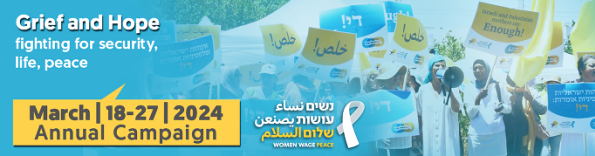
The following annual campaign for security, life and peace is in memory of Vivian Silver, a beloved and widely known Canadian-Israeli human rights activist who was murdered by Hamas terrorists on the 7th of October at Kibbutz Be’eri in Southern Israel. Please read and give generously if your heart is so moved.

“We’re not stopping without an agreement. We still mean that. Our commitment to future generations here faced an excruciating test on October 7 when our losses included one of our beloved co-founders, Vivian Silver.

Others we love have been killed in the aftermath or are still captive or are living as innocents trapped in hell. Despite the terrible shadow cast on our efforts, Women Wage Peace is not stopping.

We are working hand-in-hand with our Palestinian sisters, Women of the Sun, for lives that can be lived in peace, dignified by justice and equality.

Recently, the impact of our unwavering determination was confirmed with an official nomination, alongside Women of the Sun, for the 2024 Nobel Peace Prize.

Both movements were also honored when Time Magazine chose its twelve Women of the Year for 2024, among them Dr. Yael Admi, another co-founder of Women Wage Peace, and Reem Hajajre, the founder of Women of the Sun.

The war that erupted after October 7th has deteriorated the Israeli-Palestinian conflict to an unprecedented low, but we are determined to seize this moment as an opportunity for change. The concept of managing the conflict has failed and it is time to act for a political solution.

Your unwavering support, your own determination to believe that peace is possible when women lead, has become more than much-needed fuel for our diverse activities.

It has been a source of strength as we shift from grieving to grasping – grasping this moment as one of profound change. We are seizing this opportunity by mounting an ambitious campaign that continues to widen our connection to more Israeli and Palestinian women as well as to moderate Arab nations and the international community.

Since October 7th, our initiatives have taken different directions; some are ongoing, some will be launched soon: ƒ

1. a daily presence of WWP members in Tel Aviv’s ‘Hostage Square’, alongside tormented family members of the hostages calling for the return of the hostages, which will enable a ceasefire;

2. delivery of humanitarian aid, and a return to negotiations towards a long-term diplomatic solution; ƒ

3. empowering Arab-Israeli women as peace-builders, recognizing their crucial role in building bridges between Jewish and Arab women in Israeli society and between Jewish Israeli women and Palestinian
women; ƒ

4. joining forces with Israeli groups to bring about a courageous, moderate, peace-seeking, egalitarian government; ƒ

5. planning a public campaign to convey the message that security can be achieved only through a diplomatic solution; ƒ

6. preparing to revive our bi-national in-person workshops, once checkpoints are re-opened; ƒ

7. expanding international endorsement of our Mothers’ Call, working for an end to mutual dehumanization and creating an infrastructure to support shared processes of reconciliation; ƒ

8. last but hardly least, launching a large and complex joint project with Women of the Sun, called Women Building Bridges, with a peace-building training program for environmental, religious, and traditional leaders from both sides, supplemented by joint Israeli-Palestinian study tours.

A few of the many actions aided by last year’s crowdfunding campaign include:ƒ

-organizing a bi-national training program for peace activism, with WOS supporting lawful protest against the proposed judicial overhaul, a major threat to peace and women’s participation in decision-makingƒ;

-hosting Reem, the leader of Women of the Sun, in gatherings with hundreds of Israelis to meet our partner movement and to restore hopeƒ;

-convening an all-day event with Women of the Sun on October 4 in Jerusalem and at the Dead Sea, with 1500 Israeli and Palestinian women marching together and calling for negotiations.

Join us as we continue to wage peace. Your contribution is your powerful affirmation that where women lead, peace and justice can more easily follow.

Our Annual Crowdfunding Campaign will be launched on March 18th and continue until March 27th.

Each donation is doubled!

Watch this short video – https://www.youtube.com/watch?v=0qRoGPz1JQk

Donate here NOW – https://causematch.com/wwp24-en


ƒ

ƒ
ƒ

The Democrats Are Right. Being pro-Israel Means Being pro-Palestinian – Haaretz op-ed

20 Wednesday Mar 2024

Posted by rabbijohnrosove in Uncategorized

≈ 1 Comment

Tags

gaza, Israel, news, palestine, politics

Introductory note: This op-ed was posted today at Haaretz – for those with a subscription, here it is

Faced with an increasingly recalcitrant Netanyahu government, Senate Leader Chuck Schumer and his Democratic colleagues are leading a welcome shift in policy. Both Israel and the U.S. have a moral obligation to do better

John Rosove

Elliott Tepperman

March 20, 2024

When we woke up on October 7 to the shocking news of the Hamas terror attack in Israel, we were deeply shaken–as were Jews around the world.

As accounts of Hamas’ barbarism emerged – and as we spoke with loved ones in Israel–the anguish only grew worse. With over 1,200 murdered, well over 200 taken hostage, and hundreds of thousands displaced, the pain of the attack and its aftermath has been enduring for Israelis and Jews around the world alike.

The ensuing war against Hamas in Gaza has brought no end to the grief. Over 30,000 Palestinians have been killed, more than 1 million forced to flee their homes, and the entire population is enduring unimaginable suffering with scarce medical supplies and hundreds of thousands on the brink of starvation.

We’ve watched as Israeli Prime Minister Benjamin Netanyahu’s government has exacerbated the pain and suffering of Israelis and Palestinians alike, running counter to our Jewish values, to the foundations of the U.S.-Israel relationship, and to Israel’s own national interests.

As Jewish Americans and rabbis who care deeply for our Jewish homeland, our U.S. ally Israel, and its citizens–among whom we count our own friends and family–we understand the moral struggle U.S. lawmakers now face as they wrestle with both how to support Israelis and bring the death and suffering in Gaza to an end.

Rightfully, Capitol Hill has been spending a lot of time on the crisis since October 7, and we have been particularly proud of those U.S. senators leading the way. While so many have struggled to hold the humanity of both Israelis and Palestinians in their hearts, some are showing true, courageous leadership – precisely what this perilous hour demands.

In an unprecedented speech on the Senate floor last week, Senate Majority Leader Chuck Schumer opened his remarks saying he spoke for the “silent majority” of Jewish Americans “whose nuanced views … have never been well represented in this country’s discussions about the war in Gaza.”

In a bold but important call, he went on to urge Israelis to hold new elections, noting Netanyahu “has put himself in coalition with far-right extremists like Ministers [Bezalel] Smotrich and [Itamar] Ben-Gvir, and as a result, he has been too willing to tolerate the civilian toll in Gaza, which is pushing support for Israel worldwide to historic lows.”

Other signs of understanding that the crisis demands an overdue, different approach came last month when U.S. President Joe Biden issued National Security Memorandum 20–widely reported to have been coordinated with Maryland Democrat Senator Chris Van Hollen and inspired by his amendment to the Senate supplemental aid package. The memorandum stipulates countries receiving U.S. military aid must comply with U.S. and international law and align with our country’s interests and values. In so doing, the memorandum requires Israel to conduct the war in a way that prioritizes the safety of civilians both in its military operations and its facilitation of humanitarian aid delivery.

In a separate move, Van Hollen joined his Democratic Senate colleagues Jeff Merkley, Dick Durbin, Elizabeth Warren, and Peter Welch in calling for a comprehensive approach to immediately mitigate the humanitarian crisis in Gaza–while clearly acknowledging Israel’s right to go after Hamas and reiterating the need to free hostages held in captivity.

Another example of a welcome shift was Senators Jon Ossoff and Raphael Warnock, both Democrats from Georgia, leading 25 Senators in advocating for a “mutual ceasefire” to gain the release of the remaining Israeli hostages and stop the killing of Gazan civilians, simultaneously recognizing Hamas must “be removed from power in Gaza.”

And last week, Senators Richard Blumenthal (D-Conn.) and Chris Coons (D-Del.) published an opinion piece in Foreign Policy, stating Israel should take steps to increase the flow of humanitarian aid into Gaza and that the United States is “prepared to take more persuasive steps to ensure compliance with U.S. policy on civilian protection and humanitarian assistance.”

Most of these calls occurred in the shadow of the Senate’s passage of the bipartisan national security supplemental package, which, in addition to security aid to Israel, Taiwan, and Ukraine, included humanitarian aid for Palestinians in Gaza. Appallingly, former President Donald Trump and Speaker Mike Johnson have sought to block the bill from a vote in the House for short-term political reasons, even though it is all but certain to pass with bipartisan support.

What is clear to us, as Jewish leaders who care deeply for the safety of Israelis and the country’s future, is that the Democratic lawmakers mentioned have a deep, nuanced understanding of what it means to be pro-Israel. Faced with an increasingly recalcitrant Netanyahu government, it is not enough to spout platitudes or support symbolic resolutions. The U.S.-Israel relationship deserves and is strengthened by a more substantive approach.

These senators realize that to be pro-Israel also means being pro-Palestinian. As October 7 and its aftermath have made clear yet again, the fates of these two peoples–who share a land and a history, and neither of whom is leaving–are inextricably linked.

We in the pro-Israel community would be wise to understand, as these legislators do, that providing Palestinians with stability, security and self-determination while promoting reforms in governance and education will also serve to benefit Israel’s security in the future. Compounding an already-dire humanitarian calamity in Gaza, on Israel’s doorstep, is in nobody’s interests.

We find solace and hope in the efforts of our Congressional representatives to help bring this war to an end, the hostages home, and desperately needed aid to Gaza.

We thank them for the political courage they have displayed in recent months. Schumer himself summed up the welcome, straight-talking new direction, when he noted in his speech that we hope will be a roadmap forward, “We should not let the complexities of this conflict stop us from stating the plain truth: Palestinian civilians do not deserve to suffer for the sins of Hamas, and Israel has a moral obligation to do better. The United States has an obligation to do better.”

Rabbi John L. Rosove is a national co-chair of the J Street Rabbinic and Cantorial Cabinet. He is a past national chair of ARZA, the Association of Reform Zionists of America, and Rabbi Emeritus of Temple Israel of Hollywood.

Rabbi Elliott Tepperman is a national co-chair of the J Street Rabbinic and Cantorial Cabinet. He has been the spiritual leader of Bnai Keshet in Montclair, NJ since 2002, and he is the immediate past president of the Reconstructionist Rabbinical Association. @RavElliott

“Revelations from the US-Mexico Border …not what it seems”

17 Sunday Mar 2024

Posted by rabbijohnrosove in Uncategorized

≈ Leave a comment

Tags

asylum, asylum-seekers, immigration, news, politics

Steven Koltai – Substack – March 15, 2024

Note: Steven Koltai is a friend of many decades. Check out his bio at https://digitalequitycenter.org/about-us/board/steven-koltai/ – The following is Steven’s eye-opening report that I urge you to read and share.

“I have just returned from a visit to the US/Mexico border.  We were at two sites: El Paso/Juarez and San Diego/Tijuana. The trip was a Board Mission for HIAS, the oldest American refugee assistance organization. The Hebrew Immigrants Assistance Society (its full, former name), was begun in the 1880s and coincidentally, helped me (age 2) and my parents come to America from Hungary in 1956. While originally created to help Jews settle in the US, today, virtually none of HIAS’s clients are Jews and the largest number settle in countries other than the US, though the exception is the US/Mexico program where most migrants do settle in the US. HIAS specifically neither encourages nor facilitates immigration; rather, it works with asylum seekers and refugees who are caught in extremis. Our signature programs fall in 4 main areas: Gender-based violence counseling, mental health and psycho social support, legal information, and job training. HIAS normally does not provide food, shelter, clothing, medical care, transportation or security (except for its own staff and programs). 

What I saw at the border was NOT consistent with what I normally see in the mainstream news about the crisis at the US/Mexico border. The dissonance was striking. Here are the key disparities with the usual narrative:

1.         There were NOT hundreds of thousands of people clamoring to cross the border (on either side). Shelters on both sides were generally at 50% capacity or less. While the NGOs running them certainly agreed that there are peaks and valleys in the flow of people, the current “below capacity” story was very common.

2.        The vast majority of migrants on the US side of the border (99% according to the biggest NGO we talked to working with migrants), have family or friends in the US and have specific onward destinations to go to from the border crossing areas. In fact, the biggest task of these welcome centers is getting people to their planes and buses for [their] onward journey. Certainly, it is possible to fill buses with people being shipped to “liberal” cities like NY, Chicago and Denver. But even these people are often going to join specific family members or friends.

3.        The vast majority of asylum seekers are fleeing physical violence and threats with a substantial number having actually experienced same. They are NOT economic migrants and all things being equal, most people would have preferred to say in their home communities if at all possible.

4.        100% of migrants who make it to the US border do so with the “help” of criminal cartels who basically shake them (and their families) down for every penny they have, leaving them fully destitute by the time they arrive. This “human trafficking” is now at least an equal revenue stream for the cartels as is drug trafficking. Given the size of the business, there is little any regulatory change will do to stem the flow, especially since it is primarily Mexico-based where the national and especially key state governments (Guerrero, Michoacan, Jalisco were often mentioned) are not only powerless to control this but seem to often be acting in concert with these cartels.

5.        There is an enormous difference in the situation in Texas vs California, clearly owing to the different politics in those states. In California, the State Government works with and supports NGOs trying to provide some order and structure to the flow of humanity. An example is that one of the largest temporary shelter programs in San Diego actually receives state funds to pay rent for a hotel with 200 rooms. In Texas, the situation is reversed. The state is an active adversary of NGOs, actually harassing them and impeding their work. One of the largest temporary shelter organizations in El Paso is currently being sued by the Texas Attorney General in a “nuisance suit” seeking every document in their possession to basically show they are a “magnet” for migrants, thus impeding their daily work. 

6.        Perhaps most importantly, there seems to be much evidence that the entire “crisis” is largely of the US Government’s making and is largely, if not wholly, political. The infamous “CBP1App” is the ONLY way for asylum seekers to access the formal, legal US asylum entry system. There are over 1 million asylum seekers. The CBP1 App assigns 1,400 appointments per day spread across the 6 ports of entry between the US and Mexico. This means that it not only takes 6+ months to get an appointment, but that once one has an appointment, the result is almost always denial. In the “wait time” migrants spend hours – often between 2 am and 5 am when they are told the chances of getting through are greatest – trying to get appointments. They suffer sleep deprivation, frustration, depression and anger. When layered on top of the “normal” challenges of often sleeping in awful conditions with little food, heat, sanitation and services, the system itself creates untold misery. Similarly, we learned (and saw) that the border wall in Tijuana, for example (build entirely with US money), is set at 38 feet so as to maximize injuries when falling down on the other side. Since there are actually two layers of fence with a no-man’s land in between, the result is that there are often people with horrific leg, ankle, and foot fractures (including broken and protruding bones) that are literally in limbo and unable to get care or move to either side. Even some of the most infamous walls in history (Berlin, West Bank, Korea) do not leave people in this state of limbo. The US Government policy of inflicting maximum pain seems to continue throughout the system where it is virtually impossible to “legally” immigrate to the US. There are woefully few immigration judges, lawyers, social workers and even customs and border patrol (CBP) officers to manage this process in an orderly fashion. This mania to prevent people from entering is particularly nonsensical given the crying need for labor in the US – everything from hotel and restaurant workers to health care workers, bus drivers and agricultural workers – most of these people seeking entry are willing to take ANY job, no matter how trivial. It is almost comical that even in El Paso and San Diego, it is virtually impossible to find restaurant workers or custodial staff when there are thousands of people ready, willing and able to take ANY job.

HIAS does the work it does because Jews are well acquainted with what it means to be persecuted refugees fleeing for one’s life. The Torah mentions aiding the stranger 36 times; in fact, it is one of the most important tenets of Judaism. Passover, coming in a few weeks, is primarily the story of exile, and its central theme is comforting the stranger; the person who is different from you but no less worthy of compassion and help. As the motto of HIAS says, originally we helped others because they were Jews; today we help others because we are Jews. At this fraught moment where xenophobia and hate mongering against “the other” seem to be the flavor of the month, it is useful to remember that the three Abrahamic faiths of Judaism, Christianity and Islam all place caring for the stranger at the top of their hierarchy of fulfilling God’s commandments.”

For more information about HIAS, including to make a donation to support our work, please see: https://hias.org

To subscribe to Steven’s substack, go to https://stevenkoltai.substack.com/p/revelations-from-the-us-mexico-border?r=cwke4&utm_campaign=post&utm_medium=web&triedRedirect=true

I awoke today somewhat relieved

08 Friday Mar 2024

Posted by rabbijohnrosove in Uncategorized

≈ 4 Comments

Tags

donald-trump, joe-biden, news, politics, trump

I’m relieved this morning after watching President Biden deliver the State of the Union message (also a campaign speech) last evening. I’m relieved because it was clear that he still has what it takes to be president, fire in the belly, intellectual acuity, moral clarity, understanding of American history and policy, a grasp of the many issues confronting America in this dangerous era of anti-democratic demagoguery at home and abroad, and common decency, integrity and respect for others.

By nature, as a liberal, I know I’m not alone in being concerned, nervous, disturbed and confused by Biden’s low approval ratings despite his significant legislative and international accomplishments and despite the respect with which he is held as the leader of the free world by America’s allies. My general nervousness that Trump could be reelected remains given what is likely to be a very close election determined by 6 or 7 swing states. But, Biden’s primary weakness – his advancing age – doesn’t concern me that he can’t do the job of president though much of the public’s perception of his age concerns others.

Yes, Biden is old – but clearly he still intellectually has what it takes to lead the country. He also has smart and decent domestic and foreign advisors around him, and his long governmental and lived experience and the wisdom he has gained over many decades gives him a unique perspective to understand where we are along the arc of American history and where he wants to lead us. Like President Obama before him, Biden’s administration is remarkably devoid of corruption and scandal. Not so, of course, with Trump whose administration is likely the most corrupt in all of American history. The old adage that the fish stinks from the head is true with Trump.

When I compare Biden with Trump I’m amazed that any thinking and decent person can support Trump given his massive deficiencies in character, his autocratic disrespect for the law, his responsibility for the insurrection on January 6, his rape and fraud convictions, the many indictments against him waiting adjudication, his massive hostility to the constitutional order and his indecency as a human being. The contrasts between Biden and Trump are so vast that they boggle the mind. I understand that good people will disagree about policy choices made by Joe Biden. That’s normal in a democracy and so I can understand classic Republicans choosing not to vote for Biden or Trump in the general election, though there are conservatives like Liz Cheney who will hold her nose and vote for Biden because she understands that the future of American democracy requires her to do so.

A few years ago, I compiled a list of adjectives used by journalists, op-ed writers, psychiatrists and historians to describe Trump’s character. I counted 170 words and posted them here in a blog. As this presidential campaign heats up, I’m re-posting that list again. Taken individually and together they constitute a sweeping condemnation of a man who has caused millions of Americans to lose their independent judgment, to set aside their courage to resist immorality, to fear a vicious president who will stop at nothing to destroy them personally and publicly when they challenge him, and to compel them to bow down and kiss the ring of a fascistic leader.

Here is that list. If there’s a word you’ve heard about Trump that doesn’t appear here, please send it to me and I’ll gladly add it for the next time I post the list:

“Twice-impeached, convicted rapist, convicted fraud, one-man-crime-wave, corrupt, unprecedented, pathological liar, dishonest, deceitful, grifter, denier, deceptive, insincere, untrustworthy, duplicitous, hypocritical, angry, argumentative, oppositional, divisive, aggressive, mob-boss-like, cyber-bully, intimidating, threatening, vindictive, superficial, uncontrollable, theatrical, unsure, arrogant,  bravado, show- off, rage-filled, controversial, outrageous, arrogant, entitled, intolerant, insensitive, uncaring, hardhearted, indecent, disrespectful, shameless, craven, hostile, hateful, ruthless, cruel, mean, malevolent, dystopian, dark, base, low, abhorrent, decrepit, egoistical, egotistical, self-centered, narcissistic, malignant, unwell, mentally ill, delusional, pathological, unhinged, nihilistic, self-serving, selfish, chaotic, unpredictable, childish, cowardly, manipulative, ignoble, shameful, deplorable, discreditable, licentious, lecherous, reprehensible, sexist, misogynist, racist, white supremacist, Islamophobic, homophobic, poisonous, odious, toxic, evil, bad, criminal, wrong-doer, amoral, immoral, ignominious, worst, catastrophic, chaotic, calamitous, ruinous, disastrous, devastating, damaging, destructive, back-stabbing, double-crossing, two-faced, unfaithful, faithless, loser, weak, morally profligate, sacrilegious, soulless, disloyal, cheater, thief, fraudulent, scandalous, despicable, rancid, grievous, churlish, rude, ill-mannered, bad-tempered, cynical, appalling, profligate, ignorant, foolish, stupid, inflammatory, degenerate, debauched, imprudent, alarming, clownish, reckless, dangerous, murderous, violent, extremist, unworthy, unfit, dysfunctional, incompetent, ineffective, irresponsible, unaccountable, culpable, failed, subversive, illiberal, authoritarian, fascistic, anti-democratic, anti-constitutional, dictatorial, lawless, autocratic, seditious, traitorous, treasonous, insurrectionist, un-American.”         

For Thursday’s State of the Union Address

06 Wednesday Mar 2024

Posted by rabbijohnrosove in Uncategorized

≈ 1 Comment

Tags

Israel, middle-east, news, palestine, politics

Introductory Notes:

The continuing war initiated by Hamas on October 7 has been a disaster for Israeli and Palestinian civilians. Hamas’ brutality, its murder of babies, pregnant women, young adults and seniors resulting on that day in the death of 1200 Israelis (mostly civilians constituting the worst attack on Jews since the Holocaust), the gang rape of countless Jewish women and men by Hamas terrorists, and the kidnapping of 240 Israelis and international workers all constitute war crimes. Israel’s justifiable military response, however, has not fulfilled the Netanyahu government’s war aims of destroying Hamas’ capacity to repeat its war crimes against Israeli/Jewish lives nor has this war successfully returned all the Israeli hostages to their families and homes. At the time of this writing, still there are 130 Israeli hostages remaining in Gaza of which it is estimated about 30 were murdered on October 7 or since, and that women hostages are still being sexually assaulted by Hamas captors.

Though any statistics cited by Hamas is wholly suspect, huge numbers of Palestinian civilians have died in the fighting including thousands of women and children. Hamas has used its own people as human shields against Israel, and Hamas’ fighters, military command centers and stockpiles have been placed deliberately in and under Gazan apartment buildings, homes, schools, mosques, community centers and hospitals, also constituting war crimes. Israel’s massive military response has no doubt cause the death of countless innocent civilians and I fear that Israel’s use of thousands of 2000-pound “dumb bombs” in populated areas seeking to kill Hamas commanders and destroying underground tunnels and weapons depots have wantonly caused untold death and suffering.

I feel it is necessary to repeat all this, which ought to be well-known by now by any reasonable observer, because the horrors of October 7 have either been forgotten or moved into many people’s rear-view mirrors. All this said, this war must be brought to a conclusion as soon as possible to stop the killing, injury and suffering of Palestinian civilians, the death of far too many Israeli soldiers and the return of the hostages.

I signed the following letter produced by J Street because it represents a compassionate, pragmatic and clear statement about what will be necessary after this war concludes in addressing long-term inequities in the West Bank and Gaza and the need for peace, justice and security for both Israel and the Palestinian people.

It should be obvious to everyone by now that Hamas is not a partner for peace with Israel. It is a murderous genocidal terrorist organization based upon an uncompromising extremist Islamic ideology fueled by hatred that seeks the destruction of the State of Israel and the murder of all Jews. And it should be obvious to everyone that Hamas has not only caused manifold suffering to the Palestinian people but represents a dictatorial intolerant anti-western philosophy that disregards the dignity and divinity of every human being. For there ever to be peace between Israel and the Palestinian people, Hamas must be pushed to the sidelines, and a reconstituted Palestinian Authority must represent the Palestinian people in Gaza and the West Bank.

This letter insists not only on an ceasefire but a return of all hostages to their families and homes. I ask my readers to read the letter carefully and appreciate the nuance contained therein as well as the clarity about what can be achieved if there is ever to be peace, justice and security over the long-term for both our two peoples. It needs to be said also that for Israel to be secure, the Palestinian people’s national aspirations for sovereignty, justice, security and peace also must be realized. Therefore, to be pro-Israel means also to be pro-Palestinian.

One more thing – Israel and the Palestinians need a strong advocate to help them negotiate together an end to their conflict. The United States must be fully engaged along with the Arab League, the EU and even the UN, despite the UN’s historic bias against Israel.

I hope President Biden will speak boldly this Thursday night about what the United States intends to do to help Israel and the Palestinians find peace with justice and security together.

Dear President Biden,

I hope you are well aware of the deep gratitude most Jewish Americans and friends of Israel feel toward you for the support you demonstrated to the state and people of Israel following the horrific October 7 Hamas attack.

You have shown amazing empathy for the victims, the hostages and their families, as well as for the trauma still being experienced by Israelis and their friends across the world.

You have also stated clearly that the government of Israel must pursue its defense of the country’s borders and people, the release of the hostages and pursuit of the perpetrators of the attack within the bounds of international law. You have urged the Israeli government to live up to standards that liberal democracies must embrace not just as a matter of law, but of morality.

It is deeply painful for many of us who care about Israel to acknowledge that the Netanyahu government has failed to uphold those moral – and possibly even legal – standards in its conduct of the war.

On Thursday, I hope you will find a way to demonstrate deep, personal concern both for the Israeli people and for the people of Gaza. I know, as you do, that the suffering of the Palestinian people and the humanitarian crisis of unimaginable proportions they are enduring is not simply due to the Israeli offensive but that Hamas bears much responsibility for the suffering as its leaders and fighters hide beneath and among the civilian population of the Gaza Strip.

Israelis, Palestinians and others in the region need more than empathy, though. They need your leadership. They look to the United States as the “indispensable player” – and those of good will hoping for a more secure and peaceful future are looking to you for a vision and a plan to get there.

To that end, I hope you will make six key points on Thursday:

  1. There must be an immediate negotiated ceasefire that stops the fighting for a considerable period, frees the remaining hostages and surges humanitarian assistance to the people of Gaza.
  2. You will do all in your power to ensure that sufficient humanitarian assistance – food, fuel, water, medicine, shelter – reaches Gazans in the coming days, with or without a ceasefire. Acknowledge that you personally understand that lives hang in the balance and that you are committed to ensuring the necessary help. In tandem, you will, I know, reiterate your deep, personal commitment to the security of the people of Israel not only from attacks by Hamas, but Hezbollah, the Houthis and other Iran-backed groups in the region.
  3. Recognize that nearly 57 years of Israeli occupation must end and declare your support for the establishment of a demilitarized Palestinian state. You can express your hope to be the American President who formally recognizes the state of Palestine and supports its admission to the United Nations. You can make clear that – for this to happen – very serious reforms are needed from the Palestinian Authority and Palestine Liberation Organization, and you should list out some of the more prominent conditions, including reform of the prisoner payments program, addressing corruption, shoring up democracy and more.
  4. Reiterate Secretary of State Blinken’s recent statement that Israeli settlements in the territory it occupies are inconsistent with international law and that the United States will take meaningful actions to crack down on settler violence and ensure that Israel stops expanding settlements in areas that will be part of a Palestinian state and ends practices such as home demolitions that undermine the possibility of ending the conflict.
  5. Outline how eventual statehood for Palestine is only one piece of a bold vision for the future of the region – one in which Israel has meaningful security, guaranteed by fully normalized relations with all its neighbors. Make clear that you intend in the coming months to pursue normalization for Israel with Saudi Arabia and other nations in the Arab and Muslim world, provided Israel agrees to a pathway to a Palestinian state. You should be the first President to formally mention and support the Arab Peace Initiative in a State of the Union.
  6. Finally, make clear to the Israeli and Palestinian people that the future is in their hands. There is a path to security, dignity and prosperity for both peoples, and there is also the path of never-ending conflict and bloodshed. The US will rally friends around the world to support the two peoples if they choose a future of peace and mutual recognition. You should make it equally clear that those not willing to sign on to that vision and respect the rule of law will no longer have our unquestioning support.

Mr. President, a balanced speech along these lines that speaks directly to the people involved – over the heads of leaders who have been obstacles to peace in the past – is not only the right policy for the United States, it meets the political moment. Your supporters and the majority of the American people want peace and security for both peoples and a regional security architecture that protects our national interests.

Please know that – in our movement – you have a partner in taking the bold steps needed to end the current nightmare and build meaningful opportunity out of this horrendous disaster.

← Older posts
Newer posts →

Enter your email address to subscribe to this blog and receive notifications of new posts by email.

Join 366 other subscribers

Archive

  • March 2026 (2)
  • February 2026 (6)
  • January 2026 (8)
  • December 2025 (4)
  • November 2025 (6)
  • October 2025 (8)
  • September 2025 (3)
  • August 2025 (6)
  • July 2025 (4)
  • June 2025 (5)
  • May 2025 (4)
  • April 2025 (6)
  • March 2025 (8)
  • February 2025 (4)
  • January 2025 (8)
  • December 2024 (5)
  • November 2024 (5)
  • October 2024 (3)
  • September 2024 (7)
  • August 2024 (5)
  • July 2024 (7)
  • June 2024 (5)
  • May 2024 (5)
  • April 2024 (4)
  • March 2024 (8)
  • February 2024 (6)
  • January 2024 (5)
  • December 2023 (4)
  • November 2023 (4)
  • October 2023 (9)
  • September 2023 (8)
  • August 2023 (8)
  • July 2023 (10)
  • June 2023 (7)
  • May 2023 (6)
  • April 2023 (8)
  • March 2023 (5)
  • February 2023 (9)
  • January 2023 (8)
  • December 2022 (10)
  • November 2022 (5)
  • October 2022 (5)
  • September 2022 (10)
  • August 2022 (8)
  • July 2022 (8)
  • June 2022 (5)
  • May 2022 (6)
  • April 2022 (8)
  • March 2022 (11)
  • February 2022 (3)
  • January 2022 (7)
  • December 2021 (6)
  • November 2021 (9)
  • October 2021 (8)
  • September 2021 (6)
  • August 2021 (7)
  • July 2021 (7)
  • June 2021 (6)
  • May 2021 (11)
  • April 2021 (4)
  • March 2021 (9)
  • February 2021 (9)
  • January 2021 (14)
  • December 2020 (5)
  • November 2020 (12)
  • October 2020 (13)
  • September 2020 (17)
  • August 2020 (8)
  • July 2020 (8)
  • June 2020 (8)
  • May 2020 (8)
  • April 2020 (11)
  • March 2020 (13)
  • February 2020 (13)
  • January 2020 (15)
  • December 2019 (11)
  • November 2019 (9)
  • October 2019 (5)
  • September 2019 (10)
  • August 2019 (9)
  • July 2019 (8)
  • June 2019 (12)
  • May 2019 (9)
  • April 2019 (9)
  • March 2019 (16)
  • February 2019 (9)
  • January 2019 (19)
  • December 2018 (19)
  • November 2018 (9)
  • October 2018 (17)
  • September 2018 (12)
  • August 2018 (11)
  • July 2018 (10)
  • June 2018 (16)
  • May 2018 (15)
  • April 2018 (18)
  • March 2018 (8)
  • February 2018 (11)
  • January 2018 (10)
  • December 2017 (6)
  • November 2017 (12)
  • October 2017 (8)
  • September 2017 (17)
  • August 2017 (10)
  • July 2017 (10)
  • June 2017 (12)
  • May 2017 (11)
  • April 2017 (12)
  • March 2017 (10)
  • February 2017 (14)
  • January 2017 (22)
  • December 2016 (13)
  • November 2016 (12)
  • October 2016 (8)
  • September 2016 (6)
  • August 2016 (6)
  • July 2016 (10)
  • June 2016 (10)
  • May 2016 (11)
  • April 2016 (13)
  • March 2016 (10)
  • February 2016 (11)
  • January 2016 (9)
  • December 2015 (10)
  • November 2015 (12)
  • October 2015 (8)
  • September 2015 (7)
  • August 2015 (10)
  • July 2015 (7)
  • June 2015 (8)
  • May 2015 (10)
  • April 2015 (9)
  • March 2015 (12)
  • February 2015 (10)
  • January 2015 (12)
  • December 2014 (7)
  • November 2014 (13)
  • October 2014 (9)
  • September 2014 (8)
  • August 2014 (11)
  • July 2014 (10)
  • June 2014 (13)
  • May 2014 (9)
  • April 2014 (17)
  • March 2014 (9)
  • February 2014 (12)
  • January 2014 (15)
  • December 2013 (13)
  • November 2013 (16)
  • October 2013 (7)
  • September 2013 (8)
  • August 2013 (12)
  • July 2013 (8)
  • June 2013 (11)
  • May 2013 (11)
  • April 2013 (12)
  • March 2013 (11)
  • February 2013 (6)
  • January 2013 (9)
  • December 2012 (12)
  • November 2012 (11)
  • October 2012 (6)
  • September 2012 (11)
  • August 2012 (8)
  • July 2012 (11)
  • June 2012 (10)
  • May 2012 (11)
  • April 2012 (13)
  • March 2012 (10)
  • February 2012 (9)
  • January 2012 (14)
  • December 2011 (16)
  • November 2011 (23)
  • October 2011 (21)
  • September 2011 (19)
  • August 2011 (31)
  • July 2011 (8)

Categories

  • American Jewish Life (458)
  • American Politics and Life (417)
  • Art (30)
  • Beauty in Nature (24)
  • Book Recommendations (52)
  • Divrei Torah (159)
  • Ethics (490)
  • Film Reviews (6)
  • Health and Well-Being (156)
  • Holidays (136)
  • Human rights (57)
  • Inuyim – Prayer reflections and ruminations (95)
  • Israel and Palestine (358)
  • Israel/Zionism (502)
  • Jewish History (441)
  • Jewish Identity (372)
  • Jewish-Christian Relations (51)
  • Jewish-Islamic Relations (57)
  • Life Cycle (53)
  • Musings about God/Faith/Religious life (190)
  • Poetry (86)
  • Quote of the Day (101)
  • Social Justice (355)
  • Stories (74)
  • Tributes (30)
  • Uncategorized (835)
  • Women's Rights (152)

Blogroll

  • Americans for Peace Now
  • Association of Reform Zionists of America (ARZA)
  • Congregation Darchei Noam
  • Haaretz
  • J Street
  • Jerusalem Post
  • Jerusalem Report
  • Kehillat Mevesseret Zion
  • Temple Israel of Hollywood
  • The IRAC
  • The Jewish Daily Forward
  • The LA Jewish Journal
  • The RAC
  • URJ
  • World Union for Progressive Judaism

Blog at WordPress.com.

  • Subscribe Subscribed
    • Rabbi John Rosove's Blog
    • Join 366 other subscribers
    • Already have a WordPress.com account? Log in now.
    • Rabbi John Rosove's Blog
    • Subscribe Subscribed
    • Sign up
    • Log in
    • Report this content
    • View site in Reader
    • Manage subscriptions
    • Collapse this bar
 

Loading Comments...