• About

Rabbi John Rosove's Blog

Rabbi John Rosove's Blog

Category Archives: Uncategorized

Sarah Zoabi – A Brave Israeli-Arab and Proud Zionist Speaks Out in Support of Israel

10 Tuesday Nov 2015

Posted by rabbijohnrosove in Uncategorized

≈ Leave a comment

Tags

Israel and Palestine, Israel Zionism, Social Justice, Women's Rights

These two videos of Sarah Zoabi, an Israeli-Arab citizen from Nazareth, are eloquent expressions of her Arab-Israeli-Zionist identity, by which she means that the Jewish people have a right to a state of their own. They are extraordinary examples of courage in speaking out as an Arab-Israeli in an environment in which she, like her son Mohammed who has done as she has done, will likely receive death threats. Sarah believes that for an Arab to live as a citizen in the state of Israel is “paradise.”

She explains that Israeli Arab citizens enjoy freedoms in the democratic state of Israel that do not exist in any other Arab country ruled by dictators. She acknowledges, as well, that Israeli society is not perfect explaining that “perfect countries exist in theory and not reality.”

Sarah calls upon all Israeli minorities to join together and publicly express their support for their democratic state of Israel.

Kol hakavod to you, Sarah. The Jewish people needs more people like you to speak out.

https://www.facebook.com/theisraelproject/videos/10154262718827316/

https://www.facebook.com/mirilavi/videos/10154436057032715/

Should Israel Split Itself in Half? A Thought Experiment

08 Sunday Nov 2015

Posted by rabbijohnrosove in Uncategorized

≈ Leave a comment

Tags

Israel and Palestine, Israel/Zionism, Jewish History, Jewish Identity

TLV1’s “The Promised” broadcast reported last week that Eran Tashiv, the head of the program for national security and economy at the Israeli Institute for National Security Studies (IINSS), imagined just such a scenario recently in a Haaretz column which he wrote as a kind of thought experiment, describing what would happen should two different Jewish states be organized along contrasting religious and national lines. Each smaller state, he opined, might be content with itself and even happier after a divorce from the other half. His thought experiment begs the central question – would splitting Israel in two be better or worse for the Jewish people than what we have today? (see http://tlv1.fm/the-promised-podcast/2015/11/07/partition-ambition/)

Tashiv suggests that one Jewish state might be called “Judaea” and include the Jerusalem area going south, the West Bank settlements, and the cities of Ashdod, Beersheva and Ashkelon. Its population would number approximately 3.4 million people and include all the occupied West Bank Palestinians.

The other Jewish state might be called “Dan” and include Tel Aviv going north, Haifa, the Jezreel Valley, the Sea of Galilee, Rishon L’Tziyon, and Petach Tikvah, and  total 4.9 million people including Israeli Arab citizens in the Galilee and elsewhere who have been loyal citizens of the state of Israel since 1948.

“Judaea” would end up being primarily a right-wing ultra-orthodox state governed, most likely, according to halachah (traditional Jewish law), a Jewish version of Iran and Turkey. The occupation of the West Bank, with its 2 million hostile Palestinians, would become the responsibility of “Judaea.”

“Dan,” however, would include Israel’s cultural, political and secular middle and left-wing and likely would remain a social democracy. “Dan” would produce, based on current demographic, educational and economic conditions, twice the GNP of “Judaea.”

In effect, there would be one state (“Dan”) that is secular, liberal, modern, and economically thriving living alongside another state (“Judaea”) that is ultra-Orthodox, halachic, nationalist, and poor.

This splitting of the state of Israel in half, of course, will never happen because the IDF, the West Bank occupation, the thriving economy of the “Dan” sector, and classic Zionist ideology won’t allow it.

The cultural, religious and political divisions embodied in these two states of “Dan” and “Judaea” are, of course, not clean. There are both economically successful western-oriented Mizrachim (aligned most naturally with the ideology of “Judaea”) and successful Ashkenazim who would be citizens in “Judaea,” just as economically struggling secular Ashkenazim (aligned most naturally with the ideology of “Dan”) would share life with below the poverty level ultra-Orthodox citizens in “Dan.”

It is ironic that PM Netanyahu, who set the conditions for the thriving hi-tech economy when he served as Finance Minister during the Ariel Sharon era, and Naftali Bennett, the head of the Jewish Home Party that represents religious nationalists and the settler movement and who is himself a successful hi-tech entrepreneur, are two of the principle leaders of the current government and would be the leaders of the right-wing nationalist halachic state of “Judaea.” It ought to be noted, as well, that the policies of then Finance Minister Netanyahu are responsible for the widening economic gap between the wealthy and poor of Israel and the diminishing and struggling Israeli middle class.

In “The Promised” broadcast, Times of Israel journalist Miriam Herschlag suggested that this discussion about creating two Jewish states is taking place especially now because we Jews are testing the boundaries of what constitutes our “family” and we are wondering what to do with those fellow Jews about whom we feel we can no longer be engaged and with whom we are constantly quarreling about the meaning of Jewish and Israeli identity. We wonder if there is some end-point on our people’s emotional map where at last we say: “No – we’re too far apart ethically, religiously, nationally, and politically, and our differences require us to separate and get a divorce!”

Many Israelis from across the political, national and religious spectrum might welcome a separation because they feel that increasingly someone else is taking over their country and that Israeli culture is moving either too far to the ideological left or ideological right.

Don Futterman, the head of the Moriah Fund and a regular participant on the “The Promised” broadcast, pointed to another serious and consequential fault-line in Israeli society that exacerbates current tensions. He noted that Israel’s economic stability and success has become overly dependent upon certain sectors, leaving the ultra-Orthodox and Arab communities (especially under-employed Arab women) behind. Both sectors need to be integrated more fully into the Israeli work force in order to move their families out of poverty and enhance Israel’s national security.

Splitting Israel in half is neither possible nor desirable because it would mean our giving up on the Zionist dream of the Jewish people united in a Jewish, diverse, pluralistic and democratic state.

The truth is that we are stuck with each other whether we like it or not, and we better learn to live together or the Zionist experiment will end up on the trash heap of Jewish history.

A Weeping Isaac Alone in the Field – A Paradigm for Our Times

06 Friday Nov 2015

Posted by rabbijohnrosove in Uncategorized

≈ 1 Comment

Tags

American Jewish Life, Divrei Torah, Ethics, Health and Well-Being, Israel and Palestine, Jewish History, Jewish Identity, Poetry, Stories

Chayei Sarah is a monumental Torah portion in the Book of Genesis (23:1-25:18) that establishes Hevron as one of our people’s holiest cities in the land of Israel and tells the story of the betrothal of Isaac and Rebekah. Thus, for the first time in Jewish history we witness the passing of the baton of history from one generation to the next.

We, the current generation, however, have yet to fulfill our Jewish destiny. Hevron today is a hot spot of Palestinian and Jewish rage, of extremism and violence, of polarization and hate. Until there is peace (shalom) between the tribes of Israel and shalom/salem (not hudna – i.e. “quiet”) between Israel and the Palestinians, we will not have fulfilled our raison d’etre as a people to be rod’fei shalom, pursuers of peace.

The current violence cannot be the way forward, nor can suspicion, distrust and hatred of the “other” define the character of our people’s and the Palestinian people’s hearts and souls.

I offer a poetic midrash on Isaac’s and Rebekah’s encounter leading to their marriage. I love this story because their meeting is pure and sweet, and it suggests a paradigm of what is possible not only between individuals, but between the tribes that comprise the Jewish people today (e.g. Haredi, Orthodox, Mizrachi, Ashkenazi, Reform, Reconstructionist, Conservative, secular, atheist, liberal and right-wing Zionists, American, Israeli, European, Latin, etc.), and the peoples of the Middle East who know far too much polarization, suspicion, distrust, and hatred of each other.

A Weeping Isaac Alone in the Field

To be alone amidst shifting wheat / And rocks and sun / Beneath stirred-up clouds / And singing angels / Audible only by the wind.

I’ve secluded myself / As my father did / When he went out / Alone leaving all he knew / For a place he’d never been / That God would show him.

I can do nothing else / Because Father broke my heart / And crushed my soul / When he betrayed me / By stealing me away one morning / Before my mother awoke / And nearly offered me to his God.

When my mother learned / Her soul passed from the world.

O how she loved me! / And filled me up / With laughter, love and tears.

Bereft now / I’m desolate in this world / And this field.

O Compassionate One – Do You hear me / From this arid place / Filled with snakes and beasts, hatred and vengeance?

I sit here needing YOU.

As if in response, / Suddenly from afar / Appears a caravan / Of people and camels, / Led by Eliezer, Abraham’s servant, / With a young girl.

Isaac, burdened by grief / Neither looks nor sees.

He sits still / Lasuach basadeh / Meditating / And weeping / Beneath the afternoon sun / And swirling clouds / And singing angels / Whom he cannot hear.

Rebekah asks: / ‘Who is that man crying alone in the field?’

Eliezer says: / ‘He is my master Isaac, / Your intended one, / Whose seed you will carry / Into the future.’

“Vatipol min hagamal – And she fell from her camel” / Shocked and afraid / Onto the hard ground / Yearning.

She veiled her face / Bowed her head / And Rebekah and Isaac entered / Sarah’s tent, / And she comforted him.

The Problems of Little People in this Crazy World

05 Thursday Nov 2015

Posted by rabbijohnrosove in Uncategorized

≈ 8 Comments

Tags

American Politics and Life, Quote of the Day

Among my favorite lines in all of film history is Rick’s (Humphrey Bogart) sober farewell to Ilsa (Ingrid Berman) in Casablanca as they stand on the tarmac in Nazi-occupied Morocco:

“Ilsa – I’m no good at being noble, but it doesn’t take much to see that the problems of three little people don’t amount to a hill of beans in this crazy world.”

So much about what is important is covered by this line: the virtues of humility, maintaining perspective and selflessly pursuing noble work.

It is important for all of us, in good times and bad, to discern the difference between serious problems and those minor inconveniences and aggravations that plague us. Serious problems sear the heart, mind, body, and soul, and deeply impact our lives. Inconveniences pass away in time and have little meaningful long-term impact.

Nevertheless, I know that I am not alone in confessing those minor inconveniences that drive me, at times, to distraction. Like most people, I have my fair share of pet peeves.

For the record, here are 19 of my pet peeves. Perhaps you share one or more with me. Perhaps you do the offending behavior, and, if by my noting them you see fit to adjust what you do, I thank you profusely for myself and on behalf of us all who feel as I do. If not, then have a nice day!

In the Car

• Drivers in heavy traffic who don’t keep up with the car in front of them and sail through at the final second of a yellow light leaving me behind to wait for the next green;

• Those waiting to turn left on a busy street who inch forward only a few feet into the crosswalk as they wait for oncoming traffic to pass, and as the yellow light turns red casually make the turn leaving everyone behind to wait for the next light. They could easily have moved forward far enough for one or two additional cars to get into the intersection so as to take advantage of the light, but like Walter Mitty, their heads seem to be up in the clouds and are unaware that anyone is behind them;

• People who never let you move into their lane of traffic (i.e. usually young men between 18 and 40);

• People who inexplicably give me the finger for something I probably did but did unintentionally;

• Drivers who move 10 mph below the speed limit on single-lane roads with a double yellow median and don’t pull over to let all those cars that have lined up behind them pass;

In Restaurants

• Waiters who are constantly filling water glasses even when little water has been consumed, picking up empty dishes while diners are still eating at the table, offering pepper (there’s already a pepper shaker on every table), and incessantly disturbing and interrupting what are obviously intimate, serious and intense conversations. In Europe, waiters leave you alone after taking orders and delivering food. Why can’t American waiters (usually nice people, btw) do the same thing? In case you are wondering, I am a fair and generous tipper and will even tip well those who do all the above because I know they are just trying to make a living;

• Very loud people at the next table who make it difficult to carry on a quiet conversation at my table;

Cell phones

• People talking in a very loud voice on their cellphones in airport lounges, on airplanes, in hospital and doctors’ waiting rooms, and restaurants (yes – I know. I just said this);

• Those who don’t turn off their ringers and beeps in classes, religious services, theaters, even after having been asked to do so;

Use of Language

• Teens and young adults who add to every third sentence “…like…”;

• Those who end half their statements with “Right?” as if we don’t understand what they just said;

General

• Nasty people;

• People who insist on telling their “truth” even if what they say unnecessarily hurts the feelings of or embarrasses another person;

• People who are always complaining about others (I know – I’m doing that right now!!!);

• People who constantly self-reference and turn every conversation around to be about themselves;

• People who talk at you and not with you;

• People who are certain they are right and are resistant to hearing and absorbing evidence to the contrary;

• People who can’t apologize;

• Bullies.

If you care to share your pet peeves, I’m all ears! Just keep it clean, and don’t be nasty!

Iran’s Closing Technology Gap – J Street’s Response

02 Monday Nov 2015

Posted by rabbijohnrosove in Uncategorized

≈ Leave a comment

Tags

A, American Jewish Life, American Jewish Life and Politics, Israel and Palestine, Israel/Zionism, Jewish History, Jewish Identity

This past week the Israeli daily Haaretz reported about a closed-door meeting in Tel Aviv in which Major General Herzl Halevi was quoted as warning that Iran’s technology war with the state of Israel is rapidly “narrowing the quality gap.” http://www.haaretz.com/israel-news/.premium-1.683442

This was the first time, Haaretz noted, that a senior official of the Israeli Defense Forces has ever made such an assessment. Major General Halevi was quoted as saying, “Our engineers are fighting Iranian engineers, today, and it’s becoming increasing significant….They use the most cutting-edge technology. It’s not carrier pigeons; it’s the most advanced communication systems, with the best encryption on top of that. It changes every couple of days.”

Upon my return from Israel a week ago where I was a delegate of the Association of Reform Zionists of America (ARZA) at World Zionist Congress (WZC) in Jerusalem, I met with Israeli members of my community to discuss the WZC, my experience in Israel and their concerns and anxieties about their Israeli families and friends.

Knowing of my position as the national co-chair of the J Street Rabbinic Cabinet (composed of 850 rabbis from all of American Jewry’s religious streams), some took the occasion to share their skepticism about J Street’s support of the Iran Agreement and Israel’s overall security interests. One insisted that J Street supports the Boycott, Divestment and Sanctions movement against Israel. This is false and has always been false (see J Street’s policy position against BDS – http://jstreet.org/blog/post/the-boycott-divestment-and-sanctions-bds-movement_1.)

J Street is a pro-Israel pro-peace organization based in Washington, D.C. that advocates before the American government a two-state for two-peoples diplomatic resolution of the Israeli-Palestinian conflict as the only way that Israel can continue to be a Jewish and democratic state and assure its security and future.

I emphasized that J Street’s goal has always been to prevent Iran from getting a nuclear bomb and that Israel must maintain its technological and military superiority over all nations in the Middle East as a matter of both Israel’s and America’s security interests. As the Iran Deal was being closed, J Street sent its policy platform to Capitol Hill (see https://s3.amazonaws.com/s3.jstreet.org/images/next-steps-on-iran.pdf), and called upon our government “to implement the nuclear agreement while advancing policies that complement that effort and advance priorities that strengthen the security interests of the United States, our ally Israel, and our partners in the region.”

J Street advocated upon the close of the Nuclear Agreement

“…acting quickly and in unison with the Administration this year to renew the Memorandum of Understanding with Israel on American military aid – set to expire just as the next administration takes office — and lengthening the duration of a new M.O.U. would underscore that the United States Government, across the board, is solidly committed to ensuring Israel’s military capacity and kinetic advantages for the long haul, no matter which party controls the government in either Washington, D.C. or Jerusalem.” (https://s3.amazonaws.com/s3.jstreet.org/images/next-steps-on-iran.pdf)

J Street also issued recently a statement supporting Senator Ben Cardin’s new Iran Policy Oversight Bill:

“The bill’s provisions closely track the policy prescriptions J Street put forward immediately after last month’s key votes on the accord in Congress. Comprehensive reporting on Iran’s activities, enhancement of the President’s existing non-nuclear sanctions powers and further strengthening already unprecedented US security and intelligence cooperation with Israel are steps that will bolster the agreement and its critical objective of ensuring that Iran never acquires a nuclear weapon.” (http://jstreet.org/blog/post/j-street-welcomes-iran-policy-oversight-bill_1)

J Street is uncompromising in its support of Israel:

“American assistance to Israel, including maintaining Israel’s qualitative military edge, is an important anchor for a peace process based on providing Israel with the confidence and assurance to move forward on a solution based on land for peace. J Street consistently advocates for robust US foreign aid to Israel, and J Street also strongly supports continued aid to the Palestinian Authority which is essential to Israeli security.” (http://jstreet.org/policy/pages/usisrael-special-relationship–aid)

Watson – you see but you do not observe! Parashat Vayera

29 Thursday Oct 2015

Posted by rabbijohnrosove in Uncategorized

≈ 1 Comment

Tags

Divrei Torah, Ethics, Musings about God/Faith/Religious Life

This week’s Torah portion Vayera reminds me of Sherlock Holmes’ famous statement to his loyal friend Dr. Watson: “Watson – you see but you do not observe!”

Most of us are like Watson. At first sight, we see only the surface of things, an object’s size, shape, color, line, texture, and form.

Jewish mysticism teaches, however, that nothing is as it appears to the eye – every physical thing is but a reflection of something deeper, more complex, wondrous, and enriched than we imagine it to be.

The great Jewish scholar, Dr. Jacob Neusner, described the 2nd century law code, the Mishnah, as an ideal spiritual architecture underpinning the physical world. Every letter, word, phrase, and law, he said, embraces the seen and the unseen, the explicit and implicit – all existence.

This week’s Torah portion, Vayera, is about seeing in all its dimensions. It concerns especially what God sees and what God wants us to see;  the physical and the metaphysical, the material and what can be grasped only through intuition.

The 3-letter Hebrew root of the title of Vayera (“And God appeared…”) is resh-aleph-heh. The root appears 11 times in the portion in a variety of forms (Genesis 18:1-22:24). In 9 of the 11, it is used in connection with God and angels (i.e. God’s messengers).

Abraham greets three God-like men who ‘appear’ near his tent. God goes to Sodom and ‘sees’ whether the people have turned away from their evil. Lot ‘saw’ two of God’s messengers. Sarah ‘saw’ Ishmael and feared he had receive the inheritance in place of her son Isaac. Hagar ‘saw’ a well of water that would save her son, Ishmael, from certain death. Abraham and Isaac both were able to ‘see’ the cloud hovering upon a mountain called Moriah, the place (Makom – another word for God) where there would be ‘vision.’

In those 9 of 11 occurrences, there is divine revelation. These chapters of Vayera point to our patriarch Abraham as a grand ‘seer’ graced with intuitive insight. In every one of these spiritual encounters, we sense newness and spiritual awakening, and that phenomenon inspires within the heart the virtues of appreciation and gratitude and within the soul the experience of awe and wonder.

When the heart opens this way and the soul ‘sees,’ we mere mortals are drawn more deeply into what it means to be human and to sense what God requires of us ethically and spiritually in the world.

Abraham, the prophet and patriarch, must have had a highly developed intuitive sensibility. If only we could hear God’s voice and know what Abraham experienced in those moments!

The 18th century British poet and painter, William Blake, in his book The Marriage of Heaven and Hell, imagined a conversation with the prophets Isaiah and Ezekiel:

“…the prophets Isaiah and Ezekiel dined with me, and I asked them how they dared so roundly to assert that God spoke to them; and whether they did not think at the time that they would be misunderstood…?  To which Isaiah answered: ‘I saw no God nor heard any in a finite organic perception; but my senses discovered the infinite in everything.”

Blake’s way is also the way of the Jewish mystic who senses always the holy in the mundane and glimpses the Godly in the human situation. I suspect this was Abraham’s experience as he welcomed the three visitors to his tent. He saw them as human beings, but they were really angels. Thus, Abraham set the way of the Jew and became our example.

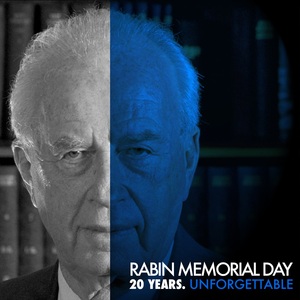
Yizkhak Rabin 20-Year Memorial – A Message from The Israel Movement for Progressive Judaism

26 Monday Oct 2015

Posted by rabbijohnrosove in Uncategorized

≈ 1 Comment

Tags

Israel and Palestine, Israel/Zionism, Jewish History

Having just spent face to face time with the leadership of the Israel Movement for Progressive Judaism (IMPJ) in Jerusalem as partners with ARZENU (the world Reform Zionist movement) at the World Zionist Congress, I wanted to forward this message from Rabbi Gilad Kariv, the Executive Director of the Israeli Reform movement, in memory of the late Prime Minister Yitzhak Rabin.

It has become so very clear that PM Rabin’s assassination was a destructive turning point in the quest for peace with the Palestinians, and though hopes for a settlement of the Israeli-Palestinian conflict are now low in the near-term, we cannot stop advocating for a two-state solution. Rabin’s memory will forever be tied with hopes for mutual recognition and peace.

Click here to view it in your browser.

fb-rabin(en)-20-2015


Dear John,

The IMPJ remembers and mourns the assassination of Prime Minister Itzhak Rabin, 20 years ago. Upon recognizing 20 years to the assignation, MARAM – the Reform Rabbinic Council in Israel put out a public statement. following is an excerpt from it:

Our hearts bleed as we recall the fact that this heinous murder was supposedly committed in the name of the Torah. We condemn any attempt to hinder the democratic fabric in Israel in the name of our Jewish tradition… only in a truly democratic society which respects and defends human rights, will our timeless Jewish values be fulfilled; only the fortification and reinforcement of Israeli democracy will ensure the future of the Jewish people and all Israeli citizens, in their sovereign homeland.

May his memory be a blessing.

Sincerely,

Rabbi Gilad Kariv
Gilad Signature English
Executive Director

What does the recent violence tell us about a One State or Two State Solution? Report from Jerusalem #5

25 Sunday Oct 2015

Posted by rabbijohnrosove in Uncategorized

≈ Leave a comment

Tags

Ethics, Israel and Palestine, Israel/Zionism, Jewish History, Jewish Identity

Those on the Israeli left are divided about the future with the Palestinians. One camp still desires to find common cause with the Palestinians, and the other says that this 67-year marriage must come to an end. One believes that marriage counseling is still possible; the other that only through divorce can there be a peace and security for both sides.

The violence we have witnessed in both Intifadas and in this recent wave of suicide knife-attacks has shown that the right wing direction has failed, that one state doesn’t work, that there can be no security without a political solution, that the occupation is unsustainable, that Israel needs to say ‘We are here, You are there’ and we need a permanent divorce.

Indeed, this violence may be the opportunity Israelis need to realign and make a political deal with the Palestinians.

In my taxi ride from Jerusalem to the Ben Gurion Airport, my driver, Mordecai (a 63 year-old descendent of Iraqi Jews), took me on a side road to avoid a traffic jam, and we passed by a maximum security prison that held about 400 Palestinian terrorists. Mordecai explained to me that the Palestinians are now controlled by the Islamists who do not believe that Jews have a right to be here, that they never will accept the state of Israel on “Islamic land,” that what they can accept is hudna (quiet) until such time as the Palestinians are strong enough to attack and destroy the state of Israel.

I have heard this argument before, most recently from Likud Knesset member, Benny Begin, the son of the late Prime Minister, who met with the ARZENU faction in the Knesset before the WZC sessions began last week, and eloquently explained why one state is the only solution to the Israeli-Palestinian conflict. He emphasized that Palestinian citizens deserve full and equal rights and that those rights should extend to all residents living in Judea and Samaria (i.e. the “West Bank”).

Yes, of course, there are Palestinians who believe that Israel does not have the right to exist as the nation state of the Jewish people. PM Netanyahu made acceptance of Israel as a “Jewish state” a demand in the negotiations with the Palestinian Authority sponsored by the United States in 2014. At that time PA President Abbas said that though the PA had already recognized the State of Israel, the Palestinians would never recognize Israel as the nation state of the Jewish people.

At the time, I believed that Netanyahu was using this argument to make an agreement impossible. However, there is truth in his demand, and I have come around to the belief that a two-state solution requires the Palestinians to recognize the Jewish State of Israel that offers equal rights to all citizens of the state (Palestinians included) even as Israel recognizes the right of the Palestinians to a nation state of their own living in peace and security alongside Israel – peace, not hudna. (Note: Israel will always have to maintain military and strategic superiority over all its neighbors, including the Palestinians).

There are, however, many Palestinians who do not accept the Islamic view that the State of Israel is illegitimate, and particularly so many of those Palestinian-Israeli citizens who have lived in Israel since 1948. The danger of the status quo continuing is that Palestinian-Israeli citizens are becoming more and more identified with West Bank Palestinians under occupation.

There are, to be sure, many values that many Palestinians share with Israelis, and so the lines of conflict should not be drawn as Jews vs Palestinians, but rather as those who support a one-state option as opposed to those who want two states for two peoples. The latter is the only way, it seems to me, to save Palestinian-Israeli citizens as loyal to the state of Israel.

Simply and categorically said, we need a divorce and a two-state solution with lines drawn between Israel before 1967 with land swaps to include most of the large Israeli settlements in Israel, and a new state of Palestine in the West Bank and, eventually, including Gaza. Palestinians should, of course, have the right of return to Palestine and not Israel. Jerusalem will have to be shared as capitals of both nations with all appropriate security guaranteed.

Only after a divorce can our two peoples begin to rebuild relationships. At the moment, trust has been badly damaged. Nevertheless, it seems to me that there are enough Palestinians who agree with Israelis that the current violence is intolerable and the status-quo of occupation is unsustainable.

Kotel and LGBT Resolutions Pass WZC Committee – Report From Jerusalem #4

23 Friday Oct 2015

Posted by rabbijohnrosove in Uncategorized

≈ 4 Comments

Tags

American Jewish Life, Ethics, Israel/Zionism, Jewish History, Jewish Identity, Social Justice, Women's Rights

It’s bad enough that Israel is being attacked by terrorists, now mostly in the West Bank and less in Jerusalem after Israel’s government imposed strong security measures separating East Jerusalem Arab neighborhoods from West Jerusalem Israeli neighborhoods. What is perhaps even more searing to the Jewish soul is the way some Jewish delegates at the World Zionist Congress behave towards their fellow delegates.

We of ARZENU (the world Reform Zionist movement) were warned that yelling and delaying tactics would be likely in committee meetings and in the plenary sessions, especially when discussing contentious resolutions. The warnings were prescient. Almost from the beginning of our committee meetings one Mizrahi (the nationalist right-wing religious delegation) delegate starting screaming from the moment the Chair, Rabbi Lea Muehlstein of the United Kingdom (an ARZENU delegate) opened the session.

The rules of debate in committees according to the WZC are determined exclusively by the chair. Roberts Rules of Order do not apply. Some chairs are more fair than others. The chair of this session gave all voices equal time, and when she thought the issue had been completely discussed she called for a vote.

The two most contentious resolutions were those concerning the “Establishment of an Egalitarian Prayer Space at the Western Wall,” introduced by ARZENU, and “Recognition of Support for the LGBT Community,” also introduced by ARZENU.

Jewish Agency Head Natan Sharansky, the Women of the Wall (WOW), the Conservative and Reform movements, and the Chief Rabbi of the Wall have already agreed that a third section in the Western Wall site would be established equal in size, funding and visibility for a dignified space of worship for the Conservative and Reform streams and for Women of the Wall. This WZC resolution was meant only to confirm what the Israeli government and interested parties have already determined, and to push forward towards the realization of this new prayer space.

After debate the resolution passed with a substantial majority. When I saw my friend and Chair of WOW, Anat Hoffman and asked how she felt about the good news, she said:

“John – nothing has happened to move this matter forward in the government over the past year and more, this resolution notwithstanding, and given the controversy over the Waqf charge that the status quo on the Temple Mount is being questioned, and given that the area we want for the egalitarian prayer site is only 50 yards from Al Aqsa, Israel isn’t going to touch this issue now.”

So much for that.

The LGBT resolution was the next especially contentious fight. The resolution commended the Education Minister, Naftali Bennett (the head of Mizrahi faction) for announcing an increase of support for the Israeli LGBT community. The resolution called on him to ensure adequate funding for “Israel Gay Youth” and other LGBT organizations so as to secure the role of members of the LGBT community within Israeli society. It also called on Minister Bennett to ensure that all Israeli students (and in particular in the Orthodox school systems) take part in programming that promotes diversity, inclusion and equality for the LGBT community, to support equal rights for the LBGT community in all Zionist entities and to encourage their activities within the national Institutions.

The right wing parties in our committee were strongly against this resolution and began immediately to challenge key elements of it. Some began a campaign of yelling and screaming to prevent us from having a reasoned debate ending in a vote. Orthodox delegates introduced several amendments, only one of which was accepted by ARZENU.

The most important amendment, however, we refused to accept because it gave license to Orthodox schools to choose to accept or to pass on tolerance education.

All the while, the disruption did not stop for a moment, and Rabbi Muehlstein finally ruled that anyone screaming would not have his/her votes be counted.

At last, a vote was taken and the resolution passed with about 35 votes, and 35 abstentions. Those in Mizrahi and Likud factions who negotiated with ARZENU on an amendment on which we found compromise language, in the end refused to vote “nay.” Indeed, they never intended to vote for a resolution no matter what it said. They only wanted to delay and water down the original resolution.

At one point, five of the most badly behaving delegates actually charged our table. I happened to be sitting two people away from Rabbi Muehlstein. I am not a violent person, but I was prepared to jump between them and Lea to protect her from their physical assault. It should be noted that she was a paragon of patience and brought dignity to the proceedings and to the ARZENU delegation.

I left the meeting feeling as though I needed a shower. Though justice was done in the resolution, we also witnessed the dark side of Zionist politics.
I heard that other committee meetings went far more smoothly and with good behavior by all. For me who attended the WZC for the first time, the bullying behavior of the right-wing did not have the intended effect of intimidating us. It had the opposite effect of my bearing down and committing to fight the good fight respectfully on behalf of compassion, justice and human rights within the World Zionist Congress.

See my earlier post titled “Non-Stop Zionism.”

Non-Stop Zionism – Report From Jerusalem #3

23 Friday Oct 2015

Posted by rabbijohnrosove in Uncategorized

≈ Leave a comment

Tags

American Jewish Life, Israel/Zionism, Jewish History, Jewish Identity

The theme of this 37th World Zionist Congress was Zionism itself.

509 delegates representing the Jewish world gathered Tuesday and launched into a provocative discussion of Jewish, Zionist and Israeli identity and how they interconnect and create a whole Jew.

Hila Korach, a leading Israeli morning talk-show host, moderated a panel including American Professor Arnie Eisen, President of the Jewish Theological Seminary of America, Dr. Einat Wilf, Senior Fellow of the Jewish People Policy Institute & Adjunct Fellow of the Washington Institute for Near East Policy, and writer Sarah Blau. The plenary was introduced by Rabbi Josh Weinberg, the President of the Association of Reform Zionists of America.

Dr. Eisen began:

“Zionism is as deep as it gets. As a child, for me Judaism and Zionism was one…when I became an adult and studied Torah, I was electrified by the vision beheld as the people passed over the Jordan River and came into the land and had the opportunity to have a relationship with God that had never been before. And I was moved by Lech L’cha that promised the people a society in which the Eternal judge does justly and in which we might become a blessing to all the peoples of the earth.

There is no separation between Judaism, the people of Israel, Jewish history, culture, ethics, and the land of Israel. Zionism … is far more than politics and money. It’s an affair of the spirit – a 3000 year tradition..the up-building of the entirety of the Jewish people in the birth place of the Jews.”

Dr. Wilf characterized Zionism as a “Jewish revolution,” for it put history into Jewish hands and countered the classic religious view that Jews must wait for the Messiah before returning to the land.

“The early Zionists revolted against God,” she said. “You can be the Messiah of your own self. But, Zionism didn’t sufficiently conclude its revolution. We now need to move from the rabbanut (rabbinic authority) to hibanot (the rebuilding  of ourselves).”

Dr. Wilf is a secular Israeli and she advocated that the Orthodox Rabbinate get out of the way of the people and allow the state of Israel to take over responsibility for conversions, kashrut and all Jewish affairs.

“Let the people take Zionism forward, not the rabbis, for their authority excludes large parts of the Jewish people.”

Many in the room were not pleased. Later, however, former Minister and MK Yaron Yadlin said that what is needed is not the elimination of the Orthodox rabbinate, but a fight for the inclusion of all religious streams in the life of the people in the state of Israel.

Yadlin’s words resonated powerfully throughout the hall unleashing the strongest applause of the morning.

Dr. Eisen challenged the American Jewish community to become open to “an honest, loving, well-informed, and civil conversation about Israel and Zionism because it has ceased in the United States and in many other communities. For Zionism to be truly Zionist, then it must be a living tradition that  brings the Jewish people together, despite our wide differences, and move us  forward.”

The message of the morning was that for the entire Jewish people, Zionism brings us into deep relationship with state of Israel and with one another. Dr. Eisen concluded that “there is no Jewish people without Zionism, and there is no true Zionism without the creation of a just society, in which every citizen is treated equally and with dignity.”

For so many Jews around the world, however, Zionism has become a dirty word. Since its inception, Israel’s enemies have slandered Zionism by equating it with genocide, apartheid and racism. It is, of course, none of those things. It is the national liberation movement of the Jewish people that returns our people to itself in the land of our birth.

Israel’s Declaration of Independence articulates the foundational values of Zionism and the Jewish state:

“The State of Israel …will foster the development of the country for the benefit of all its inhabitants; it will be based on freedom, justice and peace as envisaged by the prophets of Israel; it will ensure complete equality of social and political rights to all its inhabitants irrespective of religion, race, or sex; it will guarantee freedom of religion, conscience, language, education and culture; it will safeguard the Holy Places of all religions; and it will be faithful to the principles of the Charter of the United Nations.”

Though a great democracy and Jewish state, Israel is still a work in progress, and we Jews need not deny its imperfections even as we give our full support.

All this being said, many Jews have come to believe that identifying with Zionism and Israel makes them bad Jews.

The speakers urged that it is for us to define ourselves and not allow others to do it for us.

← Older posts
Newer posts →

Enter your email address to subscribe to this blog and receive notifications of new posts by email.

Join 366 other subscribers

Archive

  • March 2026 (6)
  • February 2026 (6)
  • January 2026 (8)
  • December 2025 (4)
  • November 2025 (6)
  • October 2025 (8)
  • September 2025 (3)
  • August 2025 (6)
  • July 2025 (4)
  • June 2025 (5)
  • May 2025 (4)
  • April 2025 (6)
  • March 2025 (8)
  • February 2025 (4)
  • January 2025 (8)
  • December 2024 (5)
  • November 2024 (5)
  • October 2024 (3)
  • September 2024 (7)
  • August 2024 (5)
  • July 2024 (7)
  • June 2024 (5)
  • May 2024 (5)
  • April 2024 (4)
  • March 2024 (8)
  • February 2024 (6)
  • January 2024 (5)
  • December 2023 (4)
  • November 2023 (4)
  • October 2023 (9)
  • September 2023 (8)
  • August 2023 (8)
  • July 2023 (10)
  • June 2023 (7)
  • May 2023 (6)
  • April 2023 (8)
  • March 2023 (5)
  • February 2023 (9)
  • January 2023 (8)
  • December 2022 (10)
  • November 2022 (5)
  • October 2022 (5)
  • September 2022 (10)
  • August 2022 (8)
  • July 2022 (8)
  • June 2022 (5)
  • May 2022 (6)
  • April 2022 (8)
  • March 2022 (11)
  • February 2022 (3)
  • January 2022 (7)
  • December 2021 (6)
  • November 2021 (9)
  • October 2021 (8)
  • September 2021 (6)
  • August 2021 (7)
  • July 2021 (7)
  • June 2021 (6)
  • May 2021 (11)
  • April 2021 (4)
  • March 2021 (9)
  • February 2021 (9)
  • January 2021 (14)
  • December 2020 (5)
  • November 2020 (12)
  • October 2020 (13)
  • September 2020 (17)
  • August 2020 (8)
  • July 2020 (8)
  • June 2020 (8)
  • May 2020 (8)
  • April 2020 (11)
  • March 2020 (13)
  • February 2020 (13)
  • January 2020 (15)
  • December 2019 (11)
  • November 2019 (9)
  • October 2019 (5)
  • September 2019 (10)
  • August 2019 (9)
  • July 2019 (8)
  • June 2019 (12)
  • May 2019 (9)
  • April 2019 (9)
  • March 2019 (16)
  • February 2019 (9)
  • January 2019 (19)
  • December 2018 (19)
  • November 2018 (9)
  • October 2018 (17)
  • September 2018 (12)
  • August 2018 (11)
  • July 2018 (10)
  • June 2018 (16)
  • May 2018 (15)
  • April 2018 (18)
  • March 2018 (8)
  • February 2018 (11)
  • January 2018 (10)
  • December 2017 (6)
  • November 2017 (12)
  • October 2017 (8)
  • September 2017 (17)
  • August 2017 (10)
  • July 2017 (10)
  • June 2017 (12)
  • May 2017 (11)
  • April 2017 (12)
  • March 2017 (10)
  • February 2017 (14)
  • January 2017 (22)
  • December 2016 (13)
  • November 2016 (12)
  • October 2016 (8)
  • September 2016 (6)
  • August 2016 (6)
  • July 2016 (10)
  • June 2016 (10)
  • May 2016 (11)
  • April 2016 (13)
  • March 2016 (10)
  • February 2016 (11)
  • January 2016 (9)
  • December 2015 (10)
  • November 2015 (12)
  • October 2015 (8)
  • September 2015 (7)
  • August 2015 (10)
  • July 2015 (7)
  • June 2015 (8)
  • May 2015 (10)
  • April 2015 (9)
  • March 2015 (12)
  • February 2015 (10)
  • January 2015 (12)
  • December 2014 (7)
  • November 2014 (13)
  • October 2014 (9)
  • September 2014 (8)
  • August 2014 (11)
  • July 2014 (10)
  • June 2014 (13)
  • May 2014 (9)
  • April 2014 (17)
  • March 2014 (9)
  • February 2014 (12)
  • January 2014 (15)
  • December 2013 (13)
  • November 2013 (16)
  • October 2013 (7)
  • September 2013 (8)
  • August 2013 (12)
  • July 2013 (8)
  • June 2013 (11)
  • May 2013 (11)
  • April 2013 (12)
  • March 2013 (11)
  • February 2013 (6)
  • January 2013 (9)
  • December 2012 (12)
  • November 2012 (11)
  • October 2012 (6)
  • September 2012 (11)
  • August 2012 (8)
  • July 2012 (11)
  • June 2012 (10)
  • May 2012 (11)
  • April 2012 (13)
  • March 2012 (10)
  • February 2012 (9)
  • January 2012 (14)
  • December 2011 (16)
  • November 2011 (23)
  • October 2011 (21)
  • September 2011 (19)
  • August 2011 (31)
  • July 2011 (8)

Categories

  • American Jewish Life (458)
  • American Politics and Life (417)
  • Art (30)
  • Beauty in Nature (24)
  • Book Recommendations (52)
  • Divrei Torah (159)
  • Ethics (490)
  • Film Reviews (6)
  • Health and Well-Being (156)
  • Holidays (136)
  • Human rights (57)
  • Inuyim – Prayer reflections and ruminations (95)
  • Israel and Palestine (358)
  • Israel/Zionism (502)
  • Jewish History (441)
  • Jewish Identity (372)
  • Jewish-Christian Relations (51)
  • Jewish-Islamic Relations (57)
  • Life Cycle (53)
  • Musings about God/Faith/Religious life (190)
  • Poetry (86)
  • Quote of the Day (101)
  • Social Justice (355)
  • Stories (74)
  • Tributes (30)
  • Uncategorized (839)
  • Women's Rights (152)

Blogroll

  • Americans for Peace Now
  • Association of Reform Zionists of America (ARZA)
  • Congregation Darchei Noam
  • Haaretz
  • J Street
  • Jerusalem Post
  • Jerusalem Report
  • Kehillat Mevesseret Zion
  • Temple Israel of Hollywood
  • The IRAC
  • The Jewish Daily Forward
  • The LA Jewish Journal
  • The RAC
  • URJ
  • World Union for Progressive Judaism

Blog at WordPress.com.

  • Subscribe Subscribed
    • Rabbi John Rosove's Blog
    • Join 366 other subscribers
    • Already have a WordPress.com account? Log in now.
    • Rabbi John Rosove's Blog
    • Subscribe Subscribed
    • Sign up
    • Log in
    • Report this content
    • View site in Reader
    • Manage subscriptions
    • Collapse this bar