A Prayer for the Jewish New Year 5778
19 Tuesday Sep 2017

19 Tuesday Sep 2017

18 Monday Sep 2017

I recommend highly a little book first published in 1898 called “The Majesty of Calmness” by William George Jordan, an American editor, lecturer and essayist of the late 19th and early 20th century.
This 62-page treasure-trove of common-sense wisdom reminds me of the Biblical Book of Proverbs and the wisdom literature of the Hebrew Bible. It was written in an elegant prose that exists in classical works.
This series of seven short essays is particularly appropriate reading during the coming ten days of Repentance between Rosh Hashanah and Yom Kippur: “The Majesty of Calmness;” “Hurry, the Scourge of America;” “The Power of Personal Influence;” “The Dignity of Self-Reliance;” “Failure of Success;” “Doing our Best at All Times;” “The Royal Road to Happiness.”
I offer a few short passages from each of the essays that offer a taste of what you will find in this remarkable series of essays:
“Calmness is the rarest quality in human life. It is the poise of a great nature, in harmony with itself and its ideals. It is the moral atmosphere of a life self-centered, self-reliant, and self-controlled.” (p. 1)
“Nature is very un-American. Nature never hurries. Every phase of her working shows plan, calmness, reliability, and the absence of hurry…Hurry has ruined more Americans than has any other word in the vocabulary of life….In the race for wealth, people often sacrifice time, energy, health, home, happiness, and honor, –everything that money cannot buy, the very things that money can never bring back.” (pps. 8, 9, 10)
“Self-confidence, without self-reliance, is as useless as a cooking recipe, –without food. Self-confidence sees the possibilities of the individual; self-reliance realizes them. Self-confidence sees the angel in the unhewn block of marble; self-reliance carves it out for himself.” (p. 23)
“Many of our failures sweep us to greater heights of success than we ever hoped for in our wildest dreams. Life is a successive unfolding of success from failure…Failure is often the turning-point, the pivot of circumstance that swings us to higher levels…Failure is one of God’s educators.” (pp. 33, 35, 36)
“Living at one’s best is constant preparation for instant use. It can never make one over precise, self-conscious, affected, or priggish. Education, in its highest sense, is conscious training of mind or body to act unconsciously. It is conscious formation of mental habits, not mere acquisition of information.” (p. 46)
“Happiness is the greatest paradox in Nature. It can grow in any soil, live under any conditions. It defies environment. It comes from within: it is the revelation of the depths of the inner life as light and heat proclaim the sun from which they radiate. Happiness consists not of having, but of being; not of possessing, but of enjoying. It is the warm glow of a heart at peace with itself.” (p. 53)
“Majesty of Calmness” can be purchased on Amazon for $4.95. Do yourself a huge favor. Read it once, and then read it again.
17 Sunday Sep 2017
At the midnight hour after Shabbat that precedes Rosh Hashanah, the Jewish community gathers as the Gates of Heaven begin to open to receive the petitions of forgiveness of the community.
Each year we change our Torah mantles to white symbolically revealing the deepest purpose of these High Holidays, to do Teshuvah, to turn away from an alienated life and to return to our loved ones, community, Torah, one’s own soul, and to God.


The moment is pregnant with possibility, as these verses suggest:
This is the midnight hour. / The Psalmist said: “At midnight I rose to acclaim you” (116:62). / We, who are his descendants, would follow this tradition. / For midnight belongs neither to today nor to tomorrow.
It is a moment alone in time. / It is an interval with a magic all its own. / As we grow weary with the weight of the late hour, / We become introspective, / Concerned with the nature of life; / Especially our own.
Time is fleeting. / Midnight becomes tomorrow. / A day is behind us / And the New Year beckons. / How shall we use our days? / What is the meaning of our lives, our goodness, our power? / Shall we use them only for ourselves / Or for the good of others? / This midnight service summons us / to the true purpose of life.
Summer is passing. / The days grow shorter. / The sounds and colors of nature, / The stirring of the wind, / Speak to us of changes in the world, in life, / And in a human being’s course on earth.
Now is the time for turning. / The leaves are beginning to turn / From green to red and orange.
The birds are beginning to turn / And are heading once more towards the south. / The animals are beginning to turn / To storing their food for the winter.
For leaves, birds, and animals / Turning comes instinctively. / But for us turning does not come so easily.
It takes an act of will for us to make a turn. / It means breaking with old habits. / It means admitting that we have been wrong; / And this is never easy.
It means losing face; / It means starting all over again; / And this is always painful.
It means saying: I am sorry. / It means recognizing that we have the ability to change. / These things are terribly difficult to do.
But unless we turn, / We will be trapped forever in yesterday’s ways.
Author of above poem unknown.
Photographs by Rabbi Michelle Missaghieh
15 Friday Sep 2017
Nothing has changed in the last month with Trump’s extraordinary refusal to condemn all those on the side of the KKK and Neo-Nazis at Charlottesville.
People say Trump isn’t a racist or an anti-Semite. I say that if it walks like a duck, looks like a duck and quacks like a duck, it’s a duck.
Read this article in the Forward about the American Jewish community decision concerning a pre-High Holiday call scheduled for this morning with Trump.
Our Reform, Conservative, and Reconstructionist movement’s moral decision to boycott this meeting because of Trump’s promotion of the outrageous moral equivalence argument of the haters and those who came to protest the haters.
Read the entire article, but note below the historically low level of support in the Jewish community for Trump and his presidency. Only 11% of Reform Jews support Trump.
“…. While the Orthodox community is fully on board with Trump’s call, other elements of the Jewish community are strongly opposed to participation. This split reflects the broader political divide within the Jewish community, as seen in this week’s American Jewish Committee public opinion survey. The poll found that 71% of Orthodox Jews approve of Trump’s performance as president, compared with 25% of Conservatives, 11% of Reform, 8% of Reconstructionists and 14% of those identifying as “just Jewish.” Orthodox Jews make up an estimated 10% of the American Jewish community.
14 Thursday Sep 2017
Posted in American Jewish Life, Divrei Torah, Ethics, Health and Well-Being, Holidays, Stories

12 Tuesday Sep 2017
In the tumult of the early months of the Trump presidency and in light of the recent natural disasters brought by Hurricanes Harvey and Irma, many of us have been distracted from Israel’s “matzav – situation” regarding the unresolved Israeli-Palestinian conflict.
Yossi Alpher is a long time security analyst who served as an advisor to Prime Minister Ehud Barak’s delegation at the 2000 Camp David peace effort with President Clinton and PA Chairman Yasser Arafat.
Alpher writes frequently and is always worth reading as he is clear-sighted, pragmatic, and an astute and informed observer of Israel’s security situation.
In this article, Alpher writes:
“Netanyahu….has leveraged Middle East chaos astutely to Israel’s strategic advantage. This is an important contribution to Israel’s overall security. But it is a temporary advantage, bereft of deep roots in any shared vision of Israel’s future. Israel’s Arab friends are all dictators whose lease on power could ultimately go the way of the Shah of Iran, an earlier semi-clandestine ally who was swept away by extremist Islam in 1979. Nor are these Arab neighbors blind to the fact that the same Netanyahu is presiding over the dissolution of the two-state solution. He is engineering Israel’s slow slide down a slippery slope toward a complicated and conflicted one-state reality that will critically weaken its legitimacy. As matters stand, history will probably find far more fault with Netanyahu’s Palestinian policies than benefits to his regional strategy.”
Read more:
http://forward.com/…/netanyahu-claims-israel-arab-relation…/

11 Monday Sep 2017

The central theme of the High Holidays is teshuvah, a restorative process that brings us back to ourselves, to our families and friends, to our community, to humanity, to the natural world, to Torah, and to God. Teshuvah demonstrates the power of hope, that who we are today need not be who we become tomorrow.
Teshuvah is a step-by-step process of turning and re-engaging with our inclinations, the yetzer hara-the evil urge that’s propelled by desire, lust, and self-centered needs and our yetzer tov-the good inclination that is inspired by humility, gratitude, generosity, and kindness.
The beginning in the teshuvah process is, however, despair, hopelessness, and sadness, the feeling that we’re stuck and can’t change the nature, character, and direction our lives have taken us.
Judaism rejects pessimism, cynicism, and everything that impedes personal transformation and a hopeful future.
In the story of Jonah, to be read as final scriptural portion on the afternoon of Yom Kippur, we read the tale of the prophet’s descent into despair and what’s required for him to change direction and restore a hopeful self.
Jonah is an unrealized prophet who runs away from himself, from civilization, and from God. Every verb used in his journey is the language of descent (yod-resh-daled). He flees down to the sea. He boards a ship and goes down into its dark interior. He lies down and falls into a deep sleep. He is thrown overboard down into the waters. A great fish swallows him and he finds himself down in its belly where he remains in utter darkness for three days and nights until his despair forces him, at last, to choose to live and not to die. Then he cries out to God to save him.
God responds and the great fish vomits Jonah out onto dry land. Jonah agrees this time to do God’s bidding and preach to the Ninevites to repent from their evil ways. The town’s people put on sack cloth and ashes and promise to change.
Jonah, however, still believes that change is impossible and the Ninevites are destined to failure. God chastises Jonah for his pessimism and lack of faith, for his self-centered concern for himself and not the well-being of others.
Teshuvah is difficult and challenging. It’s a dramatic break from the past, our refusal to remain stuck. It’s for the strong of mind, heart and soul, for those willing to work hard and transcend their suffering and fear of failure, to get up every time, to own without defense and excuse what we do and what we’ve become, to acknowledge all of it, to apologize to ourselves and to others without conditions that we are responsible and at fault, and to recommit to our struggle step-by-step, patiently, one day at a time, one hour at a time, one moment at a time to turn our lives around.
When successful, teshuvah is restorative and utopian, for it enables us to return to our best selves, to the place of soul, to the garden of oneness.
Rabbi Joseph Soloveitchik wrote that in teshuvah we’re able even to transcend time: “The future has overcome the past.”
Originally published – September 13, 2015
11 Monday Sep 2017
Posted in American Politics and Life, Ethics, Poetry, Social Justice
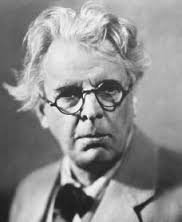
In watching Steve Bannon dueling with Charlie Rose on 60 Minutes, I was reminded of this famous Yeats poem and wondered what further damage Bannon and his minions will do to the soul of America.
“Things fall apart; the center cannot hold; / Mere anarchy is loosed upon the world. / The blood-dimmed tide is loosed, / And everywhere the ceremony of innocence is drowned; / The best lack all conviction, while the worst are full of passionate intensity.”

William Butler Yeats
08 Friday Sep 2017
Posted in American Politics and Life, Ethics, Social Justice

A narcissist is a person concerned only about himself. He sees the world through a lens reflecting just his image. Everything is a function of his ego. He is hypersensitive to slights. He bristles at criticism. If it serves his interests, he attacks, maligns, humiliates, and obliterates those he perceives as a threat.
When a narcissist is President of the United States, his actions, words, and policies can be cruel, and cruelty is the only word that adequately describes Trump’s action against 800,000 children of undocumented people who have committed no crime.
Trump’s cancellation of DACA instituted six years ago by Executive Order of President Obama, despite the urging of Trump’s advisors and many fellow Republicans not to do so, is without question the ugliest action he has taken since becoming President. In my memory, this is the ugliest action taken by any president in my lifetime.
Countless Jewish organizations have condemned Trump’s decision including the Union for Reform Judaism, the Central Conference of American Rabbis, the Hebrew Immigrant Aid Society, the American Jewish Committee, the ADL, Bend the Arc, J Street, Amenu, the National Council of Jewish Women, Truah: The Rabbinic Call for Human Rights, the Shalom Center, the Anne Frank Center for Mutual Respect, and the Jewish Council for Public Affairs.
Why did Trump do it? The writer John Binder in Breitbart News tried to justify Trump’s action:
“Ending DACA could be a major stimulus for the 4.4 percent of unemployed Americans who will see more than 700,000 new job openings across the United States.”
Rob Eshman, the publisher of the LA Jewish Journal, put it exactly right when he wrote this week:
“… ludicrous. It assumes none of the Dreamers are self-employed, that their roles can easily be filled by the ranks of the remaining unemployed – many of whom are far less well-educated, less well-trained, less motivated, far older or not even living in areas where the Dreamers work. Some 250 work for Apple – in what fantasy world are those jobs just ripe for the picking? But Breitbart knows that.”
And so, what’s this all about?
It seems to me that Trump was motivated by two things:
First, he hates Obama, never missing an opportunity to trash policies of the Obama administration. It doesn’t matter what good Obama did for the country and for millions of people. If the policy was Obama’s, Trump has sought to reverse it.
Second, Trump recognizes that his shrinking power-base has to be fed continually. His base of nativist, xenophobic, white supremacist and anti-immigrant bigots will stay close if he speaks and acts on their dark impulses. According to polls, Trump is now losing everyone else at the rate of one percentage point each week.
Thankfully, for the sake of these 800,000 children of undocumented immigrants, there is a potential silver lining. Not only has the nation reacted negatively across political lines to Trump’s decision to cancel DACA, a number of Republicans are working in a bi-partisan effort with Democrats in Congress to legislate a compassionate and humane solution for the dreamers.
As more and more Republicans lose faith in Trump and see him for who he really is, many Republicans in Congress will be guided not by partisan politics but by their moral compass. That will be good not only for the DACA people but for the country.

06 Wednesday Sep 2017
Posted in American Politics and Life, Ethics, Quote of the Day, Social Justice

This week has yet proved another difficult time for the American dream and the dreamers.
I offer some thoughts by others as an antidote to the hard-heartedness of Donald Trump.
“Compassion, in which all ethics must take root, can only attain its full breadth and depth if it embraces all living creatures and does not limit itself to mankind.” -Albert Schweitzer
“I learned compassion from being discriminated against. Everything bad that’s ever happened to me has taught me compassion.” -Ellen DeGeneres
“The dew of compassion is a tear.” -Lord Byron
“The measure of a country’s greatness is its ability to retain compassion in times of crisis.” -Thurgood Marshall
“If you want others to be happy, practice compassion. If you want to be happy, practice compassion.” -The Dalai Lama
“Az mir hat nit kein rachmonis, farvoss zein zee a Yid? — If you have no compassion, so why be a Jew?”