• About

Rabbi John Rosove's Blog

Rabbi John Rosove's Blog

Monthly Archives: September 2026

Beware the Scams

29 Tuesday Sep 2026

Posted by rabbijohnrosove in Uncategorized

≈ Leave a comment

Tags

fraud, publishing, scam, scams, writing

Over the past year, I received through email many personal invitations to attend milestone family celebrations of people I’ve known over the course of my life and career. These invitations always include a link to the details of the event and a request to send an RSVP.

I got one this week from an elderly man I’ve known for almost 40 years to celebrate with him and his family a milestone happy event. The only problem with the invitation is that he died more than a year ago.

I know I’m not alone in receiving these kinds of emails or robocalls seeking personal information from companies with which I do business. I do not click on the link or respond to any phone call requesting my immediate action as I’m almost certain they are all scams seeking entry into my email address book, personal computer, social security number, or checking account. If I have a question about their legitimacy, however, I send in a separate email or make a phone call to the individual or company to confirm what I received. Virtually every one of them confessed that their address book had been hacked and there was no family event forthcoming and that the company never calls clients’ personal phone numbers and requests over the phone personal information.

In this age of AI, these can ruin the innocent and steal bank accounts and more.

On a much larger scale, I recommend listening to Ezra Klein’s most recent podcast interview with Bill Gates on the pluses and minuses of AI and the vital need for Congress to pass legislation that will control what Gates describes as dangers far worse than nuclear war and to enter into international treaties with China and other nations to control AI threats.

‘Fauda’ is a must-see series

27 Sunday Sep 2026

Posted by rabbijohnrosove in Uncategorized

≈ 4 Comments

Tags

gaza, hamas, Israel, palestine, politics

I have watched all 59 episodes of Fauda, including the fifth season that was released a few weeks ago on Netflix. If one wants to understand Israelis, this series is a must see, especially those who focus only on the results of Israel’s just war against Hamas in Gaza.

What is remarkable about the fifth season of Fauda is that the series ranks as Netflix’s top 10 across many Arab countries. In the second week of September, it was the No. 1 show in Lebanon, No. 4 in Jordan and Qatar, No. 5 in the United Arab Emirates, and No. 9 in Kuwait.

One has to wonder what is so appealing about Fauda in the Arab world. Yes, it is great television, as it is multi-layered, emotionally raw, psychologically complex, and historically important. The show does not spare us in showing and inferring the brutality that innocent Israelis suffered on 7 October 2023 at the hands of Hamas. Perhaps, more than any of us might have imagined, Israel’s suffering has penetrated into the hearts and minds of Israel’s neighbors, many of which have no formal relations with the Jewish state.

Do we need to really watch this show? I say, “Yes” lest we forget the brutality of Hamas and what provoked Israeli fears and its military response.

I encourage you to watch every episode, react as you will, and then reflect about the dire need for peace for Israel and the Palestinian people, not peace at any price. Rather, peace with dignity, justice, and security for Israel and the Palestinian people so that attacks such as what Hamas did and the war that resulted can never happen again.

A disclaimer – two of the young people who were murdered by Hamas at the Nova Music Festival, attended by thousands of young people, Norelle and Roya Manzuri (z’l), grew up in my synagogue’s elementary school before their family returned to Israel.

I know I am not alone. Virtually every Israeli knew someone who was murdered and taken as hostages on that day, and much of the Jewish Diaspora also knew someone who lost their life or was taken as a hostage into Gaza’s tunnels.

The following is a review of the series by Israel’s daily newspaper Ma’ariv Online (September 14, 2026)

Fifth season of ‘Fauda’ sparks viral international reactions to October 7-focused episodes

Within a day of its release on Netflix, the series had already ranked seventh among the platform’s 10 most-watched shows in 43 countries and was leading to new understandings of the massacre.

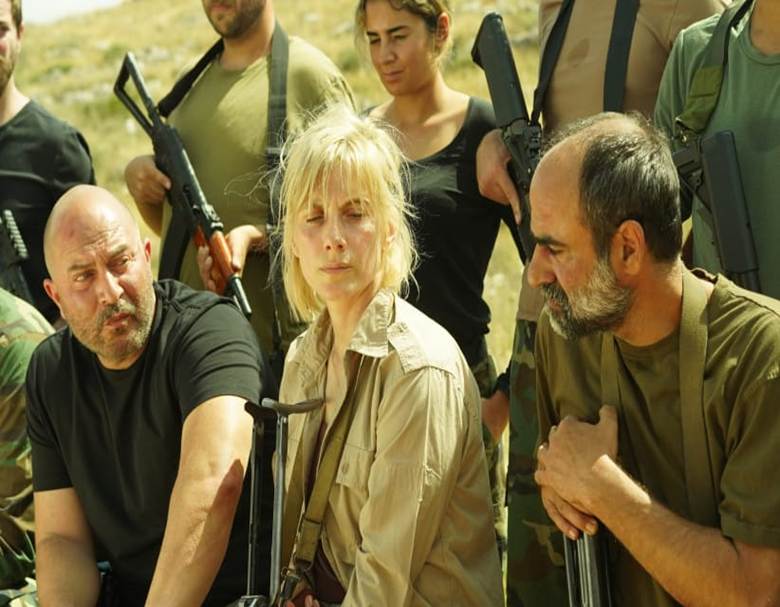
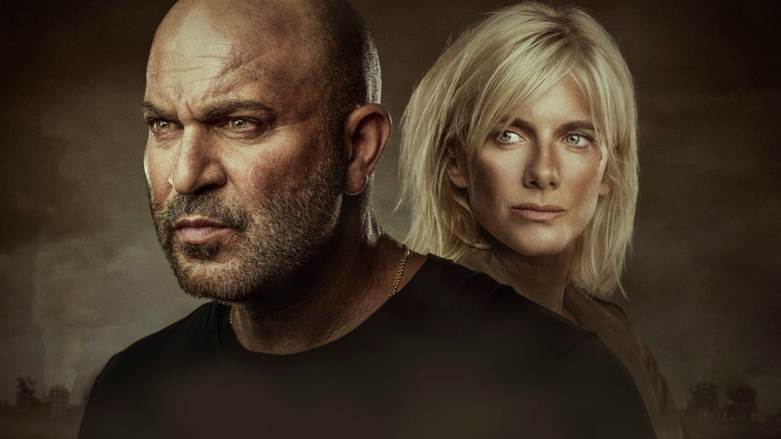
Lior Raz and Mélanie Laurent in season five of Fauda. (photo credit: COURTESY OF YES) By MAARIV ONLINE SEPTEMBER 14, 2026

The fifth season of the Israeli television series Fauda sparked controversy and a new understanding of the October 7 massacre around the world after it devoted several episodes to October 7, with episodes 7 and 8 focusing specifically on the Hamas-led attack. 

Both episodes received a 9.3 rating on IMDb, sparking widespread reactions on social media. Within a day of its release on Netflix, the series had already ranked seventh among the platform’s 10 most watched shows in 43 countries.

Israeli social media influencer Lee Malach wrote: “My entire feed is filled with tweets from Dutch and German people; I have no idea why, about the October 7 episodes of ‘Fauda.’ They are in total shock over what happened here, and the posts are difficult to read and very supportive of Israel. It is crazy to me how little these people know about what happened here and how much they talk about the subject.”

Show brings new understanding of massacre 

Brazilian cartoonist Luciano Pires wrote: “I watched the fifth season of ‘Fauda.’ It has always been an unsettling series. But the fifth season is particularly shocking and painful. Episodes 7 and 8 recreate the October 7 massacre, making them far more difficult to watch than a fictional drama. After all, we have all seen dozens of real videos from the attack, many of them filmed by the terrorists themselves, and they were horrifying enough. But this time, the fictional work takes us directly into the horror.”

Pires also reflected on what filming the scenes may have meant for the show’s Israeli cast and crew.

Lior Raz (left) with Melanie Laurent and Yaakov Zada-Daniel in a scene from season five of Fauda. (credit: COURTESY OF YES, CREDIT ELIA SPINOPOLOS)

He continued: “I was genuinely horrified, not only by watching the massacre through the eyes of the victims, but also by thinking about the Israeli actors, many of whom are Jewish. The image accompanying this post shows actor Yaakov Zada Daniel, who plays the operative Eli, as he enters his home in a kibbutz attacked by Hamas terrorists. It is a breathtaking moment. He was not acting out a scene about a distant tragedy; he was recreating on camera an event that struck his country, his family, his friends, and the series’ own production team. Idan Amedi, an actor in the series, was seriously wounded during the fighting in Gaza. Matan Meir, a member of the production team, was killed in the war.”

Pires concluded: “Perhaps that is why these episodes have a different quality. They do not feel like an attempt to imagine the horror. They take us directly into it.”

The episodes also prompted strong reactions from viewers in Italy. One man wrote: “I could barely keep my eyes open.” Another woman wrote: “Yesterday, a friend called me and told me the same thing. She added, ‘Who knows, perhaps this series will help people understand the atrocities committed by Hamas on October 7.’ And I replied, ‘I’m afraid it won’t.’ P.S. My friend is neither Jewish nor Israeli, but she is free and knows how to use her own mind.” Some users also shared real footage of the massacre in southern Israel in their replies.

An influencer from India wrote: “Sleepless nights. Can someone please erase my memory of this episode?? I can’t stop thinking and worrying. Episode eight of ‘Fauda’ really disturbed me. I don’t understand how there are still Hamas supporters among us. God, please help me get over this series.” Another user responded: “I am a huge fan of ‘Fauda’ and of Israel, but I don’t have the courage to watch the fifth season.”

Viewers argue series only showed small portion of attack

A different user from India argued that the series had shown only a small portion of the violence committed during the attack.

The user wrote: “Contrary to claims that the fifth season of ‘Fauda’ went too far, I think it is remarkably restrained. The series offers only a small glimpse into the atrocities of October 7. The reality was far more disturbing: murder, abductions, sexual violence, brutal abuse, torture, and the deliberate targeting of innocent civilians. 

“It spared viewers descriptions of women who were gang raped and burned alive, families who were tied together and whose bodies were dismembered, the killing of pregnant women and children, the sexual desecration of bodies, the mutilation of genitalia, and horrific injuries suffered by children. Many children were also abducted, including infants as young as nine months old. Kfir Bibas was only nine months old when he was kidnapped; he was later murdered in captivity alongside his four-year-old brother, Ariel. The series did not show fathers who had kerosene poured over them and begged for their lives moments before being set on fire as their attackers laughed.”

The user continued: “No film or television series can truly recreate the horror of such a pogrom. ‘Fauda’ is a fictional work, but it draws inspiration from real events. October 7 was not a fictional story; it was a real tragedy, and the victims deserve to be remembered as events truly occurred.”

A woman from the UK responded: “I just finished watching episodes 7 and 8. This will stay with me forever. What Israelis went through… and the world simply does not care.”

A social media user from Texas asked his followers whether they had watched the season and what they thought of it. Responses included: “Well made, but heartbreaking. Not for the faint of heart,” and “Episodes 7 and 8 are simply unforgettable.”

He concluded: “It seems that episodes 7 and 8 of ‘Fauda’ moved everyone; it looks like a phenomenal season, as usual.”

“Never despair! Never! It is forbidden to give up hope” – Rabbi Nachman of Breslov

22 Tuesday Sep 2026

Posted by rabbijohnrosove in Uncategorized

≈ Leave a comment

Tags

Israel, judaism, palestine, politics, zionism

In this era of growing cynicism, a-historical and ignorant thinking, moral relativity, and pessimism, we Americans, Jews, Israelis and people around the world have a critical choice before us – to succumb to the malignant forces in our respective governments and political leadership, or to act on the appeal that President Abraham Lincoln famously said in his first inaugural address in 1861 to act according to the “better angels of our nature.” As Rabbi Nachman so passionately advised, we are “forbidden to give up hope” for a better world order.

Rabbi Jonathan Sacks wrote about the nature and importance of hope:

“There is nothing inevitable or even rational about hope. It cannot be inferred from any facts about the past or present. Those with a tragic sense of life hold that hope is an illusion, a childish fantasy, and that a mature response to our place in the universe is to accept its fundamental meaninglessness and cultivate the stoic virtue of acceptance. Judaism insists otherwise: that the reality that underlies the universe is not deaf to our prayers, blind to our aspirations, indifferent to our existence. We are not wrong to strive to perfect the world, refusing to accept the inevitability of suffering and injustice … Hope is one of the very greatest Jewish contributions to Western civilization, so much so that I have called Judaism ‘the voice of hope in the conversation of humankind.’”

As we begin this new Jewish year, Judaism reminds us not to lose hope no matter what is happening in our lives or in the world around us. The Jewish people’s longevity is evidence enough that hope abides. Otherwise, we would have vanished long ago from the pages of history.

Hope is emphasized throughout Jewish history, tradition, liturgy, theology, ethics, culture, and art despite our people’s suffering from antisemitism, persecution, expulsion, murder, war, terrorism, and assimilation. How else can one explain the consistency and dogged determination of Jewish rebirth after so many catastrophic events, except through unalloyed hope?

Hope has buttressed our people’s spirit from the ancient Hebrew enslavement to the Exodus from Egypt; from our people’s wandering in the desert to the forging of the Covenant at Sinai; from the frequent rebellions against Moses’ leadership to the ancient Israelite’s entrance into the Promised Land; from the destruction of the First and Second Temples in Jerusalem to the creation of a thriving Diaspora; from the Crusades, Inquisition, and pogroms to our immigration to the New World and Palestine; from the fires of the Holocaust to the establishment of the State of Israel; from the suppression of Soviet Jewry to their massive emigration to the United States and the Jewish Homeland; from terrorism and war in Israel to our undying “hoped-for” peace.

In every instance, the Jewish people’s will to survive, to reaffirm who we are, to re-create ourselves as a people, and to adapt to and then thrive in new circumstances are evidence of our people’s determination, willfulness, familial and community cohesion, values, and hope.

What is it about hope that persists in the Jewish heart? It would seem to anyone who knows Jewish history that hope is defiance against reason and against the lived experience of our people, an illusion based in magical thinking.

However, despite our people’s history, hope gives us the confidence to carry on, take chances, plan for the long term, create families, bring children into the world, support Jewish community and the State of Israel, and stand against cynicism, pessimism, and despair no matter what challenges we face and what obstacles make progress seem improbable.

The first chapters in the Book of Genesis set the stage almost four millennia ago. God exists. Moral values infuse creation (after each day the biblical text tells us “וירא אלוהים כי טוב – and God saw that it is good”). Order and purpose are at the core of our nature as human beings and our perception of our moral role in the universe. Although humankind consistently struggles morally and ethically, our people’s wrestling with good and evil (we are called ישראל – Yisrael, a people that struggles) and our consistent searching for the efficacy of transcendent values infuse the Jewish heart and soul with hope that we can overcome every malignant force that allies itself against us.

Our keeping focus on the kind of world we want to inhabit while doing everything possible to prepare ourselves for the fulfillment of a higher moral and ethical vision, which is what we Jews have done over the millennia, inspires hope in the Jewish heart and renewed energy, a sense of purpose, and a positive attitude.

There is no place for a moral person to hide in a world challenged “to do justice, to be compassionate, and to walk with humility before the Eternal” (Micah 6:8). Judaism calls upon us to overcome cynicism, pessimism, and despair, and to bring hope to others through our performance of deeds of loving-kindness and our advocacy of justice.

Judaism and the Jewish people’s lived experience teach that we are at our best when we’re driven by the pursuit of justice infused with compassion, that no matter what our personal circumstances, tradition calls upon us to right the wrongs that produce human misery. Those who help others become, as a result, more resilient in the presence of evil. It is when we reach out to others that we are elevated to our highest humanity. Through activism we also become less fearful and anxious, perhaps more saddened by the suffering we encounter in the world, but unbowed as we struggle on behalf of the well-being of those we seek to help.

There are so many inspiring stories across cultures and nations of how one individual changed the course of history for the better. All great social movements started with a single person whose will and hope thrust them forward to do great deeds.

Theodor Herzl, the father of modern political Zionism as a response to rampant antisemitism in Europe, envisioned the return of the Jewish people to the Land of Israel and, in 1898, predicted that a Jewish and democratic state would be established in Palestine in fifty years.

Rosa Parks refused to give up her seat to a white man on a Montgomery, Alabama bus in 1955 and became a symbol of African American courage, pride, and dignity, leading eventually to the passage of the Civil Rights Act of 1964 and the Voting Rights Act of 1965.

Think also of the courageous Russian opposition leader, lawyer, and anti-corruption activist Alexei Navalny, who, on 20 August 2020, was poisoned on the presumed orders of President Vladimir Putin of Russia with a Novichok nerve agent and was hospitalized in serious condition. He was whisked away to Germany to recover, and then he returned to Russia to lead the opposition once again against Putin’s autocratic and deadly rule. Navalny knew he would be arrested as he descended from the airplane at Moscow’s airport. He was imprisoned and then murdered, allegedly on Putin’s orders, because Navalny represented hope against tyranny.

Activism for the good is founded upon memory of past sufferings, on our ability to rise after a tough ordeal, on the faith that we can recover and be stronger than we were, and on our capacity to remain hopeful without illusion. We Jews have good reason to despair and be cynical and pessimistic in the shadow of our history of persecution, suffering, victimization, and wandering, but Judaism forbids it.

Elie Wiesel put it this way in his Nobel Prize for Peace acceptance speech: “Because I remember, I despair. Because I remember, I have the duty to reject despair.”

Dr. Martin Luther King said in his final address in Memphis on 3 April 1968, less than twenty-four hours before he was assassinated: “We’ve got some difficult days ahead. But it really doesn’t matter with me now; because I’ve been to the mountaintop … I’ve seen The Promised Land. I may not get there with you. But I want you to know tonight, that we, as a people, will get to The Promised Land.”

Dr. Jerome Groopman distinguished the difference between hope and optimism: “Hope differs from optimism. Hope does not arise from being told to ‘think positively,’ or from hearing an overly rosy forecast. Hope, unlike optimism, is rooted in unalloyed reality … Hope is the elevating feeling we experience when we see – in the mind’s eye – a path to a better future. Hope acknowledges the significant obstacles and deep pitfalls along the way. True hope has no room for delusion.”

In this New Year 5787, despite the rampant corruption, cynicism, political extremism and polarization, wars and violence all around us, we Jews continue to hope. It is hope itself that will save us from the toxicity of cynicism and despair.

L’shanah tovah.

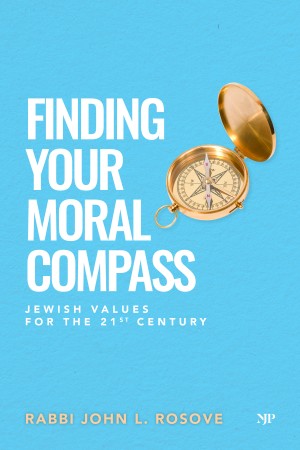
Note: This blog is edited from the final chapter of my book Finding Your Moral Compass – Jewish Values for the Twenty-First Century (Toronto: University of Toronto New Jewish Press, 2026). See the most recent review of my book here –  https://www.jewishbookcouncil.org/book/finding-your-moral-compass-jewish-values-for-the-21st-century. The book is available through the Jewish Book Council of America, the book’s publisher or on Amazon.
Find­ing Your Moral Com­pass: Jew­ish Val­ues for the 21st Century – A New Review

14 Monday Sep 2026

Posted by rabbijohnrosove in Uncategorized

≈ 1 Comment

Tags

christianity, Faith, philosophy, religion, spirituality

My new book was reviewed recently by Jonathan Fass, the Senior Man­ag­ing Direc­tor of RootOne at The Jew­ish Edu­ca­tion Project of New York as published by the Jewish Book Council of America – September 14, 2026

The hor­rif­ic events of Octo­ber 7, the ensu­ing hostage cri­sis and region­al con­flict, and the author’s chal­lenges with the poli­cies of the Trump Admin­is­tra­tion are the back­drop for Rabbi Rosove’s new book. In Find­ing Your Moral Com­pass: Jew­ish Val­ues for the 21st Centu­ry, Rab­bi John L. Rosove, Senior Rab­bi Emer­i­tus of Tem­ple Israel of Hol­ly­wood in Los Ange­les, writes not as a the­olo­gian or moral philoso­pher but as a con­gre­ga­tion­al rab­bi, liber­al Zion­ist, and stu­dent of human nature. He exam­ines a wide range of virtues and commit­ments, includ­ing faith, civil­i­ty, wis­dom, courage, humil­i­ty, grat­i­tude, and compassion. These chap­ters are grouped into six larg­er themes, includ­ing the rela­tion­ship between God and human­i­ty, inter­per­son­al dynam­ics, and Jew­ish Peo­ple­hood and the State of Israel.

In forty chap­ters, each ded­i­cat­ed to one val­ue, the author begins with a text-based exploration and then con­sid­ers its con­tem­po­rary rel­e­vance. Each chap­ter clos­es with quota­tions — often from non-Jew­ish thinkers — and ques­tions designed to prompt fur­ther discus­sion. Each chap­ter invites per­son­al reflec­tion while also lend­ing itself to class­room use or fam­i­ly conversation.

The chap­ter titled ​“Anavah, Humil­i­ty” presents this virtue as the foun­da­tion for oth­er virtues, includ­ing grat­i­tude, patience, dig­ni­ty, gen­eros­i­ty, com­pas­sion, jus­tice, and peace. It frames humil­i­ty through the Tal­mu­dic pas­sage, ​“Know before Whom you stand,” emphasizing both human lim­i­ta­tion and divine suprema­cy. The chap­ter con­trasts humil­i­ty with two extremes: arro­gance and self-aggrandizement on one side, and humil­i­a­tion, passivity, and self-denigration on the oth­er. It argues that true humility is not weak­ness or self-erasure. Over­all, it defines humility as a bal­anced moral dis­ci­pline root­ed in know­ing one’s dig­ni­ty and capac­i­ties while resist­ing arro­gance, remain­ing teach­able, and act­ing with com­pas­sion. The con­clud­ing quo­ta­tions and dis­cus­sion ques­tions invite read­ers to exam­ine humil­i­ty in them­selves and their leaders.

Find­ing Your Moral Com­pass is an acces­si­ble read that asks a decep­tive­ly sim­ple ques­tion: How should a per­son live at a moment when the world feels bro­ken? Rosove’s response is to recov­er Jew­ish val­ues as prac­ti­cal dis­ci­plines for liv­ing a moral life. Its most valu­able con­tri­bu­tion is not a nov­el eth­i­cal sys­tem, but an invi­ta­tion to make Jew­ish wis­dom usable amid uncer­tain­ty. For read­ers seek­ing a thought­ful entry point into Jew­ish moral tra­di­tion, Rosove’s book offers a prac­ti­cal guide. Rosove also argues that injus­tice and cru­el­ty demand more than pri­vate dis­ap­proval. He encour­ages read­ers to con­sid­er what they require in rela­tion­ships, insti­tu­tions, and pub­lic life.

More from Jonathan Fass

Published by the University of Toronto New Jewish Press, 2026 – 224 pages

Categories

  • American Jewish Studies
  • Essays
  • Philosophy & Ethics
  • JBC Network Author

See – https://www.jewishbookcouncil.org/book/finding-your-moral-compass-jewish-values-for-the-21st-century

Re-considering Faith as we enter the High Holidays

06 Sunday Sep 2026

Posted by rabbijohnrosove in Uncategorized

≈ 4 Comments

Tags

bible, Faith, god, jesus, spirituality

It was a warm spring Los Angeles afternoon. My brother and I were lying on our backs and looking into a cloudless blue sky. I was six years-old (he was seven) and he said: “You know – there’s no ceiling!”

That was for me an ah-ha moment, the first time in my life that I felt overcome with a sense of awe and wonder and the intuition of the infinity of the universe. That sensibility is expressed powerfully in the Biblical Book of Job (37:14-17):

“Hearken to this, O Job, stand, / And take in the wonders of God. / Do you know when God directs them, / And His thunderhead’s lighting shines? / Do you know of the spread of cloud, / The wonders of the Perfect in knowledge, / When your garments feel warm / As the earth is becalmed from the south?”

That childhood experience of what Rabbi Abraham Joshua Heschel called “radical amazement” was the beginning of my lifelong religious and spiritual quest.

My motivation to understand the enduring mystery of existence, the nature of my life and the character of my soul was compounded several years later when suddenly my father died at the age of fifty-three from a heart attack. As time passed and I struggled to integrate the emotional shock of losing him into how I lived my daily life and how I moved through the weeks, months and years without him, I was left with ultimate questions and no answers.

What did my father’s life and death mean? What remains of us over time besides the inert matter after death that we bury into the earth? Is there such a thing as a soul that exists beyond the grave that is eternal? What is human consciousness that enables us to self-reflect upon the nature of our lives and that we human beings have the capacity to experience awe and wonder?

The answer to the deepest question that emerged when my father died so suddenly so long ago has continued to elude me – Is there a God?

In many religions, and in some Jewish communities, “Do you believe in God?” is a threshold question. Answer yes, and you are one of the fold. Answer no, and you have a problem. So it is with reticence or a mildly defiant tone that many Jews tell me, “Rabbi, I don’t believe in God!” I sometimes think that on some level they expect someone (me) to hear that statement and “cast them out.” The conversation gets interesting if we talk about the nature of the God they find so incredible. Often it turns out to be Michelangelo’s white-haired figure touching fingers with Adam on the Sistine Chapel ceiling – a commanding, rewarding, and punishing God – the God of the Hebrew Bible, traditional prayer book and High Holiday Machzor. Most liberal Jews do not accept the notion of such a God, especially given the evidence all around us that innocent people suffer and that the all-knowing, all-powerful, and all-good God of tradition has either turned the Divine back on us, ignores us, or doesn’t exist.

When people tell me that they don’t believe in God because they have seen no empirical proof for God’s existence, or they cannot accept the God of Jewish tradition, I understand – because I don’t believe in that God either.

Today, so many of us are hungry for the spiritual answers that our linear rational minds cannot deliver – and the embracing sense of community that their openness can help create. We are new and different kinds of Jews, some of whom neither our mystical nor our rational ancestors would recognize as particularly Jewish or rational at all. One says, “I’m a religious person in that I feel a connection to something eternal and infinite that’s in my soul and in yours. But I don’t believe in a personal God, and all this talk about God as King and me as servant is meaningless to me.” Another says, “I’m grateful for the gifts of health, meaningful work, and love. Sometimes I feel overwhelmed by gratitude and a sense of inadequacy to express how much I feel blessed, and that’s about as close as I come to prayer. But that prayer is addressed to life itself and to no one in particular, and surely not to ‘God.’”

The question that is most pertinent to us in these times is not “Do I believe in God?” It is “How do I and how can I experience myself as a spiritual being?”

A search that starts with that question does not ask us to marshal empirical evidence for a God-force existing somewhere outside of us, but instead shifts our focus to our own experiences. When we embark on an interior search, we can live as fully spiritual beings without having to concern ourselves with, affirm, or deny belief in God at all. Instead, we open ourselves to awe, wonder, and gratitude; and in the vastness of all that, we connect with our souls and with the ancient mysteries threaded through our lives.

Over the years, I’ve found that my capacity to experience awe and wonder has grown in direct proportion to how grateful I feel for the gifts in my life.

It’s the mystic’s God, the God of “inwardness” that expands us in this way and allows us to tap into the hidden spiritual waters within. The truth of the mystics is that the individual isn’t separate from God. God is the mystery in our souls. Rabbi Nachman of Breslov taught that the Divine Presence flows constantly as the light of awareness into the world and that an inner vessel needs to be created within every human being to receive the light. The vessel of our soul – once we’re in touch with it – receives the light in moments of awe and wonder over the miracles of the universe, as well as in moments of love and connection with others. Rabbi Nachman taught that a vessel is made whenever the heart opens to give love to others. This is one meaning of the verse in Exodus “And let them make Me a sanctuary that I may dwell among them.” (25:8)

This mystical experience of Godliness is not only revitalizing, it breaks down unnecessary barriers and enables a far more inclusive and expansive vision of Jewish life and humankind as a whole. Reaching across time, space, and human distinctions, it inspires the understanding that divinity shines everywhere.

Here is what I think is important to know: Every peak emotional moment of joy, awe, gratitude, and humility is similar to the classic religious and prophetic moments recorded in the great books of Jewish literature – it’s the revelation of some deeper spiritual truth. Recognizing that, as we contemplate the depths of space or each other’s eyes, we’re reminded that we’re part of something far greater than ourselves.

Rabbi Heschel, among our people’s greatest poets of the soul, describes what the spiritual experience is all about:

“Our radical amazement responds to the mystery, but does not produce it. You and I have not invented the grandeur of the sky nor endowed the human being with the mystery of birth and death. We do not create the ineffable, we encounter it . . .  The awareness of the ineffable is that with which our search must begin . . . The search of reason ends at the shore of the known; on the immense expanse beyond it only the sense of the ineffable can glide . . . reason cannot go beyond the shore, and the sense of the ineffable is out of place where we measure, where we weigh.” (Abraham Joshua Heschel, Between God and Man: An Interpretation of Judaism (London: Collier MacMillan, 1959), 49.

Jewish tradition does many things, and two of the most important are that it feeds the mind and inspires the soul. I do not think we need to put aside our left-brain training as we open ourselves to what the mystics can teach us. Rather, we can ask the question that will take us closer to our souls: “How do I and how can I experience myself as a spiritual being?” How can we connect to what is eternal and infinite in ourselves and the world? How can we connect with the sense of awe and wonder over the miracles of our universe on the one hand and gratitude for the simple facts of our existence on the other? Our search for answers, whether we use the word “God” or not, pulls us into the deep and vital current of Judaism. It doesn’t demand that the atheists and agnostics among us suspend their doubts and disbeliefs. It doesn’t ask us to slink away if we don’t believe in God. Instead, it asks all of us to become more aware of the musings of the right hemisphere of our brains and to think about the spiritual significance of the hours and days, months and years of our lives: our ability to fall in love; our ability to celebrate and rejoice at weddings, births, B’nai Mitzvah celebrations, conversions, anniversaries, and our family gatherings; our ability to treasure and enjoy our alone time; our ability to create and enjoy the creations of human hands, hearts, minds, and souls in all forms of art; our ability to engage in good works in the community; and our ability to respond with gratitude for the miracles we enjoy every day.

We don’t need to believe in a removed, plague- and miracle-wielding God to be Jews and spiritual beings. Our task instead is to be more than secular actors in our human drama as it unfolds, to understand that we aren’t separate willful beings making our way in a chaotic, meaningless existence, but a unique glow of light in our souls – the beautiful, inexplicable, an awe-inspiring spark of life. It is by seeing the light in one another and then drawing our separate lights together into a larger glow that we reveal to ourselves and to each other, discover and understand the deeper truth about the world. It may be true, as Rabbi Menachem Mendel of Vitebsk (1730-88) once noted, that “the human being is the language of God,” because God is present in each of our souls, each longing to know the Source from which we come and to which we return.

Whether we speak of that source as God or nature or life or love, we and the mystics and the scientists are all talking about the same thing, and Judaism is embracing enough to welcome us all.

Note: This blog is edited from the first chapter of my book Finding Your Moral Compass – Jewish Values for the Twenty-First Century (Toronto: University of Toronto New Jewish Press, 2026), 9-17. It also appears in Because My Soul Longs for You – Integrating Theology into Our Lives, edited by Rabbi Edwin C. Goldberg and Rabbi Elaine S. Zecher (New York: CCAR Press, 2021), 3-10.

To my readers in Mainland China

03 Thursday Sep 2026

Posted by rabbijohnrosove in Uncategorized

≈ Leave a comment

I’ve been writing this blog for more than 15 years. Most readers live in the English-speaking world, including Europe and Israel where so many speak and read English.

In recent months, however, large numbers of people from mainland China suddenly began reading this blog, and I’m wondering how you found it and what keeps you reading it.

If you are among those in China and you care to comment, I welcome understanding what you have found of value here and, if you have questions to which I can respond, please pose them and I am happy to respond.

Thank you for your interest.

Enter your email address to subscribe to this blog and receive notifications of new posts by email.

Join 359 other subscribers

Archive

  • October 2026 (2)
  • September 2026 (6)
  • August 2026 (2)
  • July 2026 (4)
  • June 2026 (3)
  • April 2026 (4)
  • March 2026 (6)
  • February 2026 (6)
  • January 2026 (8)
  • December 2025 (4)
  • November 2025 (6)
  • October 2025 (8)
  • September 2025 (3)
  • August 2025 (6)
  • July 2025 (4)
  • June 2025 (5)
  • May 2025 (4)
  • April 2025 (6)
  • March 2025 (8)
  • February 2025 (4)
  • January 2025 (8)
  • December 2024 (5)
  • November 2024 (5)
  • October 2024 (3)
  • September 2024 (7)
  • August 2024 (5)
  • July 2024 (7)
  • June 2024 (5)
  • May 2024 (5)
  • April 2024 (4)
  • March 2024 (8)
  • February 2024 (6)
  • January 2024 (5)
  • December 2023 (4)
  • November 2023 (4)
  • October 2023 (9)
  • September 2023 (8)
  • August 2023 (8)
  • July 2023 (10)
  • June 2023 (7)
  • May 2023 (6)
  • April 2023 (8)
  • March 2023 (5)
  • February 2023 (9)
  • January 2023 (8)
  • December 2022 (10)
  • November 2022 (5)
  • October 2022 (5)
  • September 2022 (10)
  • August 2022 (8)
  • July 2022 (8)
  • June 2022 (5)
  • May 2022 (6)
  • April 2022 (8)
  • March 2022 (11)
  • February 2022 (3)
  • January 2022 (7)
  • December 2021 (6)
  • November 2021 (9)
  • October 2021 (8)
  • September 2021 (6)
  • August 2021 (7)
  • July 2021 (7)
  • June 2021 (6)
  • May 2021 (11)
  • April 2021 (4)
  • March 2021 (9)
  • February 2021 (9)
  • January 2021 (14)
  • December 2020 (5)
  • November 2020 (12)
  • October 2020 (13)
  • September 2020 (17)
  • August 2020 (8)
  • July 2020 (8)
  • June 2020 (8)
  • May 2020 (8)
  • April 2020 (11)
  • March 2020 (13)
  • February 2020 (13)
  • January 2020 (15)
  • December 2019 (11)
  • November 2019 (9)
  • October 2019 (5)
  • September 2019 (10)
  • August 2019 (9)
  • July 2019 (8)
  • June 2019 (12)
  • May 2019 (9)
  • April 2019 (9)
  • March 2019 (16)
  • February 2019 (9)
  • January 2019 (19)
  • December 2018 (19)
  • November 2018 (9)
  • October 2018 (17)
  • September 2018 (12)
  • August 2018 (11)
  • July 2018 (10)
  • June 2018 (16)
  • May 2018 (15)
  • April 2018 (18)
  • March 2018 (8)
  • February 2018 (11)
  • January 2018 (10)
  • December 2017 (6)
  • November 2017 (12)
  • October 2017 (8)
  • September 2017 (17)
  • August 2017 (10)
  • July 2017 (10)
  • June 2017 (12)
  • May 2017 (11)
  • April 2017 (12)
  • March 2017 (10)
  • February 2017 (14)
  • January 2017 (22)
  • December 2016 (13)
  • November 2016 (12)
  • October 2016 (8)
  • September 2016 (6)
  • August 2016 (6)
  • July 2016 (10)
  • June 2016 (10)
  • May 2016 (11)
  • April 2016 (13)
  • March 2016 (10)
  • February 2016 (11)
  • January 2016 (9)
  • December 2015 (10)
  • November 2015 (12)
  • October 2015 (8)
  • September 2015 (7)
  • August 2015 (10)
  • July 2015 (7)
  • June 2015 (8)
  • May 2015 (10)
  • April 2015 (9)
  • March 2015 (12)
  • February 2015 (10)
  • January 2015 (12)
  • December 2014 (7)
  • November 2014 (13)
  • October 2014 (9)
  • September 2014 (8)
  • August 2014 (11)
  • July 2014 (10)
  • June 2014 (13)
  • May 2014 (9)
  • April 2014 (17)
  • March 2014 (9)
  • February 2014 (12)
  • January 2014 (15)
  • December 2013 (13)
  • November 2013 (16)
  • October 2013 (7)
  • September 2013 (8)
  • August 2013 (12)
  • July 2013 (8)
  • June 2013 (11)
  • May 2013 (11)
  • April 2013 (12)
  • March 2013 (11)
  • February 2013 (6)
  • January 2013 (9)
  • December 2012 (12)
  • November 2012 (11)
  • October 2012 (6)
  • September 2012 (11)
  • August 2012 (8)
  • July 2012 (11)
  • June 2012 (10)
  • May 2012 (11)
  • April 2012 (13)
  • March 2012 (10)
  • February 2012 (9)
  • January 2012 (14)
  • December 2011 (16)
  • November 2011 (23)
  • October 2011 (21)
  • September 2011 (19)
  • August 2011 (31)
  • July 2011 (8)

Categories

  • American Jewish Life (458)
  • American Politics and Life (417)
  • Art (30)
  • Beauty in Nature (24)
  • Book Recommendations (52)
  • Divrei Torah (159)
  • Ethics (490)
  • Film Reviews (6)
  • Health and Well-Being (156)
  • Holidays (136)
  • Human rights (57)
  • Inuyim – Prayer reflections and ruminations (95)
  • Israel and Palestine (358)
  • Israel/Zionism (502)
  • Jewish History (441)
  • Jewish Identity (372)
  • Jewish-Christian Relations (51)
  • Jewish-Islamic Relations (57)
  • Life Cycle (53)
  • Musings about God/Faith/Religious life (190)
  • Poetry (86)
  • Quote of the Day (101)
  • Social Justice (355)
  • Stories (74)
  • Tributes (30)
  • Uncategorized (860)
  • Women's Rights (152)

Blogroll

  • Americans for Peace Now
  • Association of Reform Zionists of America (ARZA)
  • Congregation Darchei Noam
  • Haaretz
  • J Street
  • Jerusalem Post
  • Jerusalem Report
  • Kehillat Mevesseret Zion
  • Temple Israel of Hollywood
  • The IRAC
  • The Jewish Daily Forward
  • The LA Jewish Journal
  • The RAC
  • URJ
  • World Union for Progressive Judaism

Blog at WordPress.com.

  • Subscribe Subscribed
    Rabbi John Rosove's Blog
    Join 359 other subscribers

    Have a WordPress.com account? Log in now.

  • Rabbi John Rosove's Blog
    View site in Reader
    Manage subscriptionsSign upLog in
    Report this content
    Collapse this bar
Loading Comments...