
I have watched all 59 episodes of Fauda, including the fifth season that was released a few weeks ago on Netflix. If one wants to understand Israelis, this series is a must see, especially those who focus only on the results of Israel’s just war against Hamas in Gaza.
What is remarkable about the fifth season of Fauda is that the series ranks as Netflix’s top 10 across many Arab countries. In the second week of September, it was the No. 1 show in Lebanon, No. 4 in Jordan and Qatar, No. 5 in the United Arab Emirates, and No. 9 in Kuwait.
One has to wonder what is so appealing about Fauda in the Arab world. Yes, it is great television, as it is multi-layered, emotionally raw, psychologically complex, and historically important. The show does not spare us in showing and inferring the brutality that innocent Israelis suffered on 7 October 2023 at the hands of Hamas. Perhaps, more than any of us might have imagined, Israel’s suffering has penetrated into the hearts and minds of Israel’s neighbors, many of which have no formal relations with the Jewish state.
Do we need to really watch this show? I say, “Yes” lest we forget the brutality of Hamas and what provoked Israeli fears and its military response.
I encourage you to watch every episode, react as you will, and then reflect about the dire need for peace for Israel and the Palestinian people, not peace at any price. Rather, peace with dignity, justice, and security for Israel and the Palestinian people so that attacks such as what Hamas did and the war that resulted can never happen again.
A disclaimer – two of the young people who were murdered by Hamas at the Nova Music Festival, attended by thousands of young people, Norelle and Roya Manzuri (z’l), grew up in my synagogue’s elementary school before their family returned to Israel.
I know I am not alone. Virtually every Israeli knew someone who was murdered and taken as hostages on that day, and much of the Jewish Diaspora also knew someone who lost their life or was taken as a hostage into Gaza’s tunnels.
The following is a review of the series by Israel’s daily newspaper Ma’ariv Online (September 14, 2026)
Fifth season of ‘Fauda’ sparks viral international reactions to October 7-focused episodes
Within a day of its release on Netflix, the series had already ranked seventh among the platform’s 10 most-watched shows in 43 countries and was leading to new understandings of the massacre.
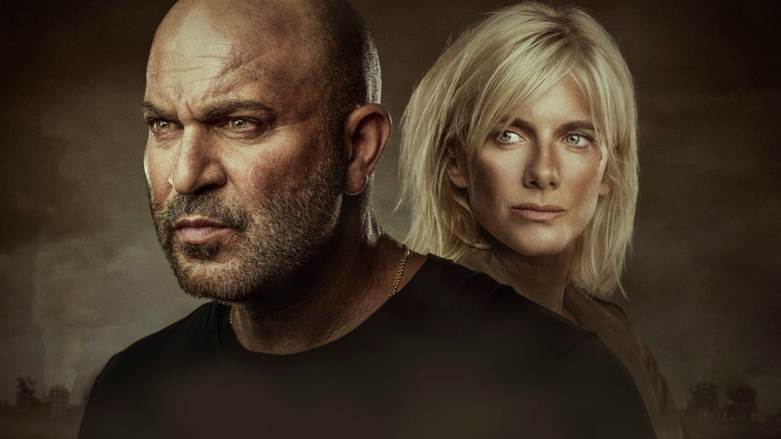
Lior Raz and Mélanie Laurent in season five of Fauda. (photo credit: COURTESY OF YES) By MAARIV ONLINE SEPTEMBER 14, 2026
The fifth season of the Israeli television series Fauda sparked controversy and a new understanding of the October 7 massacre around the world after it devoted several episodes to October 7, with episodes 7 and 8 focusing specifically on the Hamas-led attack.
Both episodes received a 9.3 rating on IMDb, sparking widespread reactions on social media. Within a day of its release on Netflix, the series had already ranked seventh among the platform’s 10 most watched shows in 43 countries.
Israeli social media influencer Lee Malach wrote: “My entire feed is filled with tweets from Dutch and German people; I have no idea why, about the October 7 episodes of ‘Fauda.’ They are in total shock over what happened here, and the posts are difficult to read and very supportive of Israel. It is crazy to me how little these people know about what happened here and how much they talk about the subject.”
Show brings new understanding of massacre
Brazilian cartoonist Luciano Pires wrote: “I watched the fifth season of ‘Fauda.’ It has always been an unsettling series. But the fifth season is particularly shocking and painful. Episodes 7 and 8 recreate the October 7 massacre, making them far more difficult to watch than a fictional drama. After all, we have all seen dozens of real videos from the attack, many of them filmed by the terrorists themselves, and they were horrifying enough. But this time, the fictional work takes us directly into the horror.”
Pires also reflected on what filming the scenes may have meant for the show’s Israeli cast and crew.
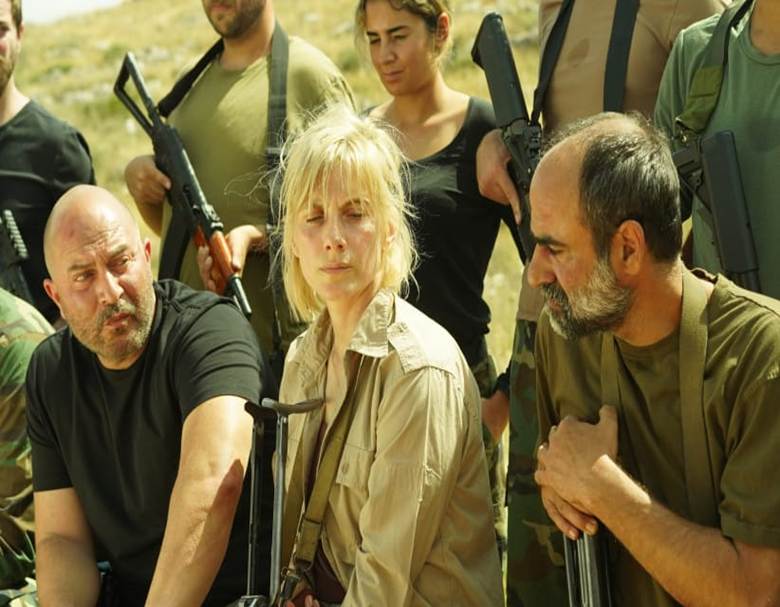
Lior Raz (left) with Melanie Laurent and Yaakov Zada-Daniel in a scene from season five of Fauda. (credit: COURTESY OF YES, CREDIT ELIA SPINOPOLOS)
He continued: “I was genuinely horrified, not only by watching the massacre through the eyes of the victims, but also by thinking about the Israeli actors, many of whom are Jewish. The image accompanying this post shows actor Yaakov Zada Daniel, who plays the operative Eli, as he enters his home in a kibbutz attacked by Hamas terrorists. It is a breathtaking moment. He was not acting out a scene about a distant tragedy; he was recreating on camera an event that struck his country, his family, his friends, and the series’ own production team. Idan Amedi, an actor in the series, was seriously wounded during the fighting in Gaza. Matan Meir, a member of the production team, was killed in the war.”
Pires concluded: “Perhaps that is why these episodes have a different quality. They do not feel like an attempt to imagine the horror. They take us directly into it.”
The episodes also prompted strong reactions from viewers in Italy. One man wrote: “I could barely keep my eyes open.” Another woman wrote: “Yesterday, a friend called me and told me the same thing. She added, ‘Who knows, perhaps this series will help people understand the atrocities committed by Hamas on October 7.’ And I replied, ‘I’m afraid it won’t.’ P.S. My friend is neither Jewish nor Israeli, but she is free and knows how to use her own mind.” Some users also shared real footage of the massacre in southern Israel in their replies.
An influencer from India wrote: “Sleepless nights. Can someone please erase my memory of this episode?? I can’t stop thinking and worrying. Episode eight of ‘Fauda’ really disturbed me. I don’t understand how there are still Hamas supporters among us. God, please help me get over this series.” Another user responded: “I am a huge fan of ‘Fauda’ and of Israel, but I don’t have the courage to watch the fifth season.”
Viewers argue series only showed small portion of attack
A different user from India argued that the series had shown only a small portion of the violence committed during the attack.
The user wrote: “Contrary to claims that the fifth season of ‘Fauda’ went too far, I think it is remarkably restrained. The series offers only a small glimpse into the atrocities of October 7. The reality was far more disturbing: murder, abductions, sexual violence, brutal abuse, torture, and the deliberate targeting of innocent civilians.
“It spared viewers descriptions of women who were gang raped and burned alive, families who were tied together and whose bodies were dismembered, the killing of pregnant women and children, the sexual desecration of bodies, the mutilation of genitalia, and horrific injuries suffered by children. Many children were also abducted, including infants as young as nine months old. Kfir Bibas was only nine months old when he was kidnapped; he was later murdered in captivity alongside his four-year-old brother, Ariel. The series did not show fathers who had kerosene poured over them and begged for their lives moments before being set on fire as their attackers laughed.”
The user continued: “No film or television series can truly recreate the horror of such a pogrom. ‘Fauda’ is a fictional work, but it draws inspiration from real events. October 7 was not a fictional story; it was a real tragedy, and the victims deserve to be remembered as events truly occurred.”
A woman from the UK responded: “I just finished watching episodes 7 and 8. This will stay with me forever. What Israelis went through… and the world simply does not care.”
A social media user from Texas asked his followers whether they had watched the season and what they thought of it. Responses included: “Well made, but heartbreaking. Not for the faint of heart,” and “Episodes 7 and 8 are simply unforgettable.”
He concluded: “It seems that episodes 7 and 8 of ‘Fauda’ moved everyone; it looks like a phenomenal season, as usual.”


Sent from my iPhoneOn Sep 27, 2026,
It is a great series, however the two episodes
Hi John
I’ve been watching Fauda since it was first on and have always regarded it as superior TV. I’m only a couple of episodes into season 5 and I am anticipating the 7th and 8th episodes the way I anticipated the Red Wedding on Game of Thrones (which I read as each book came out – I’ve been reading that writer for many years). Art as a mirror on reality is a cultural necessity. Oct. 6 needs to be much more than those news reports and opinion essays. Your blog article is very welcome.
Moadim L’simha Phil
Many thanks John.
What we have in front of us. Dealing with the denial.
Wally
>